
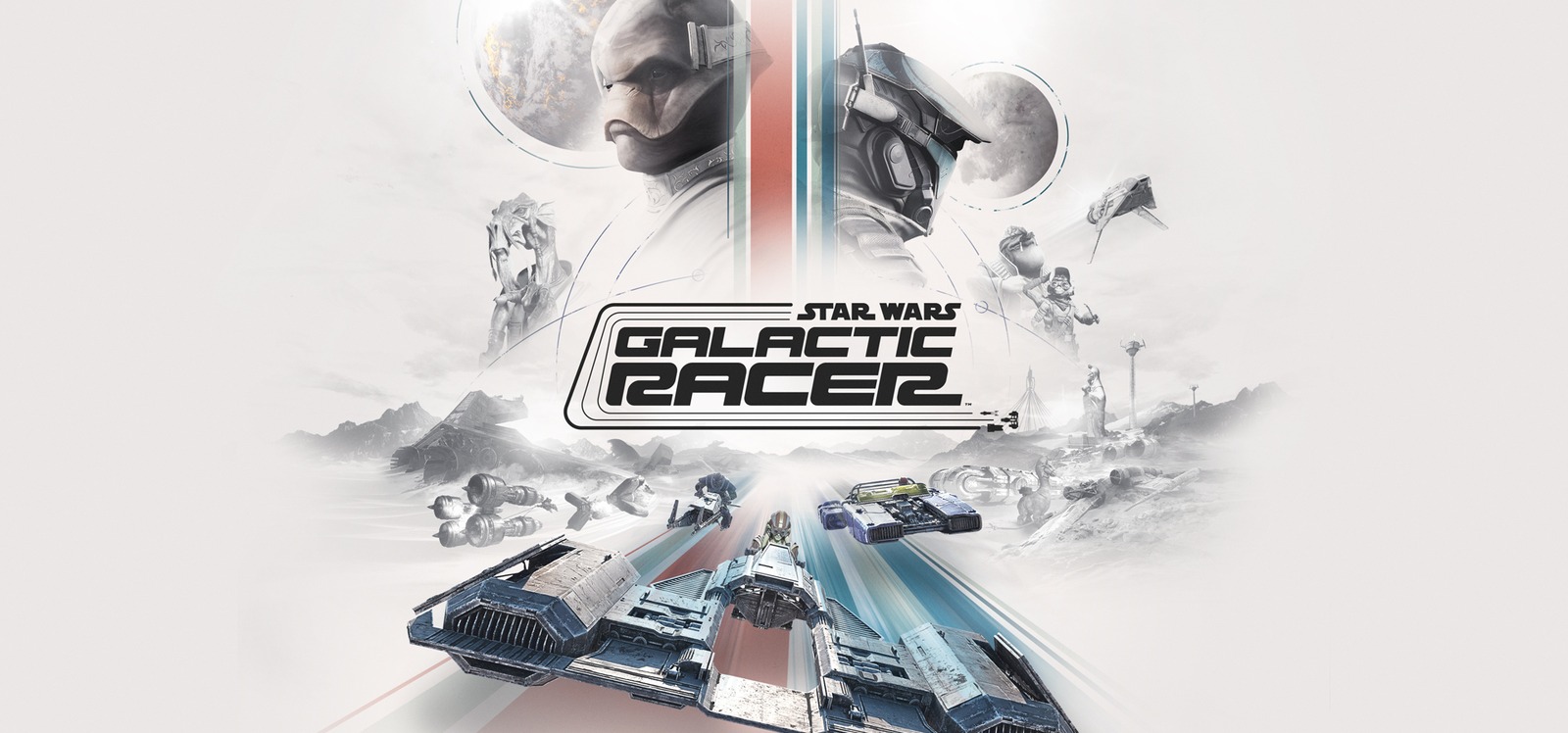
The Outer Rim has always been where Star Wars goes to get dangerous, and STAR WARS: Galactic Racer leans into that lawlessness with a racing game that refuses to play it safe. Fuse Games, a studio staffed by former Criterion developers who helped build Burnout, has crafted something that borrows from arcade racers, roguelites, and deckbuilders in equal measure — and the result is one of the most exhilarating racing games in years, even when its ambitions occasionally trip over themselves.
At $59.99 USD on Steam, Galactic Racer is a premium ask in a genre that often goes free-to-play. But the moment you slam a rival into a canyon wall at 400 kilometers per hour and watch their speeder cartwheel into scrap, the price feels justified. This is a game that understands speed as spectacle, and it delivers that spectacle with confidence.
The Racing: Burnout Meets Podracing
The core racing in Galactic Racer is exceptional. The sense of speed is genuinely incredible — players regularly describe it as the best Star Wars racing experience since Episode I Racer, and they are not exaggerating. Speeders feel weighty without being sluggish, and the handling model rewards precision over button-mashing. Drifting around corners, threading through debris fields, and timing boosts through narrow gaps all feel tactile and satisfying.
What sets the racing apart is the combat system. Rather than bolting weapons onto a racing framework, Galactic Racer weaves combat abilities directly into the driving. You can shunt rivals sideways, fire blasters to disable engines, and trigger defensive abilities to shrug off incoming fire. The result is racing that feels like a contact sport rather than a time trial. Community reviews compare it to Burnout‘s takedown mechanics, and the comparison is apt — there is a visceral satisfaction in punting an opponent off a cliff that most racing games never attempt.
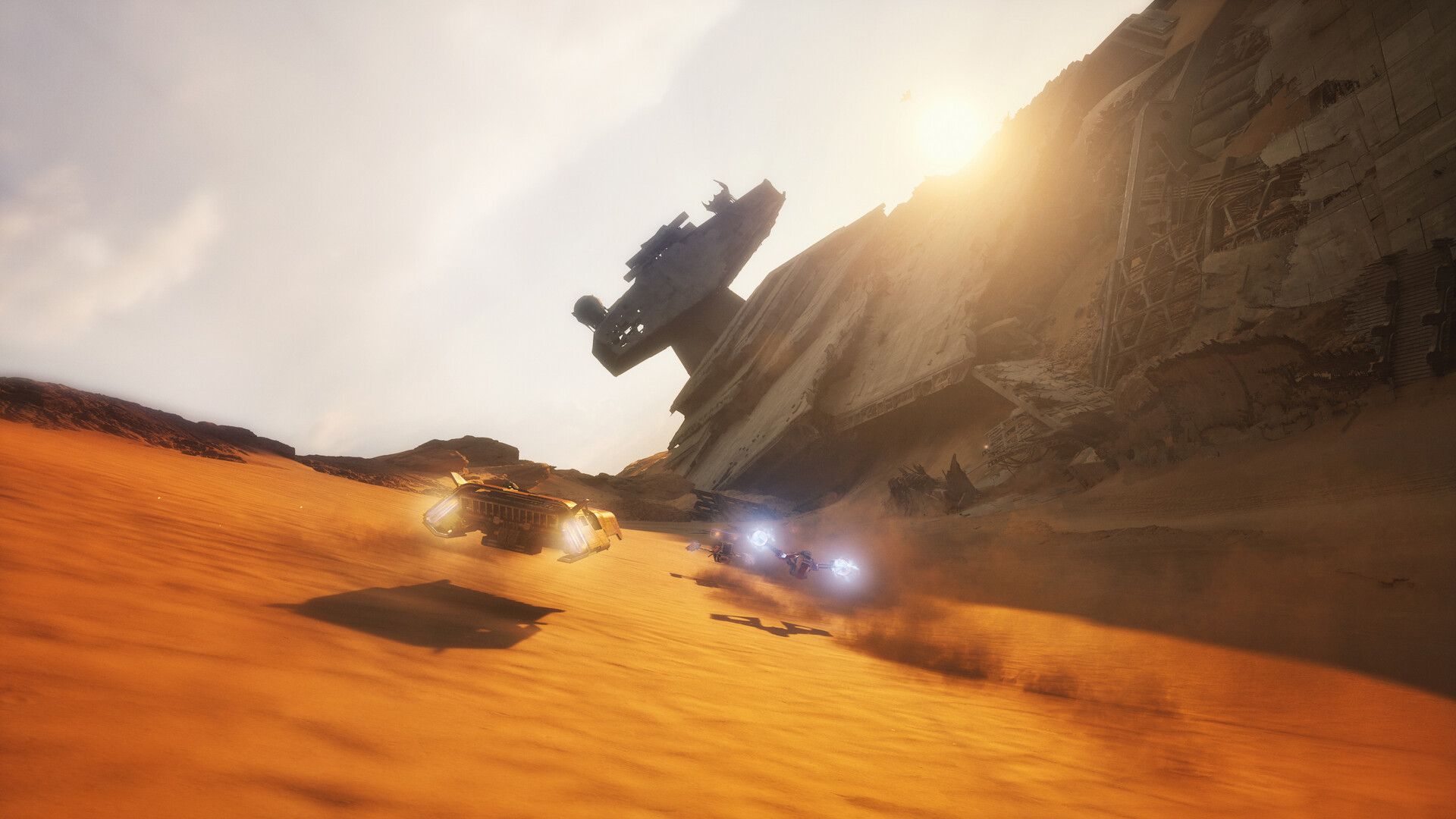
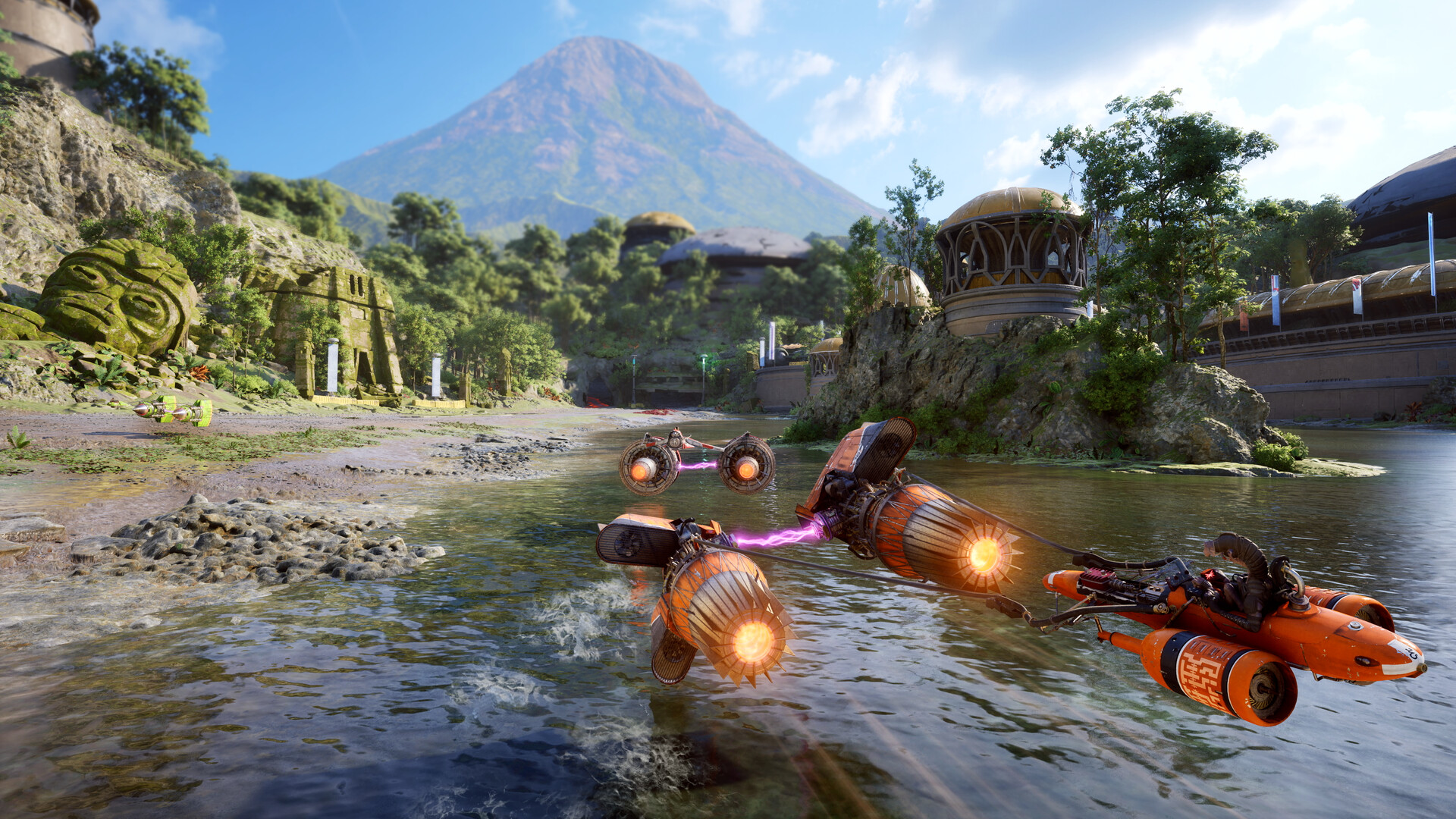
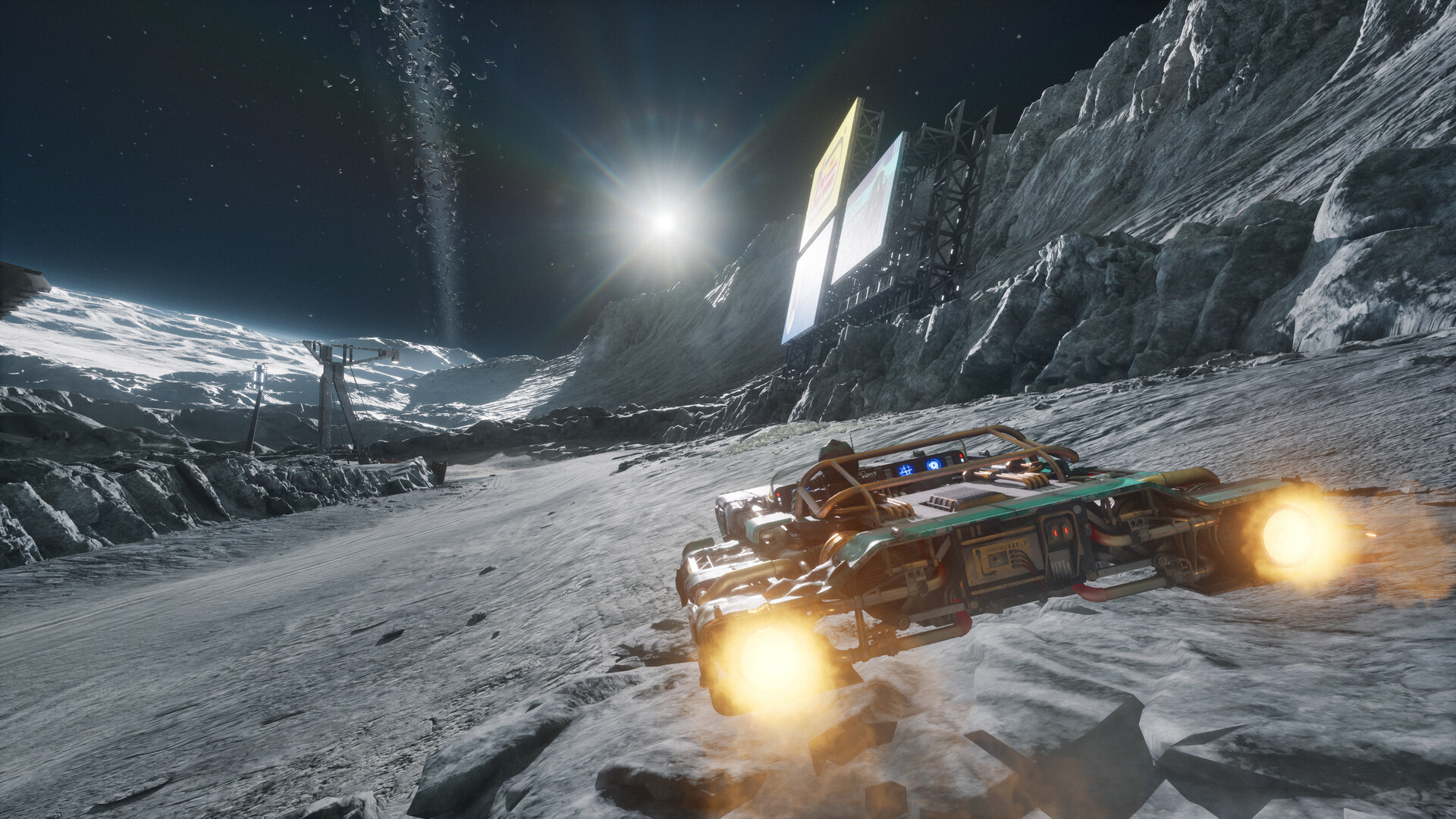
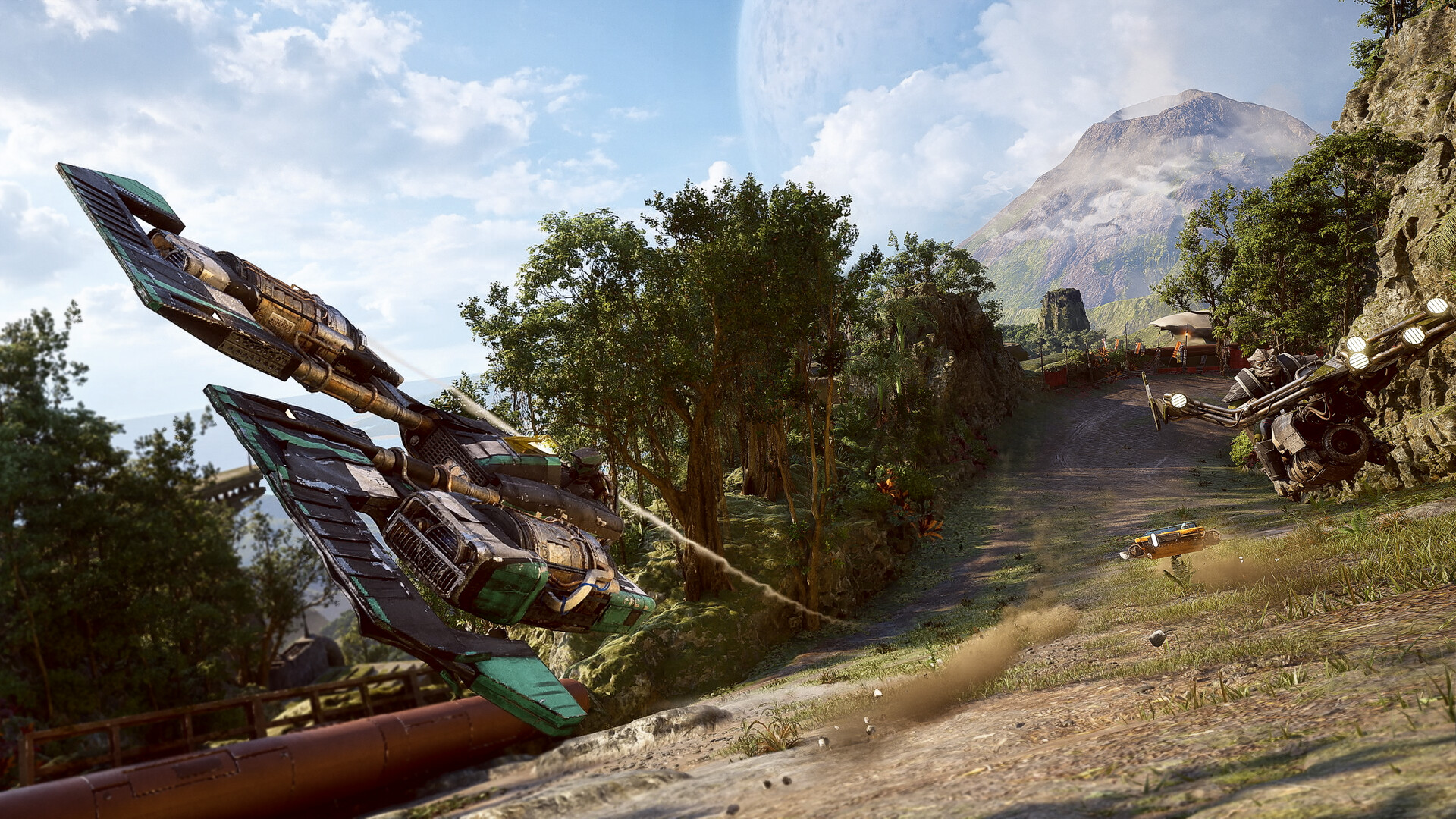
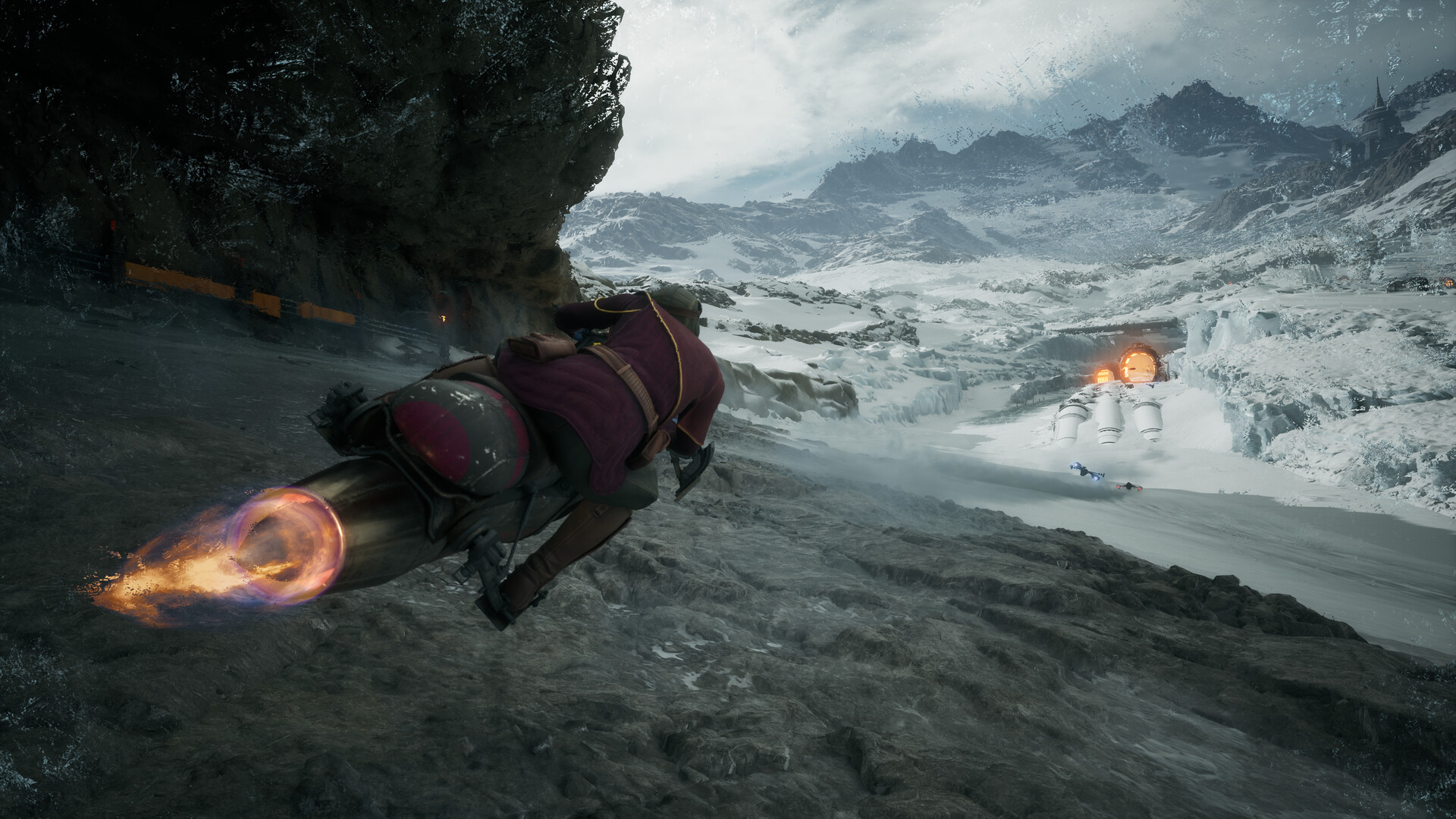
The track design deserves particular praise. Circuits span desert dunes littered with crashed Star Destroyers, volcanic swamps, cratered moonscapes, and frozen mountain passes. Each environment has its own character and hazards, and the Galactic League’s unsanctioned circuits feel appropriately dangerous. The track variety is one of the game’s strongest first impressions — no two tours feel like reskins of the same layout.
The Roguelite Campaign: A Divisive Gamble
The single-player campaign is where Galactic Racer will lose some players. Rather than offering a traditional career mode, the campaign is structured as a roguelite: you run through tours, earn currency, purchase permanent upgrades, and try again with a stronger baseline. Think Slay the Spire with speeders. Each run offers branching paths, upgrade choices, and escalating difficulty.
When it works, the structure is compelling. The permanent upgrade system means failure is never wasted — every tour teaches you something and leaves you stronger for the next attempt. The moment-to-moment decisions about which upgrades to pursue and which risks to take give the campaign genuine strategic depth. Players who commit to the loop report spending dozens of hours optimizing their builds and pushing into harder difficulty tiers.
But the roguelite framework will frustrate players expecting a straightforward racing career. The difficulty spike after the tutorial is a common complaint — the game throws you into races where the AI rubberbands aggressively, and the early hours can feel punishing before permanent upgrades accumulate. Several negative reviews describe feeling misled by marketing that emphasized pure racing over the roguelite structure. The story mode, which leans on pre-race cinematics, has drawn criticism for being heavy on exposition and light on actual gameplay variety.
Multiplayer and the Wider Package
Online multiplayer supports up to 12 players with cross-platform play, and the Galactic League PvP mode is where the game’s competitive energy is most alive. Races against human opponents are chaotic in the best way — the combat system shines when real players are making unpredictable decisions. There are also arcade events for shorter sessions and a podracing mode that taps into the Phantom Menace nostalgia that clearly inspired the game’s creation.
The multiplayer package is not without issues. Some players report missing features like private lobbies and a practice mode, which feel like notable omissions for a competitive racing game. The UI has drawn criticism for being overly bright and poorly organized, with white backgrounds and grey text that make menus harder to read than they should be. Controller keybinds are not fully rebindable on PC, which is a frustrating oversight for a game that otherwise handles controller input well.
Visuals, Audio, and Polish
Visually, Galactic Racer is polished. Speeders are detailed, environments are varied and atmospheric, and the sense of scale when you are rocketing past a downed Star Destroyer is genuinely impressive. The sound design is excellent — engine roars, blaster impacts, and the ambient hum of alien landscapes all contribute to a strong sense of place. Voice acting is well-done, with characters that sell the outlaw racing circuit premise without overplaying it.
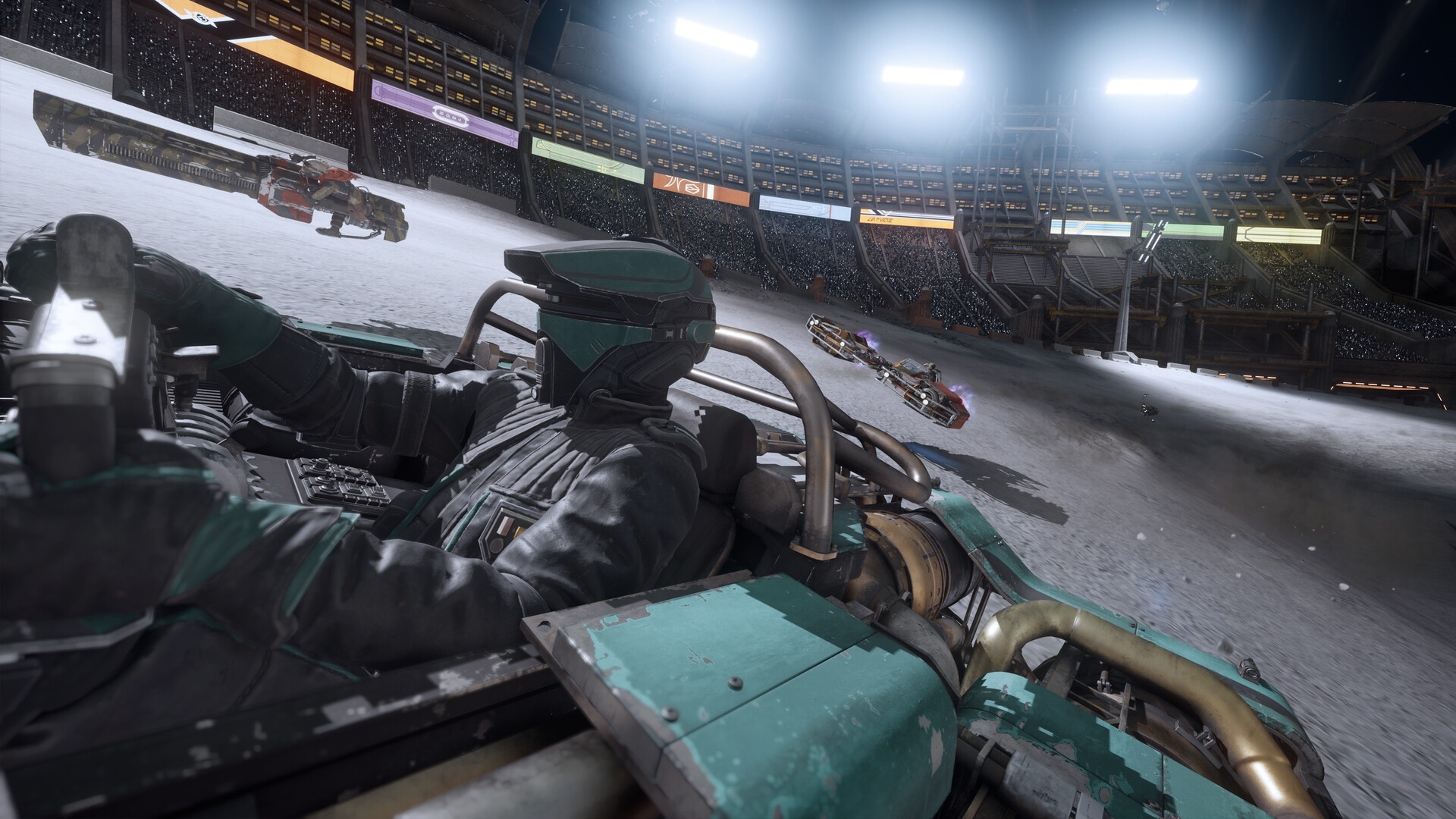
The audio work deserves special mention. Multiple positive reviews single out the sound design as a highlight, and it is easy to hear why. The way engine sounds shift with speed, the satisfying crunch of a collision, and the crowd noise at stadium starts all demonstrate careful attention to how a racing game should sound.
Performance and Technical Issues
This is where the picture gets complicated. A meaningful number of negative reviews cite technical problems: crashes after the first tour, black screens on launch, and occasional frame stuttering. The most recent patch appears to have introduced regressions for some players, with reports of broken perfect-landing mechanics and AI behavior changes. These are not universal — many players report smooth performance — but the technical issues are frequent enough to be a genuine concern, particularly at a $59.99 price point.
The game is Windows-only on PC, with no Mac or Linux support. Controller support is strong (DualShock, DualSense, and generic gamepads are all supported), but the lack of keybind customization on keyboard is a persistent frustration in the negative reviews.
SteamGamer Verdict
STAR WARS: Galactic Racer is the best Star Wars racing game in a generation. The core racing is exceptional — fast, tactile, and rewarding in a way that few arcade racers manage. The roguelite campaign structure is a divisive but defensible creative choice that gives the game legs beyond a single playthrough. The multiplayer is chaotic fun when it works, and the presentation is polished across the board.
It stumbles in the details. Technical issues are a real concern, the roguelite structure will not land for everyone, and some expected features are missing from the multiplayer suite. But the racing itself is so strong that these shortcomings feel like fixable problems rather than fundamental flaws. Fuse Games has built something genuinely special in the Outer Rim — and with post-launch support, it could become essential.
SteamGamer Score: 8.2/10 — A thrilling arcade racer with Burnout‘s soul and Star Wars‘ spectacle, held back by technical stumbles and a roguelite structure that will not suit everyone.

Sarah Chen searches the quieter corners of PC gaming for remarkable ideas that bigger releases leave behind. She covers indie games, platform updates, and overlooked releases for SteamGamer.net. If a strange little game has twelve reviews, an unforgettable mechanic, and absolutely no marketing budget, Sarah has probably already finished it—and is explaining why everyone else should care.





Comment here