
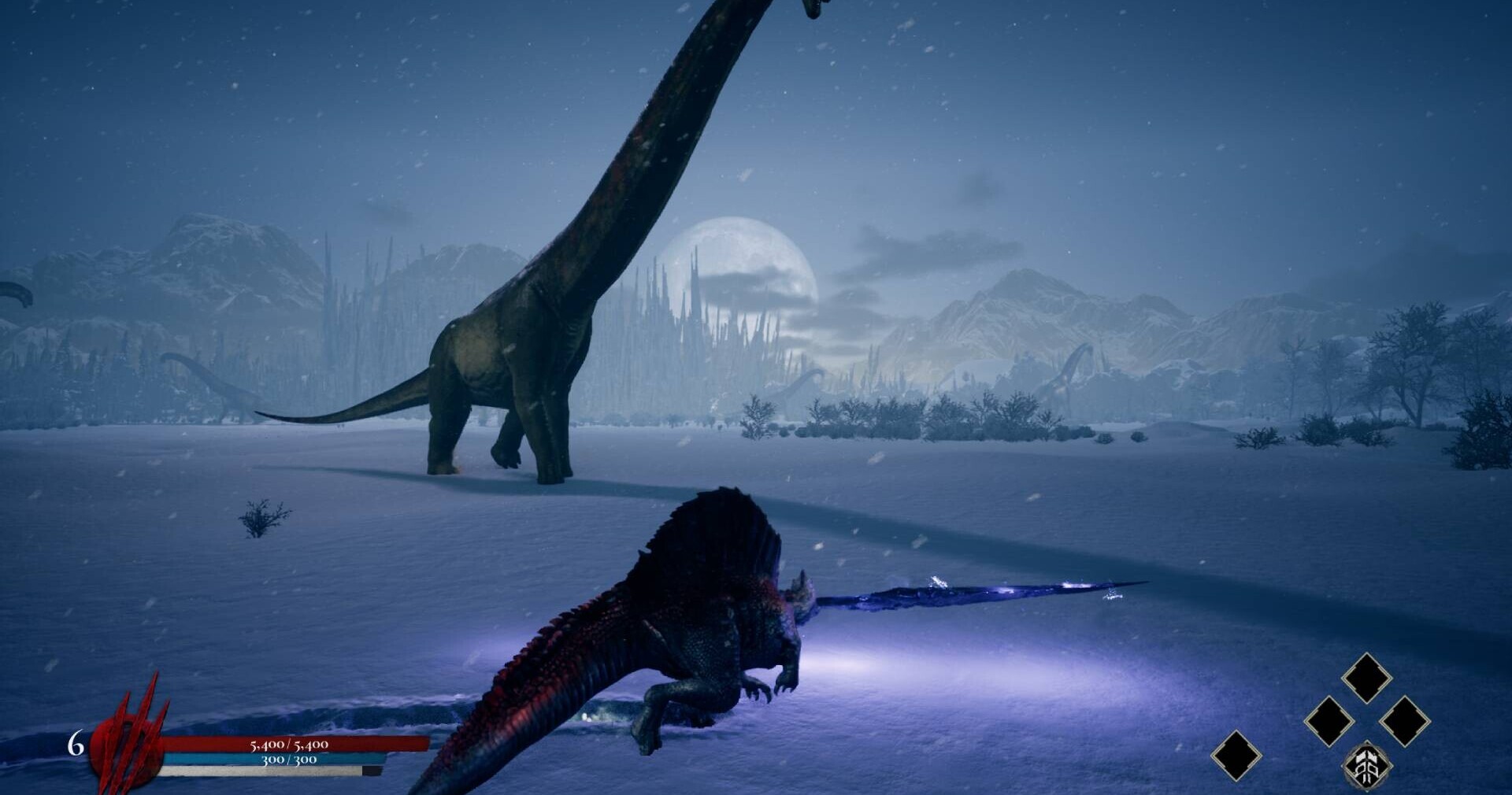
Dinoblade is the kind of game that sounds like a punchline until you actually sit down with it. A Spinosaurus. A greatsword. Held in its mouth. Fighting other armed dinosaurs across prehistoric biomes while an actual metal soundtrack pounds in your ears. You’ve probably seen the TikTok clip that started it all — a solo animator named Jean Nguyen rigging a dinosaur with a sword, and the internet collectively losing its mind. The question was always whether the joke could survive contact with a full action RPG. The answer, as of July 23rd, is: yes, but not without scars.
Team Spino’s debut launched on Steam to a “Very Positive” rating — 89% positive from over 1,200 reviews within its first week — and immediately climbed the popular new releases chart. It’s not a perfect game. The camera fights you. The parry timing is occasionally a lie. The environments between boss arenas sometimes feel like afterthoughts. But Dinoblade commits so hard to its absurd premise that it becomes something genuinely hard to look away from: a souls-like action RPG where the spectacle is the point, and the spectacle is a dinosaur fighting another dinosaur with weapons forged from ancient power.
What Dinoblade Is
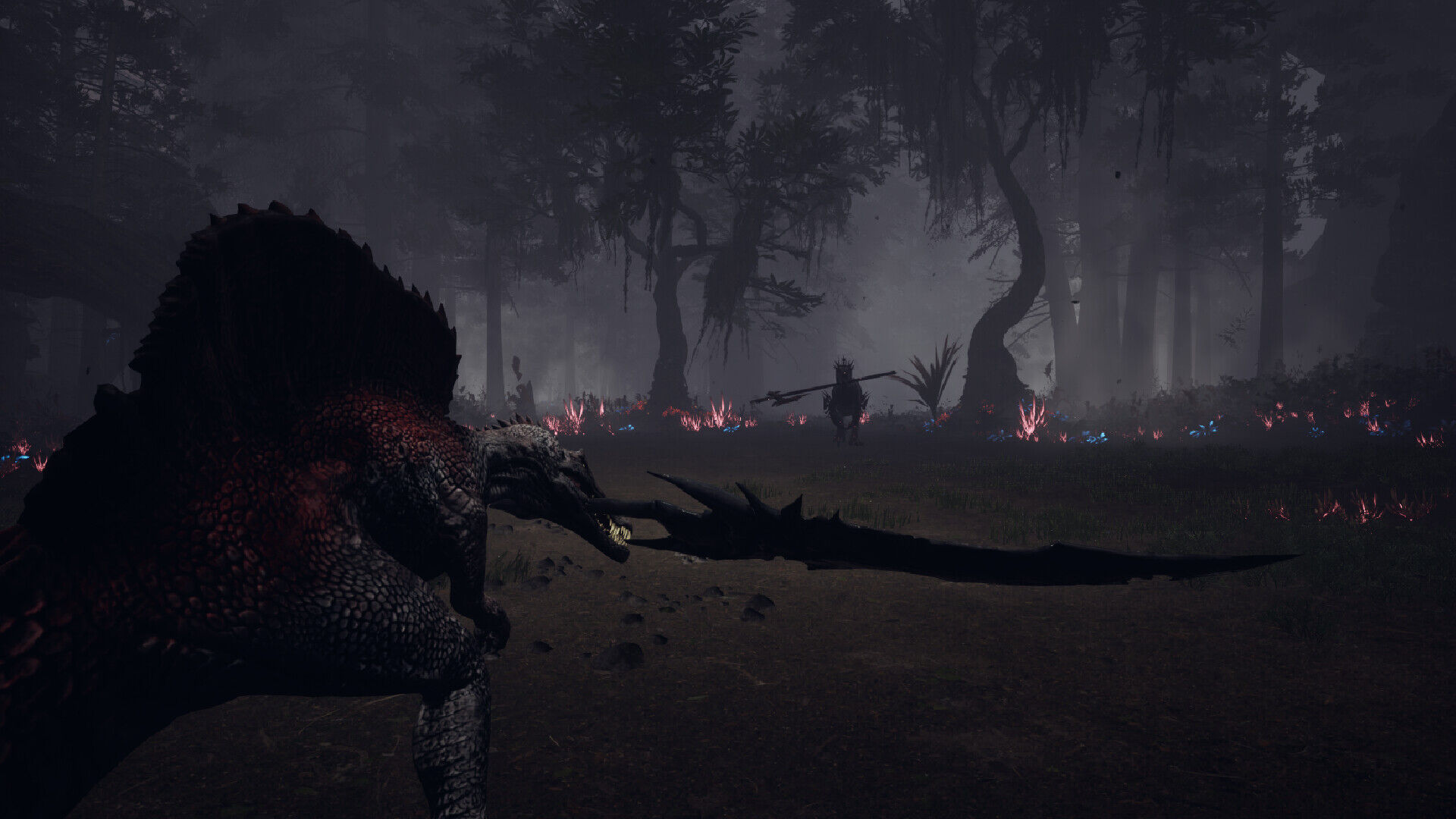
Dinoblade is an action RPG built in Unreal Engine 5 by a solo developer, Jean Nguyen, under the Team Spino LLC banner, with Boltray Games listed as co-publisher. You play as a young Spinosaurus — yes, the one with the sail on its back — and you carry a colossal Great Sword in your mouth. Your mission is to traverse a prehistoric world torn apart by a cataclysmic event, defeat the Alpha predators ruling each region, and prevent the extinction of your species.
It’s a souls-like in structure, though the community and critics have taken to calling it a “soulslite” for reasons that become clear fast. You have stamina, dodge rolls, parry windows, bonfire-style checkpoints, and stat upgrades. You die, you respawn, enemies reset. But the punishment for death is gentler than Dark Souls — there’s no dropped-souls penalty, and upgrade resources can be farmed. The intent, as Nguyen explained in interviews, is to let players have the boss fight without worshipping the runback.
The Premise Is Absurd. The Game Knows It.
Let’s get the obvious out of the way: Dinoblade is funny. A dinosaur holding a sword in its mouth is inherently comedic. The game doesn’t hide from this — it leans into it with animation flourishes, dramatic death screens, and boss encounters that escalate from “this is cool” to “this is completely unhinged.” One boss wields an entire Ankylosaurus as an improvised club. Another uses chained whips made of biological matter. The absurdity is the identity, and the game earns it by never winking at the camera.
The story is thin but functional. A cataclysmic event has changed the nature of dinosaurs in this world, granting some of them intelligence and the ability to wield weapons. You’re a young Spinosaurus trying to survive and fight your way through territories ruled by Alpha predators. There’s a mystery at the heart of it — something about the origin of the cataclysm and what it means for your species — but the narrative exists mostly as connective tissue between fights. That’s fine. Nobody is playing Dinoblade for the lore. They’re playing it to watch a Spinosaurus parry a T-Rex mid-combo and then follow up with a meteor slash.
Combat: Where Dinoblade Earns Its Keep
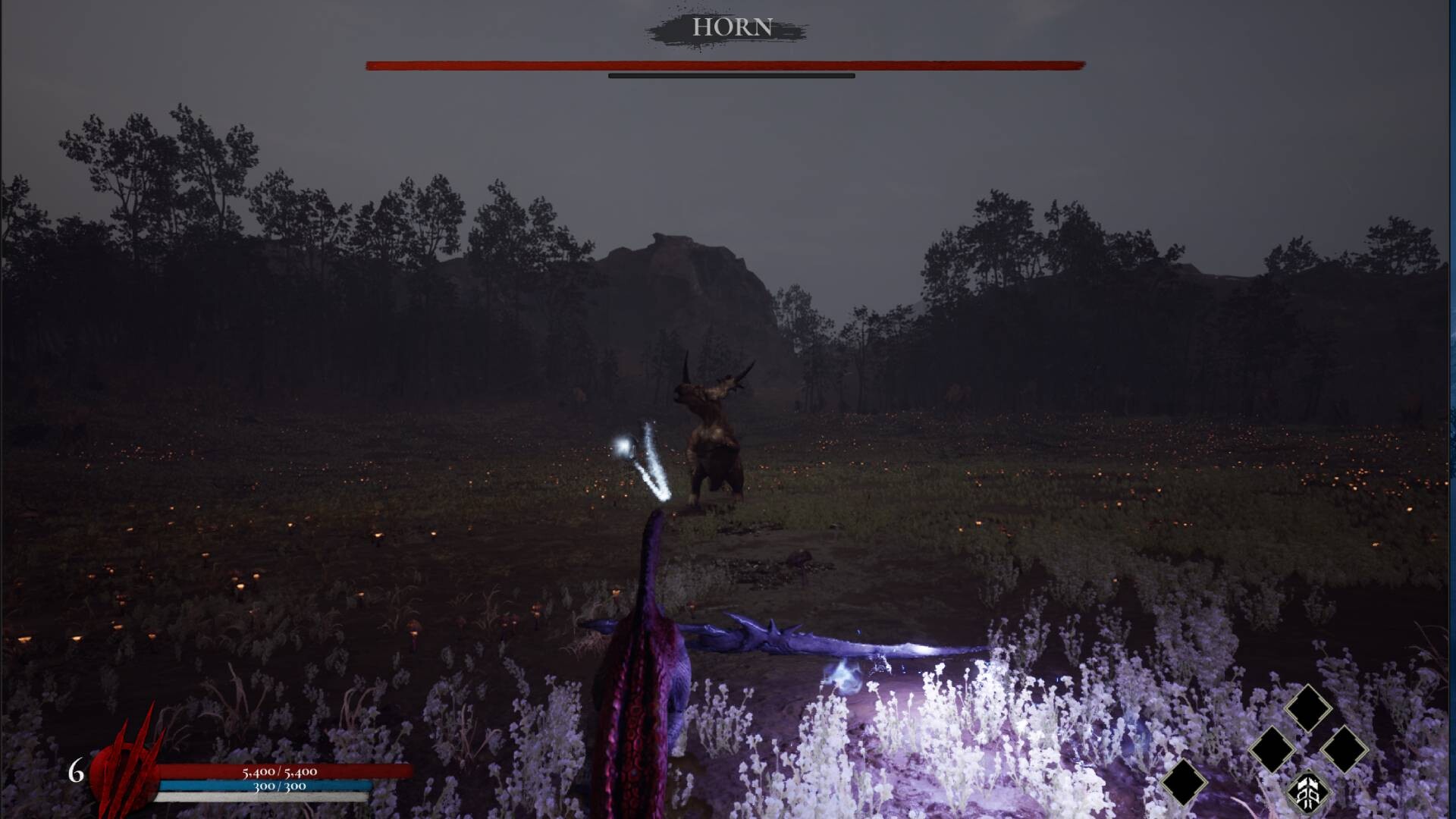
The combat is the whole reason this game works. It borrows liberally from Sekiro: Shadows Die Twice — parry-based deflection, posture-breaking finishers, a resonance mechanic that rewards alternating between offense and defense — but simplifies the systems enough to keep the barrier to entry low. You can cancel nearly any animation (including healing, which is dangerous but useful), chain ghost summons into meteor slashes, and stagger-lock bosses when you find the right rhythm.
The boss design is where the game truly shines. Each Alpha predator has a distinct fighting style, and the encounters are spaced close enough together that the momentum never really dies. There’s a particular joy in the way the game handles weapon variety — your Great Sword is the default, but you unlock new weapons and abilities as you progress, and the Soul Arts system lets you customize your approach. One reviewer compared the feeling to Metal Gear Rising: Revengeance, not because the games play the same, but because both understand that a straight-faced absurd idea executed with conviction is more entertaining than a carefully balanced one.
The parry system is the game’s double-edged sword. When it works, it feels incredible — the timing window is generous enough to be learnable but tight enough to feel rewarding. When it doesn’t work, usually because of camera positioning or lock-on behavior, it’s frustrating. Several reviews flagged the lock-on as overly aggressive, particularly against smaller enemies, where it can swing the camera wildly and obscure your view. It’s a technical issue that occasionally undermines the combat’s otherwise excellent flow.
World and Progression
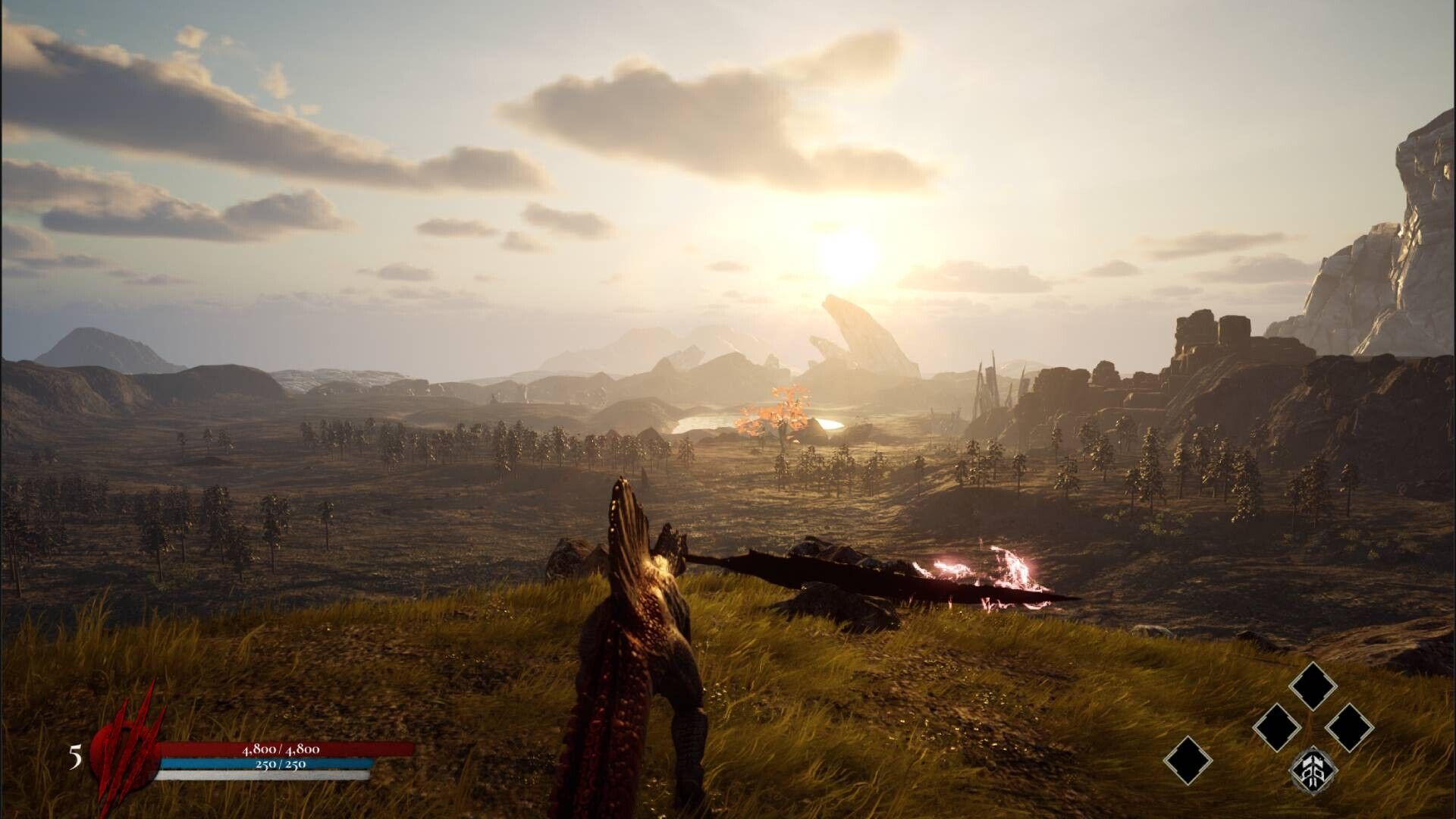
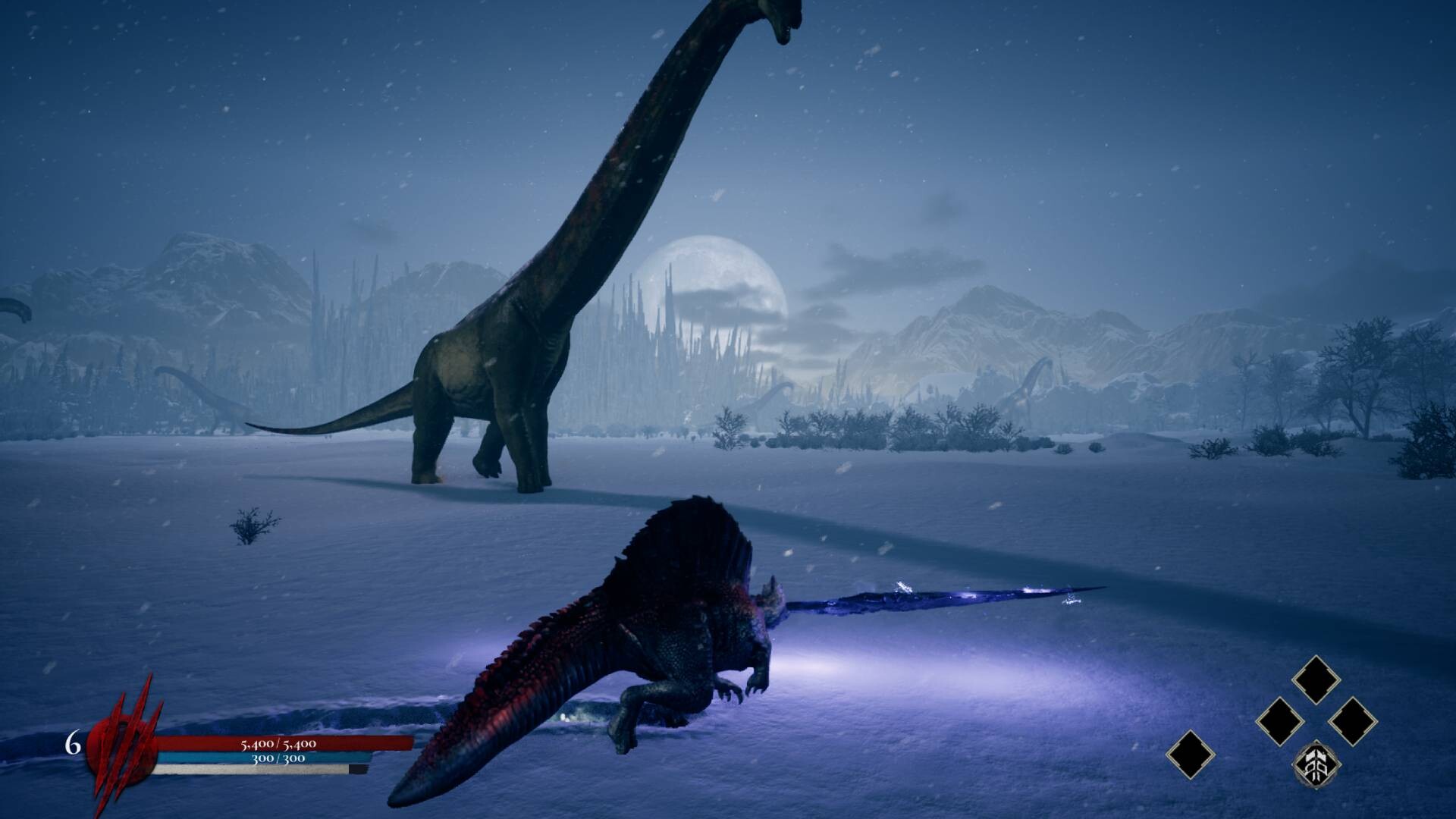
The world is beautiful but sparse. Dinoblade uses Unreal Engine 5 to create environments that look stunning in screenshots — misty jungles, dry canyons, snow-covered plains at night — but the spaces between boss arenas often feel like corridors or empty circles with limited things to do in them. Exploration exists, but it’s shallow. You’ll find some hidden weapons and upgrade materials, but the game doesn’t incentivize thorough searching the way a true open-world souls-like would.
Progression is straightforward. Souls (or their equivalent) are used to upgrade core stats: health, attack, stamina, and resonance. You earn these from defeating enemies and bosses, and since there’s no death penalty, the grind is painless. Boss points unlock abilities, and the game wisely lets you specialize — maxing out meteor slash and survival instinct while pumping strength into a glass-cannon build is a viable path through 90% of the content. There’s no respec mechanic, which is a minor annoyance but hardly a dealbreaker given the game’s ~8-hour length.
Visuals, Audio, and Atmosphere
For a solo developer’s debut, Dinoblade looks remarkably good. The dinosaur models are detailed and expressive — you can feel the weight behind each swing of the Great Sword, and the enemy designs go well beyond generic prehistoric fare. The animation work carries the energy of that original viral clip, and the environment art, while not packed with secrets, creates genuinely atmospheric moments. A snowy night scene with a Spinosaurus silhouetted against the moon is the kind of shot that makes you stop and screenshot for your desktop wallpaper.
The soundtrack deserves special mention. It moves between mournful exploration themes and full-on metal during boss fights, and the transitions feel earned rather than jarring. The music is one of the game’s most underrated elements — it does more to sell the tone of each encounter than most of the dialogue does. Sound effects are more mixed; several reviews noted that attack sounds lack variety, making it hard to distinguish between different moves by ear alone. For a game built around parry timing, that’s a notable gap.
Atmosphere is where Dinoblade punches above its weight class. The combination of the soundtrack, the dinosaur designs, and the sheer commitment to the premise creates something that feels more cohesive than it has any right to be. There’s no grand metaphor or thematic depth to dig into. There’s just a dinosaur with a sword, fighting other dinosaurs, and somehow making you care about whether it wins.
Performance and Technical Problems
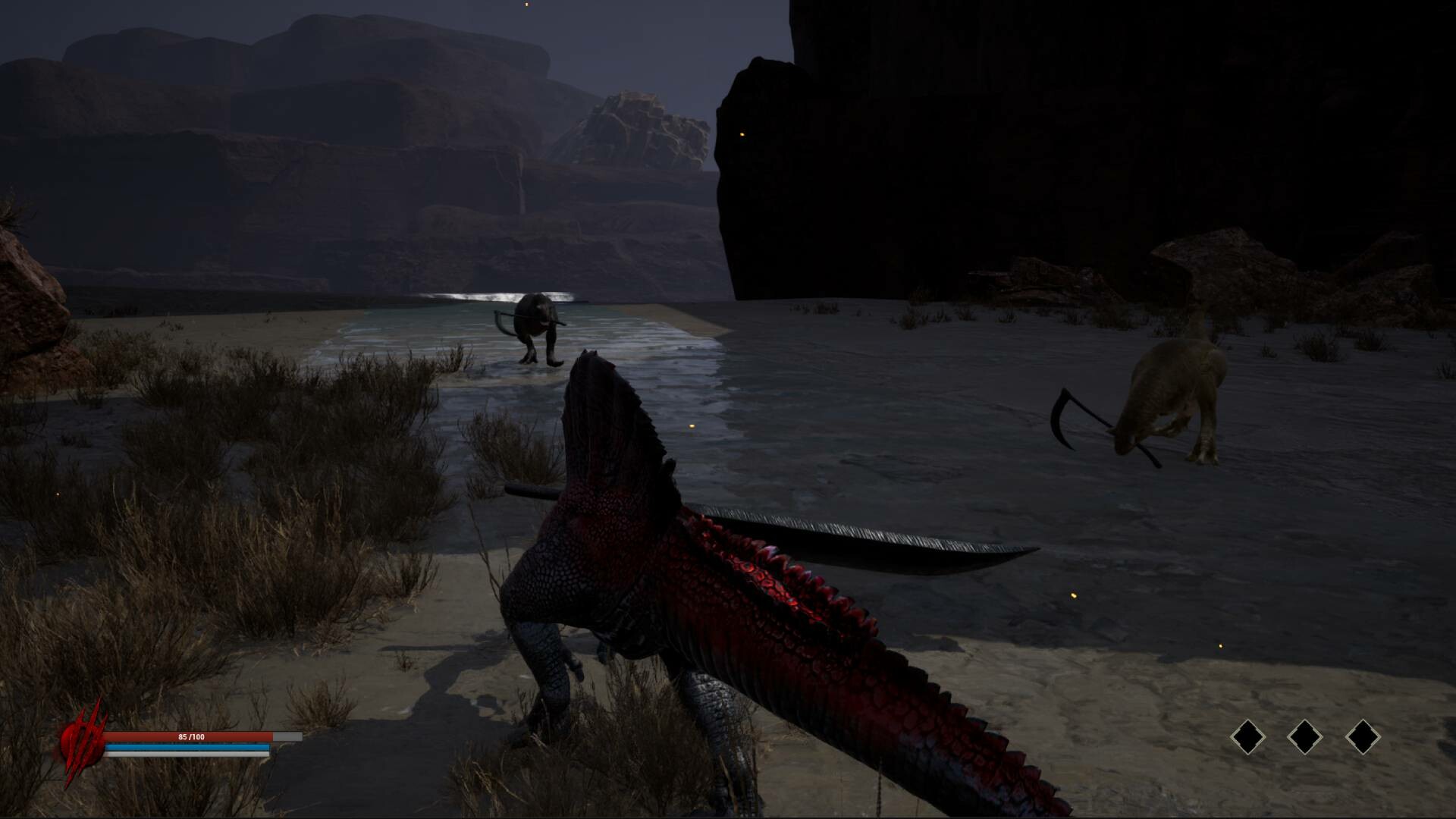
Dinoblade is not a polished product. This is a solo developer’s first commercial release, and it shows in several areas. The camera is the most commonly cited issue — lock-on behavior can be erratic, particularly against smaller enemies or in tight spaces. Frame rate drops are reported even on capable hardware, with one reviewer noting dips that cause dropped inputs during critical parry windows. A control-remapping bug affected block and parry inputs for some players.
On the quality-of-life side, the “summon ghost” splash screen appears every time you beat a named boss, which becomes grating after the third time. Sprint behavior is inconsistent — it sometimes deactivates without clear reason. Subtitled text positioning can obscure combat during repeated boss attempts. These are the kinds of issues that a patch cycle can fix, and given the game’s Early Access roadmap isn’t a factor (this is a full release), expect them to be addressed in updates. The foundation is solid; the polish needs work.
Pros
- Incredibly committed premise — a dinosaur with a sword is funny, and the game never undermines its own sincerity
- Outstanding boss design with varied enemy concepts and memorable encounters
- Satisfying parry-based combat with Sekiro-influenced deflection mechanics
- Excellent soundtrack that elevates every encounter
- Forgiving death mechanics make the game accessible without gutting the challenge
- Beautiful Unreal Engine 5 environments and detailed dinosaur models
- Strong value at the launch price point with an ~8-hour campaign
Cons
- Camera and lock-on issues actively undermine combat in several encounters
- Frame rate drops and input drops on mid-range hardware
- Sparse level design — environments between bosses feel empty and linear
- Sound effects lack variety, making attacks hard to distinguish by ear
- Thin narrative that exists mostly as connective tissue
- Minor quality-of-life annoyances: boss splash screens, inconsistent sprint, text positioning
- Solo developer debut shows in polish — needs a patch cycle to reach its potential
SteamGamer Verdict
Dinoblade is a game that understands exactly what it is and commits to it with a conviction that most triple-A studios can’t match. The premise is absurd. The execution is uneven. The result is something genuinely enjoyable — a soulslite that prioritizes spectacle and accessibility over punishing precision, wrapped in a package that’s rough around the edges but impossible to dismiss.
It’s not the next Elden Ring. It’s not trying to be. It’s a solo developer’s love letter to dinosaur action movies and souls-like combat, delivered with enough skill and personality to overcome its technical shortcomings. The boss fights are excellent, the soundtrack is a sleeper hit, and the whole thing moves fast enough that the sparse environments never quite become a dealbreaker.
If you’ve ever wanted to parry a T-Rex with a greatsword clenched in your dinosaur mouth while metal plays, Dinoblade is the only game on Steam that will let you. That’s worth something. That’s worth quite a lot, actually.
Score: 7.5 / 10

Zoe Mitchell writes about games that start arguments. At SteamGamer.net, she covers gaming culture, unexpected indie hits, controversial design decisions, and releases that send the internet into a collective meltdown. She is most interested in the moment a game stops being entertainment and becomes a conversation. If everyone is asking, “Who thought this was a good idea?” Zoe wants to play it.

Comment here