
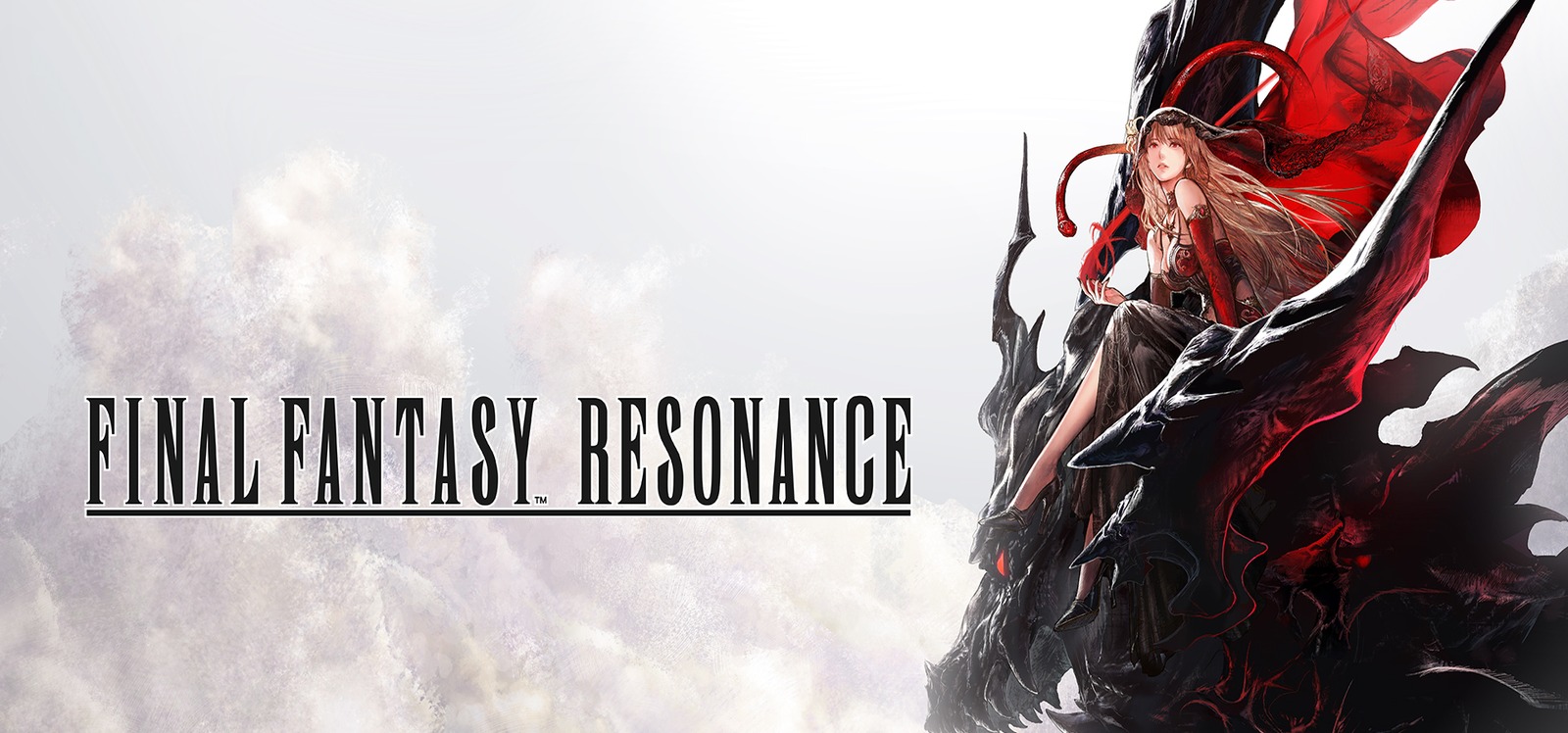
Two days after launch, FINAL FANTASY RESONANCE is sitting at Overwhelmingly Positive on Steam — 97% of its 982 user reviews are positive — and having played through its opening stretches and watched how the community is reacting, the verdict writes itself almost immediately. Square Enix and LANCARSE have built the first HD-2D entry in the series as a deliberate homecoming: a pixel-art world layered over lavish modern lighting, a strategic turn-based battle system, chocobos, espers, airships, and cameo appearances from faces like Cloud, Tidus, and the Warrior of Light. It launched on October 22, 2026 at $49.99 USD, and it is very, very good at the things it loves. The catch is that it loves a few things too loudly, and by the third cutscene of someone explaining exactly what you should do next, you will know precisely which things those are.
A Tale of Crystals, Told at Full Volume
The premise is classic Final Fantasy with the serial numbers polished to a shine: companions bound by fate, a force gathering to bring the world to ruin, and the truth of it buried under a proper noun or two. The cast is genuinely likeable, and the writing is at its best when it lets banter between party members do the work. Where it stumbles is volume. Steam’s most-cited complaint is not that the story is bad — it is that there is so much of it, delivered so constantly, that the game seems afraid of a quiet moment. One refunding reviewer described putting eighty percent of their time into the skip button, and even a positive review at ten hours on record called out “too much literal storytelling” compared to the SNES-era games this one reveres. Franchise veterans will get more out of the character cameos than newcomers, but the script rarely trusts either group to connect a dot it has not already circled three times.
World Map, Airship, and a Painted Roof
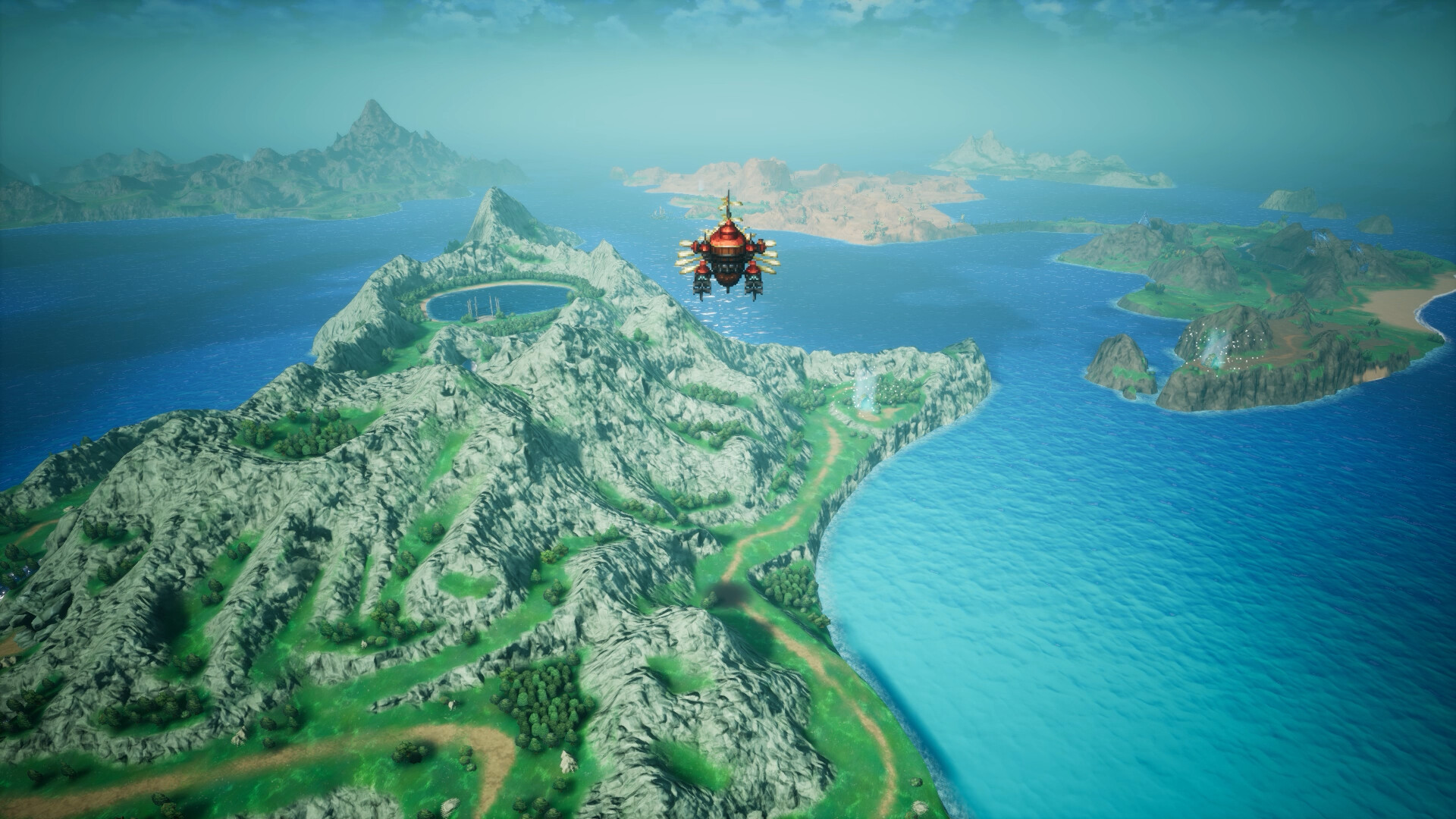
Exploration is where the nostalgia lands cleanest. The overhead world map returns in proper form, an airship is in the picture from the earliest hours, and traversal between towns and dungeons carries that old loop of “what is over that ridge?” — aided by respites of genuinely lovely pixel scenery. It is also where the hand-holding is most visible. The community’s favorite example is literal: a village of identical rooftops painted one color except the building you need, hovering under a spotlight in the establishing shot. Objectives are spelled out, paths are signposted, and the adjustable difficulty setting helps with combat but cannot help with a design that keeps answering questions before you ask them. Players who want to feel clever will have to make their own fun; players who want to sightsee will be in heaven.
Turn-Based Combat, With and Without Patience
Battles are the game’s strongest argument. The strategic turn-based system is a love letter to the classic entries — turn order matters, party roles matter, and the elemental interplay of fire, ice, and lightning keeps encounters readable. The modern twist is the Vision system: equippable boons that slot onto characters and fire during battle, which diehards have already written off as “just trinkets” while everyone else enjoys the burst timing they add to a boss push. The community split is sharp and honest: plenty of reviews call combat fantastic, while a vocal minority finds the early pacing slow and spongy, with encounters that outlast their ideas. Bosses are exactly the fights where the system sings — multi-phase, mechanic-driven, and demanding a real plan on higher difficulty. In between them, trash encounters can feel like a tax. No controller vibration at launch is a weirdly memorable footnote for an otherwise polished package.
HD-2D, Brighter and Louder
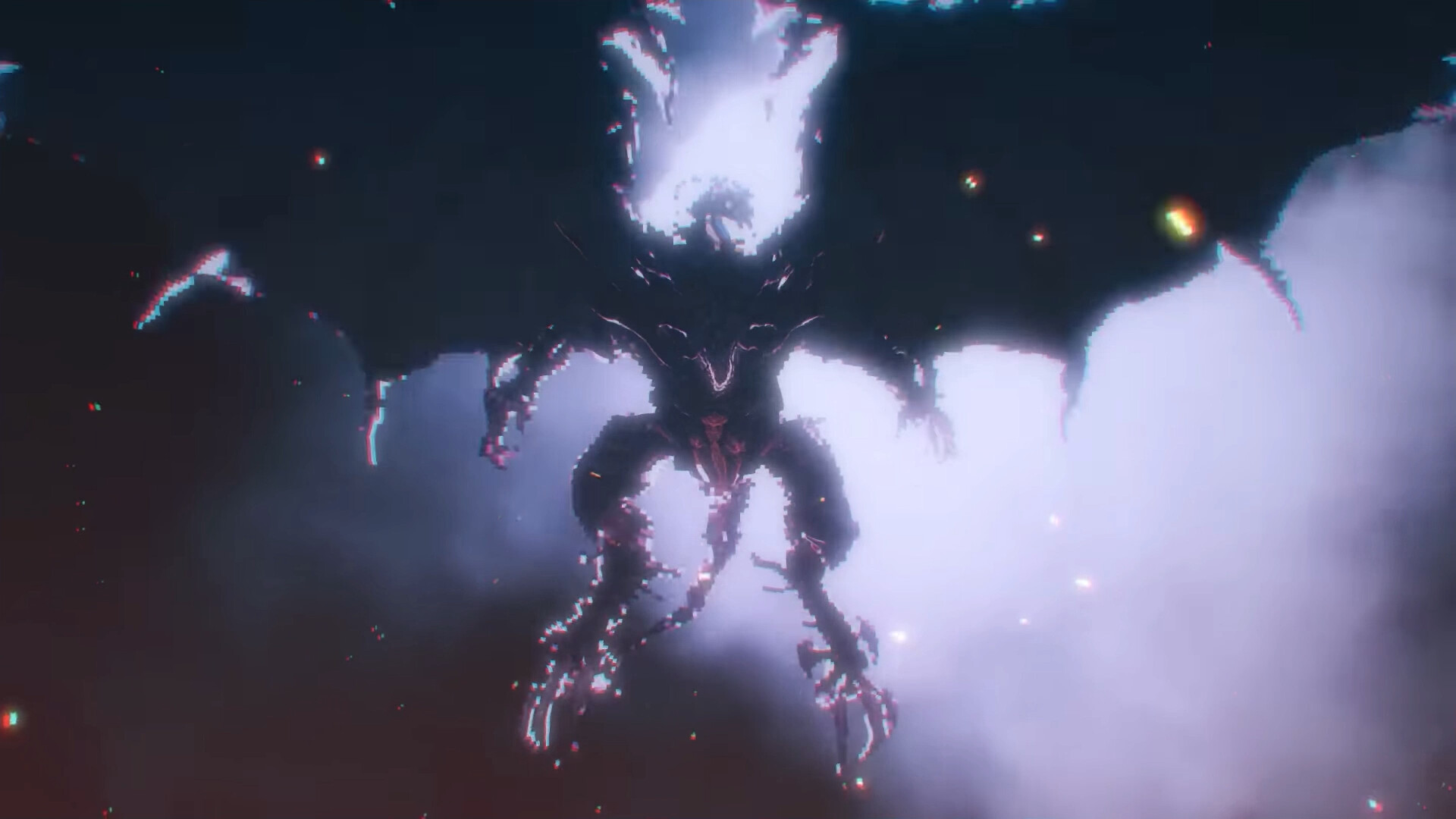
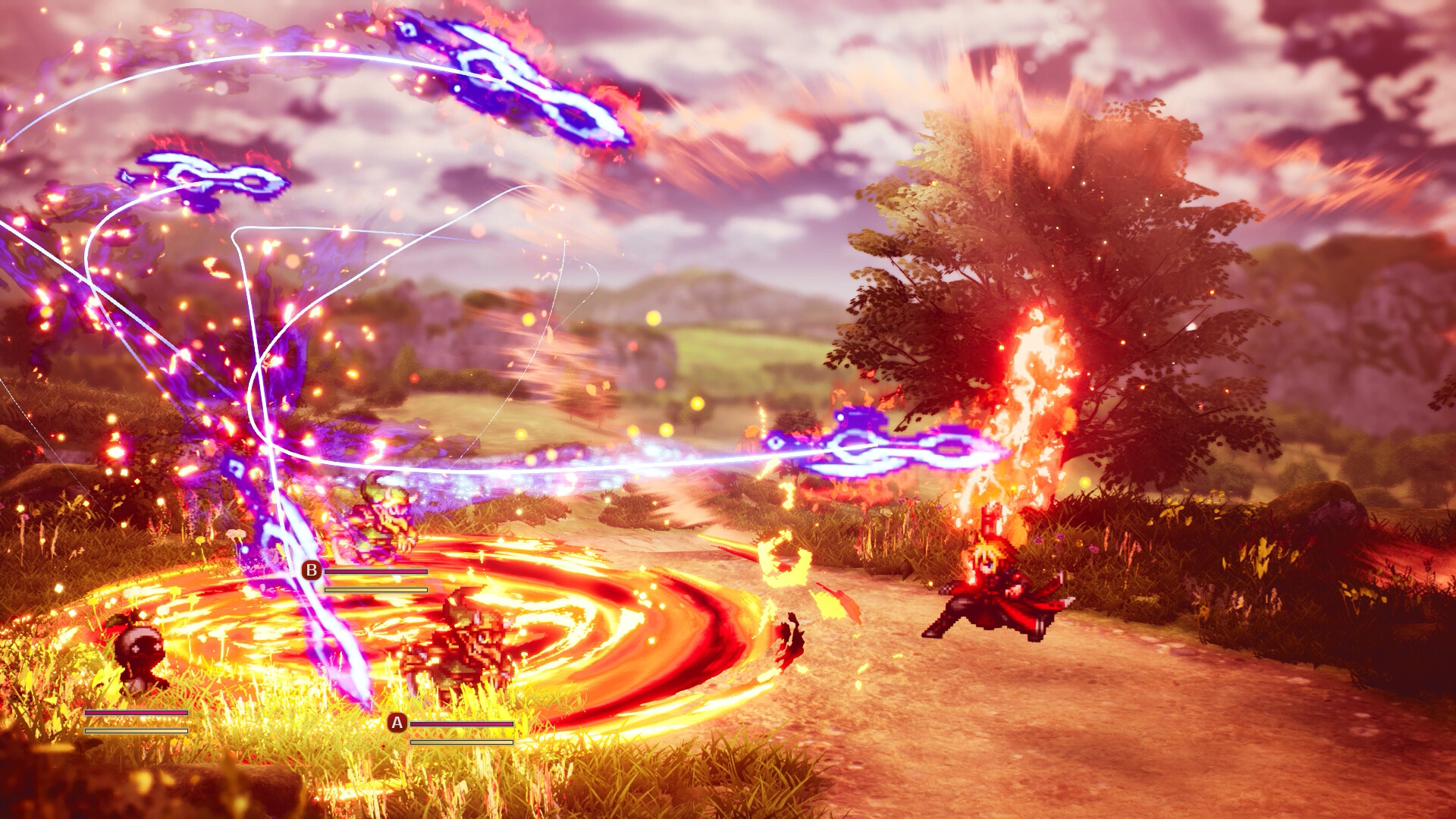
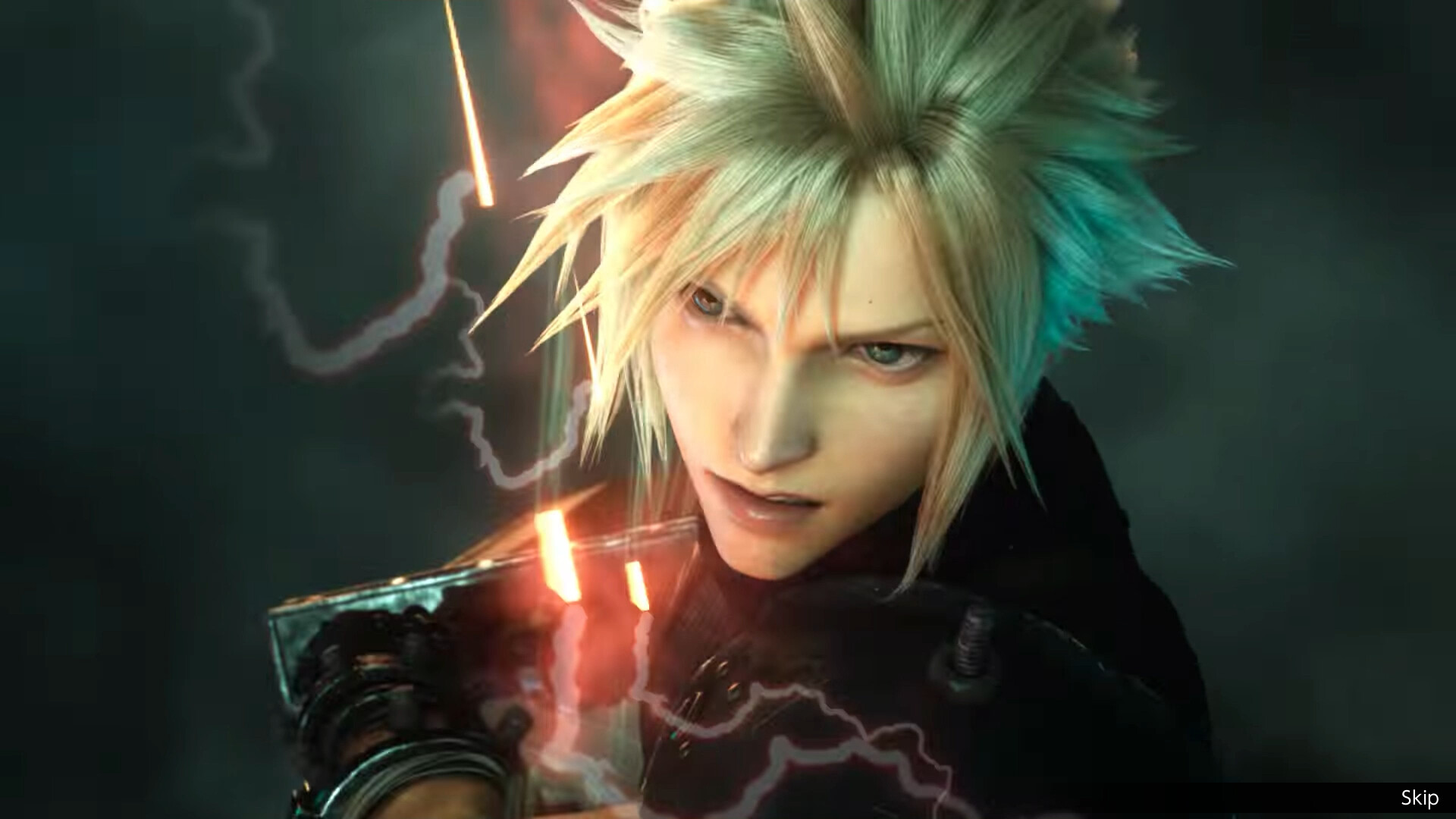
This is the prettiest the house style has looked, and the soundtrack is drawing near-universal praise — lush, melodic, and unafraid of a good leitmotif. Battle scenes layer spell effects over unit health bars in a way that stays legible even when the screen is full of fire and chain magic. The criticism is aimed at the cinematic layer: the full-motion sequences read to several players like low-resolution CGI with a pixel filter rather than true pixel art, and the cutscene camera’s restless zooming has driven more than one reviewer back to the skip button. “Visions” story cutscenes, meanwhile, interrupt with a style that feels imported from another game entirely. None of it breaks the experience, but the presentation is at its best when the pixels are moving in-engine and the camera holds still enough to admire them.
Cloud Strife, Gilgamesh, and the Price of Nostalgia
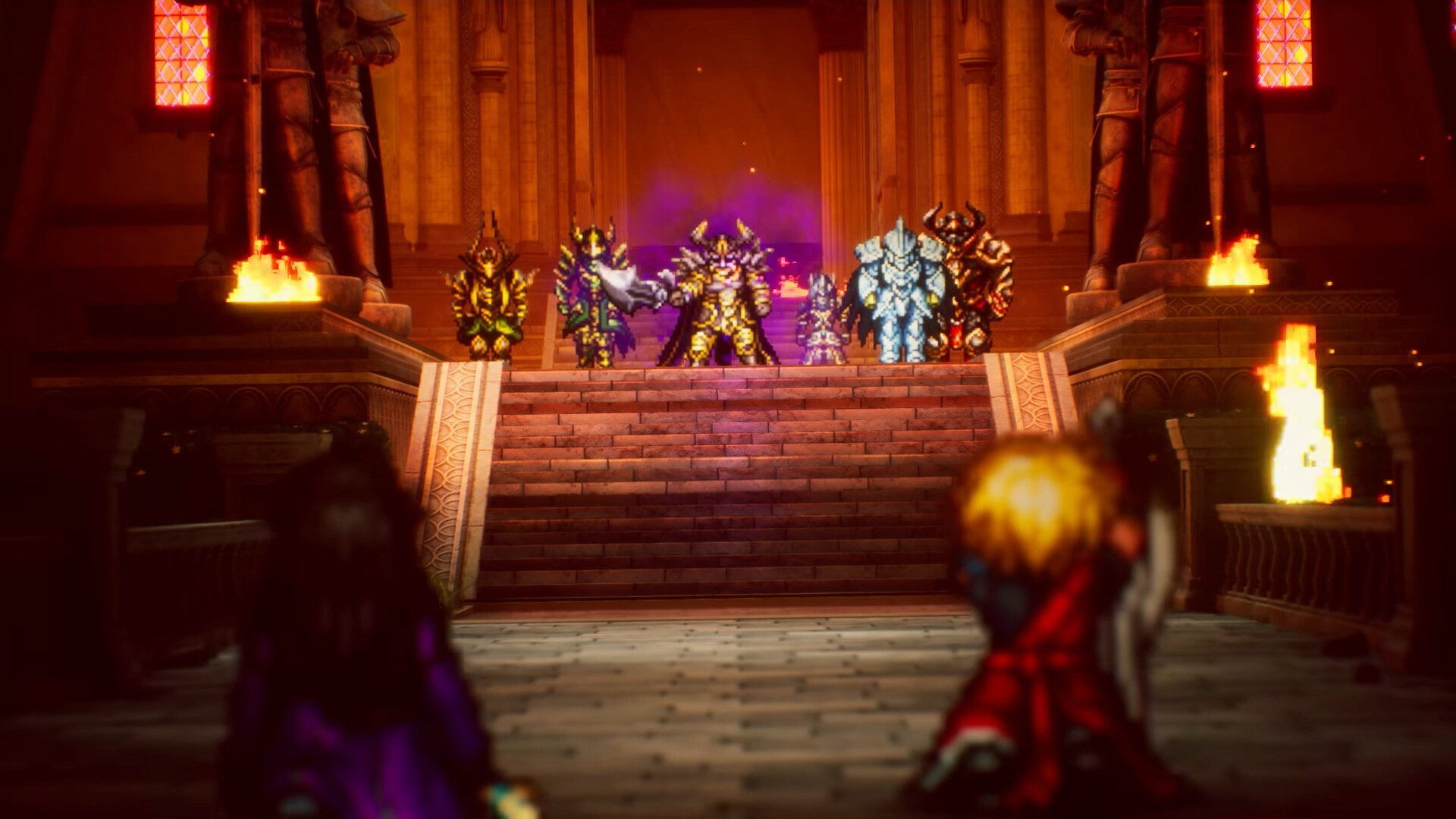
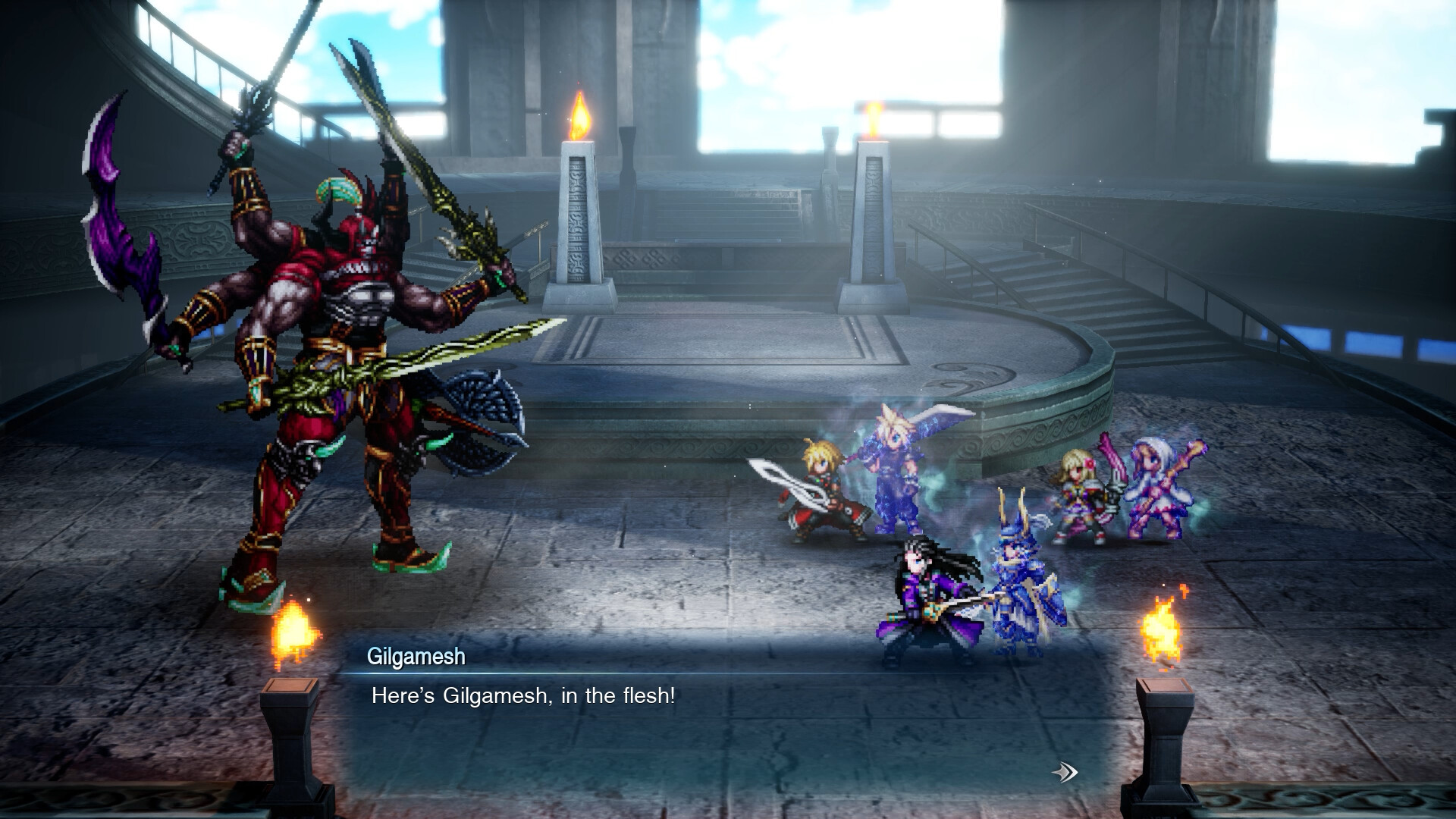
Then the guests arrive. Cloud shows up with the Buster Sword glowing, Gilgamesh bursts in with a wrestler’s timing (“Here’s Gilgamesh, in the flesh!”), and the game happily leans on decades of affection. Whether that lands or grates is the most divisive question in the reviews. Detractors call the nostalgia shallow and shameless, the mobile-game kind of fan service that mistakes references for warmth; fans — particularly those who grew up on the SNES, PS1, and PS2 entries — call it exactly what they came for. The $49.99 USD price sharpens the debate: more than one reviewer frames it as “we live in a time where a pixel game is fifty dollars,” while others counter that the production values, score, and campaign breadth earn it. Everyone agrees on one thing: it is absolutely worth it at forty dollars and a steal on a deep sale.
Underneath the guest-star parade, the moment-to-moment loop keeps doing its job: towns to poke through, a world map to roam, and a battle system that rewards paying attention. If the game has a thesis, it is that classic Final Fantasy never needed modernization so much as curation — and it curates beautifully. The Vision system in particular grows on you; what looks like a trinket layer in hour one becomes a genuine build decision by the time bosses start demanding specific answers. It is the kind of mechanical throughline that makes the fifty-dollar question easier to answer, even as the storytelling keeps shouting over it.
Verdict
FINAL FANTASY RESONANCE is a confident, gorgeous, mechanically rich JRPG that is scared of its own silences. The battle system is the best in the HD-2D class, the world map and airship scratch an itch that modern RPGs ignore, and the score is worth the download alone. Against that: an over-explained story, cutscene direction that fidgets, early combat pacing that sags, and a cameo habit that will split any room down the middle. At $49.99 USD it is an easy recommendation for series faithful and turn-based loyalists; for everyone else, a twenty-hour appetite for hand-holding is the thing to know before you buy. The community’s 97% approval is not hype — it is just a game that knows exactly what it is, even when it will not stop telling you.
SteamGamer Score: 8.2/10

Sarah Chen searches the quieter corners of PC gaming for remarkable ideas that bigger releases leave behind. She covers indie games, platform updates, and overlooked releases for SteamGamer.net. If a strange little game has twelve reviews, an unforgettable mechanic, and absolutely no marketing budget, Sarah has probably already finished it—and is explaining why everyone else should care.


Comment here