
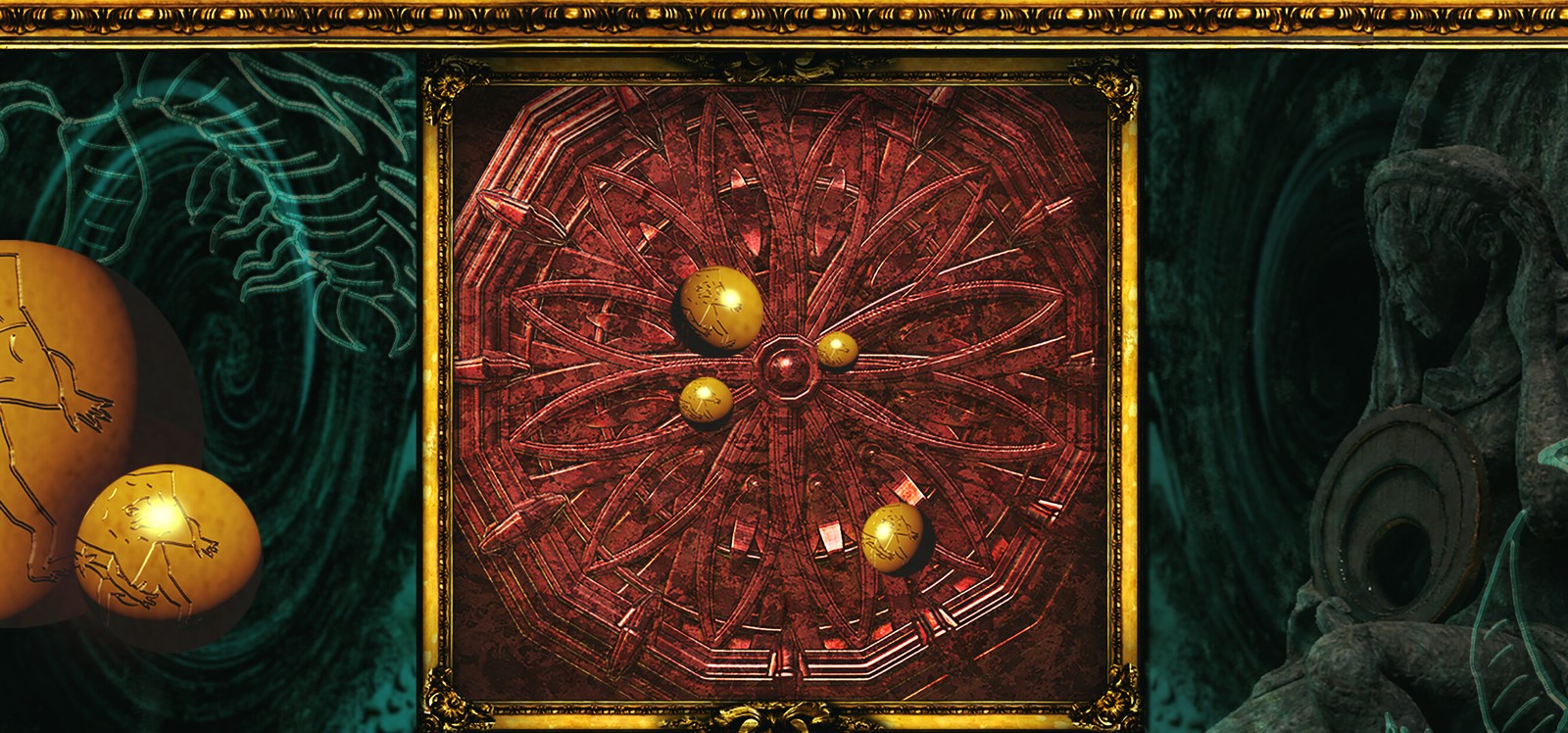
There is a particular kind of bravery in shipping a game that refuses to explain itself. Queen’s Domain drops you onto the Isle of Neasied with no tutorial, no minimap, and no hand-holding, then trusts you to read the world like a book you found in a flooded library. Freshly Baked Games — a two-person studio clearly in love with FromSoftware’s oldest, slowest ancestor — has built a first-person retro-fantasy action RPG that feels like a lost PlayStation classic filtered through modern level design. It launched October 30, 2026 on PC via Steam at $16.99 USD (15% off its $19.99 USD list price during launch), and it is one of the most rewarding exploration games of the year.
The premise is deceptively simple: your father has vanished somewhere on Neasied, sinister forces are gathering, and something called the Queen has begun to stir beneath the island. What follows is a game about patience. Patience to learn its spacing-driven combat, patience to read item descriptions that double as puzzle hints, and patience to accept that the island will kill you and keep your progress when it does.
It is not a flawless experience. The combat tuning is openly hostile in places, the save system is stingy, and a handful of technical rough edges remain. But the core of Queen’s Domain — its interconnected, secret-stuffed world — is among the best of its kind, and the community response since launch has reflected exactly that split: players enraptured by the exploration and exhausted by the attrition.
Game Overview
Queen’s Domain is a single-player first-person action RPG with immersive-sim leanings: real-time melee and ranged combat, light character growth, and an enormous interlocking map that unfolds as you acquire traversal tools. The controls support gamepads, the Steam build ships with Achievements and Steam Cloud, and the whole package runs on a retro-fidelity art style that deliberately evokes the late-1990s era the developers grew up on. The influences are worn proudly: King’s Field and Shadow Tower in the deliberate pace and first-person swordplay, The Elder Scrolls in the density of incidental spaces, and Metroid Prime in the way new abilities retroactively open old geography.
For a game built by a two-person team, the sheer volume of content is striking. Players routinely describe sessions measured in double-digit hours before they feel remotely finished, and the studio prices the whole adventure at $16.99 USD — currently 15% off the $19.99 USD list price on the US storefront.
World, Story, or Central Premise
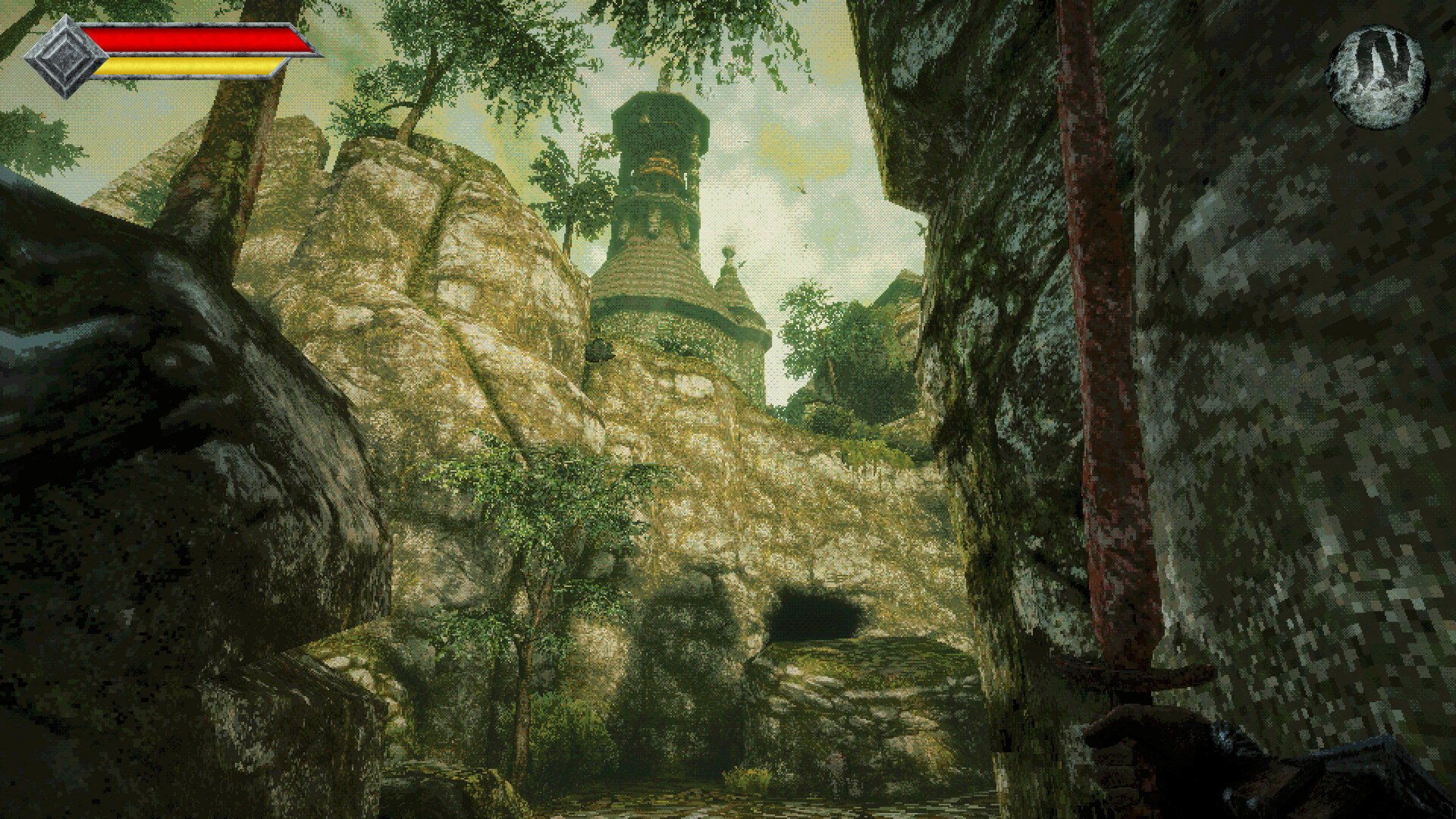
The Isle of Neasied is the star. From sunlit canyon paths climbing toward a lonely hillside tower, to the book-lined chambers of the Tower of Knowledge where an NPC called Knowledge Keeper Wourha will happily bury you in lore, the island communicates through architecture rather than waypoints. Quest direction is almost entirely diegetic: item descriptions hint at hidden switches, reward text nudges you toward strange corners of the map, and the game’s few friendly faces speak in fragments that assume you are paying attention.
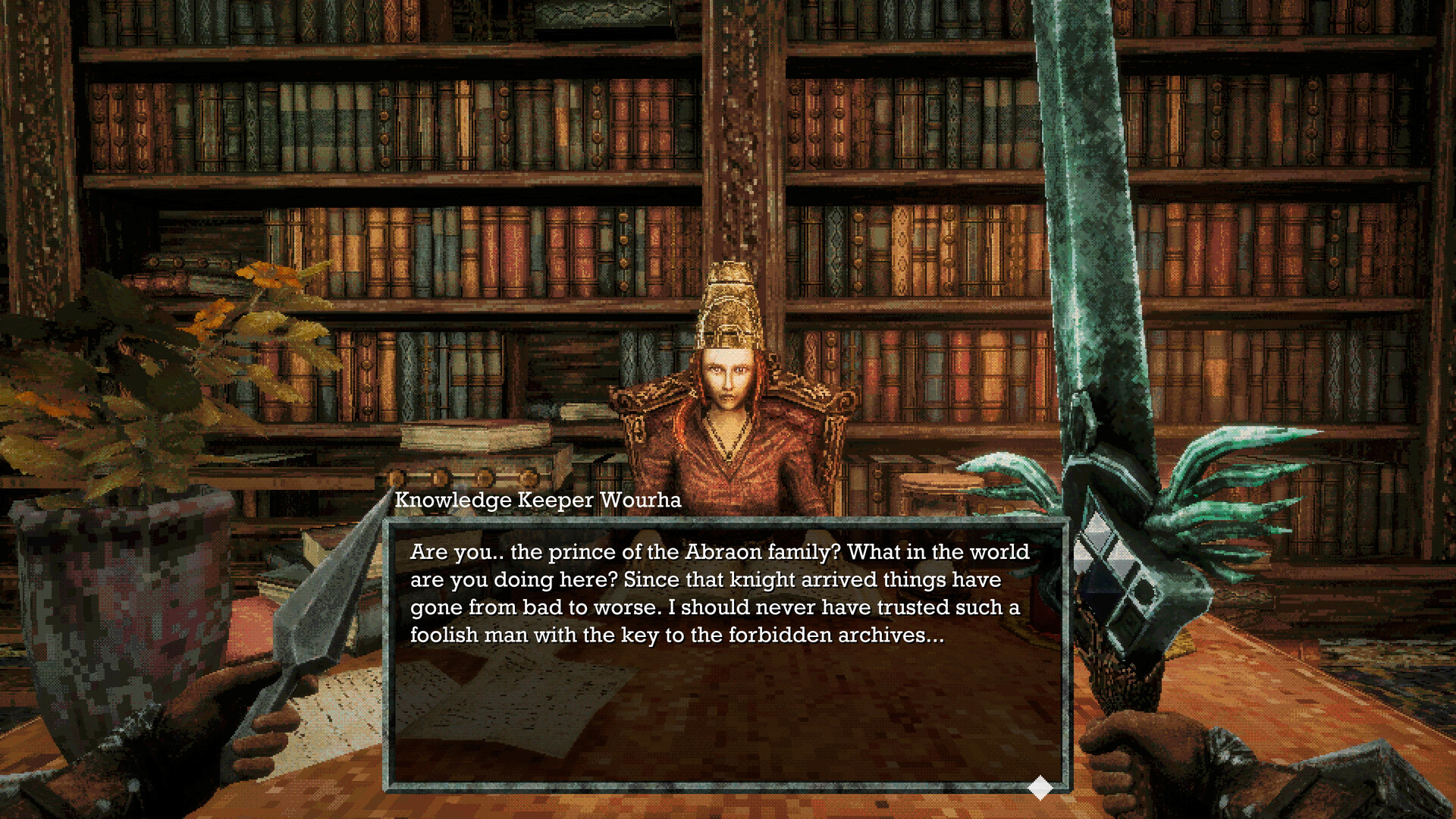
The mystery of your missing father is a thread, not a leash. The narrative quietly escalates from a personal search into something older and stranger as the sleeping Queen begins to wake, and the island’s oppressive late-game spaces reflect that tonal turn. Several players describe the world as one that “speaks but never shouts,” and that is the most accurate summary available: nothing is spelled out, everything is legible if you look, and the biggest revelations are the ones you sequence-break your way into.
Gameplay and Combat
Combat is where Queen’s Domain divides its audience. Attacks are charged: you hold the input to build power, release to swing, and commit to spacing and timing in a way that owes more to stamina-management action games than to shooters. Daggers and swords trade speed for reach, staves hurl magic at the cost of consumables, and ranged weapons use recharging ammunition that encourages hit-and-fall-back play. There is a sword dash that doubles as a traversal tool, and mastering the interplay between it, the terrain, and your three amulet slots is the difference between surviving a room and being chased across the island by everything in it.
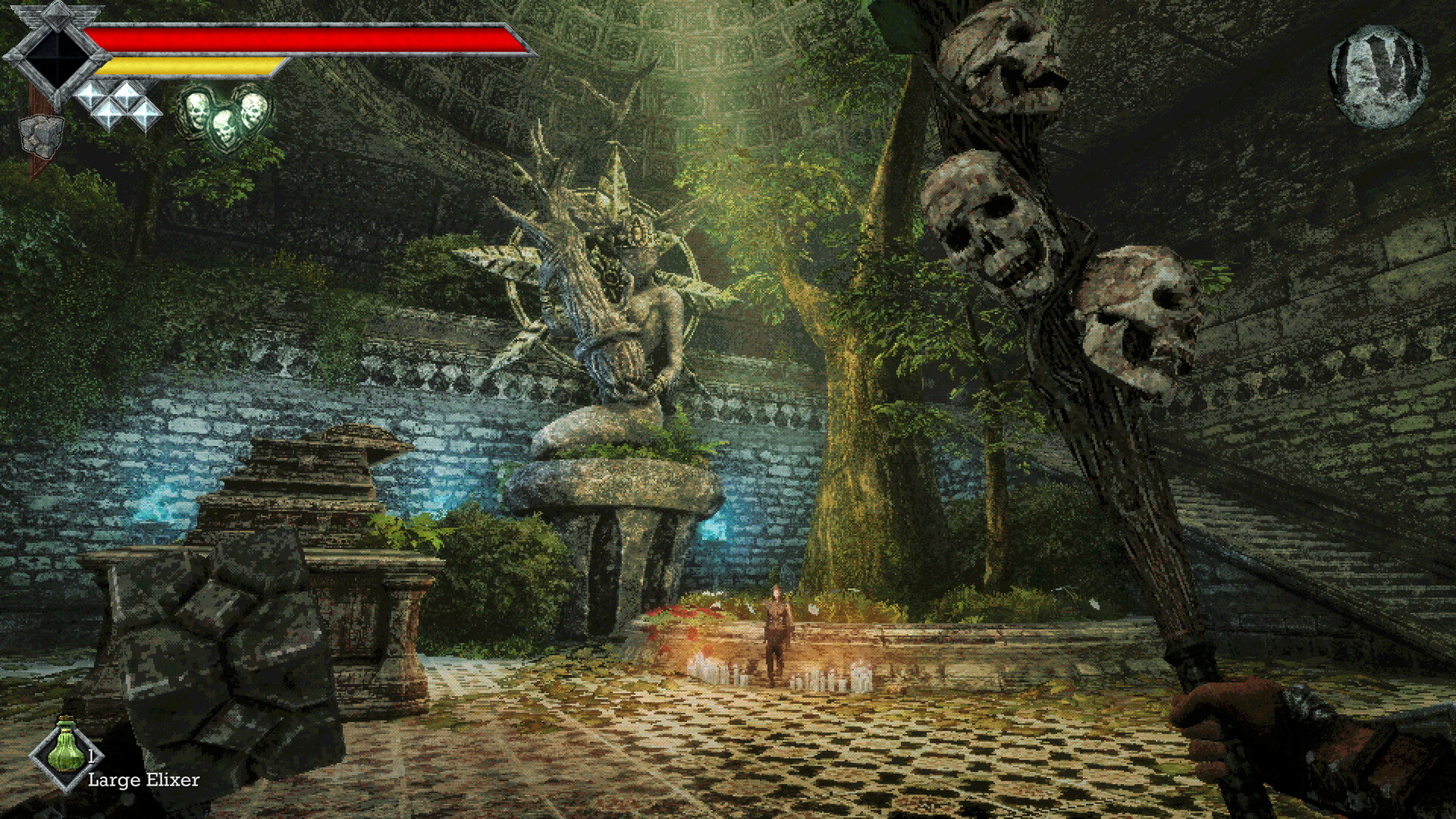
When it works, it is superb — slow, weighty, and legible, with duels that reward reading enemy tells the way a fencing match rewards patience. When it misbehaves, it does so loudly: enemy density in the back half can turn ordinary corridors into wars of attrition, and aggressive mobs that beeline straight for you punish retreat. Long-time fans of the King’s Field school call this the best combat the formula has produced; newcomers should expect a difficulty curve that is closer to a brick wall than a ramp.
Progression and Replayability
Progression is built on knowledge and tools rather than raw stat growth. New movement abilities open routes in zones you thought you had finished, hidden shrines reward obsessive poking, and the game openly supports sequence-breaking — players report reaching seemingly impossible ledges, then finding entire sub-areas waiting behind them. Multiple endings plus deep secret design give the game serious replay legs: finishing a run equips you to start the next one as a speedrunner of its geography.
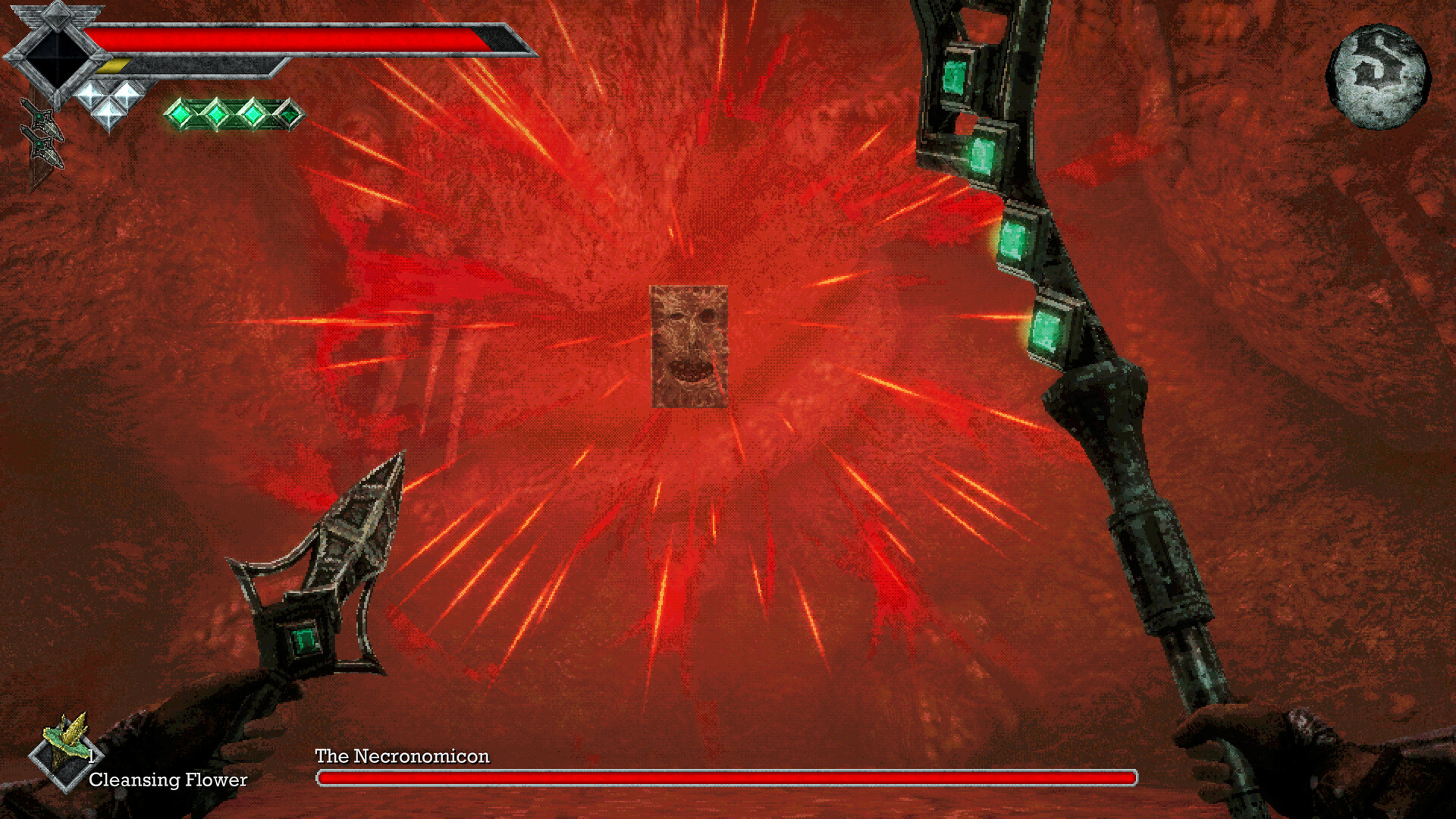
The friction points live here too. Save points are sparse obelisks, and dying rolls you back to your last save with the full loss of progress since — a punishment some players find immersive and others find exhausting. A few early sequence breaks can strand you in areas you are not equipped for, boss fights stretch into damage-sponge marathons, and the three-amulet loadout forces genuinely painful build choices. It is a game that respects your intelligence and charges you for it.
Visuals, Audio, and Atmosphere
The presentation is deliberately low-fidelity and enormously effective. Chunky geometry, moody baked lighting, and a painterly palette give every region a postcard silhouette, and the art direction does the atmospheric heavy lifting that a bigger budget would outsource to effects. Later zones go genuinely dark — sometimes too dark, with a lantern that players complain is too weak and costs a precious amulet slot — but the visual identity is never less than striking.
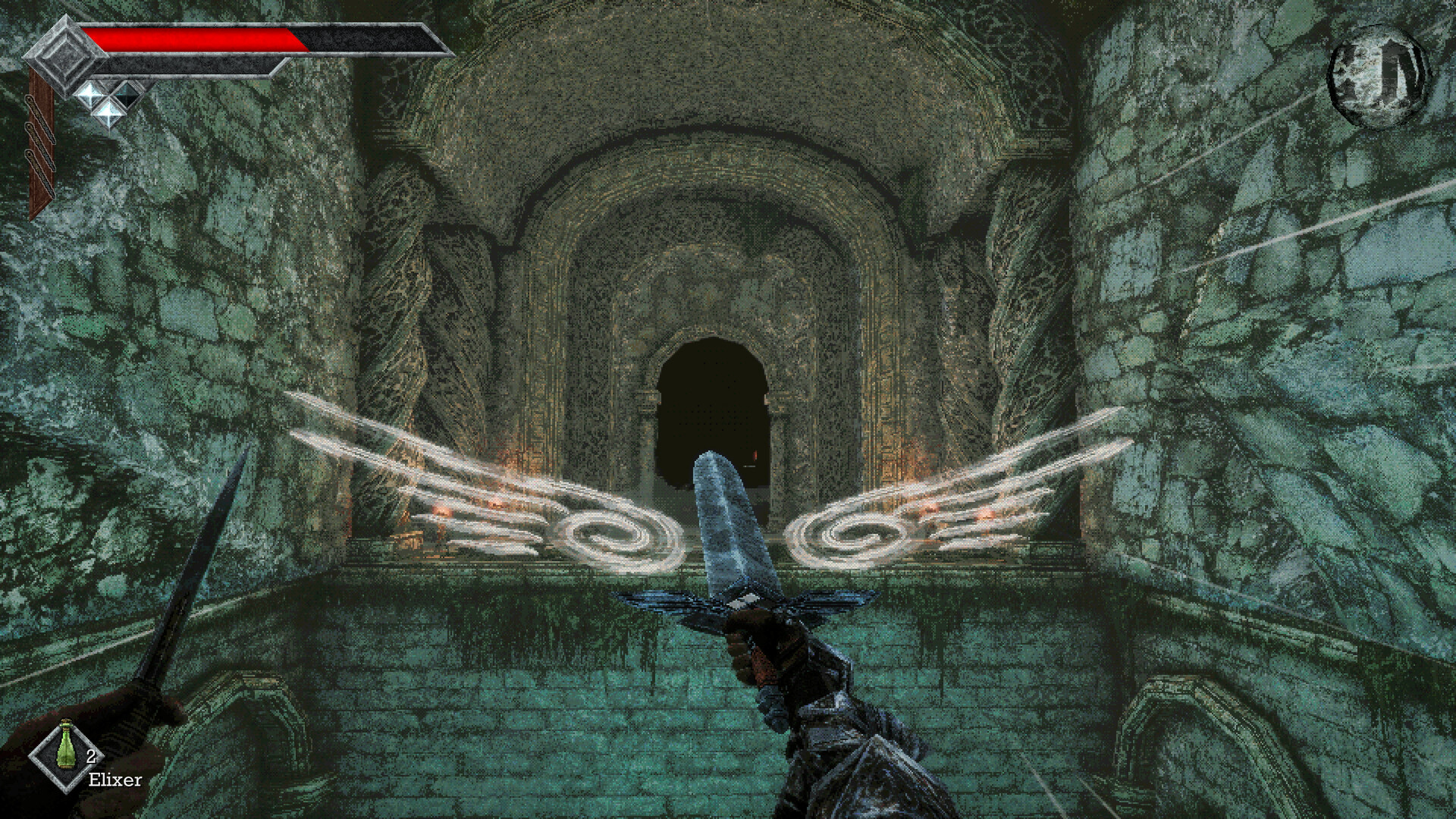
Audio is the most contested element. The score aims for nostalgic atmosphere; part of the player base finds it hypnotic and retro-perfect, while another part calls it repetitive and tonally odd against the grim world. The sound design fares better, with crunchy, convincing combat impacts. Atmospherically, though, almost everyone agrees: Neasied is a place, not a level list.
Performance and Technical Problems
This is a Unity title with modern demands. On desktop the community reports strong performance — one popular tweak is adding -dx12 to the launch options, with users crediting it for a significant frame-rate bump — but the handheld picture is rougher. Steam Deck players report the full game dropping into the 30–40 FPS range in zones where the demo held 70–90, and the Switch 2 version has similar complaints. There are also credible reports of gamepad support being incomplete despite the “Full controller support” listing, including missing button documentation that leaves controller-dependent players stranded.
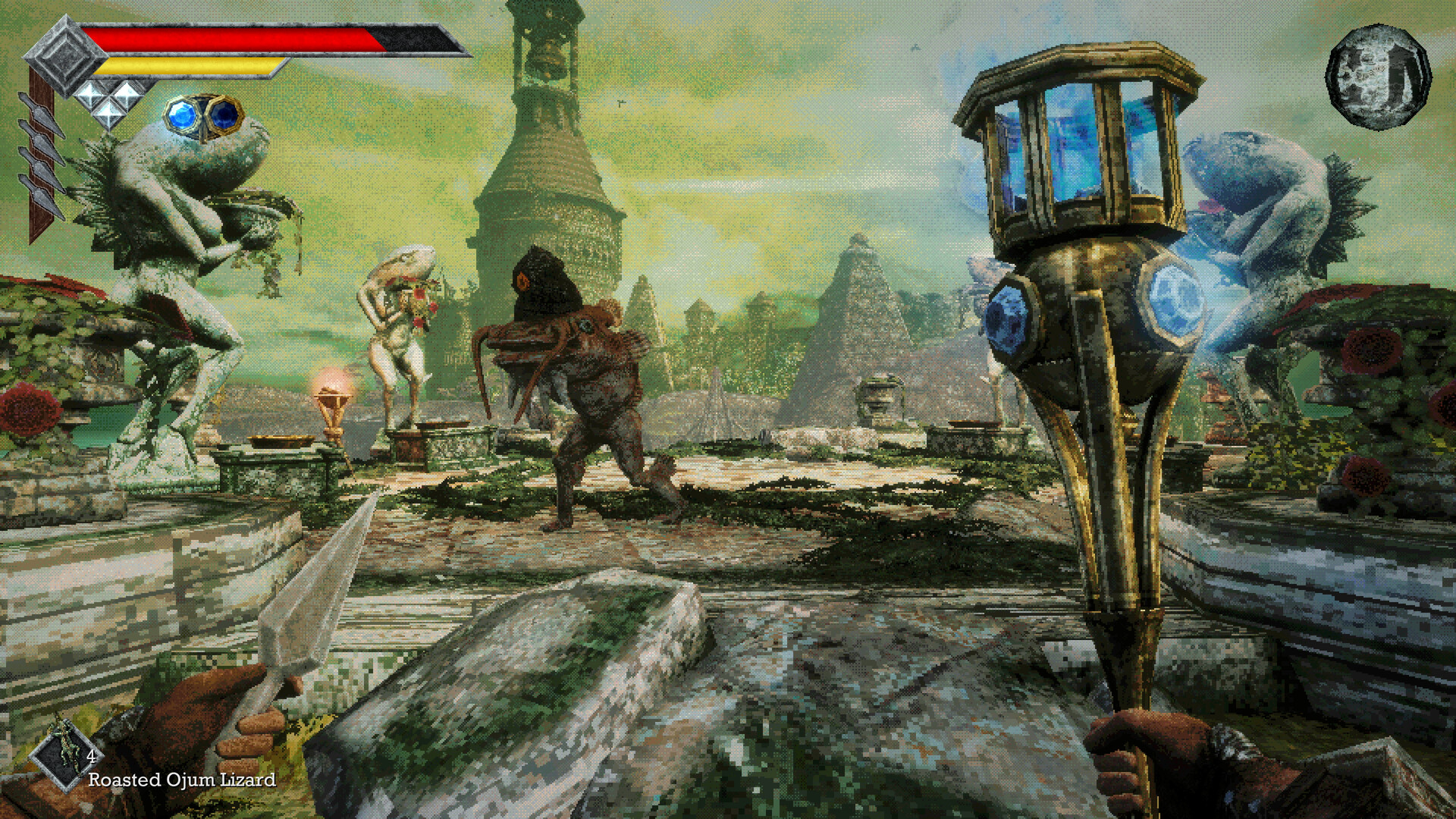
The other recurring technical grievance is tuning, not code: enemy health and density overtuned enough that late-game weapons feel like paper, status effects that ignore resistance investments, and scarce save points that amplify every failure. None of this is fatal — the community is already circulating fixes and workarounds — but it is real, and prospective players should know it before they pay $16.99 USD.
Pros and Cons
Pros:
- Exceptional interconnected world design packed with intuitive, well-hinted secrets
- Deliberate, spacing-focused combat that is brutally learnable
- Legitimate sequence-breaking freedom and strong replay value across multiple endings
- Distinct retro-fantasy art direction and a confidently old-school attitude (no hand-holding)
- Enormous content volume from a two-person team, fairly priced at $16.99 USD
Cons:
- Enemy health and density overtuned in the back half; some fights overstay their welcome
- Sparse save obelisks and harsh death penalties will frustrate explorers
- Late-game darkness and a weak lantern hurt navigability
- Steam Deck performance and gamepad support need work
- The soundtrack is divisive and occasionally at odds with the tone
SteamGamer Verdict
Queen’s Domain is the rare game whose worst qualities and best qualities spring from the same root: it wants your full attention and refuses to cushion the request. The exploration is genuinely elite — an island of interlocking secrets that respects curiosity, rewards experimentation, and supports the kind of organic sequence-breaking most games only pretend to offer. The combat is deep but overtuned, the save system is a statement rather than a courtesy, and the handheld builds are not ready. Even so, at $16.99 USD (15% off the $19.99 USD list price), this is an easy recommendation for players who miss when RPGs expected something of them.
SteamGamer Score: 8.5/10
Queen’s Domain is available now on PC via Steam for $16.99 USD (launch discount from $19.99 USD), developed by Freshly Baked Games and published by Future Friends Games.

Lena Nakamura begins every review with one question: what is this game doing that nobody else would attempt? She covers roguelikes, narrative experiments, striking art direction, and games willing to risk failure in pursuit of something original. Familiar ideas do not bother her, but safe execution does. If a game is beautiful, strange, and slightly impossible to explain, Lena is already interested.



Comment here