
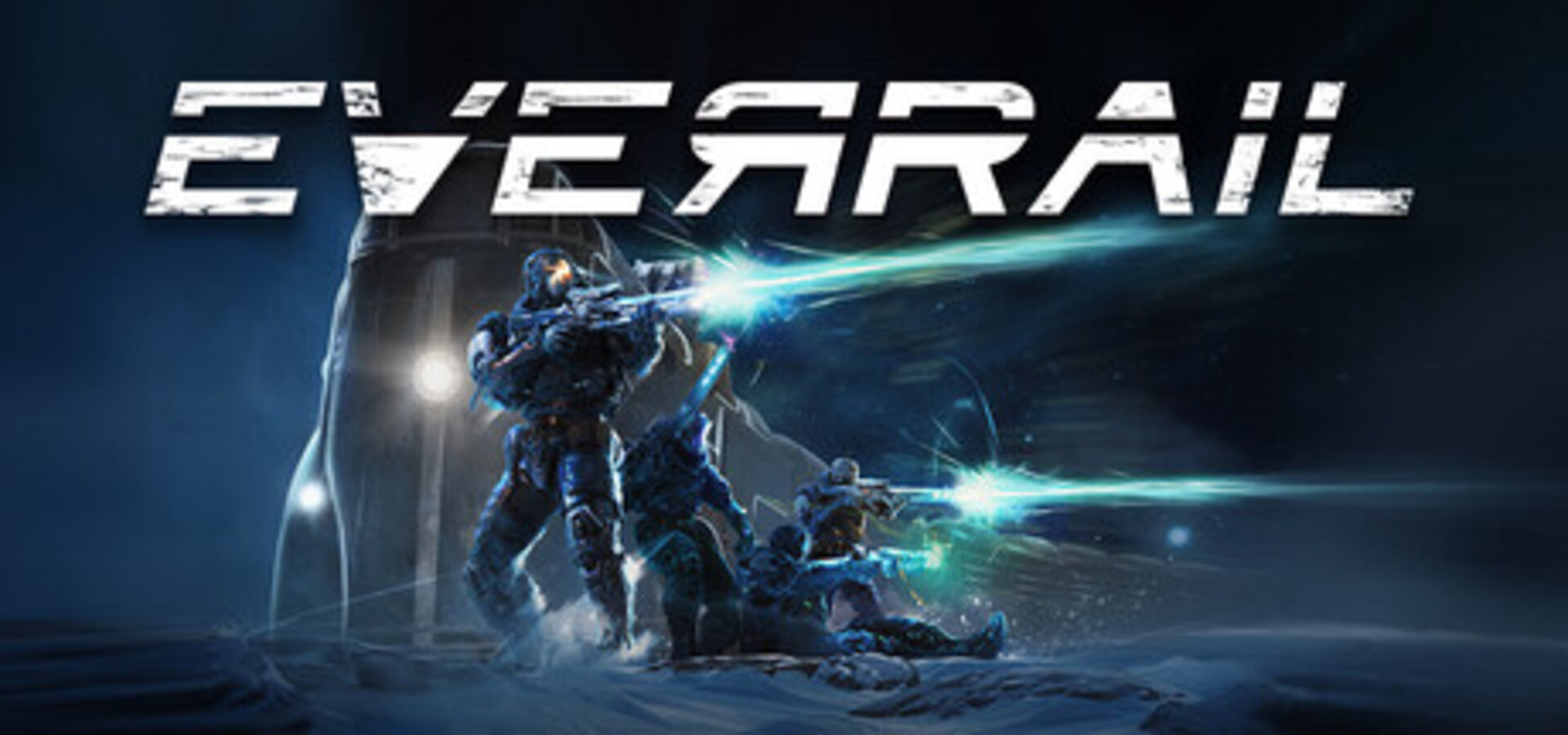
The survival crafting genre has a train problem. Not the kind where the game derails — the kind where every new entry tries to carve out its own narrow gauge of innovation while the track ahead looks suspiciously familiar. Rust, Valheim, Enshrouded, Nightingale — the formula is well-worn: gather, build, survive, repeat. So when Aesir Interactive dropped EverRail into Early Access on July 20, the pitch was immediately compelling. You don’t build a base. You drive one. Your shelter, your power source, your entire progression system is a train that never stops moving across a frozen alien moon called Inara. Stop the engine and the batteries die. Let the batteries die and everyone aboard freezes. It is Snowpiercer as a survival game, and on paper, it is exactly the kind of fresh idea the genre needs.
Seven days after launch, EverRail sits at a Mostly Positive rating on Steam with 234 reviews and a peak concurrent player count north of 2,000. The concept has clearly resonated — players are drawn to the idea of managing a mobile fortress across an endless ice field, scrounging for resources in abandoned outposts while a ticking clock forces them back to the rails. But between that strong central idea and the reality of playing it lies a gap that Early Access is supposed to close. Right now, EverRail is a game fighting to justify its own premise, and the battle is more interesting than you might expect.
What Is EverRail?
EverRail is an open-world survival crafting game for one to four players, developed and self-published by Munich-based Aesir Interactive. It launched in Early Access on Steam and the Epic Games Store on July 20, 2026, priced at $14.99 with a 10% launch discount. The game puts you aboard a battery-powered train traversing the frozen surface of Inara, a procedurally generated exomoon where humanity sent robots to build infrastructure before anyone actually arrived. Something went wrong. Now you and your passengers are all that’s left, and the only way to survive is to keep moving.
The core loop revolves around three interconnected systems: train management, on-foot expeditions, and crafting progression. You drive the train, monitor battery levels, switch rail junctions, and deploy shields against environmental hazards. When you spot an outpost or point of interest, you stop, disembark, and scavenge for resources while fighting hostile robots. Then you race back to the train before the battery runs dry. It sounds simple. It is anything but.
A Frozen World With Something to Prove
Inara is a bleak, beautiful place. Jagged mountain ranges stretch to the horizon under alien skies scattered with strange celestial bodies. The rail network — built by those long-gone robots — snakes through frozen valleys and across suspended bridges, creating a sense of scale that makes the world feel genuinely vast. Points of interest dot the landscape: abandoned facilities, resource nodes, and mysterious structures that hint at a larger story waiting to unfold.
That story, at least in the current Early Access build, is mostly implied. You awaken on the train with a handful of passengers and a tutorial that walks you through the basics via text prompts. There are conductor logs — short narrative vignettes released alongside the game — that add flavor, but the main campaign is skeletal. This is a game about systems, not plot, and the world-building lives in environmental details rather than cutscenes. The abandoned outposts tell their own quiet tales of robots that built too much and humans who arrived too late.
The procedural generation means no two runs produce the same map, which adds replay value but also means the world can feel samey in stretches. The frozen biome dominates, and while the color palette shifts between regions — pink-tinged skies give way to deeper blues and grays — the core aesthetic rarely surprises. It is effective atmosphere, but it is one note, and after several hours the beauty starts to blur into uniformity.
The Loop That Keeps You Coming Back
Here is where EverRail earns its keep. The survival loop is genuinely well-designed, and once it clicks, it clicks hard. The train’s battery is your lifeline. It drains whenever you stop, which means every expedition is a gamble: how far can you stray from the rails before you need to sprint back? The tension of that timer — watching the battery percentage tick down while you’re deep inside an outpost fighting robots and filling your limited inventory — creates a rhythm that few survival games manage.
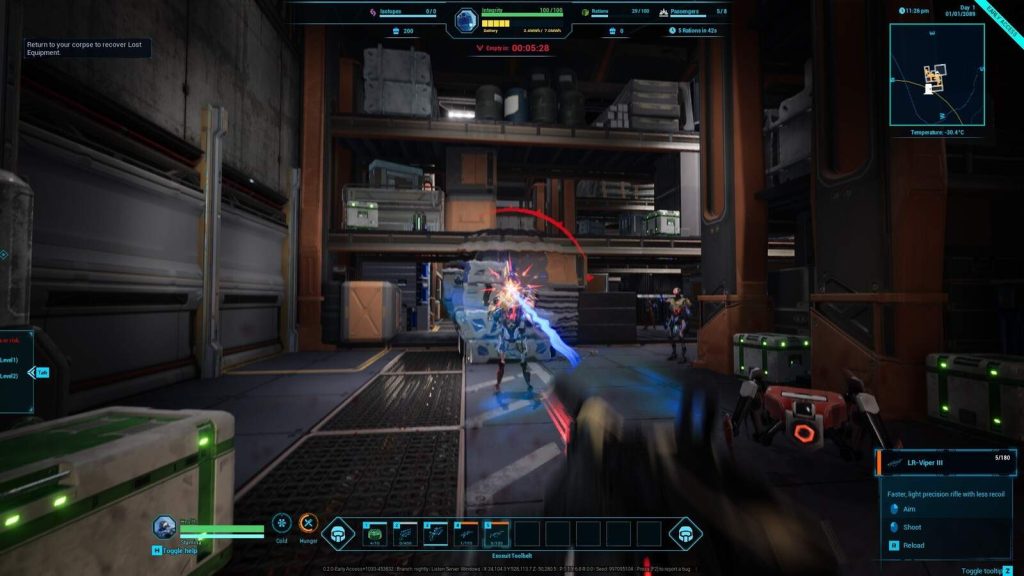
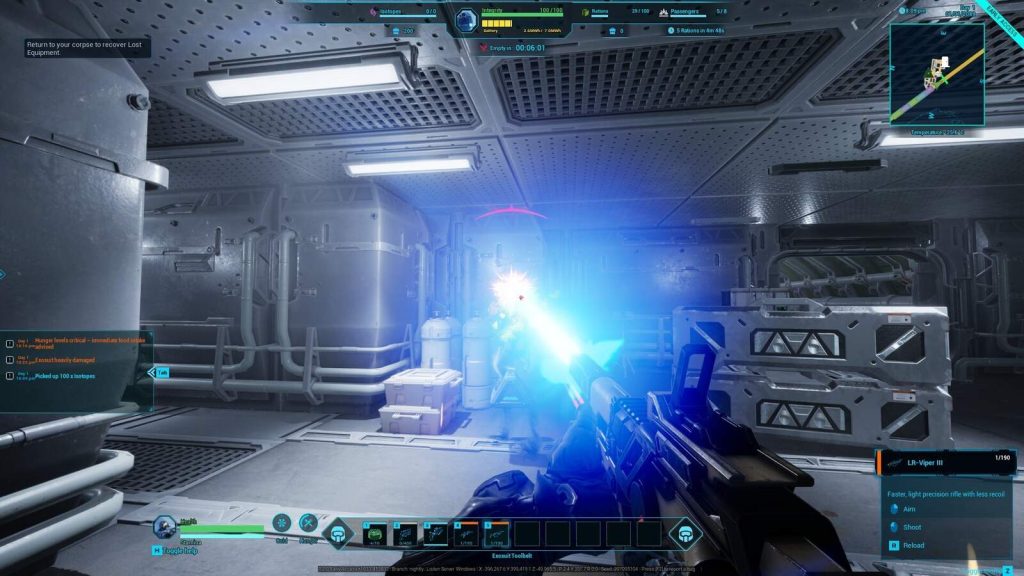
The combat is functional but unremarkable. You have melee weapons, ranged weapons with limited ammo, and energy-based firearms that require crafting ammunition from scavenged materials. Enemy robots come in several variants — basic grunts, turret emplacements, and larger threats that force you to rethink your approach. The gunplay feels stiff, with minimal impact feedback and limited enemy variety, but it serves its purpose. You fight to loot, and you loot to survive, and the loop carries you forward even when the moment-to-moment action lacks punch.
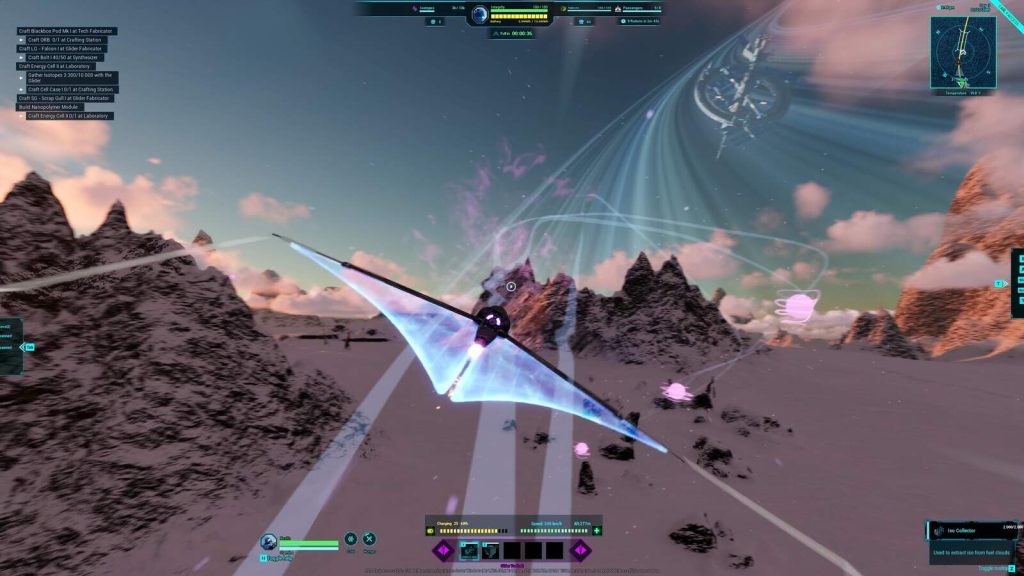
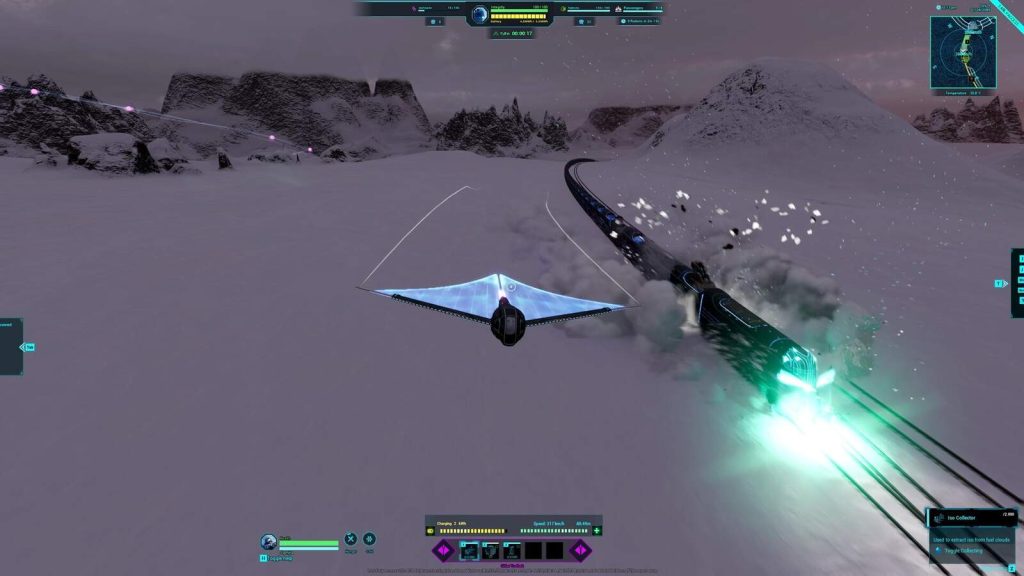
Train management adds a layer that most survival games lack entirely. You can upgrade the engine, add new wagons, install crafting stations, and expand your mobile base car by car. Rail junctions let you choose your path, and the map reveals new destinations as you explore. There is a glider system that lets you take to the air for scouting runs, adding verticality to exploration and creating some of the game’s most visually striking moments — soaring above the frozen landscape with the train churning along below you.
Progression That Rewards Patience
EverRail’s progression system is built on a tech tree that unlocks new crafting stations, weapon tiers, and train upgrades. The early game is tight on resources — you’ll scavenge basic materials, craft simple tools, and slowly expand your capabilities. By mid-game, you’re managing multiple crafting stations aboard the train, juggling food production, ammunition crafting, and train maintenance simultaneously. The depth is there, but the curve is steep.
Solo players will feel the pinch hardest. The game demands constant attention across multiple systems — food, power, storage, crafting — and doing it alone means you’re always stretched thin. Co-op splits the burden naturally: one person drives while another scavenges, someone manages the crafting stations while someone else scouts ahead. Several Steam reviews describe the experience as “much more enjoyable with friends,” and the design clearly leans that way. Solo is viable, but it requires patience and a tolerance for resource anxiety that not everyone will enjoy.
The replay value comes from the procedural world and the different build paths available through the tech tree. Early Access means the content ceiling is lower than it will eventually be, but there are already several dozen hours of gameplay for players who enjoy the loop. The developers have outlined an ambitious roadmap, with planned additions including full voice acting, expanded world content, deeper environmental storytelling, and more side quests.
Sound and Fury on a Frozen Rail
Visually, EverRail punches above its weight class for an Early Access survival game. The frozen landscapes are atmospheric, with good lighting and particle effects that sell the cold. The train itself is well-modeled, and watching it carve through the snow at speed remains satisfying dozens of hours in. Character models and enemy designs are serviceable rather than stunning, and the UI is cluttered enough to distract from the visuals in screenshots, but the overall aesthetic holds together.
The sound design is functional. The train engine provides a constant hum that becomes oddly comforting over time. Combat sounds are generic but adequate. The real miss is the ambient sound design — the frozen world feels quiet in a way that works against it. A game set on an alien moon should feel alien, and right now Inara sounds like any other survival game’s winter biome. Music is minimal, which suits the isolation theme but means long stretches of near-silence punctuated by the occasional robot combat.
Performance is where the Early Access reality hits hardest. Multiple reviewers report significant frame drops — one describes drops from 70+ FPS to single digits every 10 to 20 seconds on medium settings. CPU and GPU usage is heavy even on capable hardware, menu load times are sluggish, and stutter is a recurring complaint. The developers have already pushed a hotfix within days of launch, which is encouraging, but performance optimization is clearly a priority that needs sustained attention.
The Rough Edges
Let’s be honest about what EverRail is right now: it is an unfinished game that knows it is unfinished, and it asks you to be okay with that. The developers are transparent about it — the Early Access page explicitly warns of “rough edges, limited content, and ongoing iteration.” That honesty is refreshing, but it doesn’t make the issues disappear.
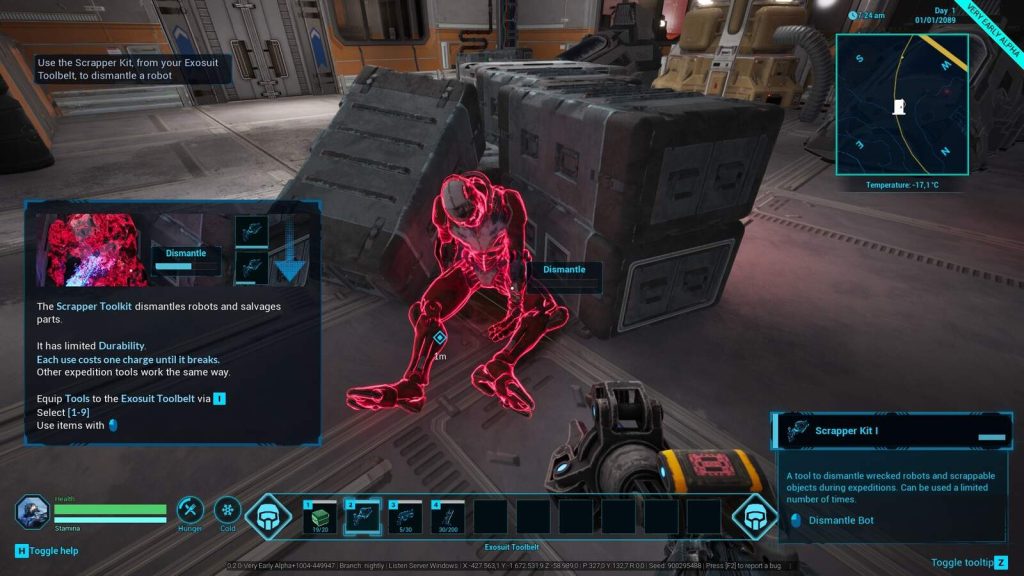
The UI is overcrowded. Tooltips duplicate information already visible in inventory screens. The inventory management system lacks basic quality-of-life features like a tab-accessible overview — a surprising omission for a survival game in 2026. Tutorial text is presented in walls of text that feel more like reading a manual than learning a game. One reviewer suggested a narrator-guided tutorial instead, and that instinct is right — the onboarding needs to match the ambition of the core concept.
Multiplayer stability is the most serious technical issue. Co-op campaigns can only be rejoined by the host, meaning if the host logs off, the session is dead for everyone else. Desync, lag, and enemies spawning inside walls and ceilings are reported frequently. For a game that clearly wants to be played cooperatively, these are foundational problems that need early fixes.
Balance is another friction point. Food consumption is aggressive, inventory space is perpetually insufficient, and turret enemies in outposts are difficult to suppress with the tools available in the early game. The learning curve is front-loaded — new players face pressure from multiple systems simultaneously before they have the tools to manage any of them comfortably.
Pros and Cons
Pros
- Fresh core concept — the mobile train base is a genuinely novel twist on survival crafting
- Engaging survival loop — the battery timer creates real tension and forces meaningful decisions
- Strong co-op design — role splitting between driving, crafting, and scavenging works well
- Atmospheric frozen world — visually compelling with a strong sense of place
- Ambitious roadmap — active developer communication and planned content expansion
- Fair price point — $14.99 with launch discount is reasonable for Early Access
Cons
- Significant performance issues — frame drops, stutter, and heavy resource usage
- Cluttered UI and weak onboarding — menus are overwhelming and tutorials are walls of text
- Co-op session persistence broken — only host can rejoin saved campaigns
- Thin content — limited enemy variety, repetitive outpost layouts, minimal story
- Solo balance is punishing — resource management is punishing without co-op support
- Combat lacks impact — gunplay is stiff with minimal feedback
SteamGamer Editorial Verdict
EverRail is one of those rare survival games that makes you sit up and pay attention to the concept alone. A train that never stops. A battery that drains while you scavenge. A frozen world where every expedition is a race against the clock. The core loop is genuinely good, and when it works — especially in co-op — it creates the kind of tension and satisfaction that survival games spend hundreds of hours trying to achieve.
But right now, the game around that loop needs work. Performance is unstable, the UI is hostile, multiplayer is broken in fundamental ways, and the content is thin enough that the repetition sets in faster than it should. The developers know this. They’ve said as much, and their early communication — hotfixes within days, transparent roadmaps, community engagement — suggests they intend to address it. That matters in Early Access.
At $14.99, EverRail is a bet on potential. If you’re the kind of player who enjoys shaping a game alongside its developers, who finds satisfaction in systems even when they’re rough, and who has friends willing to jump aboard this particular train, there is a genuinely good time waiting here. It just isn’t fully cooked yet. The foundation is strong, the concept is proven, and the direction is clear. Give this one a year and it might be something special. Right now, it is something promising.
Score: 6.5 / 10 — A strong concept held back by Early Access growing pains. Worth watching, worth playing with friends, worth waiting on if you prefer your survival games polished.

Dan Kowalski reviews games by listening to what they do before believing what they promise. He cares about responsive combat, purposeful sound design, satisfying movement, and whether a game respects the player’s time. Dan will forgive technical roughness when the underlying experience is exceptional. He will forgive almost anything for a brilliant combat system—but never a tutorial that refuses to stop talking.





Comment here