
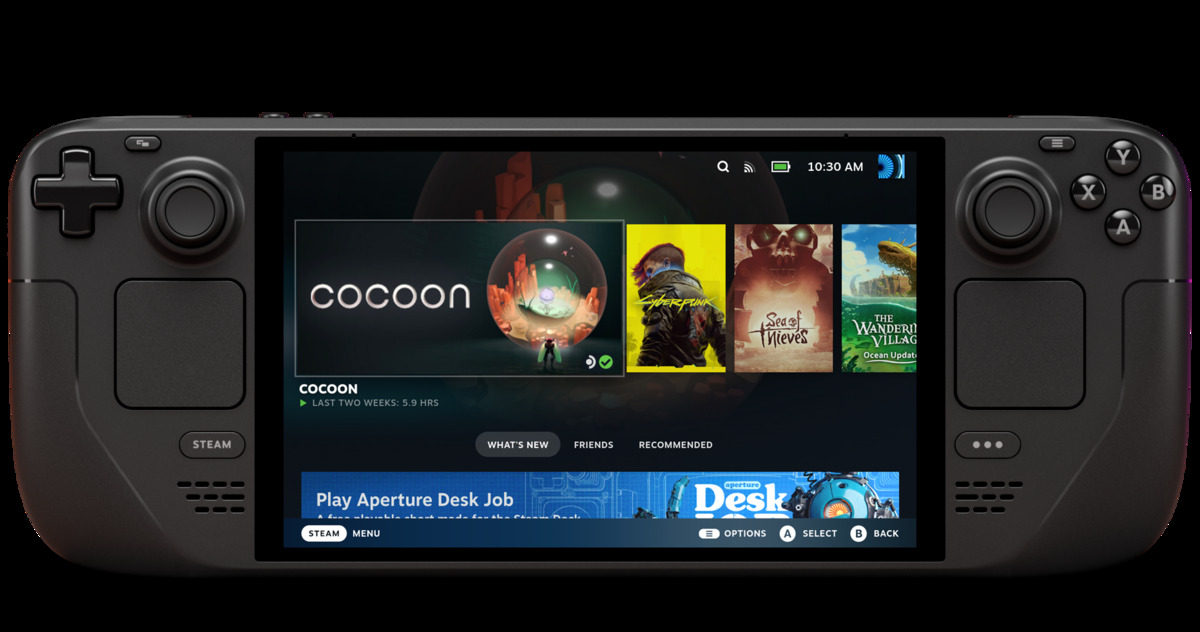
Valve has rolled out a significant improvement for Steam Deck OLED owners who use Remote Play. The latest Steam Beta Client update, shipped on July 29, introduces HDR streaming support for the handheld, alongside better video color range handling and a fix for local network game transfers.
The update, which hit the Preview and Beta channels, means that when you stream games from your PC to a Steam Deck OLED over your home network or the internet, the HDR color information now travels with the video feed. Previously, Remote Play on the OLED model had to tone-map HDR content down to SDR, which stripped away the vivid highlights and deep blacks that the OLED panel is specifically designed to display. With this change, compatible games will retain their full HDR presentation on the Deck’s screen.
In addition to HDR streaming, Valve added AV1 video streaming support for the Steam Deck when running the experimental SteamRT3 Steam Client. AV1 is a more efficient video codec than the H.264 and HEVC options currently available, potentially reducing bandwidth requirements while maintaining or improving visual quality. The combination of HDR and AV1 could make Remote Play sessions noticeably sharper, particularly for users streaming over Wi-Fi rather than a wired connection.
The update also improves video color range across all Remote Play platforms, not just the Deck. Valve fixed additional cases that were preventing local network game transfers from starting, a quality-of-life issue that some users have reported in recent months.
For Steam Deck OLED owners, the path to HDR streaming is straightforward. Head into Settings, then System, and switch the Update Channel to Beta or Preview. Once the update downloads and installs, Remote Play sessions will automatically benefit from the new HDR capability without any additional configuration.
Valve has been steadily improving the Remote Play experience throughout 2026, building on the OLED model’s hardware strengths with software that takes full advantage of the display. This update brings the streaming experience closer to matching what the OLED panel is capable of delivering locally, which is welcome news for anyone who uses their Deck as a secondary screen for their PC gaming library.

Jordan Hayes covers PC gaming news, hardware, and the ever-changing Steam ecosystem for SteamGamer.net. He believes some of gaming’s biggest stories are hiding in patch notes, performance charts, and suspiciously quiet price changes. When he isn’t investigating what developers or GPU manufacturers are doing, he is probably starting another roguelike run he insists will be his last.














Comment here