
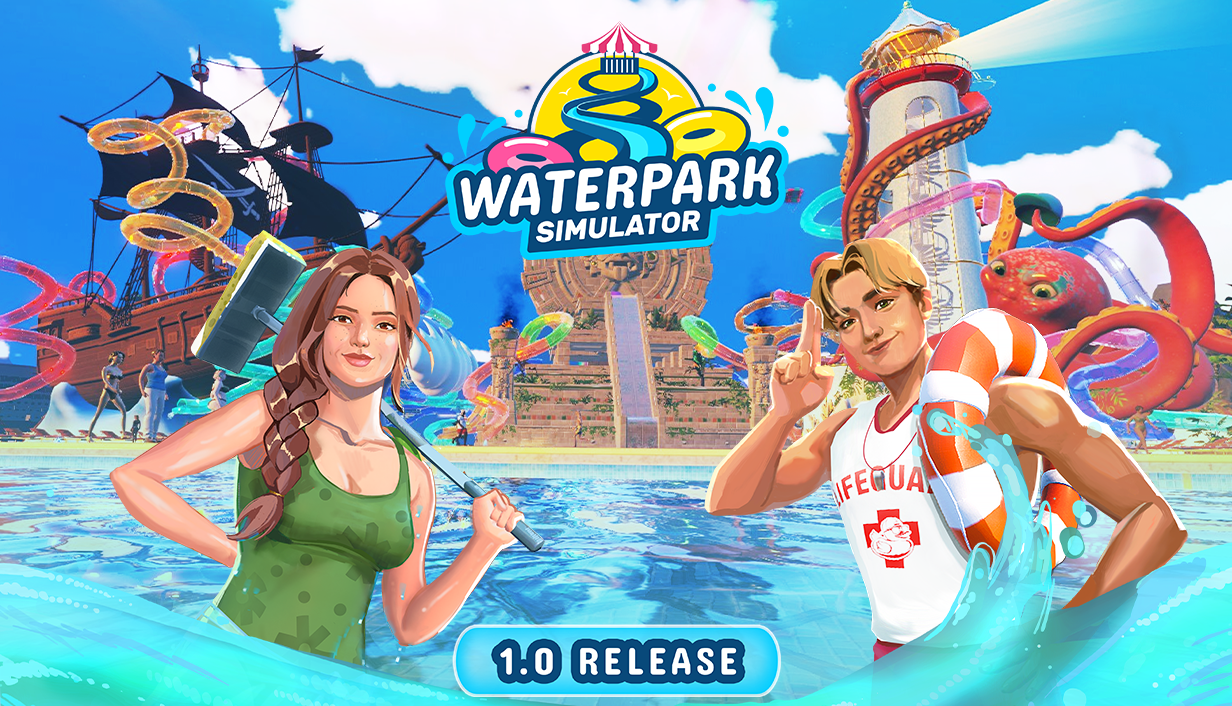
There’s a specific kind of joy that comes from watching a virtual child get launched off a diving board by a poorly timed puddle. It’s juvenile, it’s ridiculous, and it’s exactly the kind of chaos that makes Waterpark Simulator one of the most surprisingly entertaining games to land on Steam this year. CayPlay’s first-person management sandbox launched its 1.0 update on July 31, 2026, after nearly a year in Early Access, and the result is a game that understands something most simulation titles don’t: sometimes the best way to run a business is to let it fall apart spectacularly.
I went in expecting another shallow cash-in on the simulator trend — another game that slaps the word “simulator” on the box and hopes you won’t notice it’s just a reskin of every other management tycoon out there. What I found instead was closer to House Flipper crossed with Theme Park World, with a healthy dose of ragdoll-powered anarchy thrown in for good measure. Waterpark Simulator doesn’t just let you build a waterpark; it lets you live in one, break it, rebuild it, and then accidentally drown your guests while trying to fix a leaky slide.
Game Overview
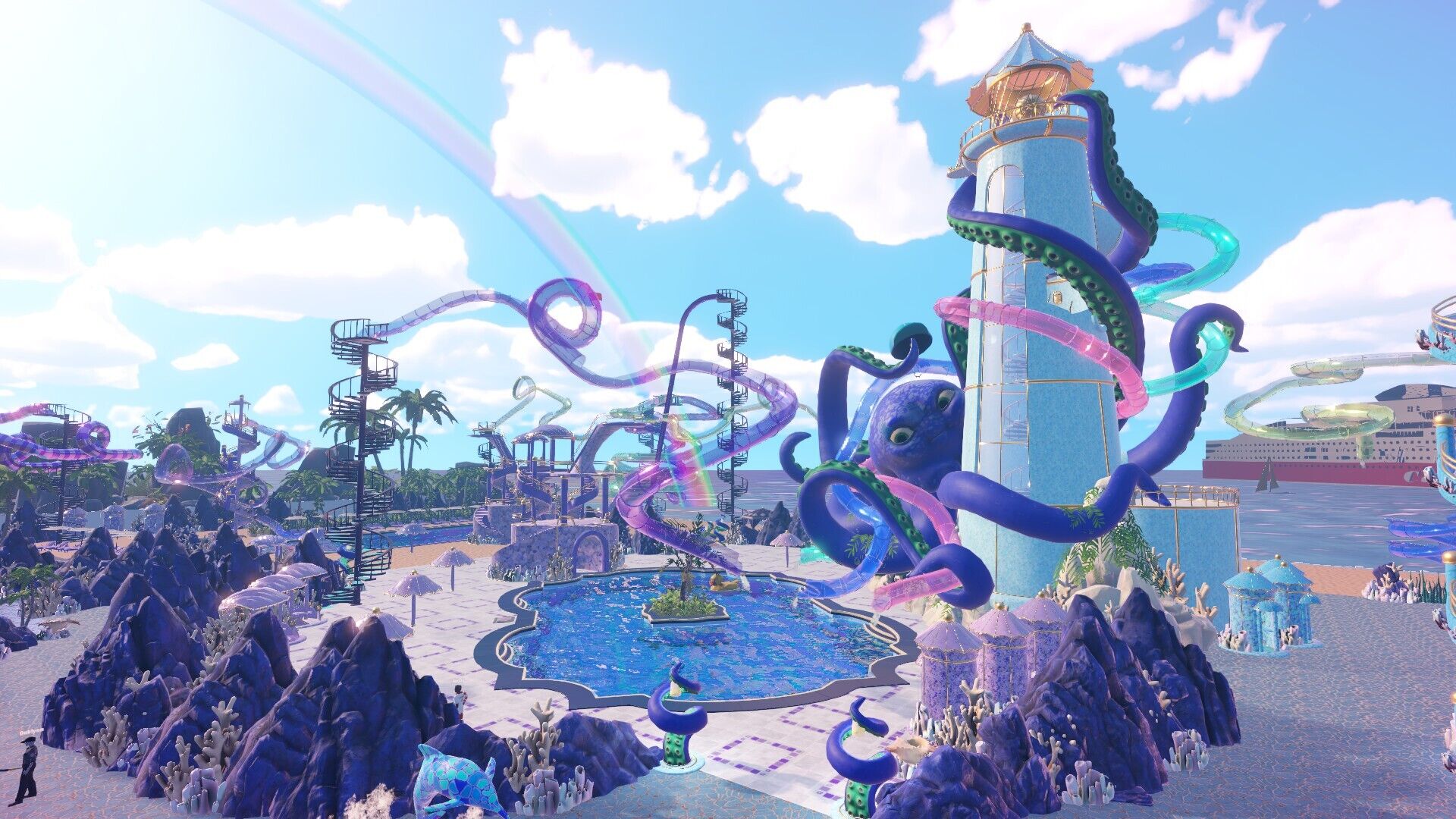
Waterpark Simulator is a first-person management sandbox developed and published by CayPlay. It puts you in the flip-flops of a waterpark owner tasked with designing, building, and managing every aspect of a seaside amusement park — from the ticket booth to the wave pool, from the hot dog stand to the sewage system. The game supports solo play and online co-op with up to four players, and it launched simultaneously on Steam, PlayStation 5, and Xbox Series X|S on July 31, 2026, priced at $12.99.
The premise is straightforward: build a waterpark, attract guests, keep them happy, and climb the ratings ladder from a dusty lot to a diamond-rated empire. But Waterpark Simulator isn’t interested in being a straightforward tycoon game. It’s a hands-on, literally hands-in-the-pool experience where you’re not just placing attractions from a menu — you’re painting walls, scooping waste out of kiddie pools, serving lukewarm hot dogs to ungrateful visitors, and occasionally launching people into the stratosphere with a well-timed water gun.
World, Story, or Central Premise
There’s no narrative here in the traditional sense, and that’s by design. Waterpark Simulator is a sandbox that hands you an empty plot of land and a toolbox full of possibilities. The “story” is whatever you make of it — whether you’re meticulously recreating a real-world waterpark or building a deathtrap that would make OSHA weep. The progression system is the closest thing to a throughline: you earn research points by completing objectives, which unlock new rides, decorations, food stalls, and building tools. Each tier of the park rating opens up new zones and new management challenges.
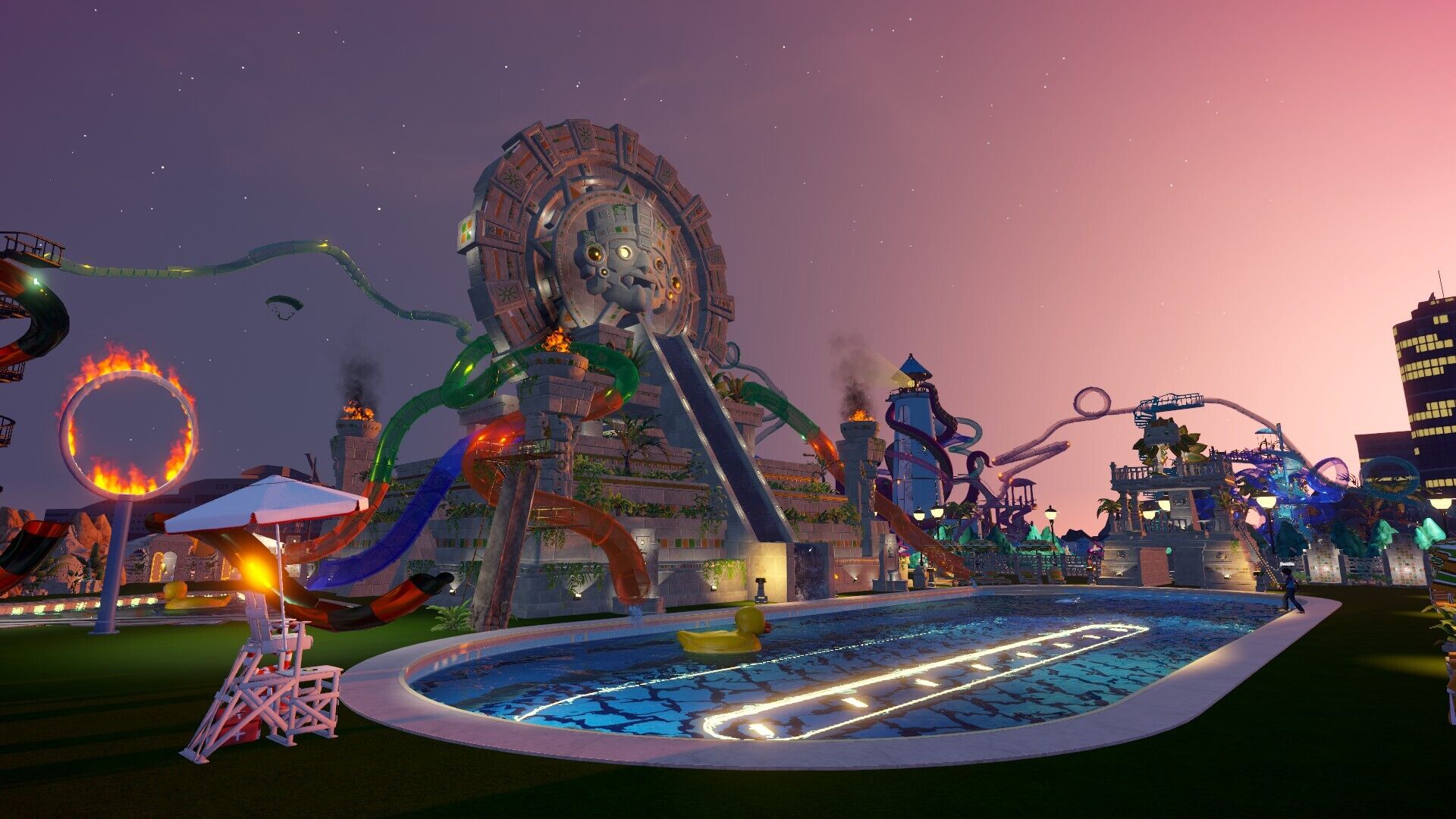
What makes the world feel alive is the guest AI. Your visitors aren’t just faceless ratings generators — they wander your park with semi-random behaviors, get lost, complain about food, clog toilets, and occasionally slip on puddles and ragdoll across the map in spectacular fashion. They’ll queue for slides, refuse to ride broken attractions, and get visibly upset if you spray them in the face with a water gun (which, admittedly, is hard to resist). The night shift mode adds a different atmosphere entirely, bathing the park in neon glow and changing the vibe from family-friendly to something closer to a late-night rave.
Gameplay and Combat
The moment-to-moment gameplay loop in Waterpark Simulator is deceptively addictive. Your day starts with a checklist: sell tickets at the entrance, check the slides for damage, clean up the messes guests leave behind, restock food stalls, and keep an eye on the overall park rating. It sounds mundane on paper, but the execution is pure chaos. The game’s physics engine turns every interaction into a comedy set piece. A guest slips on a puddle, ragdolls into a pool, and somehow launches three other visitors into the air. You’re trying to fix a broken slide while a mascot character runs around spreading chaos. A security guard is chasing a guest who’s been causing trouble. Meanwhile, the wave machine is flooding the snack bar because someone — probably you — put something unspeakable in it.
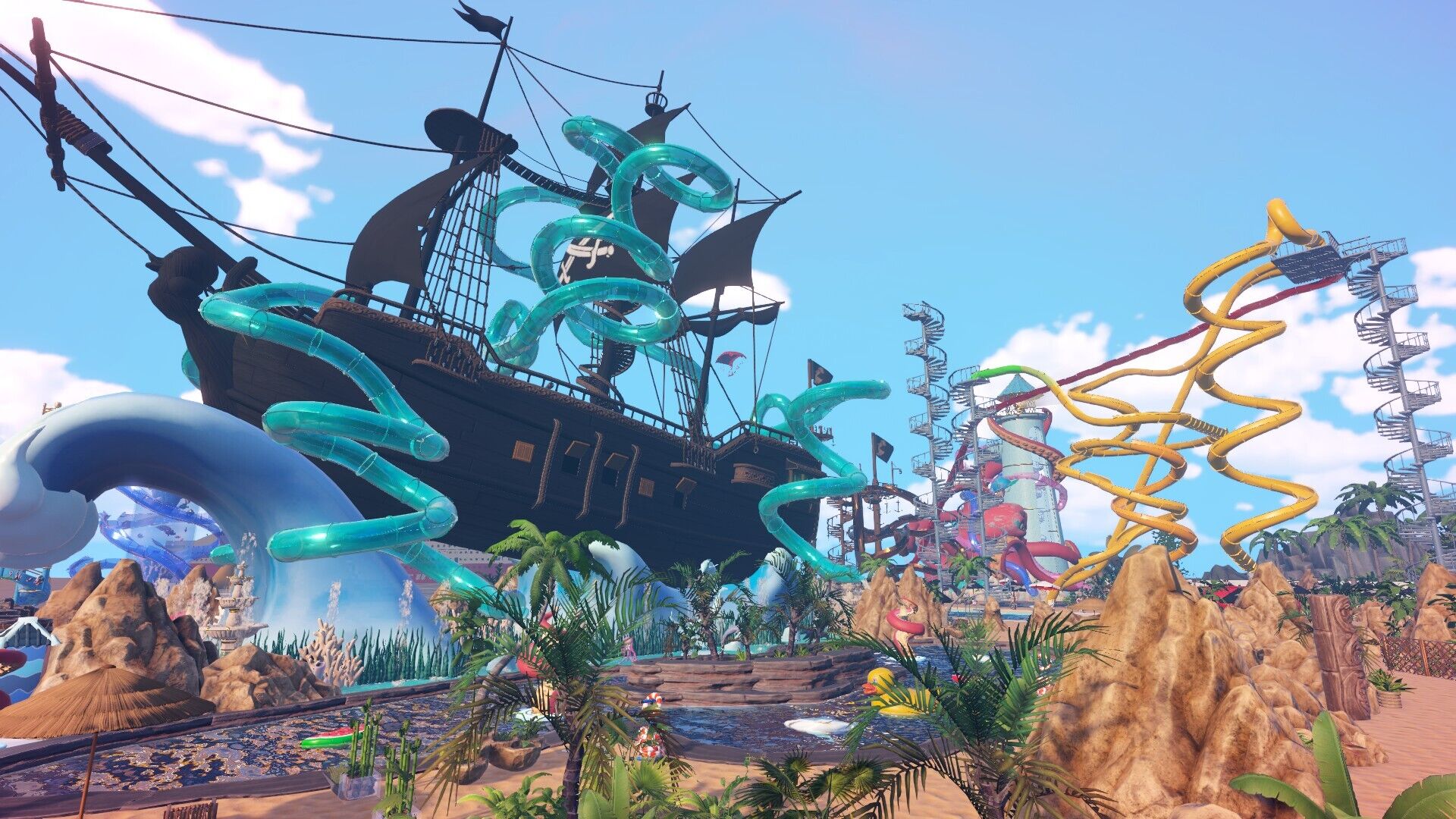
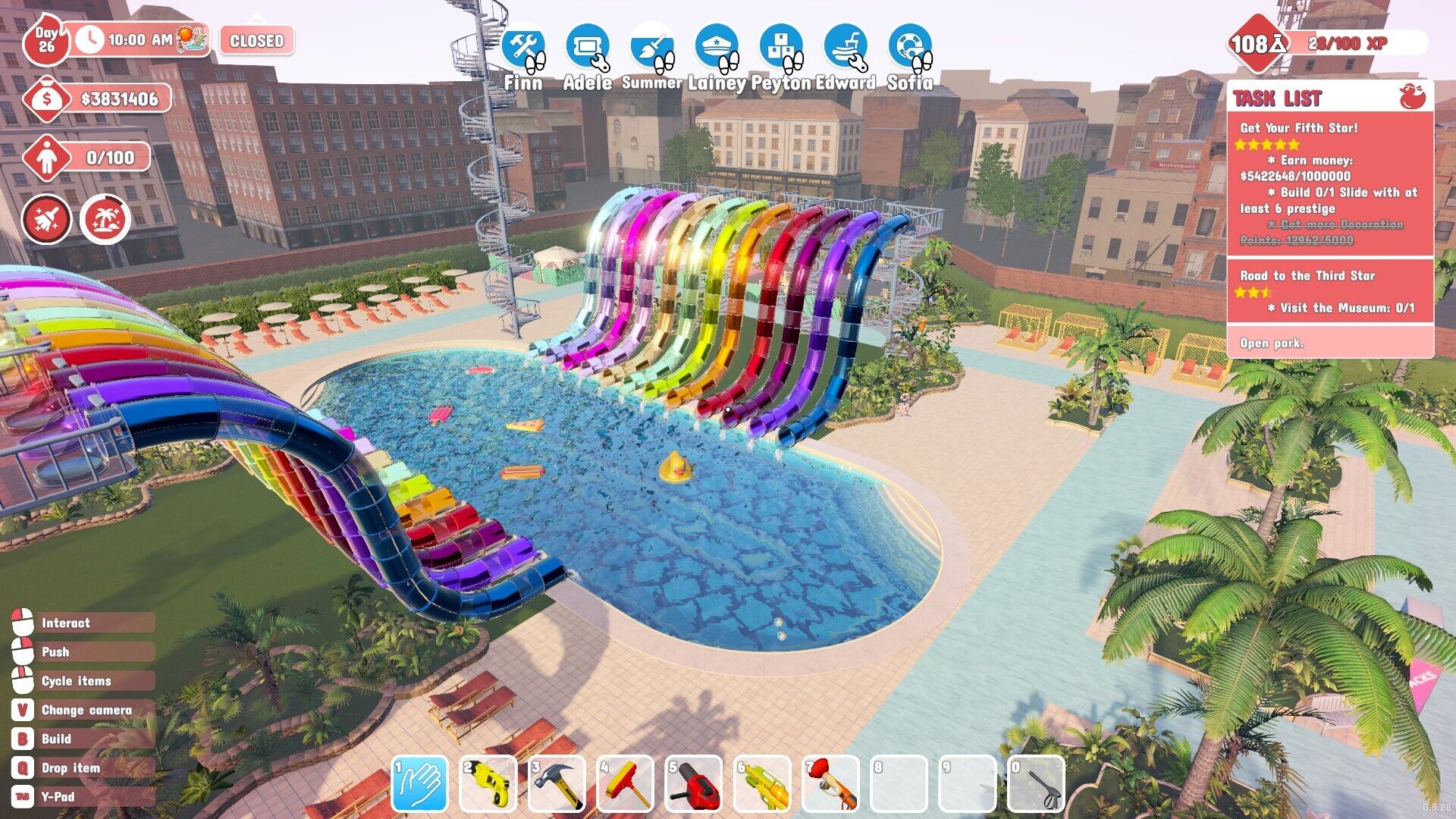
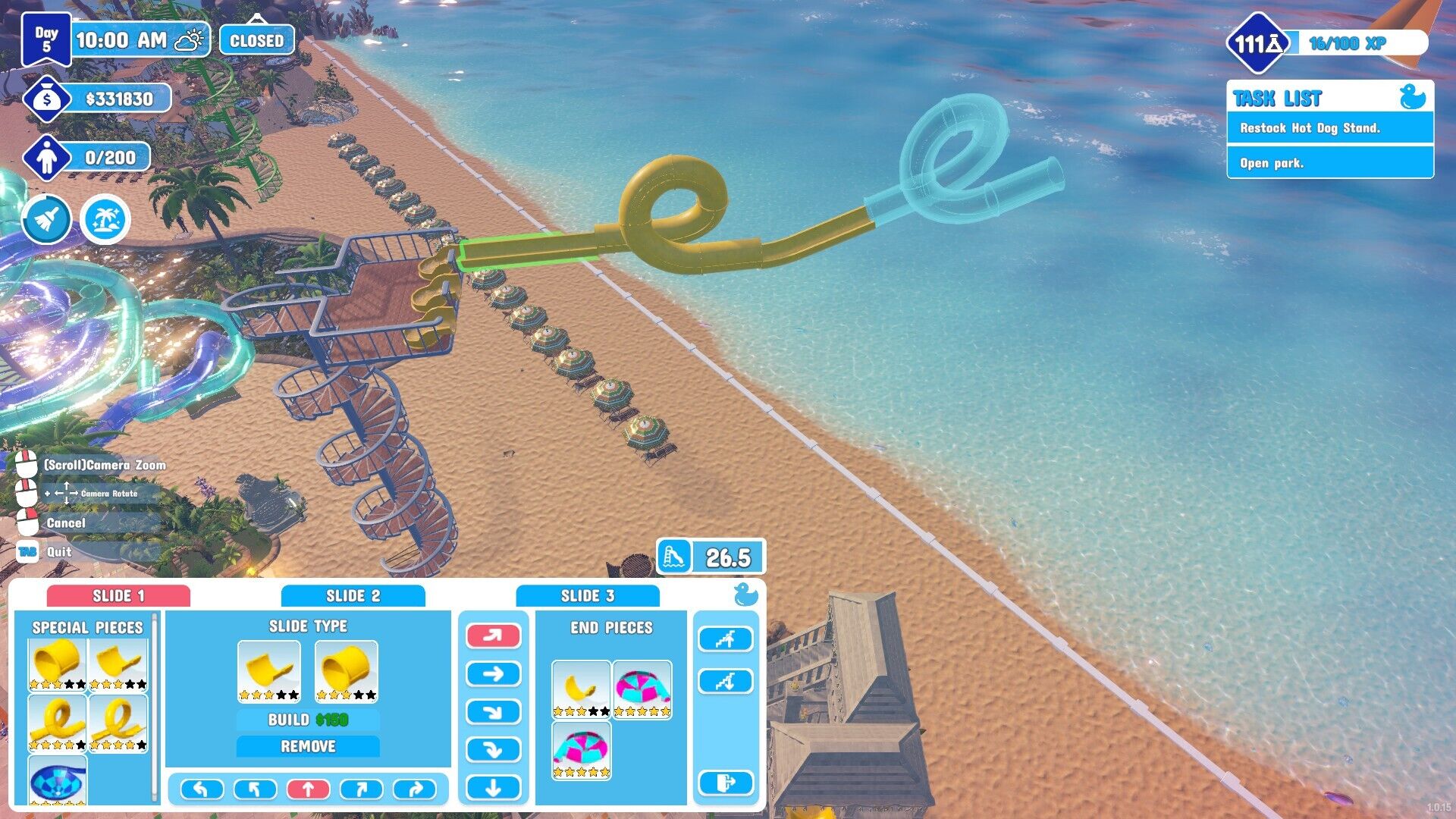
The building system is where the game really shines. You’re not just clicking “place slide” — you’re designing custom waterslides piece by piece, connecting tubes, creating loops, building spirals, and adjusting angles. The system is surprisingly deep for an indie title. You can paint slides in custom colors, add decorative elements, and chain together complex routing that sends guests through a gauntlet of drops, turns, and unexpected splashes. The ragdoll physics make every slide ride a unique experience, and watching your carefully designed attraction either thrill or terrify its riders is endlessly entertaining.
The hands-on tasks add another layer. You’re physically cleaning pools, unclogging drains, unclogging toilets (yes, really), serving food, and fighting off security threats. The game even has a mafia loan system for when funds run low — take a loan from shady characters and pay it back with interest, or face the consequences. It’s the kind of feature that shouldn’t work in a family-friendly waterpark game but absolutely does because the game never takes itself seriously enough for it to feel out of place.
Progression and Replayability
Progression in Waterpark Simulator is tied to research points earned from objectives, quests, and park achievements. Unlocking new content follows a tier system: each park rating milestone opens new zones and new building options. The research tree is extensive — from basic paint colors to complex ride components to full themed attractions. The 1.0 update expanded this significantly, adding a new city backdrop zone, multiple character save slots, security guards, mascots, and the aforementioned night shift mode.
Replayability comes from the sandbox nature and the multiplayer mode. Solo players can spend dozens of hours perfecting their park layout, experimenting with different themes, and chasing that perfect five-star rating. Co-op multiplayer, which was added in the 1.0 update, transforms the experience entirely. Playing with friends means divided labor (someone handles food, someone handles cleaning, someone handles building), shared chaos (everyone’s messing with the same park), and the inevitable betrayals that come with giving four people access to water guns and a ragdoll physics engine. The community has already created elaborate custom parks, deathtrap challenges, and “how many guests can we launch off this slide” experiments.
The main criticism from the player base — and it’s a valid one — is that progression can feel slow, especially in the mid-game. Research points accumulate gradually, and each new building tier requires significant investment. Some players have reported that the grind toward higher tiers can feel repetitive, particularly when the basic maintenance loop (clean, fix, serve, repeat) starts to feel like busywork. However, the game’s variety of tools and the sheer unpredictability of the physics engine help keep things from getting stale.
Visuals, Audio, and Atmosphere
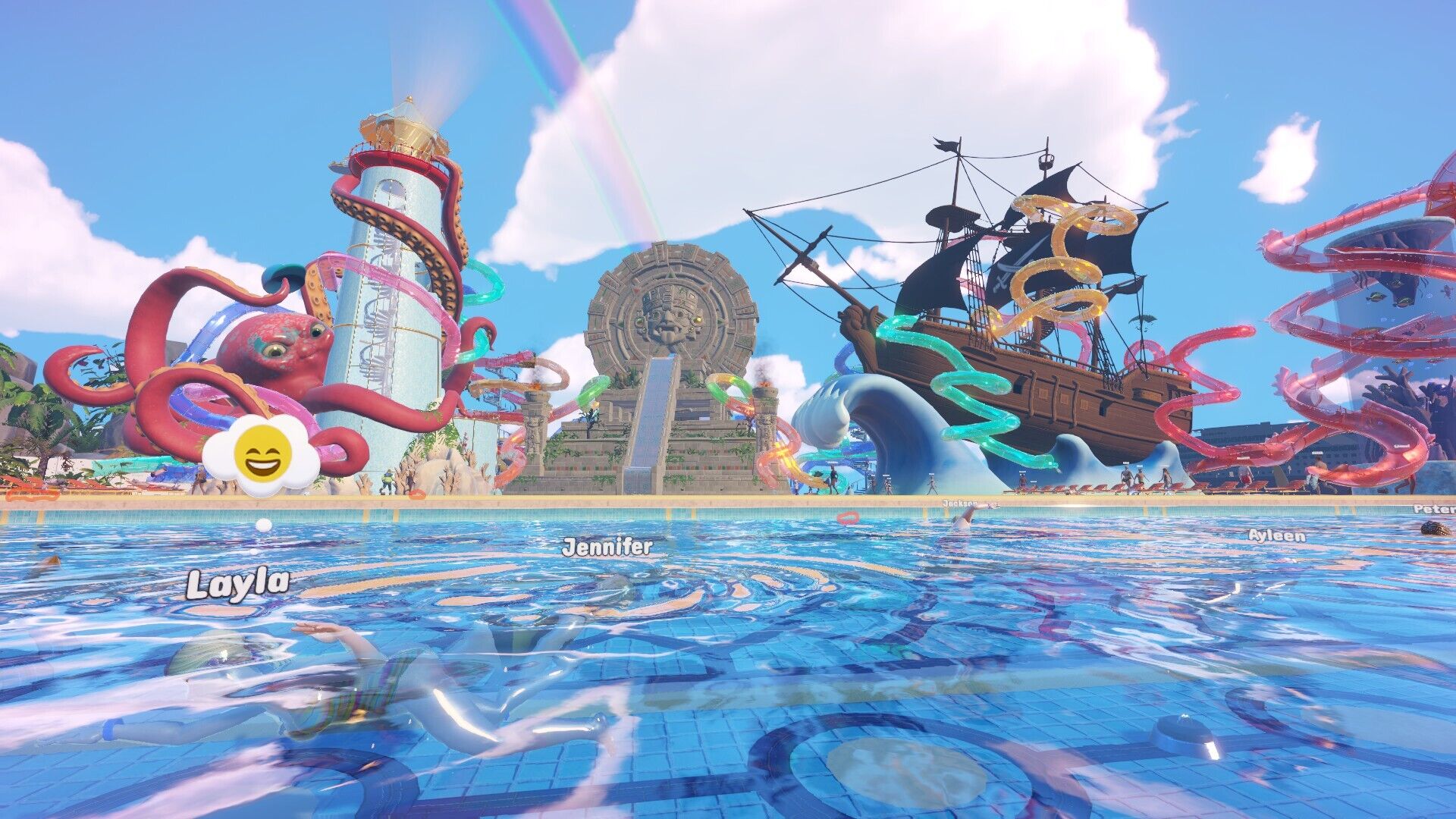
Let’s be honest: Waterpark Simulator isn’t going to win any awards for graphical fidelity. The art style is functional rather than beautiful — bright, colorful, and readable, but not particularly detailed. Character models are simple, environments are blocky, and the overall aesthetic leans heavily into the indie simulation look that prioritizes performance over polish. That said, the game knows what it is and doesn’t pretend to be something it’s not. The neon night mode is genuinely gorgeous, with glowing slides and pools that transform the park into something magical. And the ragdoll animations, while simple, are consistently hilarious.
The audio design is perfectly serviceable. Background music is upbeat and inoffensive — the kind of soundtrack that complements without distracting. Sound effects are satisfying: the splash of a pool, the clatter of a slide, the screams of guests being launched into the air. Voice lines are sparse but effective, and the overall soundscape contributes to the chaotic, playful atmosphere the game is going for. It won’t blow you away, but it doesn’t need to.
Performance and Technical Problems
For a game that spent nearly a year in Early Access, Waterpark Simulator launched in reasonably stable condition — but “reasonably” is doing some heavy lifting there. The most common complaints from the community center on performance issues when parks get large and guest counts climb. Stuttering becomes noticeable with 40+ guests on screen, and frame drops can be significant during peak hours. The game doesn’t support DLSS or frame generation, which feels like a missed opportunity given the hardware demands of busy parks.
Crashtastic sessions after long play periods have been reported, particularly in co-op mode. Save corruption after power loss or abrupt disconnects is another recurring issue, though the game does write backup files that can sometimes recover lost progress. The lack of key rebinding is a notable omission, especially for left-handed players — something the community has been vocal about since Early Access. The 1.0 update addressed some stability concerns, but these underlying issues remain the biggest barrier to the game reaching its full potential.
Pros and Cons
- Addictive gameplay loop — The build-manage-destroy-rebuild cycle is genuinely compelling, and the ragdoll physics keep every session unpredictable
- Deep customization — Custom slide building, paint systems, and decoration tools offer genuine creative freedom
- Excellent co-op — Playing with friends transforms the game from a solo management sim into a chaotic party experience
- Responsive developers — CayPlay has consistently listened to community feedback and delivered meaningful updates
- Great value — At $12.99 (less on sale), the amount of content and entertainment on offer is exceptional
- Night mode — The nighttime mode adds a completely new atmosphere and extends the gameplay loop
- Slow mid-game progression — Research points accumulate too slowly, making the grind toward higher tiers feel tedious
- Performance issues at scale — Large parks with many guests cause noticeable stuttering and frame drops
- No key rebinding — A basic accessibility feature that’s still missing at 1.0
- Visual polish — The art style is functional but not particularly impressive, even for an indie title
- Co-op stability — Online multiplayer can be buggy, with crashes and save corruption reported
SteamGamer Verdict
Waterpark Simulator is the kind of game that sneaks up on you. It looks like a budget sim, plays like a physics playground, and somehow becomes the game you lose an entire weekend to. CayPlay has built something genuinely special here — a management sandbox that understands that the best moments in simulation games aren’t the ones where everything goes right, but the ones where everything goes hilariously wrong.
The 1.0 release isn’t perfect. Progression needs tuning, performance needs optimization, and basic features like key rebinding should have been there from day one. But the core experience — building, breaking, and rebuilding your dream (or nightmare) waterpark — is so inherently fun that these issues feel like rough edges on an otherwise excellent product. With a 96% positive review rating across nearly 12,000 Steam reviews and a passionate community already creating elaborate custom content, Waterpark Simulator has earned its place as one of the best indie simulation games of 2026.
Score: 8.5 / 10

Jordan Hayes covers PC gaming news, hardware, and the ever-changing Steam ecosystem for SteamGamer.net. He believes some of gaming’s biggest stories are hiding in patch notes, performance charts, and suspiciously quiet price changes. When he isn’t investigating what developers or GPU manufacturers are doing, he is probably starting another roguelike run he insists will be his last.






Comment here