
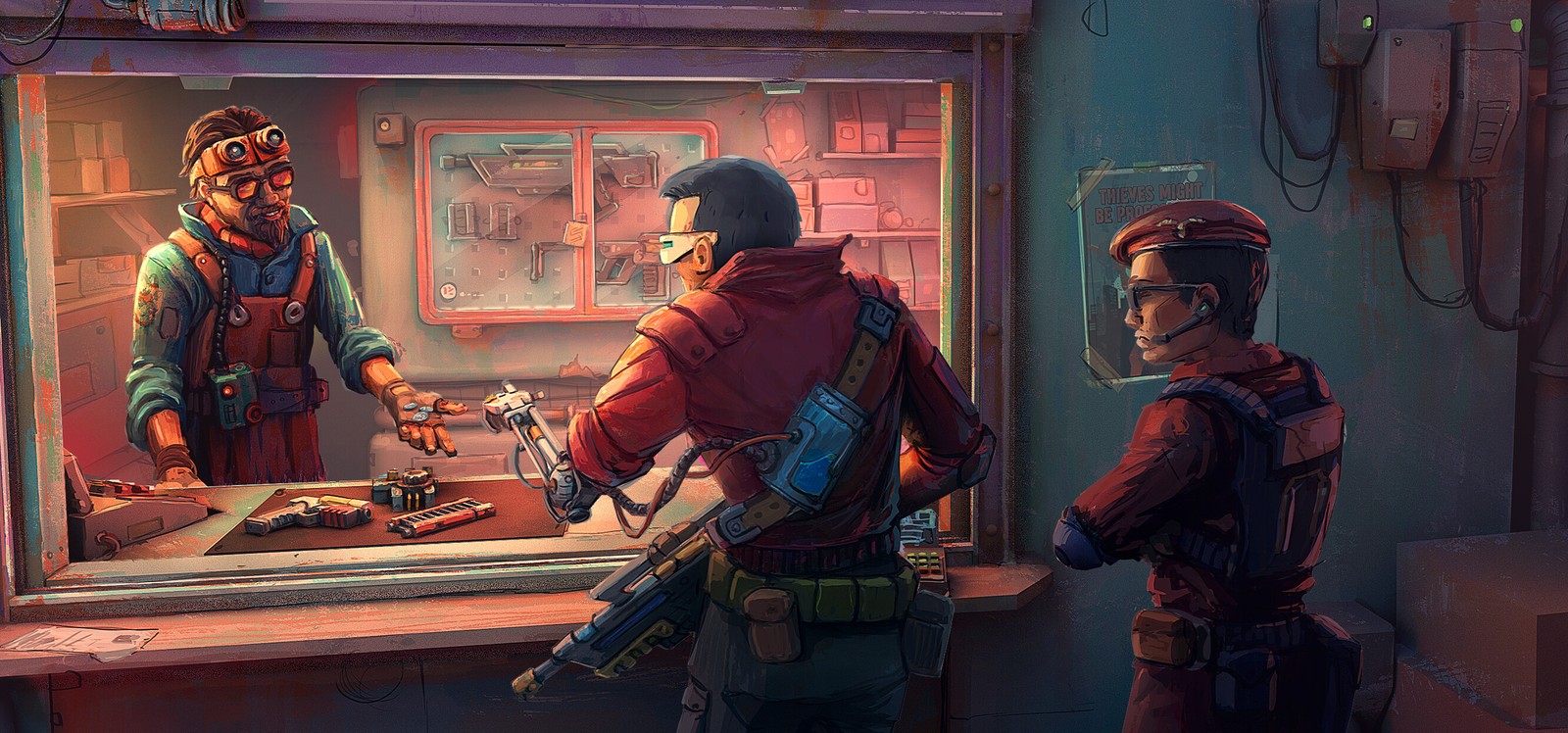
Three days after launch, Probably Stolen – Cyberpunk Shopkeeper Sim is sitting at Overwhelmingly Positive on Steam, with roughly 97% of its English-language user reviews recommending it — a rare arrival in a genre that mostly ships thin knockoffs. Questing Goose Studio’s shopkeeping RPG, published by tinyBuild and priced at $17.99 USD, puts you behind the counter of a storefront you only half own: a former scavenger with a generous loan, a rising rent tab, and a space station split by wealth and corruption. Everything legal is low margin. Everything profitable is a gray zone. That tension is the game, and it works far better than the “shop sim” label suggests.
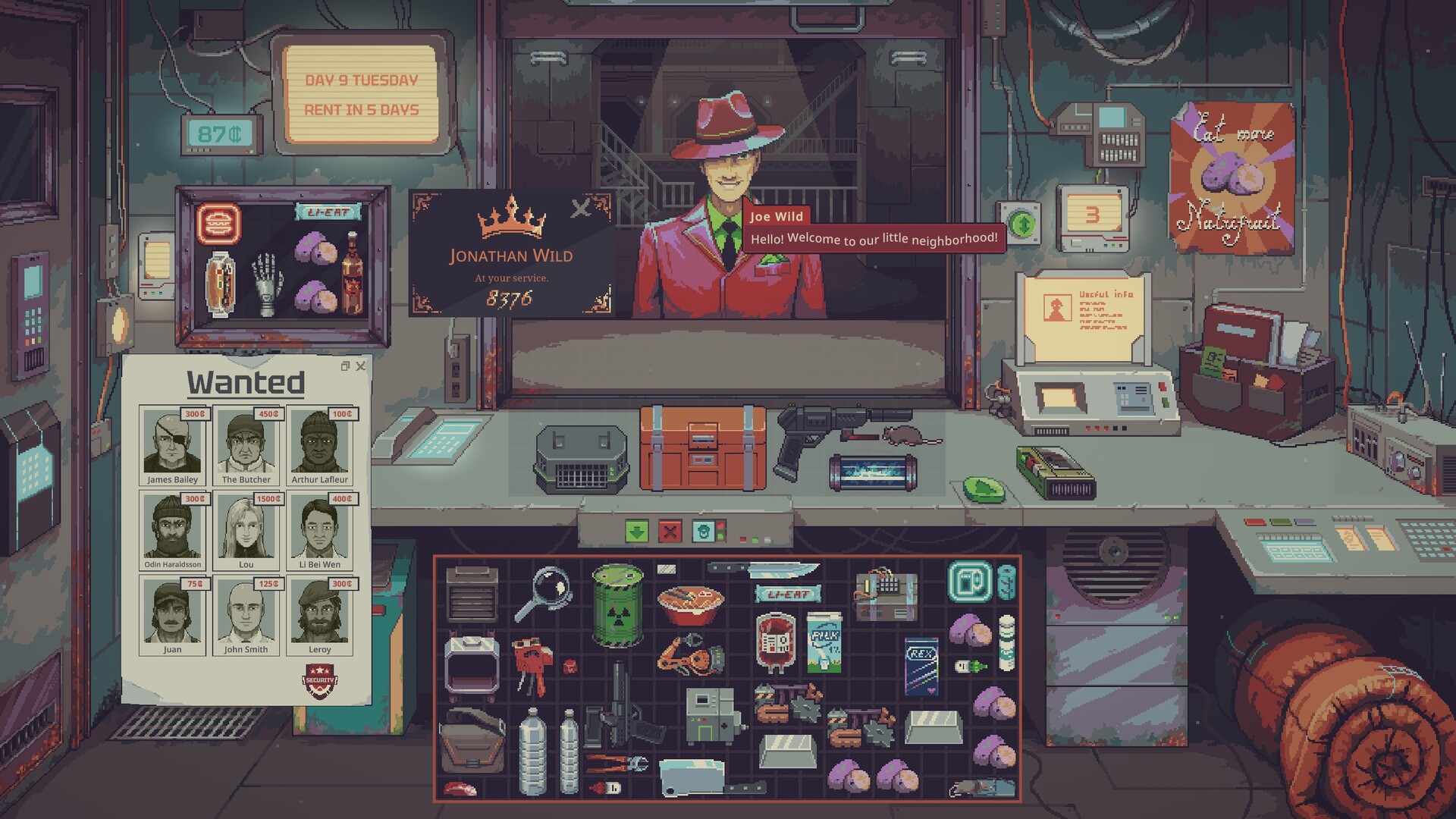
The daily rhythm is deceptively small. You set the display case to court a kind of buyer, scan the morning newspaper for events that move prices, and then work the counter: appraise what walks in, haggle, and decide what you are willing to be caught selling. Every sale is a gamble, because you never know who is on the other side of the counter — a security fisher hunting evidence, a revolutionary seeking leverage, or a fallen elite testing your usefulness — and the game lets you approve, refuse, report, or look away. The pull is immediate and dangerous. One Steam reviewer calls it “a time machine that only goes forwards” for anyone prone to saying “just one more turn,” and another describes stashing a chest of valuables in the trash can during a surprise inspection, only for the garbage collector to become the richest man on the station overnight. This is a game that keeps generating stories like that.
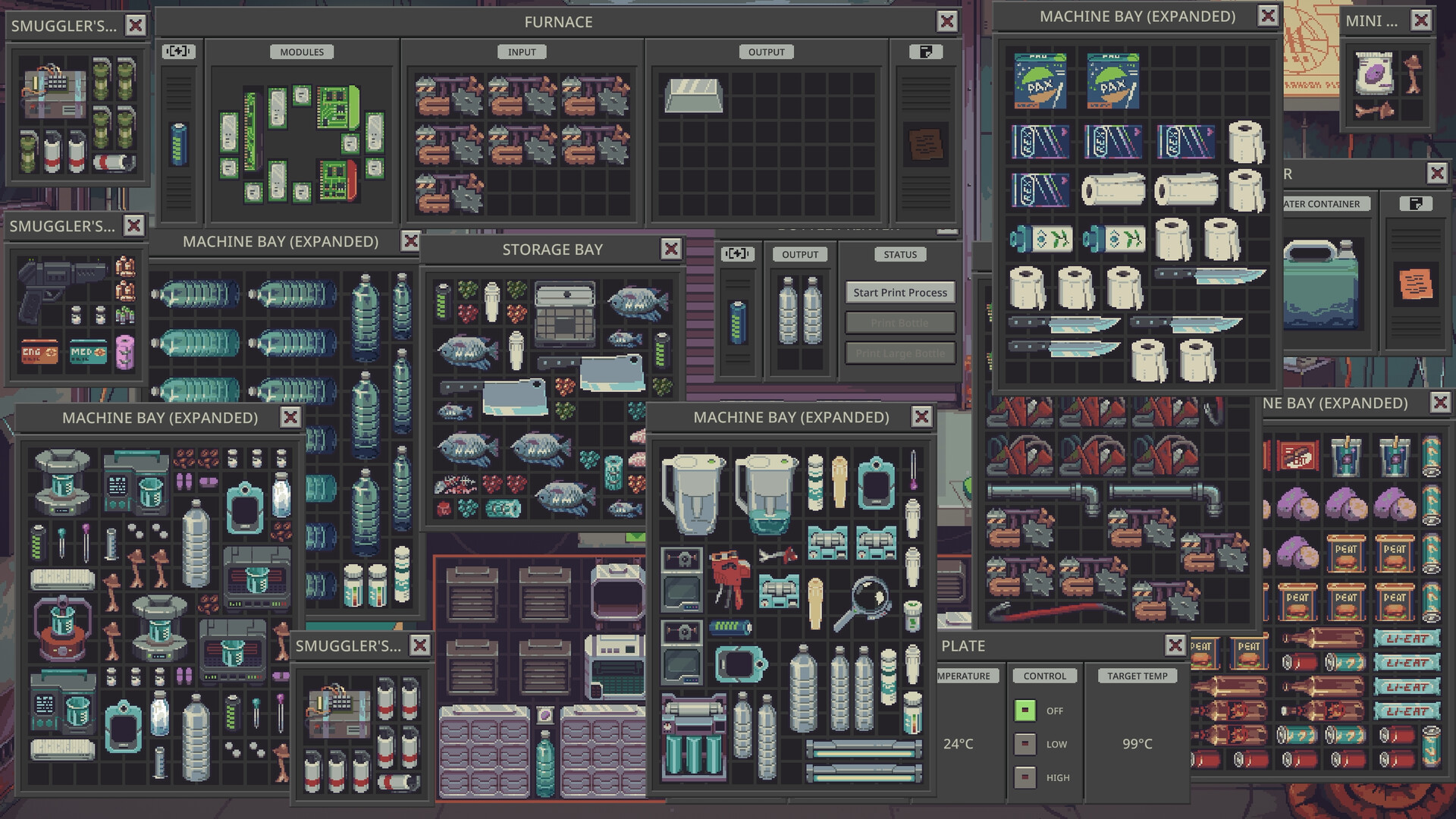
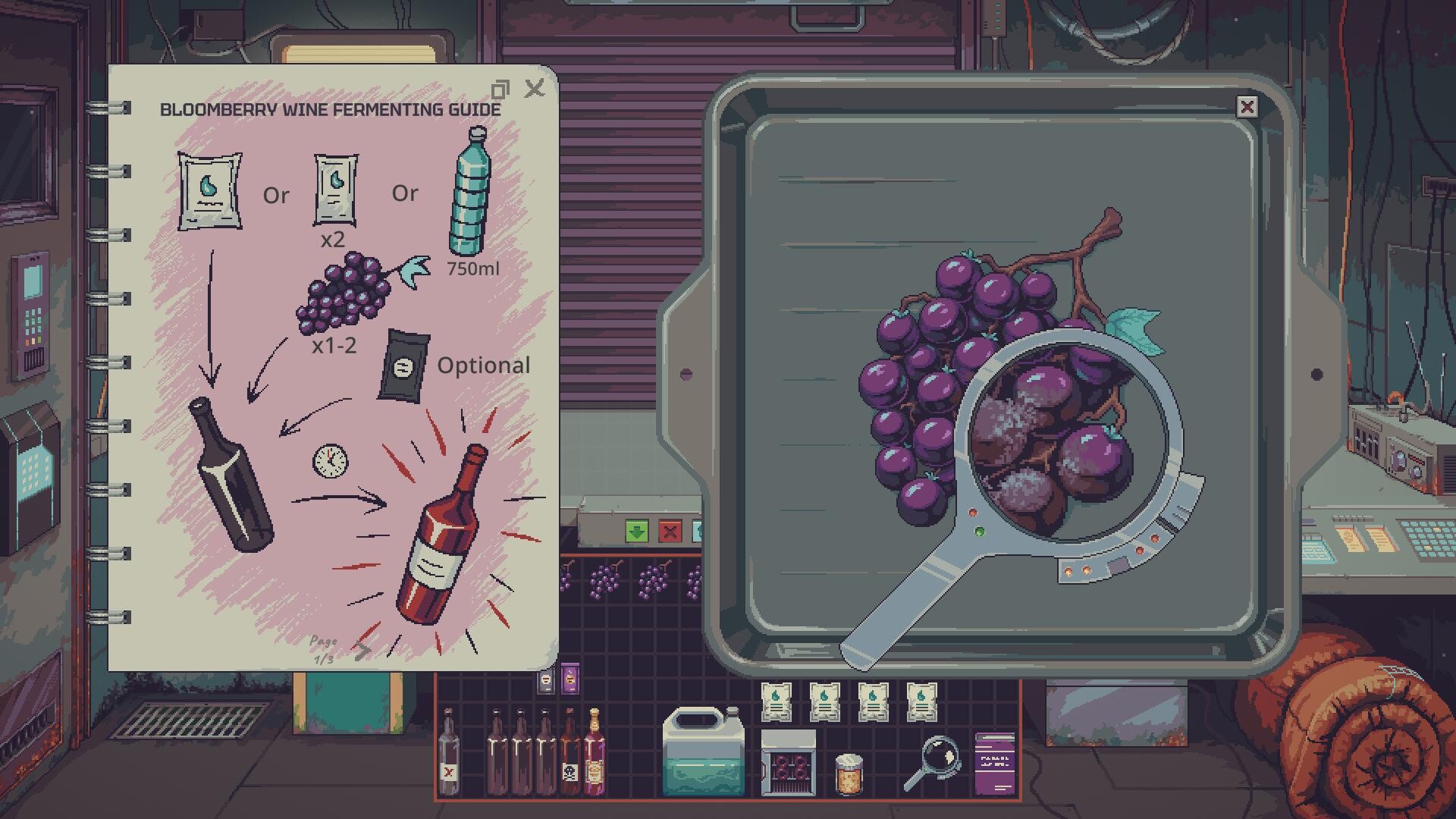
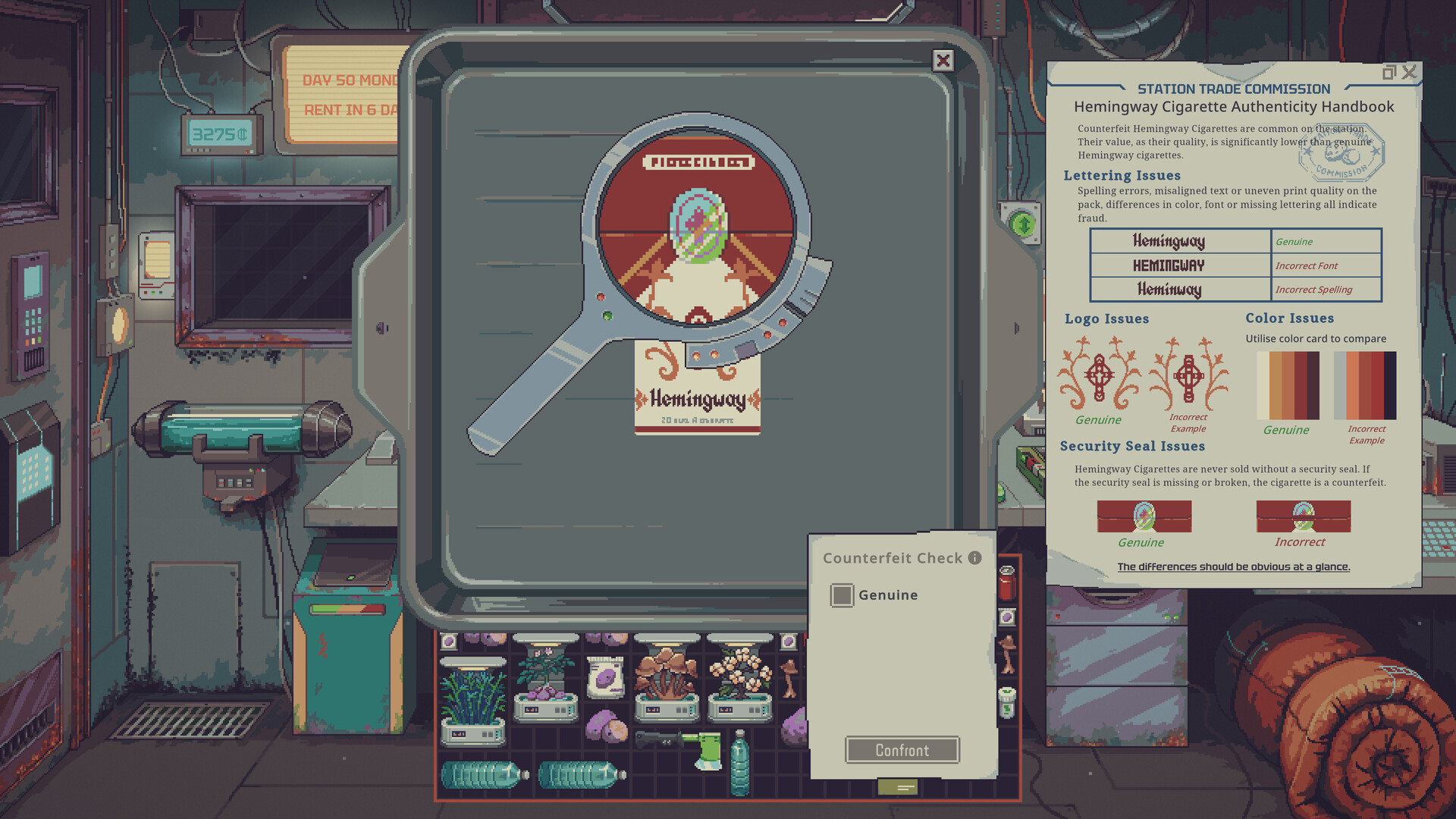
What separates it from the flood of low-effort shop sims is how much machinery is stacked behind the counter. A furnace, machine bays, a 3D printer, hydroponics, a chem finisher, fermenting vats for homebrew wine, smuggling compartments that exist to be searched — the crafting and production layers are genuinely deep, and the game’s paperwork is a mechanic in itself: appraisal handbooks teach you to spot counterfeit cybernetic hands, authenticity guides walk you through fake cigarette packaging, and a lab analysis screen will happily tell you exactly what was in that bottle of water someone died from. The community has already turned this into a catalogue of crimes. One review sums up a normal week as “rat eugenics, medical fraud, playing both sides of a revolution,” and the schemes keep multiplying as players discover new money loops.
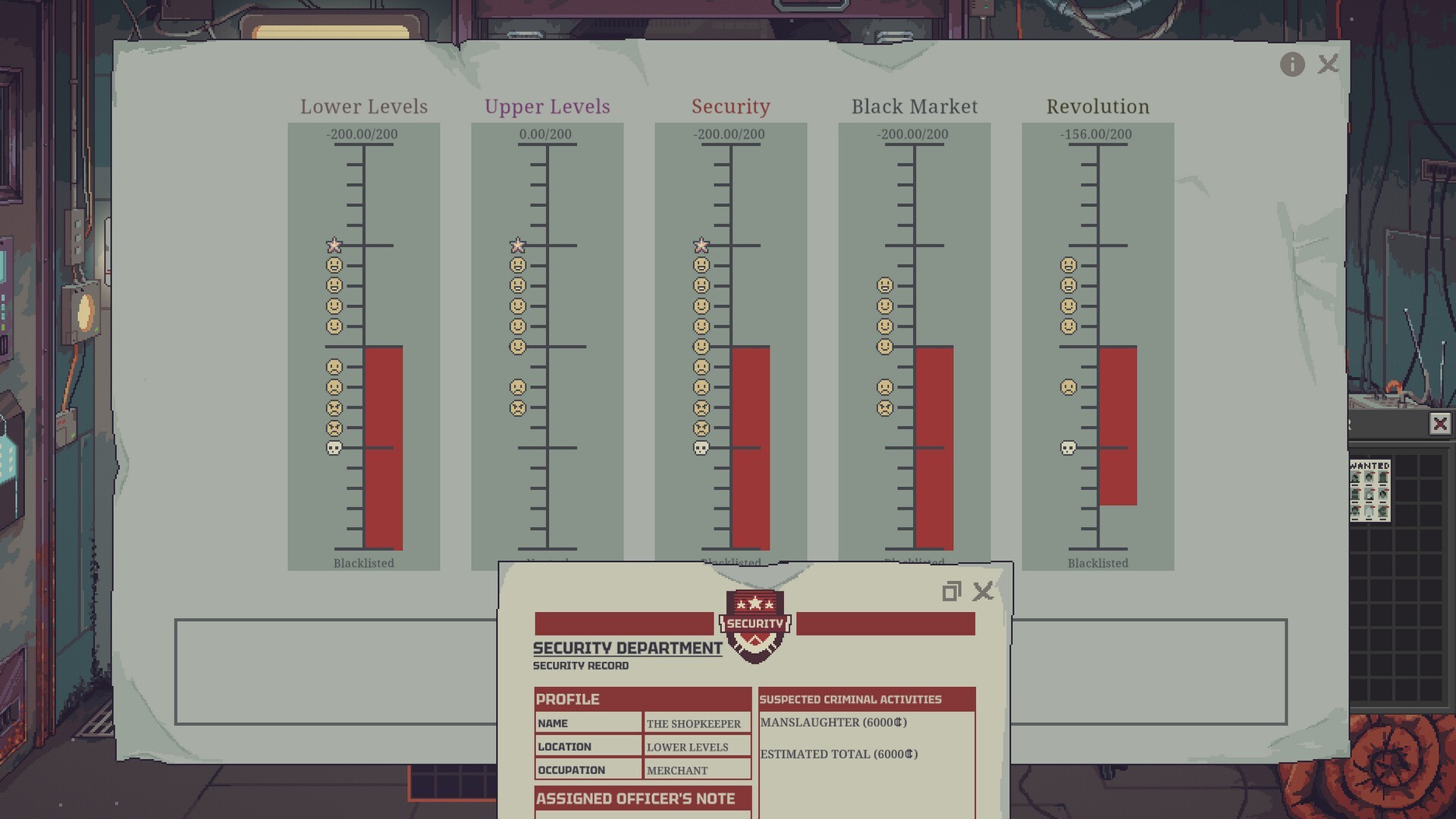
The station watches back. Surprise inspections, wanted posters, and the ever-present question of who is building a case against your shop keep the counter work tense, and confrontations can escalate until you are holding a pistol on a lower-level citizen who tells you to put it away. Five reputation tracks — Lower Levels, Upper Levels, Security, Black Market, and Revolution — track every choice you make, and the safest business decision is rarely the kindest one. It is the closest the shopkeeping genre has come to the moral claustrophobia of a proper dystopia sim: not because anyone forces a choice on you, but because the game keeps a ledger.
Progression stacks systems on top of systems. Wild’s Network sells services — referrals, favors, informants, suppliers, gunsmiths — each unlocking a new way to bend the market, while starting perks and three difficulty flavors (Price Gouge, Mark Up, Thin Margins) let you tune how cozy or brutal the margins are. The long-term goal is pointedly simple to state: earn enough to buy out the shop you rent before the increases force your hand, then grow into the machine empire the mid-game keeps dangling. For a mouse-driven game it is admirably accessible, too — adjustable text size, a mouse-only control scheme, and no timed input requirement, which fits a genre that should always respect the save-and-think crowd.
The complaints in that thin slice of negative reviews are unusually specific, and mostly worth taking seriously. The most repeated is choice paralysis: new mechanics arrive every in-game day without much guidance about what they lead to, and players expecting a shopkeeping simulator find themselves drowning in menus, machines, and reputation bets. Then there is the inventory layer, which is frankly the roughest edge of the game — items carry categories like food and medical supplies but there is no sort-by-category function, drag-and-drop will not swap two items without a three-step shuffle, and the display case has to be stocked before the newspaper that tells you what to price is readable. Buyers turn up almost randomly despite paid advertising and reputation bonuses, and the weekly merchant schedule can strand a specialized business with credits it cannot spend. None of this kills the loop, but it does grind against it.
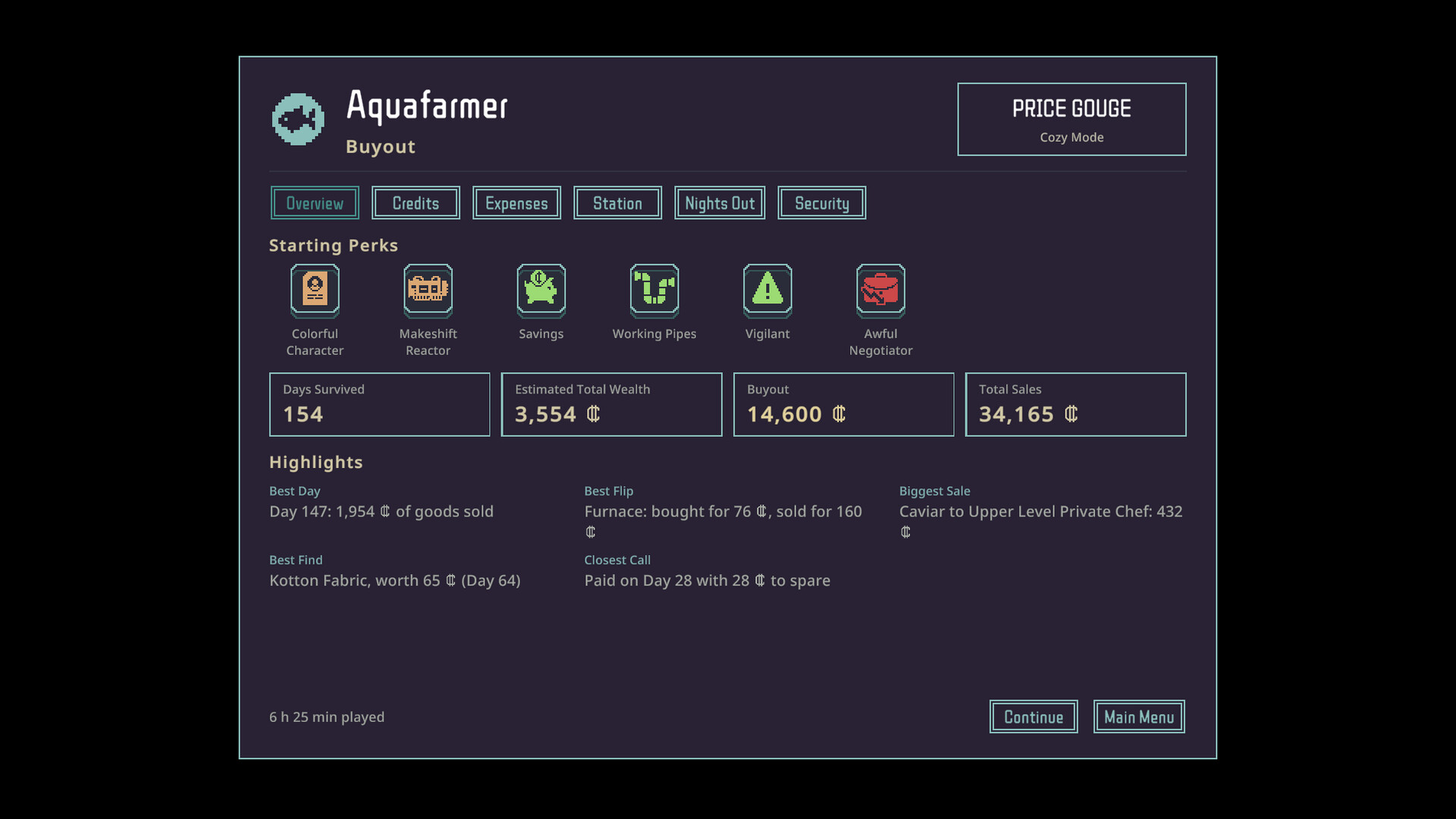
The bigger structural complaint is the endgame. Reviews with twenty-plus hours on record describe a mid-game that flattens into repeatable chores with the winner clear long before the run is over, and a finish that is a stats screen reading “you win” — no payoff for the characters you befriended, no resolution for the faction war you played both sides of, no ending shaped by the decisions the game so carefully recorded. Several reviewers say outright this should have launched as Early Access, and they have a point: a run that tracks reputation and relationships should not end like a spreadsheet closing. Two smaller bruises deserve naming — real-world internet celebrity cameos yank you out of the dystopia, and the writing’s grammar and spelling need another pass. The studio has more planned for these systems, and the community is loudly asking for it.
Verdict
Probably Stolen is the most interesting shopkeeping RPG to show up on Steam in years: dense with real mechanics, genuinely funny, and built around a dystopia that keeps score of your conscience. The counter work, the production chains, and the reputation web are excellent, and the community’s growing catalogue of scams and disasters is proof the sandbox works. What it does not yet have is an ending worthy of the run — the late game goes flat, the story threads it cultivates do not pay off, and the inventory busywork never quite gets out of the way. At $17.99 USD it is still an easy recommendation for simulation and management players who live for emergent mischief; if you need your hundred-hour runs to resolve into something, give the studio time to finish the job.
SteamGamer Score: 8.5/10

Jordan Hayes covers PC gaming news, hardware, and the ever-changing Steam ecosystem for SteamGamer.net. He believes some of gaming’s biggest stories are hiding in patch notes, performance charts, and suspiciously quiet price changes. When he isn’t investigating what developers or GPU manufacturers are doing, he is probably starting another roguelike run he insists will be his last.







Comment here