

Introduction
Some games announce their hook in a single screenshot. Tower Tactics II does it in three: a lane of towers, a hand of cards, and a map that branches like a deckbuilder’s worst decision made flesh. The sequel to asraworks’ cult-favorite fusion of tower defense and roguelike deckbuilding launched into Steam Early Access on October 8, 2026 with Assemble Entertainment handling publishing duties, and it immediately sets out to prove that the first game’s clever mashup was a foundation, not a fluke.
The pitch is simple to state and satisfying to execute: every tower and every spell is a card, every run reshuffles the possibilities, and every wave asks whether your build is smarter than the swarm. It works — and in Early Access, it already works better than most finished games in the genre.
Game Overview
At its core, Tower Tactics II is a lane-based tower defense game wrapped in a roguelike deckbuilding progression loop. You pick a hero, each arriving with a distinct starting deck and passive ability, then fight through a campaign map that lets you choose your route between battles: standard waves, elite encounters, shops, and events. Rewards come in the form of new cards and trinkets — the game’s take on roguelike relics — and the combinations you assemble determine whether the late waves melt or march.
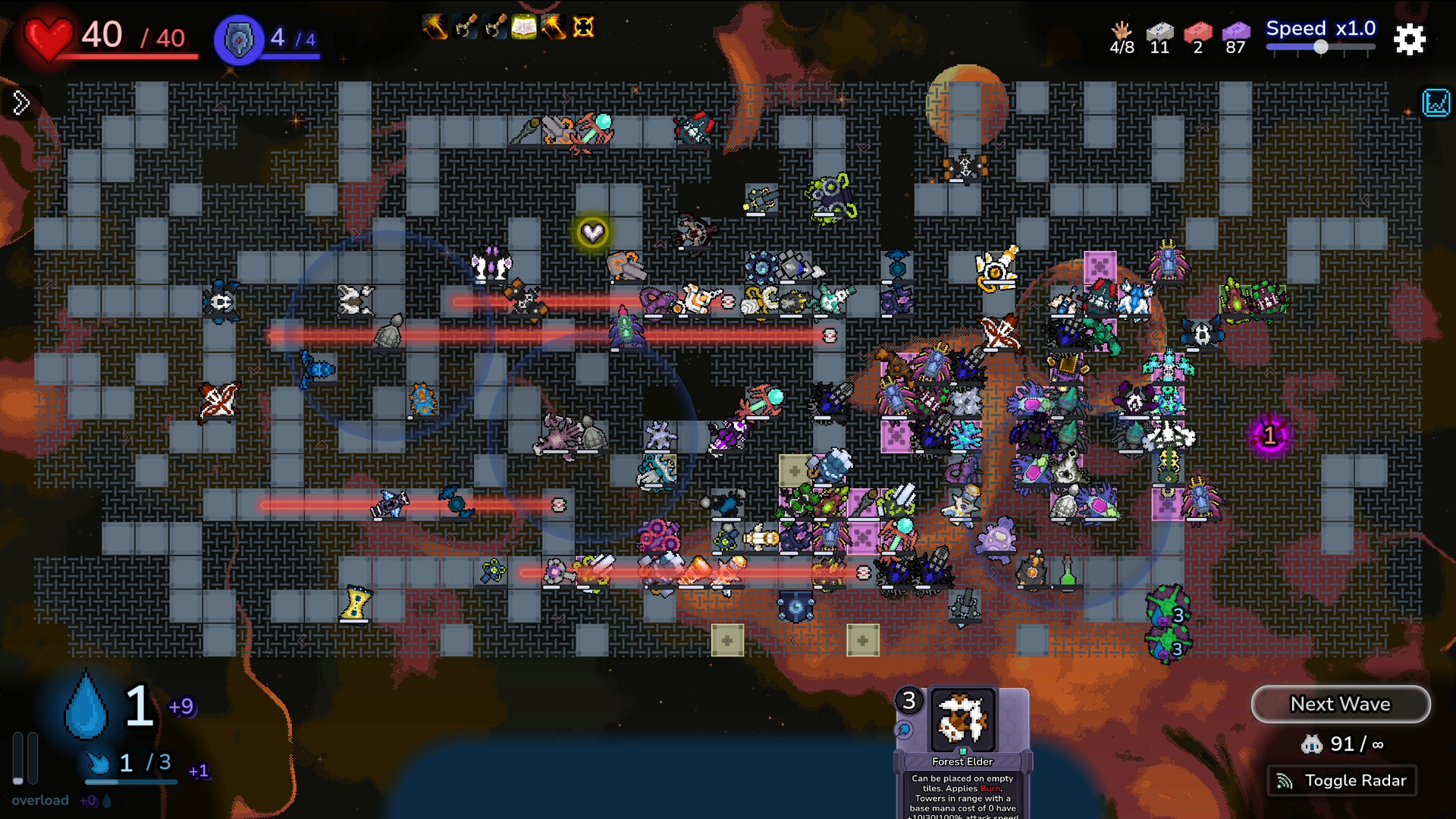
Systems density is the surprise. Three identical towers can be merged into a higher-tier version of themselves, complete with an option in the settings to toggle the auto-merge behavior. Towers can be repositioned freely between waves, and special terrain tiles grant bonuses to whatever stands on them, so placement is a puzzle you keep re-solving rather than a one-time decision. Enemies that slip through cost you health, but each wave hands some of it back, which keeps early mistakes recoverable and late mistakes fatal. It’s a ruleset that rewards planning and improvisation in equal measure.
World and Story
The original Tower Tactics was light on narrative; the sequel leans in. There’s an actual campaign framing the climb now, with a story layer that players coming from the demo have singled out as a genuine addition rather than decoration. It’s still fundamentally a systems-first game — you’re here to build decks and hold lanes — but the connective tissue between battles gives the run structure a sense of purpose that the first game’s endless gauntlet lacked. Villains taunt, heroes banter between waves, and the map itself tells a story of escalating threat as the branches narrow toward the hardest fights.
It’s not Hades in terms of writing, and it doesn’t try to be. It’s context, delivered efficiently, and it does its job.
Gameplay and Combat
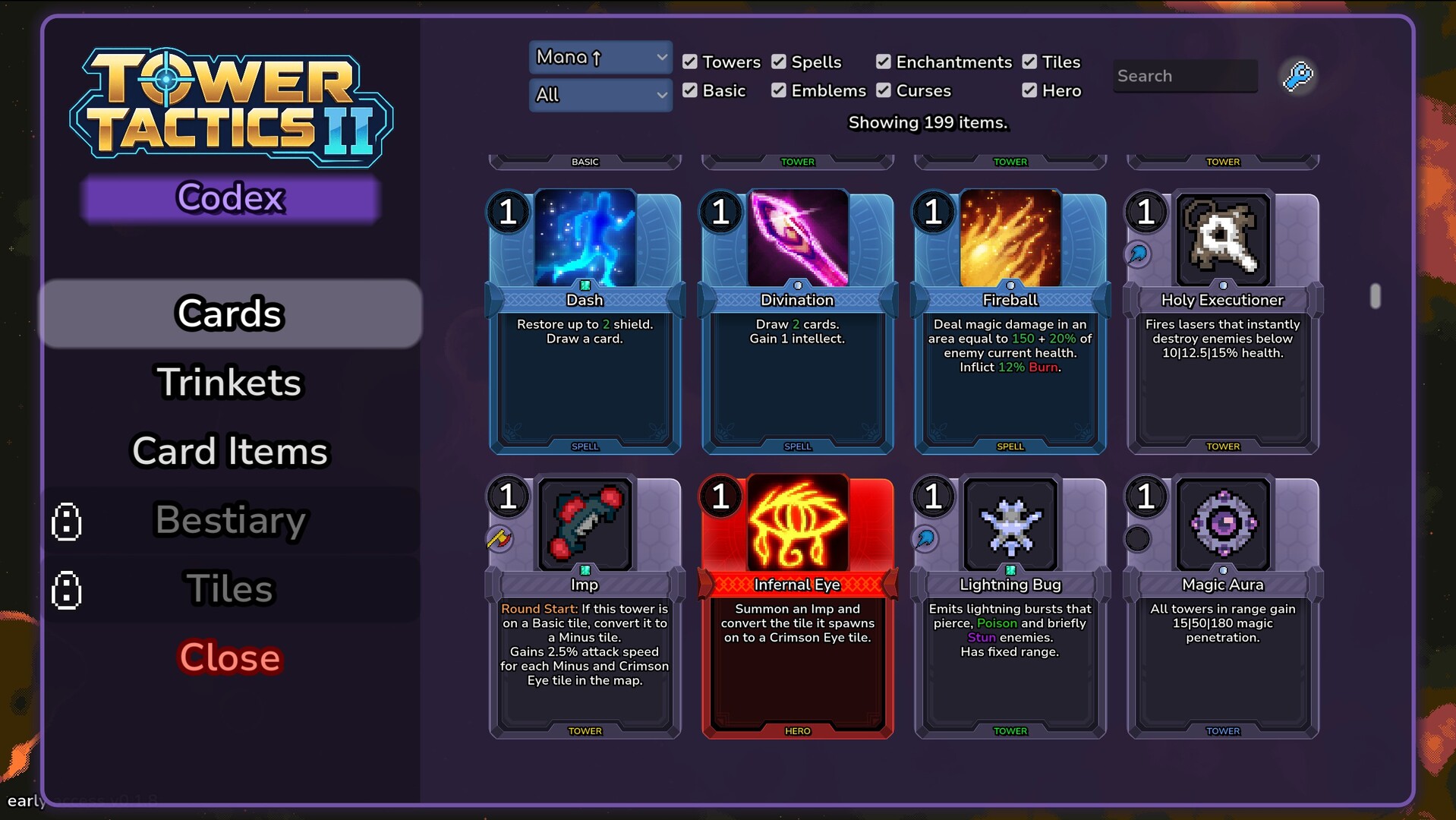
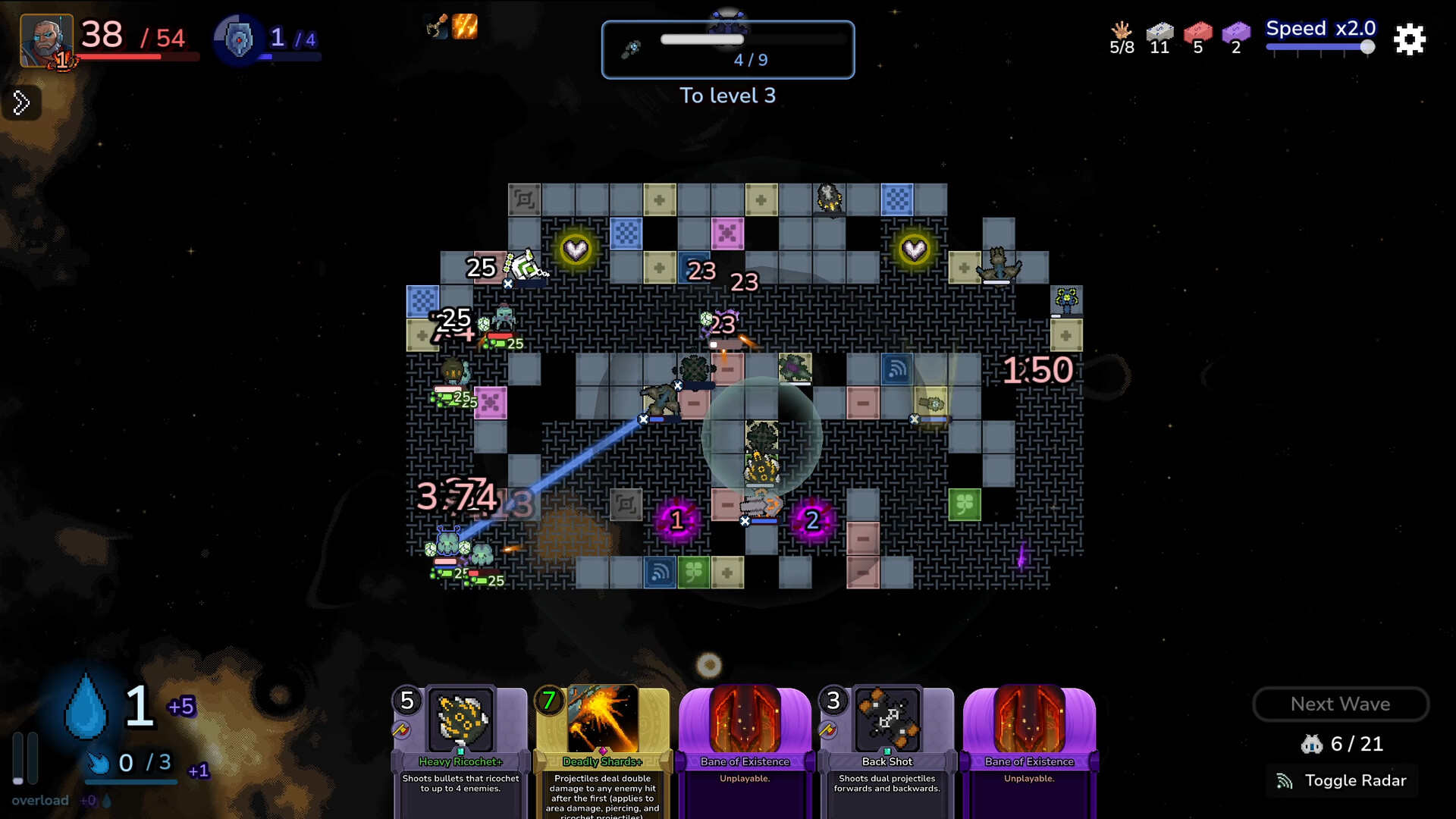
This is where Tower Tactics II earns its Very Positive reception. Every defensive tool — arrow towers, artillery, arcane constructs, direct-damage spells — lives in your deck, and drawing the right answer at the right moment is a thrill that never fully wears off. Building is layered: you’re managing tower placement on tile grids, positioning between waves, targeting priorities, terrain bonuses, and merge chains all at once, and the game does an admirable job of keeping that readable under pressure.
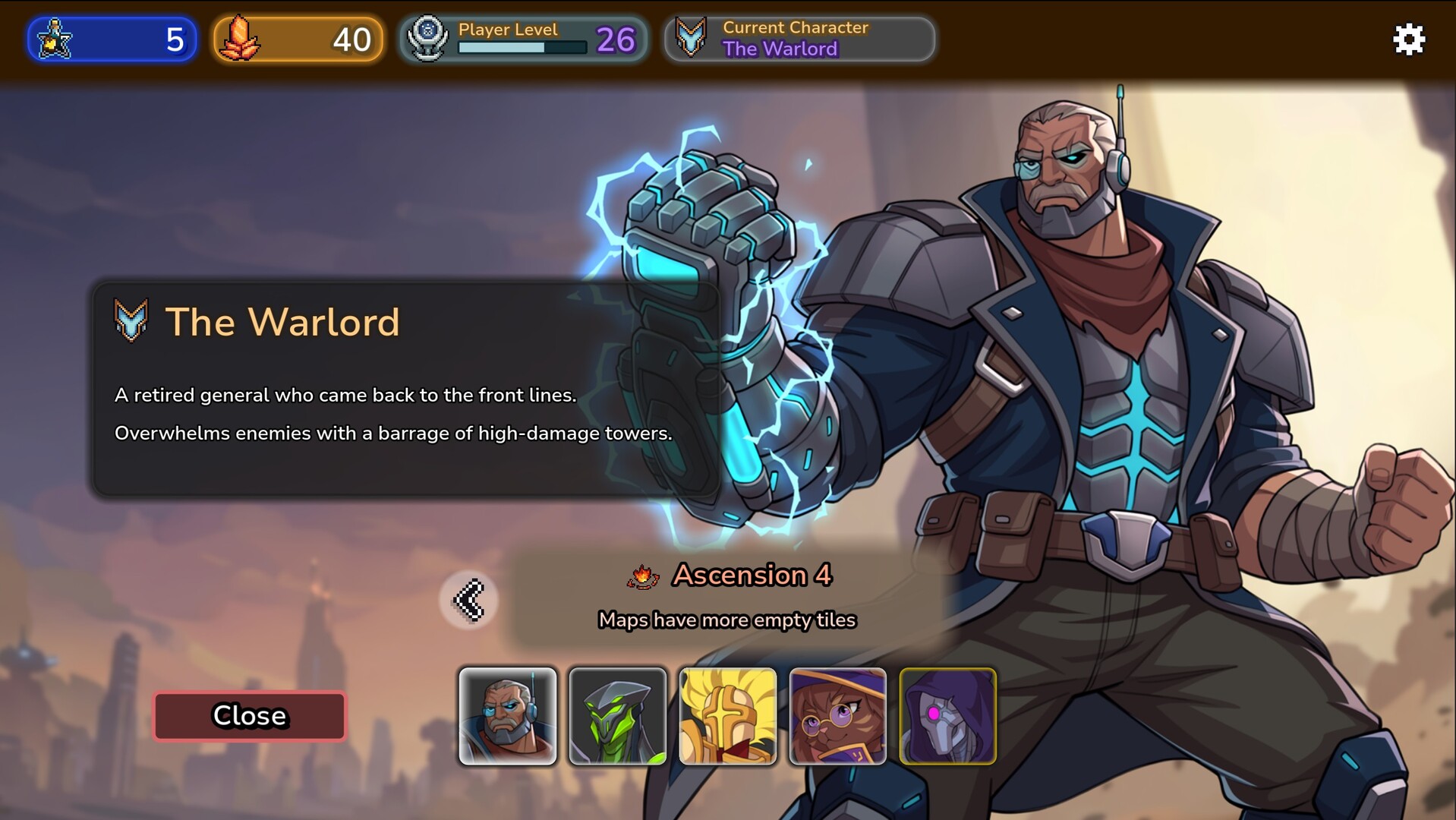
The hero system is the sharpest addition. Each hero ships with a defined starting deck and unlockable card pool, which gives runs a strong identity out of the gate. It’s also the most divisive design choice among players: some love the archetypal clarity, while others feel nudged toward a “correct” build per hero rather than free experimentation. Both readings are fair — the constraint is real, and it’s also what keeps each hero feeling distinct instead of like a reskin.
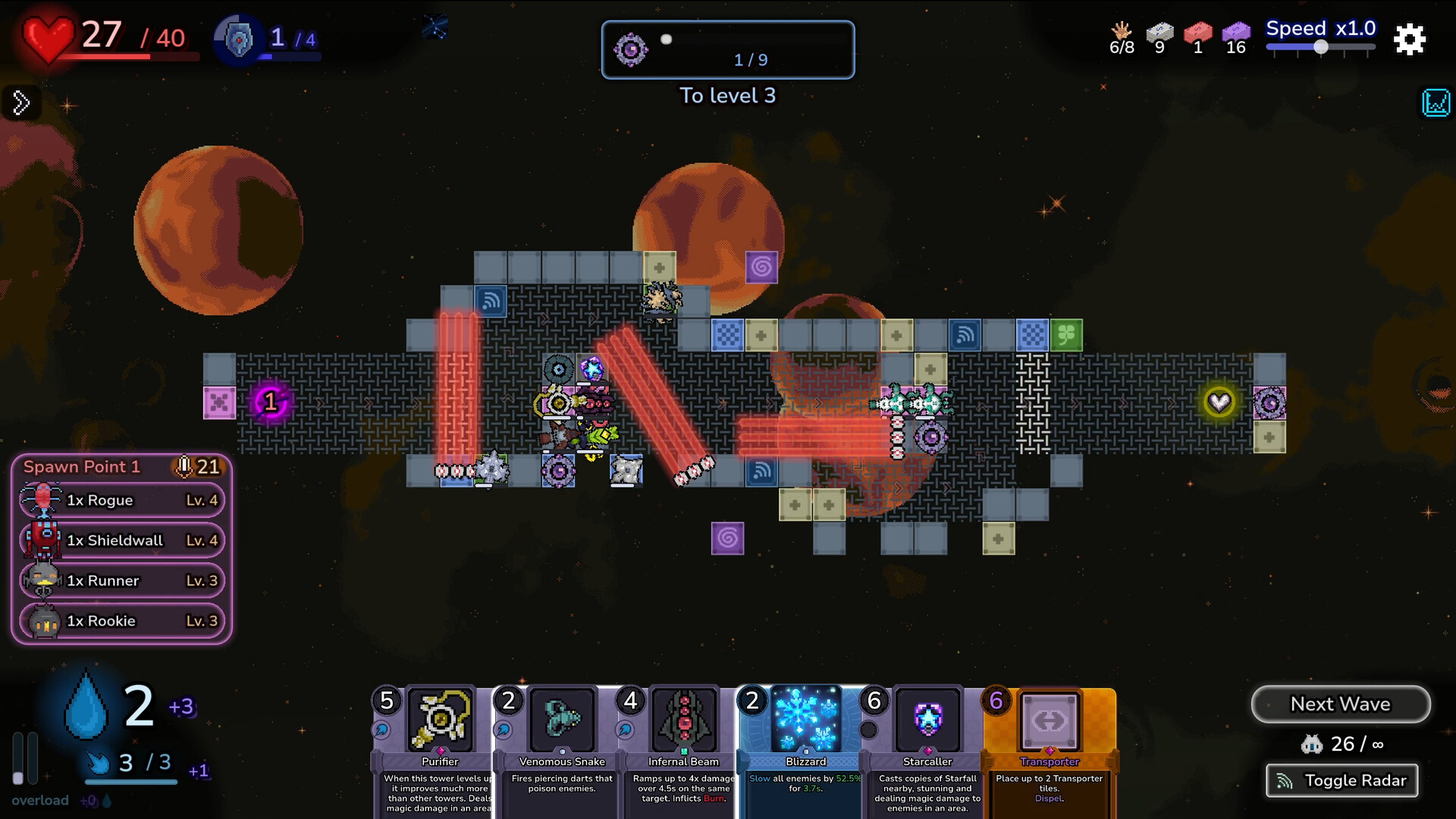
Combat escalates beautifully. Early waves teach you your deck’s shape; elite encounters break it; boss-level pressure forces you to spend everything you’ve hoarded. The merge mechanic adds a satisfying mid-fight tempo, and the tile system means even a settled defense can be optimized one more time before the wave horn sounds. When a run comes together — trinkets stacking into an engine, towers covering each other’s weaknesses, a curse-heavy draw clawed back from the brink — it feels genuinely earned.
Progression and Replayability
Replayability was the first game’s strongest card, and the sequel stacks the deck further. The campaign gives structure to the climb, while unlockable heroes, over 100 trinkets with meaningful build-shaping effects, and new game modes — including survival and a maze-builder mode — give you reasons to keep queueing “one more run.” Trinkets are the secret sauce: finding the right one at a shop or after an elite fight routinely rewrites what your deck wants to be, and the sheer variety means runs rarely rhyme.
Then there’s the longevity play. Tower Tactics II ships with a level editor, Steam Workshop support, and Steam Cloud saves, so custom maps and community challenges are part of the package from day one — a notable edge for an Early Access title whose audience will happily build content for it. Veterans of the original report the sequel feeling like a major expansion in the best sense: the loop they loved, with a real campaign bolted on and more knobs to turn. Newcomers, meanwhile, get one of the most complete-feeling Early Access packages in recent memory.
Visuals, Audio, and Atmosphere
The presentation is clean, bright, and legible — exactly what a game this busy needs. Towers and enemies are distinct at a glance, spell effects punctuate the chaos without drowning it, and the map screens carry a hand-drawn charm that suits the deckbuilder side of the family. Audio does the heavy lifting for feedback: you can hear a wave going wrong before you see it, and the soundtrack keeps the tension wound during long defense stretches.
The overall aesthetic reads as a confident step up from the original — more detail, more personality, more polish in the menus and animations. For an Early Access build, the visual package feels finished.
Performance and Technical
On the technical side, the report card is strong but not spotless. The game demands modest hardware — Windows only for now, with full controller support, Steam Cloud, and Family Sharing in place — and the vast majority of players describe it as smooth and stable. The recurring criticism is a minority one: a subset of players report performance dips during heavily upgraded late waves when the screen is at its most crowded. It’s the kind of Early Access rough edge that tuning tends to erase, and it’s worth knowing about if you’re chasing endless-mode perfection. One other early complaint targets specific high-difficulty encounters — a handful of elite missions spike sharply — though the counterargument from experienced players is that careful deckbuilding is exactly the intended answer.
Pros and Cons
Pros:
- Outstanding fusion of deckbuilding and tower defense — the loop is immediately compelling and endlessly re-combinable
- Hero-based decks, 100+ trinkets, and merge mechanics give runs real identity and depth
- Real campaign structure plus survival and maze-builder modes
- Level editor, Steam Workshop, and Steam Cloud from day one
- Polished, readable presentation that handles chaos gracefully
Cons:
- Hero card pools can feel prescriptive — some builds feel “correct” before you’ve drawn a card
- Starting cards feel weak enough to frustrate players who dislike the early-run grind
- Occasional performance dips in extreme late-wave scenarios
- A few elite encounters spike harder than the difficulty curve suggests
Verdict
Tower Tactics II is one of the easiest recommendations in the Early Access space right now. It takes a genuinely great hook — towers you build through deckbuilding — and gives it the scope it always deserved: a campaign, heroes with real identity, a trinket pool deep enough to support a hundred different fantasies, and community tools that will keep the well running long after launch. The complaints are real but small: build prescription, an occasionally harsh difficulty spike, and some late-wave technical roughness that the developers have every incentive to sand down during Early Access.
If tower defense and roguelike deckbuilders are even adjacent to your taste, this is a $9.74 USD problem (35% off the $14.99 USD launch price at review time) that will happily eat your evenings. The tower holds. Highly recommended.
SteamGamer Score: 8.5 / 10

Lena Nakamura begins every review with one question: what is this game doing that nobody else would attempt? She covers roguelikes, narrative experiments, striking art direction, and games willing to risk failure in pursuit of something original. Familiar ideas do not bother her, but safe execution does. If a game is beautiful, strange, and slightly impossible to explain, Lena is already interested.







Comment here