
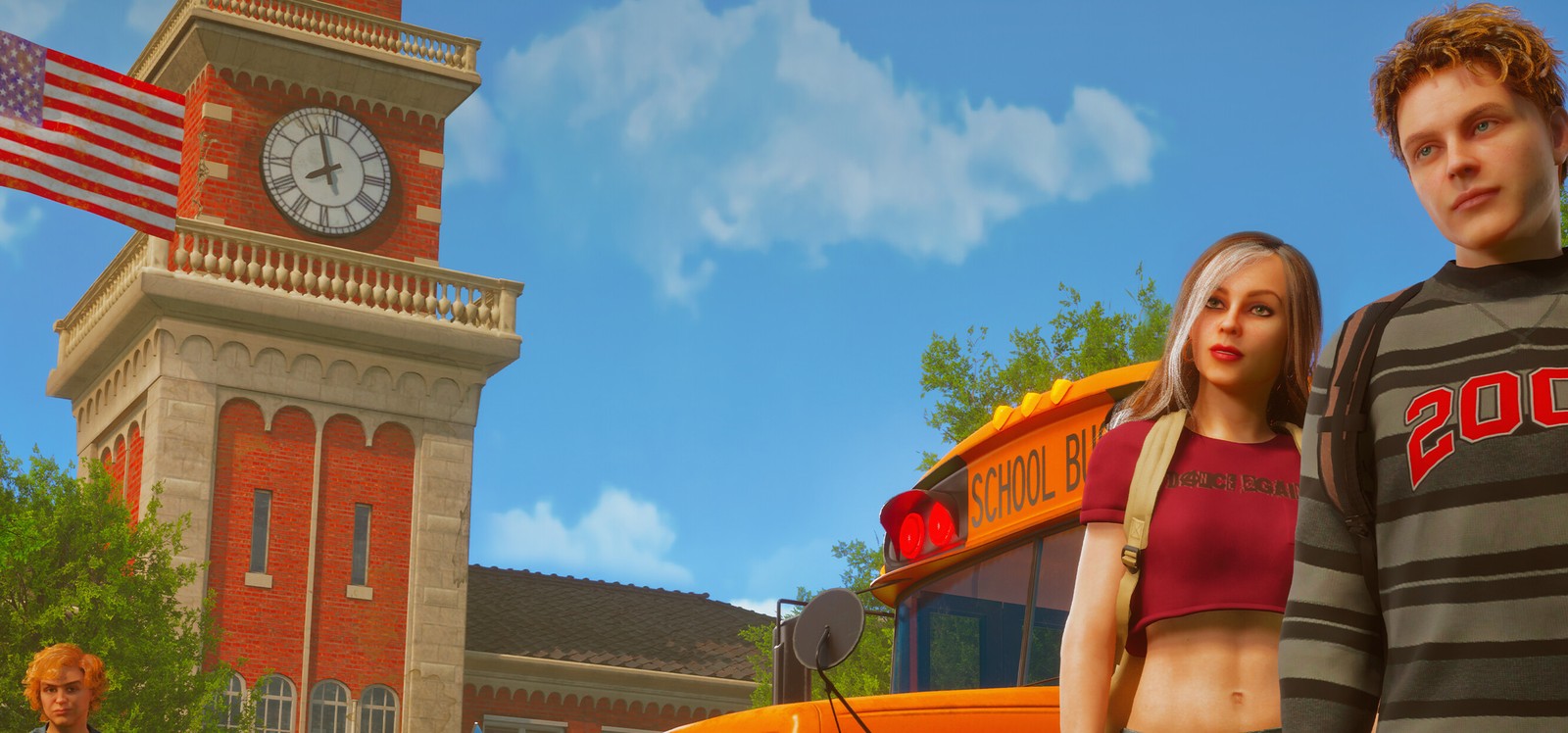
There’s a specific flavor of nostalgia that hits you when you hear pop-punk riffs layered over the sound of a school bell. Agefield High: Rock the School knows this feeling intimately, and it weaponizes it with the subtlety of a whoopee cushion left on a teacher’s chair. Developed by the small team at Refugium Games—yes, the same studio behind the divisive Greyhill Incident—this open-world coming-of-age adventure drops you into the early 2000s and dares you to remember what it felt like to be eighteen, carefree, and deeply, gloriously stupid.
The comparison to Rockstar’s Bully is inevitable. It’s practically baked into the marketing. But where Bully was a polished exercise in sandbox mischief from one of the industry’s most celebrated studios, Agefield High is something scrappier, messier, and—at its best—surprisingly heartfelt. It’s also buggy as all hell. But more on that later.
For now, know this: if you’ve ever wanted to skip class, ride your bike through a small town, get into fistfights with jocks, and attempt to win over your crush before graduation day, Agefield High delivers on that fantasy with an enthusiasm that occasionally outpaces its technical abilities.
Game Overview
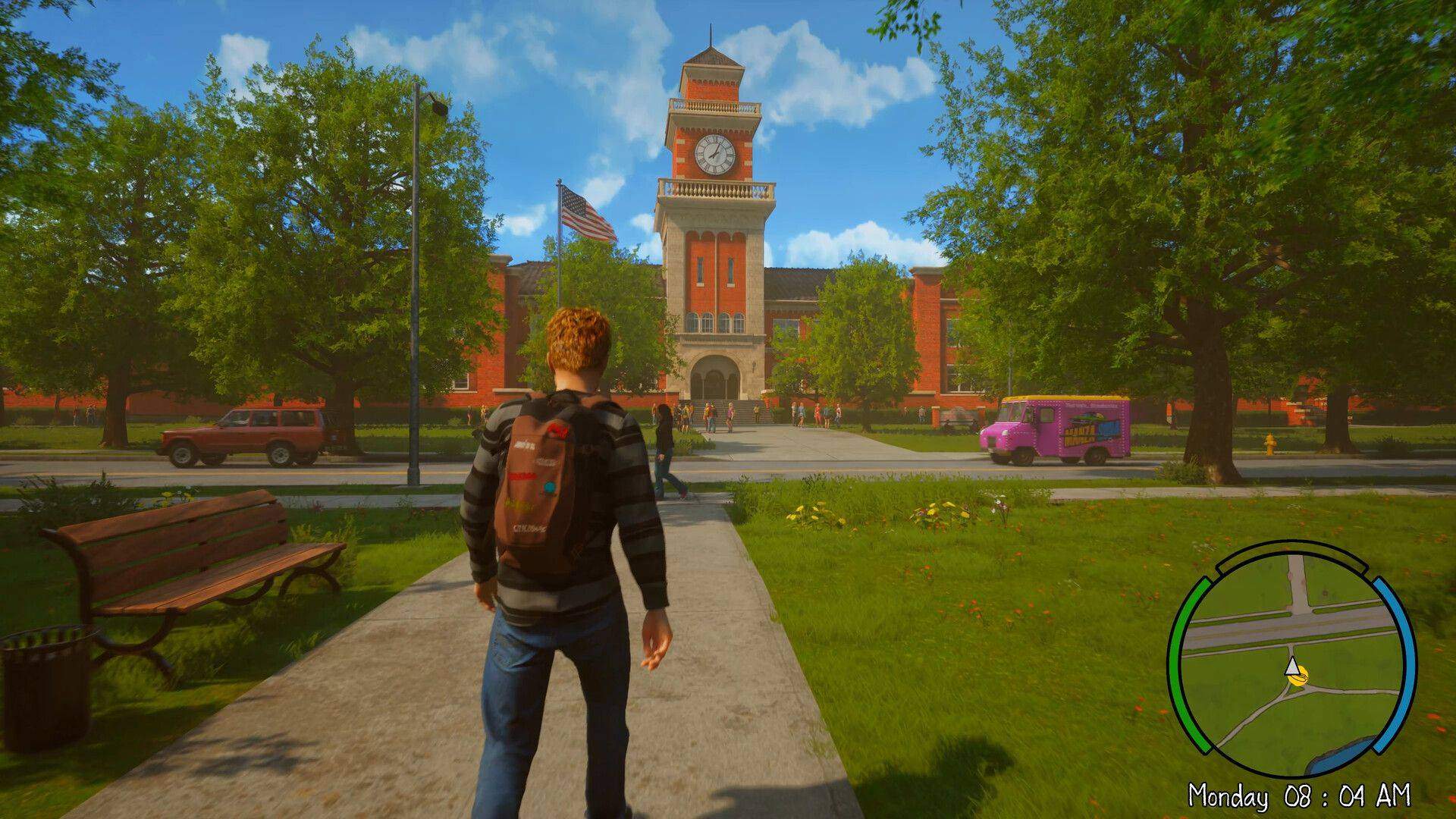
Agefield High: Rock the School is a single-player, open-world action-adventure game set in the fictional small town of Agefield during the early 2000s. You play as Sam Tatum, an eighteen-year-old who’s been uprooted by his parents and dropped into a new school with just months before graduation. The core loop revolves around attending (or skipping) classes, completing story missions, exploring a handcrafted small town, and earning enough reputation to leave your mark before the yearbook closes.
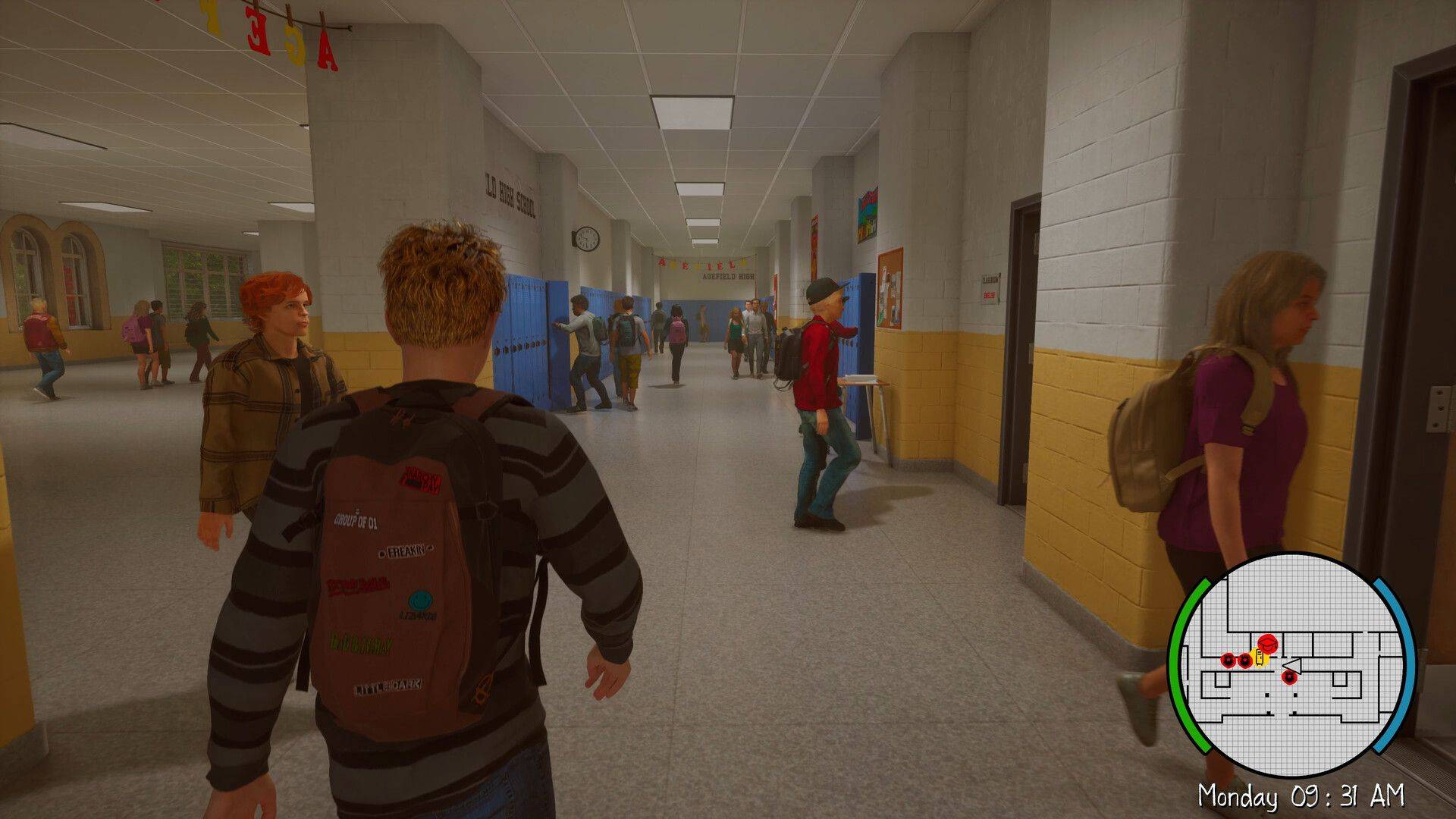
The game is built around a time and school system that gives structure to your days. Weekday mornings mean classes—English, Math, Geography, German, and Music—each with their own mini-games and grade outcomes. Skip them, and you’ll earn cash from side hustles instead. It’s a simple push-pull that captures the eternal teenage dilemma: do the responsible thing, or chase something more interesting?
At its core, this is a game about three friends—Sam, Kale, and Axel—and their ridiculous plan to “Rock the School” before they毕业. The narrative is modest in scope, clocking in at roughly eight to ten hours, but it’s packed with side missions, collectibles, and customization options that give the world more texture than its small size might suggest.
World, Story, and the Early 2000s
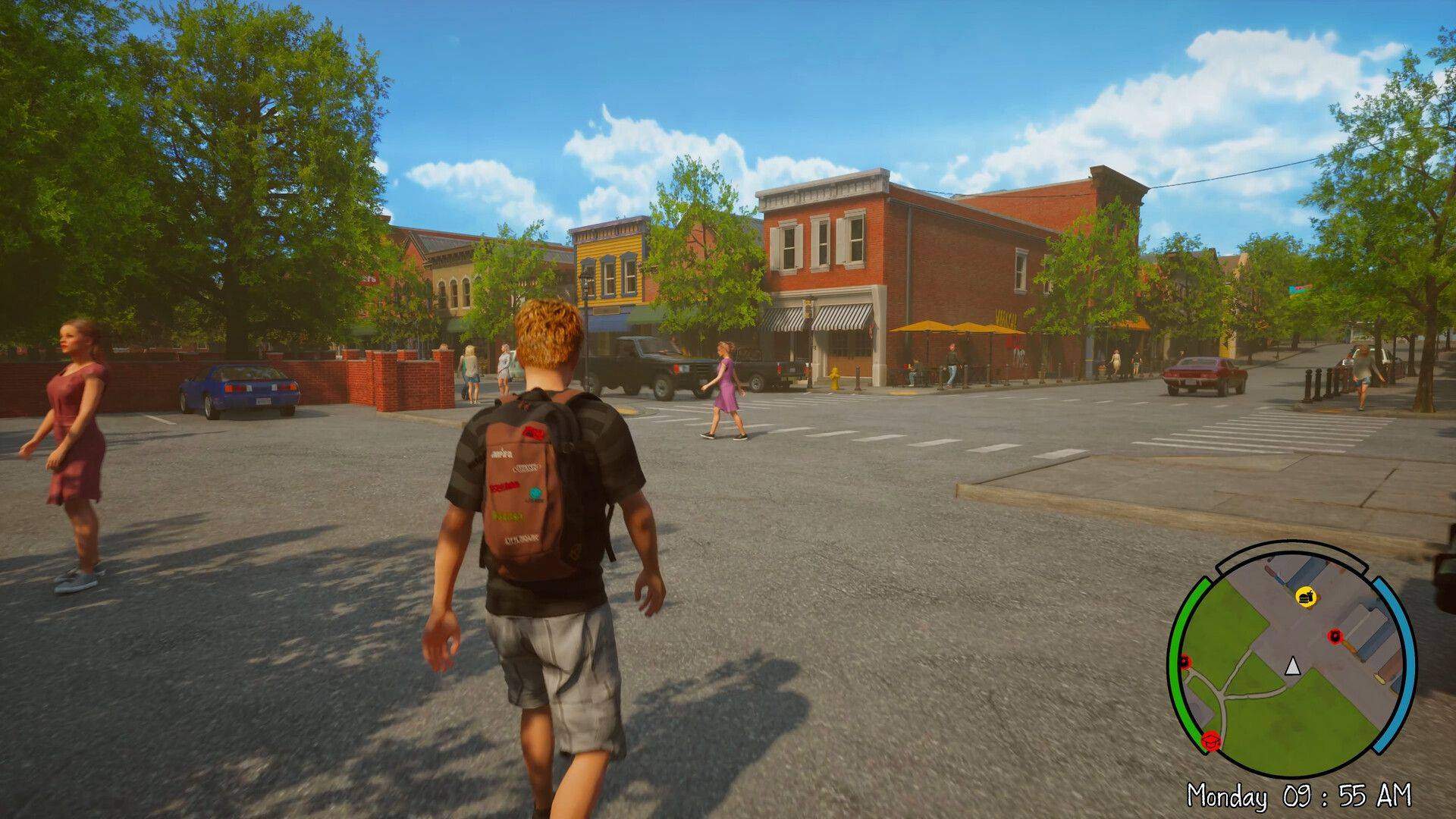
The world of Agefield is deliberately small. This isn’t a sprawling open world competing with Assassin’s Creed—it’s a handcrafted indie town with a school campus, two neighborhoods, a town center, and some countryside. Think of it as a diorama you can walk through rather than a continent you can sprint across.
And honestly? That works in its favor. Every corner of Agefield feels intentional. The dusty corner store where you can buy magazines. The arcade tucked behind the laundromat. The bike trail that winds through the countryside. It’s the kind of world that rewards attention—you’ll notice details, find shortcuts, and develop favorite routes between landmarks. It’s Bully’s Bullworth Academy distilled into a tighter, more focused package.
The story itself is a coming-of-age tale told with the energy of an early 2000s teen comedy. Sam is the new kid. Kale is the wildcard with a plan. Axel is the self-proclaimed rockstar. Together, they scheme, brawl, and stumble their way through senior year. The writing leans heavily into the era’s humor—it’s crude, it’s juvenile, it’s occasionally offensive, and it’s exactly what the developers were going for. Whether that lands for you depends entirely on your tolerance for American Pie-era comedy.
Gameplay and Combat
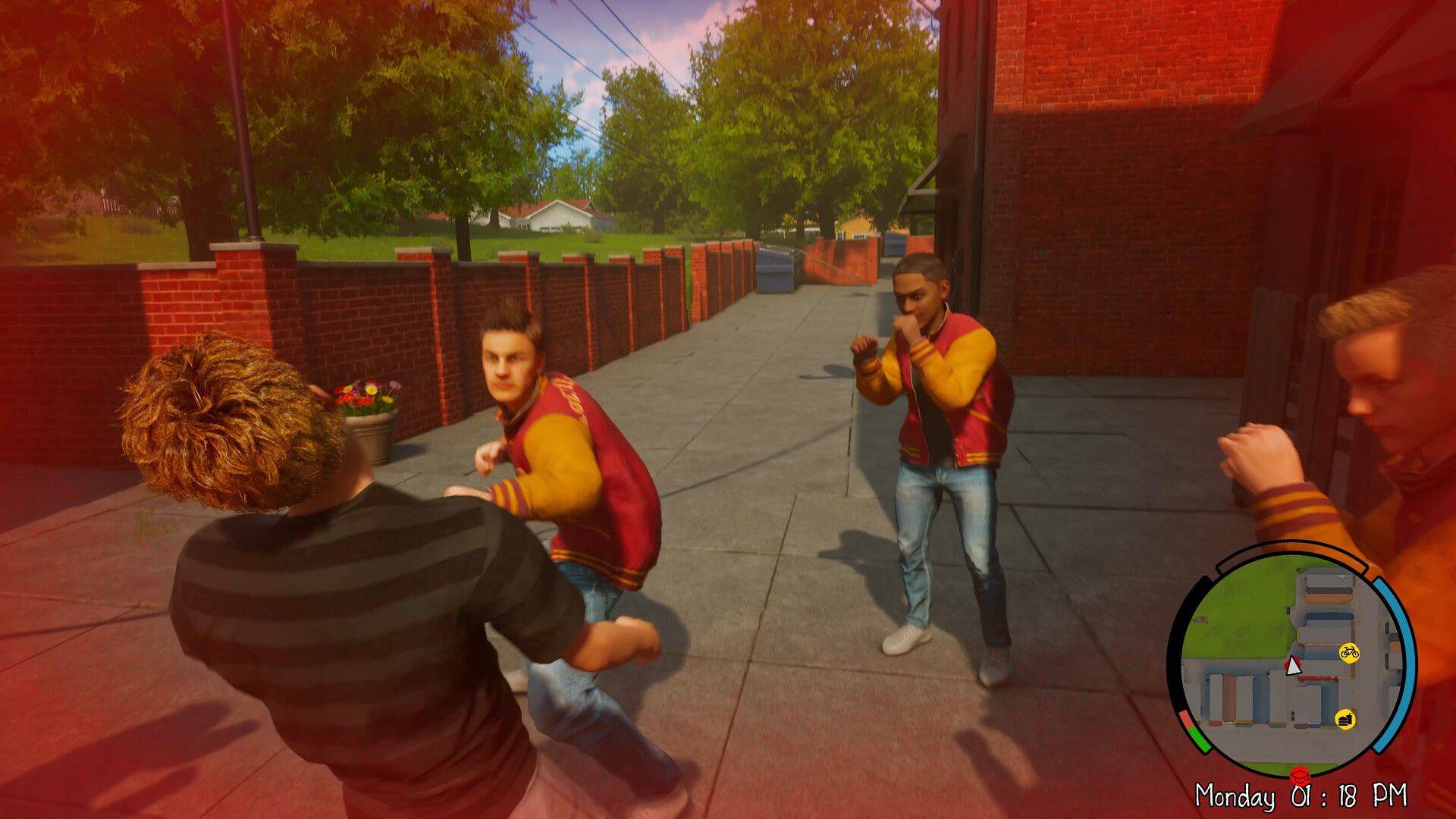
Let’s be upfront: the gameplay in Agefield High is deliberately simple. This isn’t a game trying to reinvent combat or puzzle design. The fighting system is a basic four-button affair—punch, kick, dodge, and a special move—and it feels exactly as clunky as you’d expect from a small-team indie title. You’ll fight jocks, bullies, and authority figures in encounters that are more about timing and positioning than combo mastery.
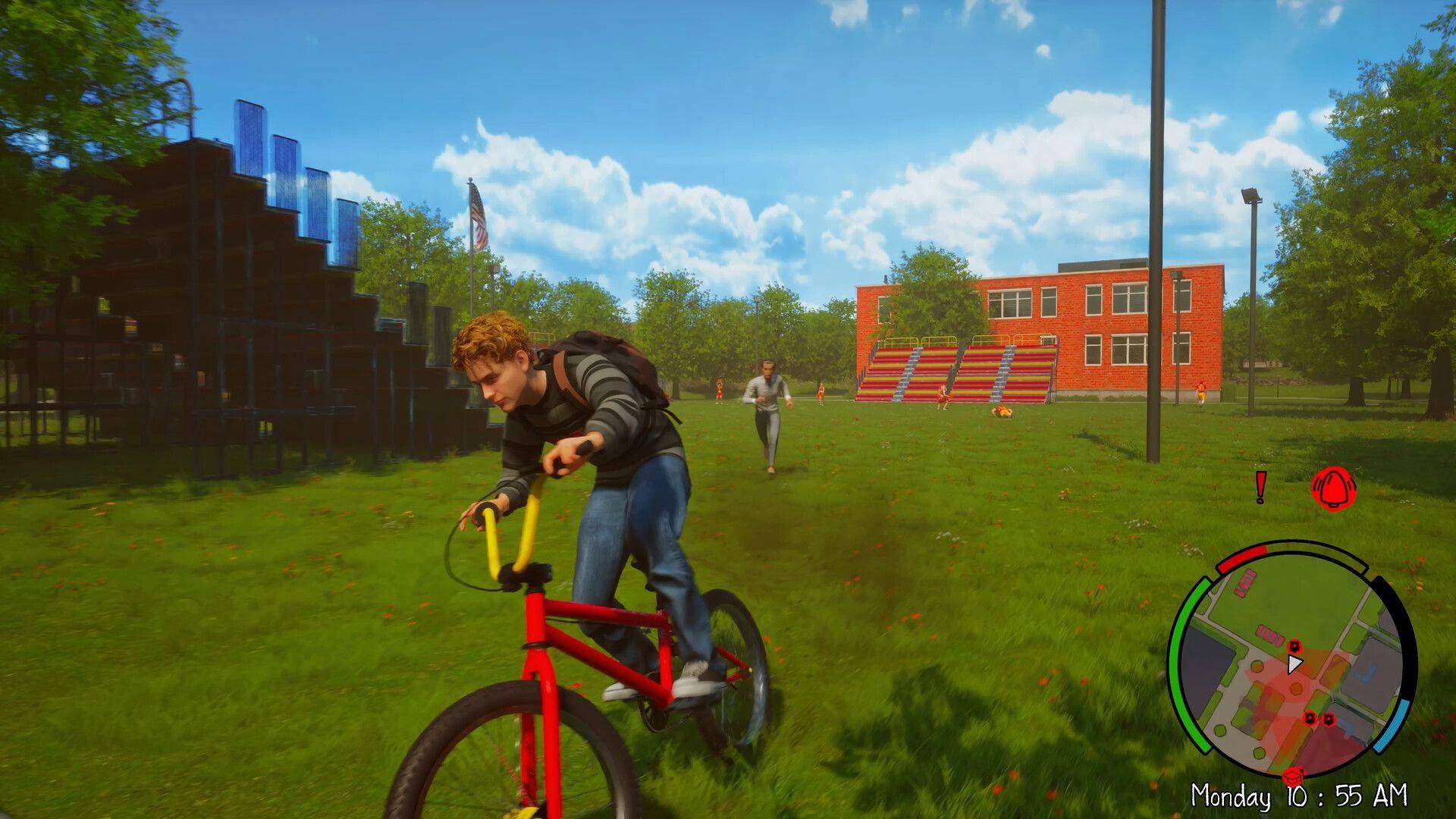
The real gameplay loop is the time management system. Mornings are for classes. Afternoons are for exploration, side missions, and the main story. Evenings bring curfew and cops. It’s a rhythm that keeps you moving through the world with purpose, even when the individual activities aren’t particularly deep. Mowing lawns for cash, prank-calling classmates, racing bikes through town—these aren’t mechanically complex tasks, but they’re charming in their simplicity.
Where the game stumbles is in its execution. Combat animations are stiff. Enemy AI is predictable. The bike physics feel like they were programmed during a caffeine-fueled weekend. And the mission design, while varied in concept, often boils down to “go here, talk to person, do simple task, return.” It’s the kind of gameplay that works fine in isolation but can feel repetitive over ten hours.
Progression and Replayability
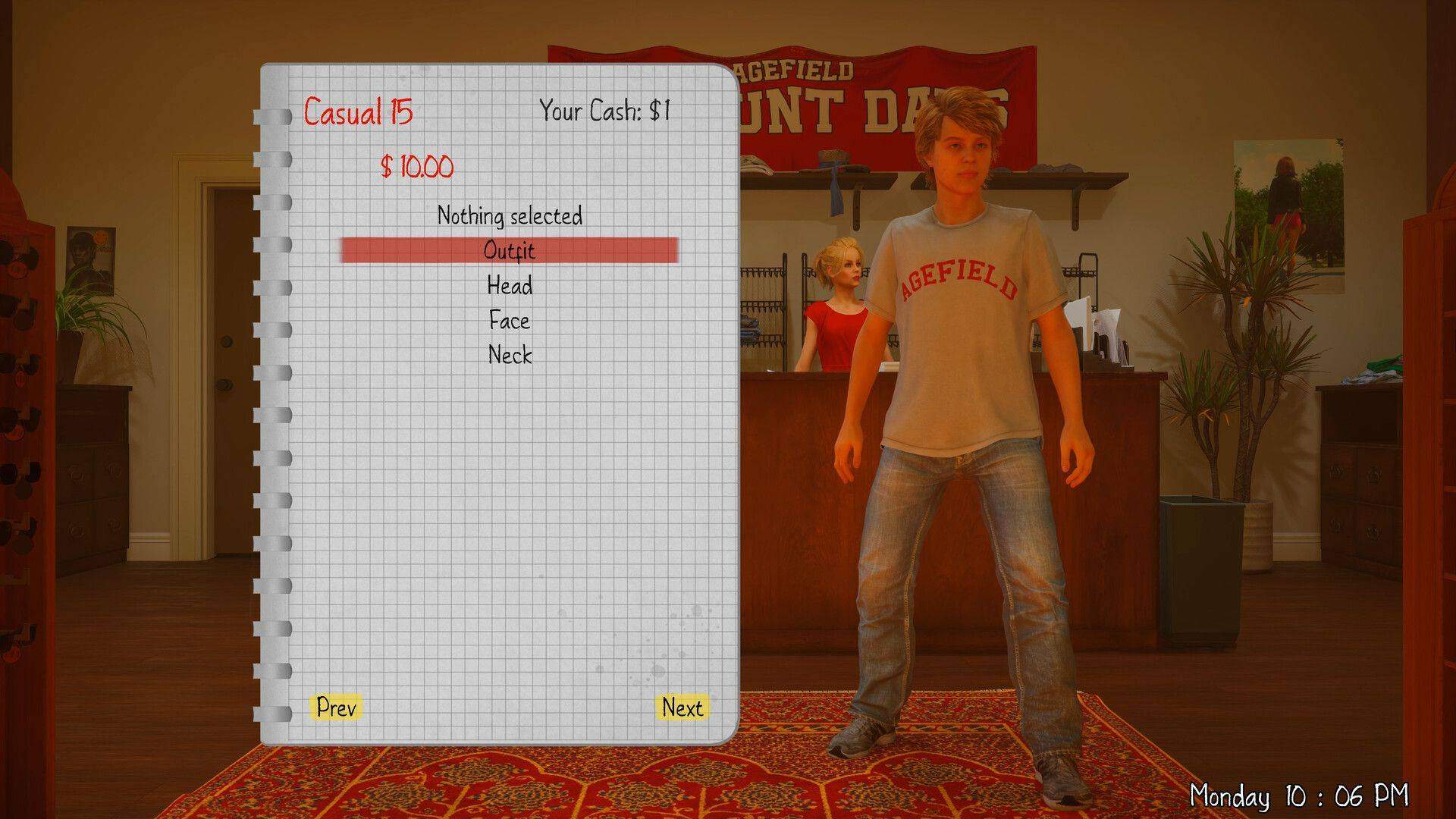
Agefield High offers a progression system that’s more cosmetic than mechanical. You’ll earn cash from missions and side jobs, which you can spend on clothes, bikes, hairstyles, tattoos, and accessories. The customization is surprisingly robust for a game this size—you can genuinely make Sam look like a specific flavor of early 2000s teenager, from baggy jeans and chain wallets to frosted tips and cargo shorts.
The story has two endings, determined by your choices and actions throughout the game. It’s a modest branching structure, but it does give you a reason to replay if you’re curious about the other path. The 32 main missions and 15 side activities provide enough content for a solid single playthrough, though whether you’ll want to return depends on how much the world and characters grab you.
There’s no New Game Plus, no difficulty modes, and no multiplayer. This is a one-and-done experience for most players—and at eight to ten hours, that’s honestly fine. The game doesn’t overstay its welcome. It just doesn’t quite fill the time it gives you, either.
Visuals, Audio, and Atmosphere
Visually, Agefield High is competent but unremarkable. The character models are stiff, the facial animations are limited, and the environments, while charmingly detailed, don’t push any technical boundaries. This is clearly an indie budget at work, and if you’re coming in expecting Bully’s polish or GTA’s fidelity, you’ll be disappointed. But if you meet the game where it is, there’s a warmth to the art direction—the saturated colors, the springtime setting, the cluttered classrooms—that helps sell the early 2000s atmosphere.
The soundtrack, on the other hand, is a genuine highlight. Pop-punk tracks blare from radios and boomboxes throughout the world, perfectly capturing the era’s energy. The ambient sound design—school bells, hallway chatter, distant traffic—creates a sense of place that the visuals alone can’t achieve. It’s the audio that really sells the fantasy of being a teenager in a small American town circa 2002.
There are moments where the atmosphere genuinely clicks. Riding your bike through town at sunset with a punk track playing, the school visible on the hill ahead of you. Sneaking through the hallways after hours, heart racing as a teacher patrols nearby. These quiet beats are where Agefield High is at its best—when it stops trying to be a game and starts trying to be a memory.
Performance and Technical Problems
This is where Agefield High takes its biggest beating. The game launched with a significant number of technical issues, and the Steam review section reads like a crash report compilation. Players have reported frequent crashes to desktop, save corruption, physics glitches (particularly with bikes), animation freezes during cutscenes, and quest-breaking bugs that force restarts.
The optimization is rough. Even on recommended hardware, frame drops are common during combat encounters with multiple enemies, and the game occasionally stutters during exploration. The crash frequency is the most reported issue—some players have experienced dozens of crashes in a single playthrough, with several noting they had to restart missions repeatedly due to save failures.
Refugium Games has acknowledged the issues and released patches, and some reviewers with more recent playtime report fewer crashes. But as of launch week, the technical state of Agefield High is its most significant flaw. The concept is fun, the world is charming, and the writing has genuine personality—but none of that matters if the game won’t stay running.
Pros and Cons
Pros:
- Charming early 2000s atmosphere with a killer pop-punk soundtrack
- Genuine coming-of-age story with personality and heart
- Surprisingly deep customization system for an indie title
- Small, dense world that rewards exploration and attention
- Time management system adds structure without feeling restrictive
- Exactly the right length—doesn’t overstay its welcome
Cons:
- Severe technical issues: frequent crashes, save corruption, bugs
- Combat is shallow and clunky with stiff animations
- Character models and facial expressions are dated
- Mission design can feel repetitive over the full runtime
- Bike physics are hilariously broken
- Raunchy humor won’t land for everyone
SteamGamer Verdict
Agefield High: Rock the School is a game caught between ambition and execution. The vision is clear and appealing—a Bully-inspired coming-of-age adventure dripping with early 2000s nostalgia—and when it works, it’s genuinely fun. The world is charming, the story has real personality, and the pop-punk soundtrack is an absolute banger.
But the technical foundation is shaky. Crashes, bugs, and performance issues plague the experience, turning what should be a carefree nostalgia trip into a frustrating exercise in patience. The combat is rudimentary, the animations are stiff, and the overall polish doesn’t match the enthusiasm of the concept.
For $29.99, Agefield High is a tough sell in its current state. The bones are good—the world, the story, the atmosphere all work. But the technical problems are too significant to ignore, and the gameplay loop, while charming, isn’t deep enough to carry the experience through its rougher moments. If Refugium Games can patch the worst of the bugs and improve performance, this could become a genuine cult classic. Right now, it’s a game with a great idea that needs more time in the oven.
Score: 6/10
Developer: Refugium Games
Publisher: Refugium Games
Platform: PC (Steam)
Release Date: August 12, 2026
Price: $29.99 USD

Jordan Hayes covers PC gaming news, hardware, and the ever-changing Steam ecosystem for SteamGamer.net. He believes some of gaming’s biggest stories are hiding in patch notes, performance charts, and suspiciously quiet price changes. When he isn’t investigating what developers or GPU manufacturers are doing, he is probably starting another roguelike run he insists will be his last.





Comment here