
The co-op horror genre has been on an absolute tear these past few years. Phasmophobia turned ghost hunting into a cultural phenomenon. Lethal Company made dying in a spaceship hilarious. Abiotic Factor proved that survival crafting could be genuinely terrifying. The market is crowded, the bar is high, and every new entry arrives carrying the weight of “what makes this one different?”
The Mound: Omen of Cthulhu has an answer to that question, and it’s terrifying in the best possible way: your teammates might be lying to you. Not on purpose. Not because they’re bad friends. But because the jungle has cracked open their mind, and what they’re seeing and hearing has absolutely nothing to do with reality. You’re standing next to each other in the same cursed Chilean rainforest, and you might as well be in two different dimensions.
That’s the kind of horror that lingers. Not jump scares. Not cheap tricks. The slow, creeping realization that the person you trust most in the party might be screaming about a creature that isn’t there — or worse, might be calmly walking toward something you can both see but only one of you recognizes as a threat.
What Is The Mound: Omen of Cthulhu?
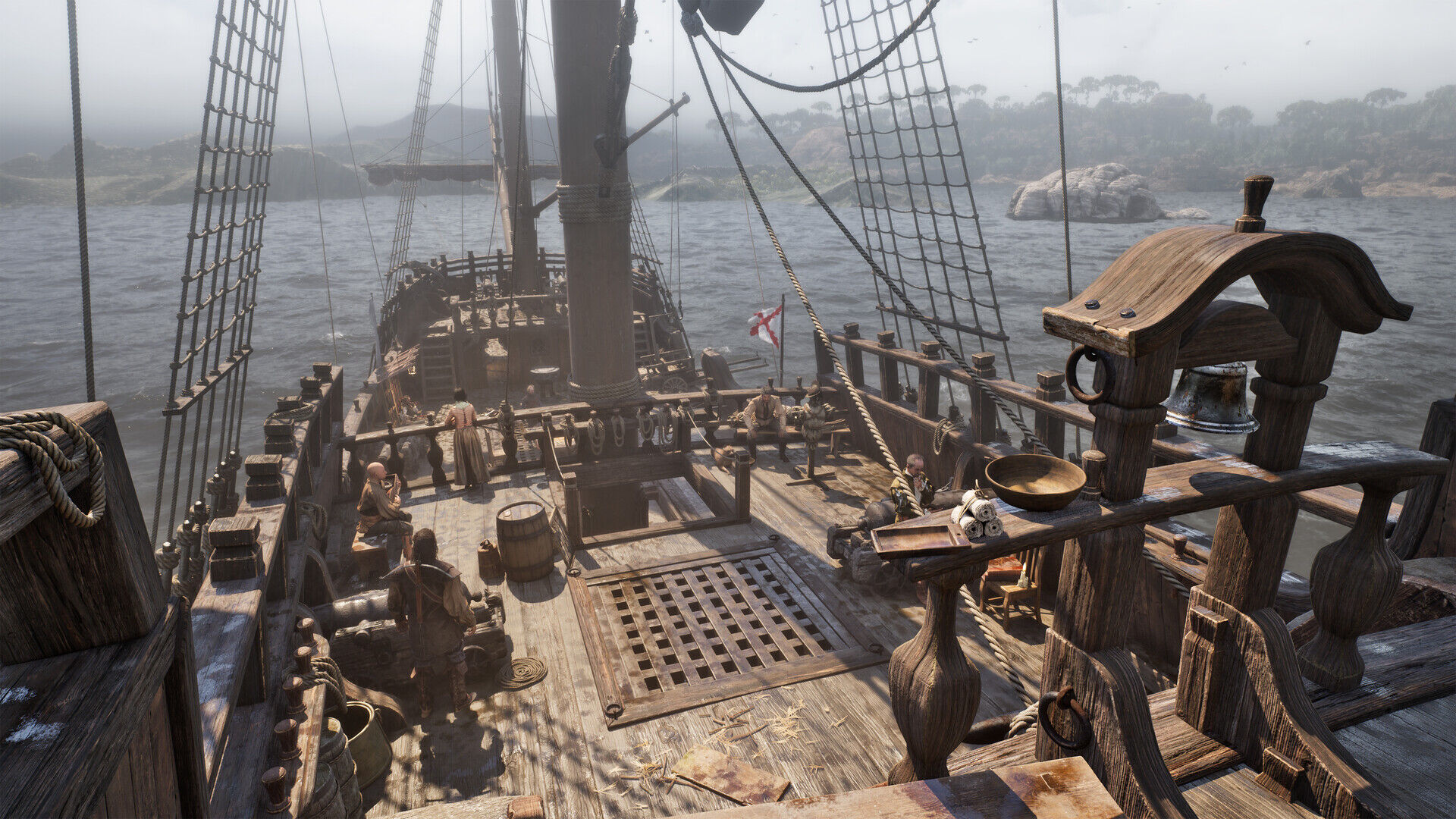
Developed by ACE Team (the Chilean studio behind Rock of Ages and Abyss Odyssey) and published by Nacon, The Mound: Omen of Cthulhu is a co-op extraction horror game for up to four players. Released on July 15, 2026, it draws its premise from H.P. Lovecraft’s short story “The Mound,” transposing it from 1920s Oklahoma to the jungles of Chile in 1652. You and your friends play as conquistadors who have ignored every possible warning to sail into uncharted territory in search of legendary treasure buried beneath an ancient, otherworldly structure.
The loop is straightforward: accept a contract aboard the galleon, gear up with whatever equipment the expedition leader allocates, sail to the mainland, explore, loot, survive, and extract with enough valuables to satisfy the captain. Fail, and you lose everything you carried. The contracts vary in difficulty from Basic to Legendary, and the deeper you push into the jungle, the more hostile the world becomes.
A World That Hates You
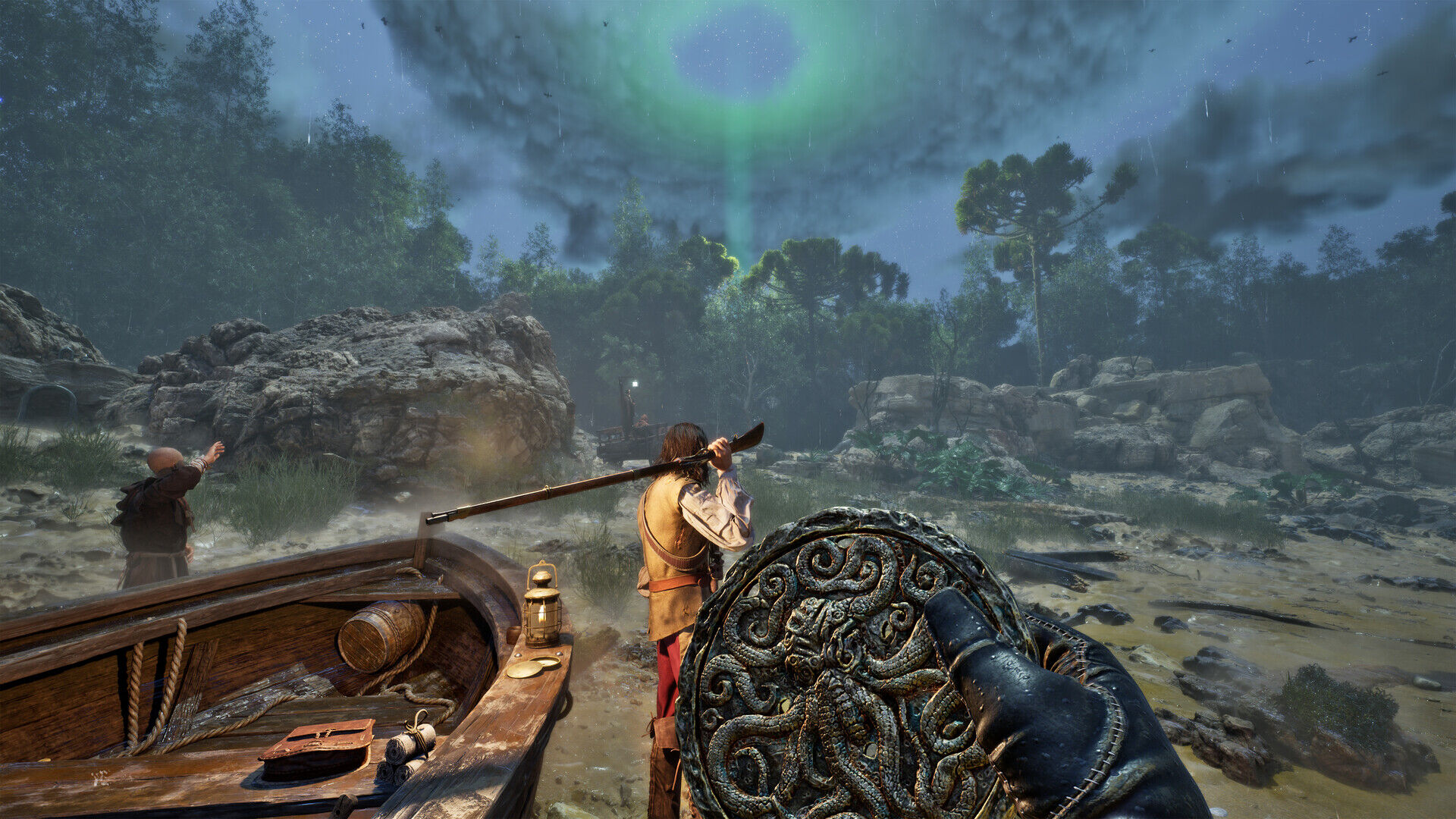
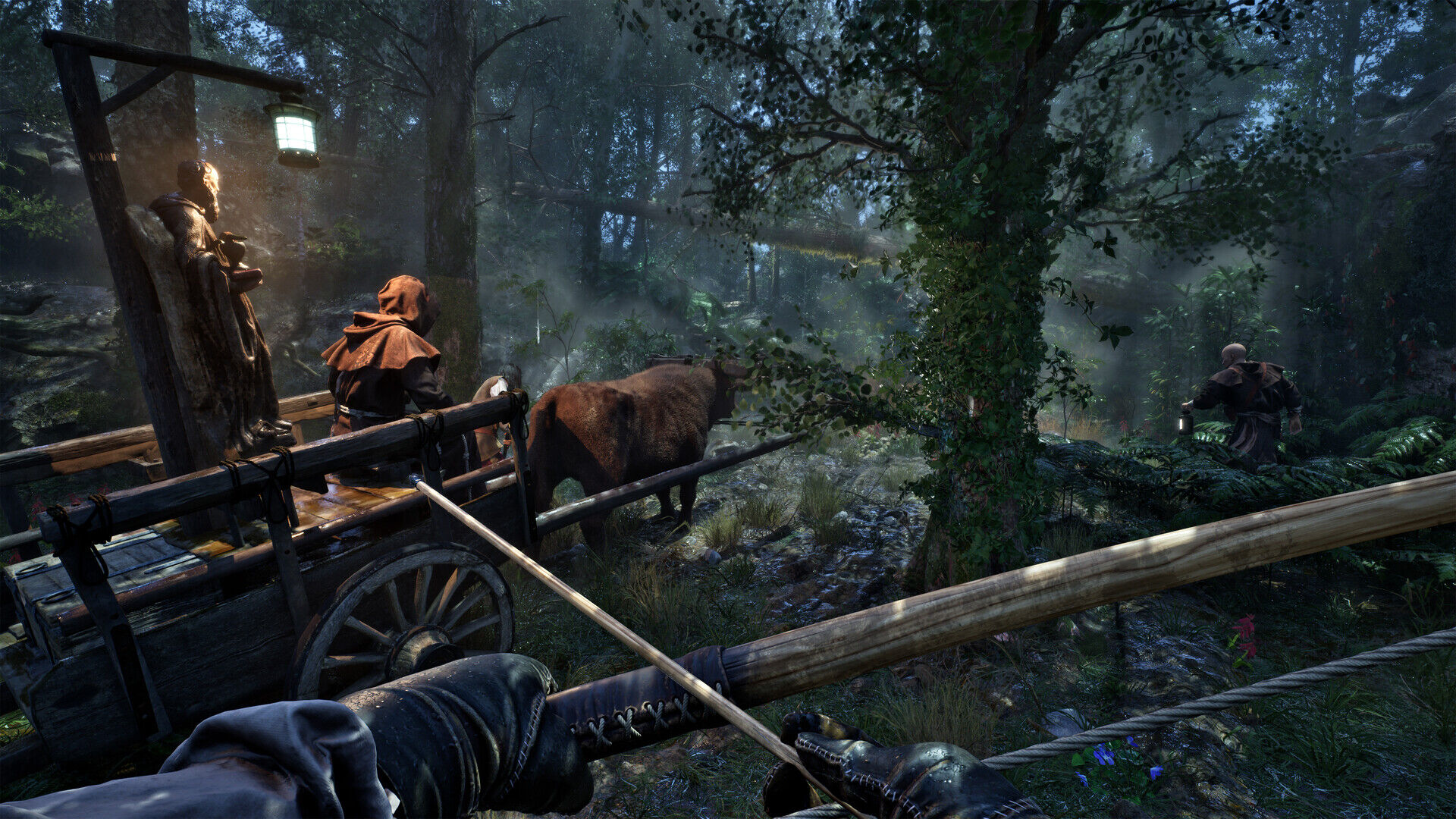
ACE Team has built something genuinely atmospheric here. The Chilean jungle is rendered in Unreal Engine with dense foliage, rolling fog, and oppressive canopies that block out the sky. Sunlight filters through in thin, sickly shafts. Abandoned colonial forts sit half-consumed by vegetation, their logbooks offering fragments of story about previous expeditions that didn’t make it back. The beaches where you land feel exposed and vulnerable — the jungle wall looms ahead like a living thing deciding whether to let you in.
The setting is crucial because it strips away the modern safety net. No military hardware. No tactical gear. You’ve got a lantern, a rapier, a bow, maybe a primitive firearm if you’re lucky, and whatever courage you can scrape together. The 17th-century timeframe isn’t just window dressing — it fundamentally changes the tension. Every expedition feels like a desperate gamble, not a routine mission. You’re not soldiers. You’re fools with swords who think gold is worth the risk.
Lovecraft’s influence runs deep. The journal entries scattered throughout the world are well-written and effectively drip-feed lore about the Mound and the alien gods connected to it. The voice acting on these collectibles is strong — measured, increasingly desperate, and genuinely unsettling in the later entries. The story unfolds through discovery rather than cutscenes, and the late-game reveals about what The Mound actually is deliver on the cosmic horror promise in satisfying ways.
One thing worth noting: the game handles its colonial setting with more care than you might expect. The Mapuche people native to the region are referenced in the story and clearly distinguished from the alien cultists deeper in the jungle. It doesn’t fully escape the “untamed wilderness of nightmares” trope that comes with colonial narratives, but it’s more thoughtful than most Lovecraft adaptations manage.
Gameplay and Combat
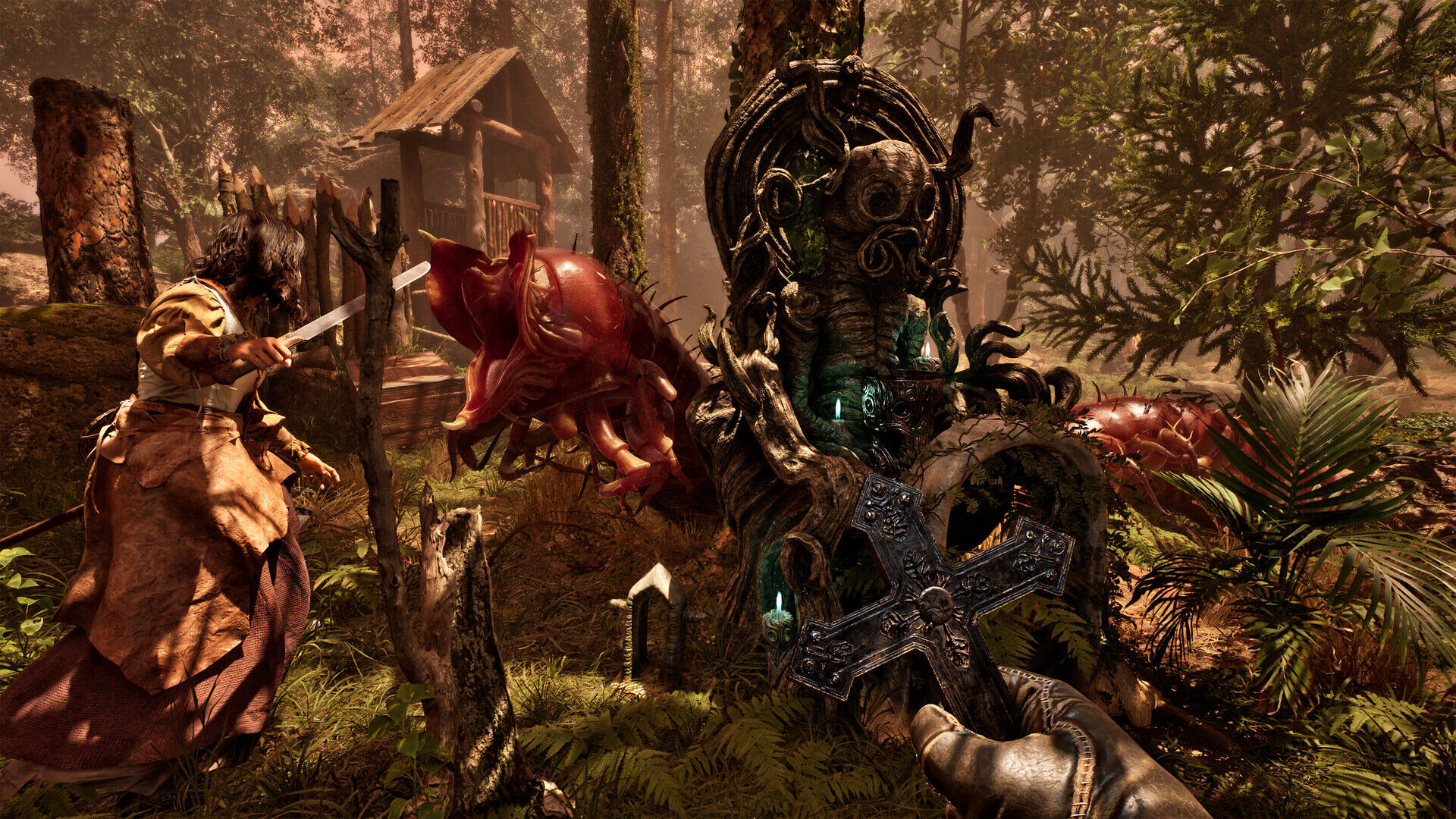
The moment-to-moment gameplay revolves around exploration, stealth, and resource management. The jungle is your biggest enemy. Walking carelessly — snapping branches, firing guns, sprinting through undergrowth — attracts creatures that lurk in the fog. You learn to move slowly, to watch your footing, to whisper through proximity voice chat instead of shouting. These small design choices transform ordinary traversal into something genuinely tense.
Combat is a mixed bag. The weapon variety is solid: rapiers, axes, bows, bolt guns, and firearms all feel distinct. Limb-severing is a mechanic, and stealth kills reward coordination. But the melee hit detection can feel imprecise, and close-quarters encounters sometimes devolve into awkward flailing rather than satisfying action. When ammunition is scarce and enemies are closing in, you want your sword swings to land cleanly, and they don’t always do.
The real star of the gameplay is the madness system. As your sanity deteriorates — through prolonged exposure to eldritch threats, isolation, or simply spending too long in the jungle — reality begins to warp. And here’s the brilliant part: it warps differently for each player. You might see blood-soaked terrain where your teammate sees clear ground. You might hear creatures approaching that no one else can detect. Most terrifyingly, the Faceless Ones — the game’s signature enemies — can copy your teammates’ character models and play back their recorded voice lines, making it nearly impossible to tell friend from foe.
One reviewer described a moment where they were yelling at their “friend” who was laughing at something, only to realize it was a Faceless One mimicking the real player using their model and audio. That’s not a scripted scare. That’s a systemic horror moment born from the game’s mechanics, and it’s the kind of thing you simply can’t get from a single-player horror game.
Progression and Replayability
The Mound is built for repetition. Each expedition is a self-contained run: you accept a contract, gear up, explore, extract or die, and return to the galleon. Between runs, you level up your character, unlock cosmetic items (mostly knife skins), and gain access to better equipment. The progression feels meaningful up to a point — unlocking maps, torches, and higher-quality gear makes later expeditions more manageable.
The problem is that progression is also punishing. You lose everything you carry when you die, including upgraded gear. After a few failed Legendary contracts, it’s easy to go broke with no easy way to recoup losses. The contract system also scales with the host’s level, which means bringing in new friends who haven’t played is a headache — there may not be Basic contracts available to ease them in.
The game does offer 18 interconnected maps, abandoned forts that serve as alternate starting points, and the Mound itself as a late-game destination. There’s enough content here for dozens of hours, especially if you’re playing with a consistent group. But the difficulty curve is steep, and solo players will find the experience significantly diminished — the AI companion is functional but not compelling.
Visuals, Audio, and Atmosphere
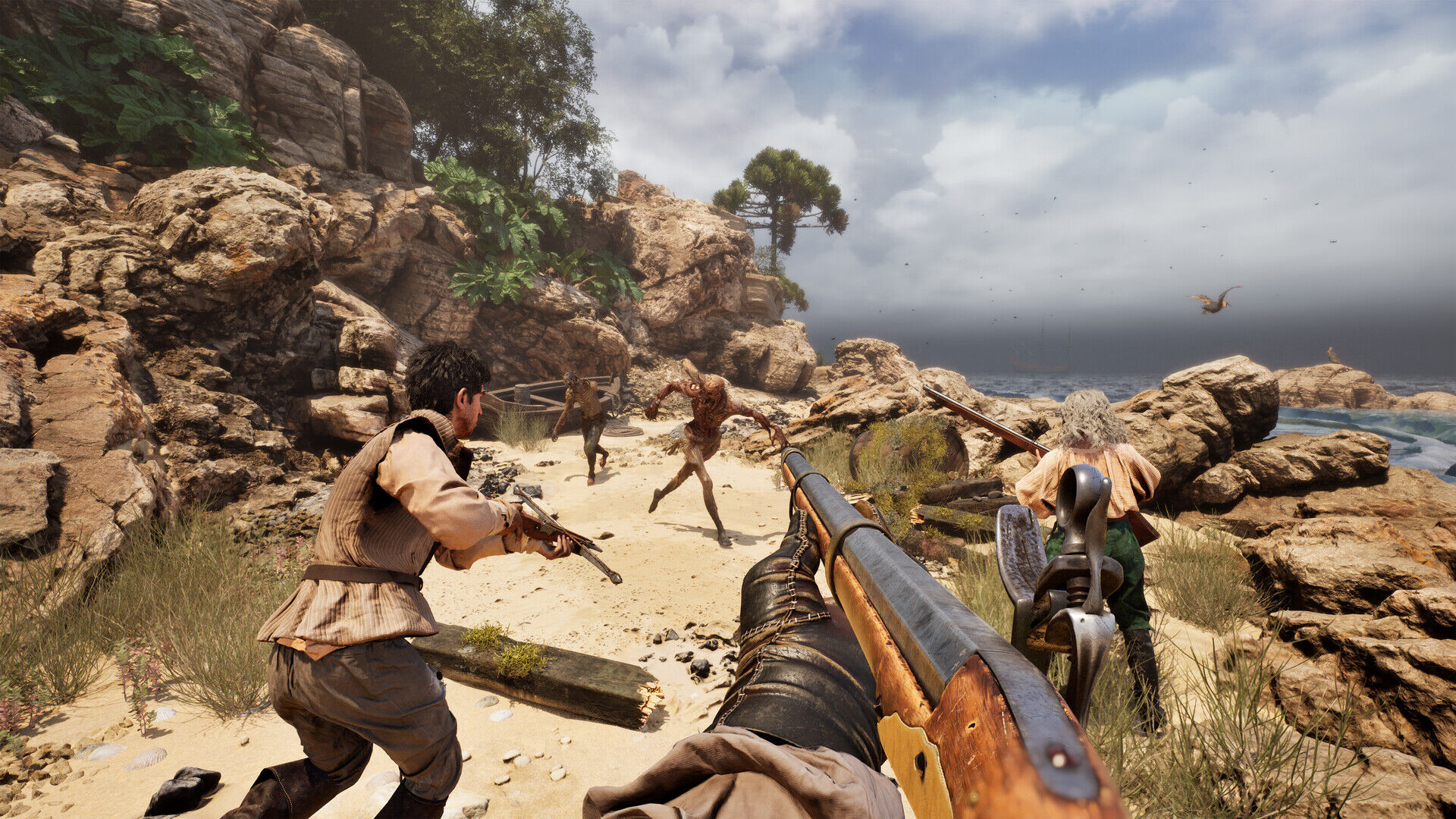
The Mound looks great. The jungle is dense and oppressive without relying on blanket darkness. Fog limits visibility in ways that feel natural rather than artificial. Lighting from lanterns barely cuts through the vegetation, creating pockets of shadow that become genuinely frightening. The abandoned forts, beaches, and otherworldly dimensions offer visual variety that keeps the environment from feeling repetitive.
The audio design is where the atmosphere really sings. Ambient jungle sounds — distant animal calls, rustling foliage, the creak of old wood — create a constant sense of unease. The proximity voice chat system means conversations fade as teammates move apart, making separation feel genuinely isolating. Sound effects for enemy encounters are punchy and unsettling. The soundtrack is appropriately restrained, letting the environmental audio do the heavy lifting.
Performance and Technical Problems
The Mound isn’t without its rough edges. Players have reported performance dips in denser jungle areas, occasional connection issues in multiplayer, and UI elements that feel unpolished. The game launched with a patch that tweaked difficulty, but some players feel the adjustments didn’t go far enough. Hit detection in melee remains the most commonly cited complaint, and the contract scaling system needs rethinking for groups with mixed experience levels.
That said, these issues don’t break the experience. They chip away at it. The core loop — explore, survive, extract — works, and the madness system is a genuine achievement in co-op horror design. Post-launch support from ACE Team and Nacon will likely address many of these concerns, but players should go in aware that The Mound is still rough around the edges.
Pros and Cons
Pros:
- The madness system is a masterclass in co-op horror design — individualized hallucinations create genuine paranoia and unforgettable moments
- Proximity voice chat combined with Faceless Ones that mimic teammates creates emergent horror that no scripted sequence can match
- Atmospheric jungle setting with strong art direction and restrained, effective audio design
- Lovecraftian lore is well-integrated through discoverable journal entries with quality voice acting
- Stealth and resource management mechanics reward patience and teamwork over brute force
- 18 interconnected maps and a progression system that encourages replayability
- The 17th-century conquistador setting feels fresh and strips away the modern safety net
Cons:
- Melee combat hit detection feels imprecise, undermining close-quarters encounters
- Difficulty is punishing from the start, with limited options to tailor challenge for mixed-skill groups
- Contract scaling tied to host level makes onboarding new players frustrating
- Solo play is technically supported but significantly less engaging
- Gear loss on death can create resource spirals that stall progression
- Portal missions are universally disliked — instant-kill mechanics feel unfair
- UI and performance issues, while not game-breaking, detract from immersion
SteamGamer Editorial Verdict
The Mound: Omen of Cthulhu is the rare co-op horror game that doesn’t just rely on jump scares or combat encounters to terrify you. It gets inside your head — literally. The madness system, which feeds different hallucinations to each player and lets enemies impersonate your friends, creates horror that feels genuinely personal and unpredictable. When it works, it’s some of the most memorable co-op gaming in recent memory.
The problems are real, though. The difficulty is uneven, the combat needs polish, and the progression system punishes failure in ways that can stall momentum. It’s a game that demands a committed friend group and a tolerance for rough edges. But for those willing to push through the early hours and find their footing, The Mound delivers something the genre desperately needed: horror that makes you distrust the people you’re playing with, and makes that distrust the point.
Score: 7/10
The Mound: Omen of Cthulhu is available now on PC (Steam), PlayStation 5, and Xbox Series X|S for $29.99. A 20% launch discount is available through July 29.

Sarah Chen searches the quieter corners of PC gaming for remarkable ideas that bigger releases leave behind. She covers indie games, platform updates, and overlooked releases for SteamGamer.net. If a strange little game has twelve reviews, an unforgettable mechanic, and absolutely no marketing budget, Sarah has probably already finished it—and is explaining why everyone else should care.





Comment here