
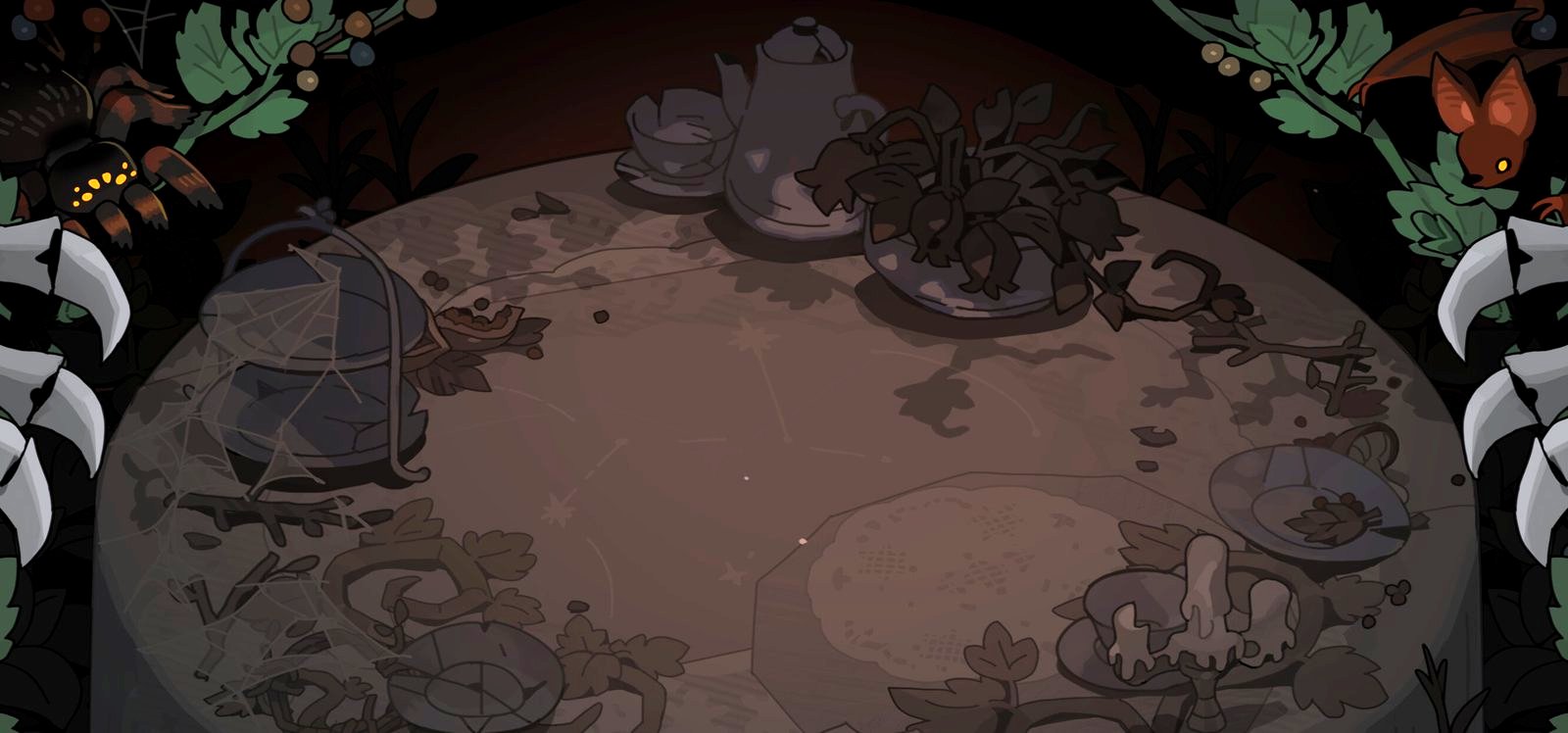
There’s a particular kind of magic in a game that makes you forget you’re playing a roguelike. Garden of Witches, the debut Steam title from Korean indie studio Team Tapas, pulls that trick off with alarming efficiency. You pick up giant scissors, snip a few witches into attending a tea party, and suddenly three hours have evaporated. It’s cute, it’s crunchy, and it understands something fundamental about the genre that many of its contemporaries miss: a roguelike doesn’t need to be endless to be worth your time.
Originally launched into Early Access in May 2025, Garden of Witches completed its journey to version 1.0 on August 28, 2026, bringing with it a combat overhaul, new Epilogue chapters, keyboard and mouse support, and Japanese voiceovers. The result is a compact, polished action roguelike that wears its charm on its sleeve — even if the sleeve is slightly too short for the price tag.
Game Overview
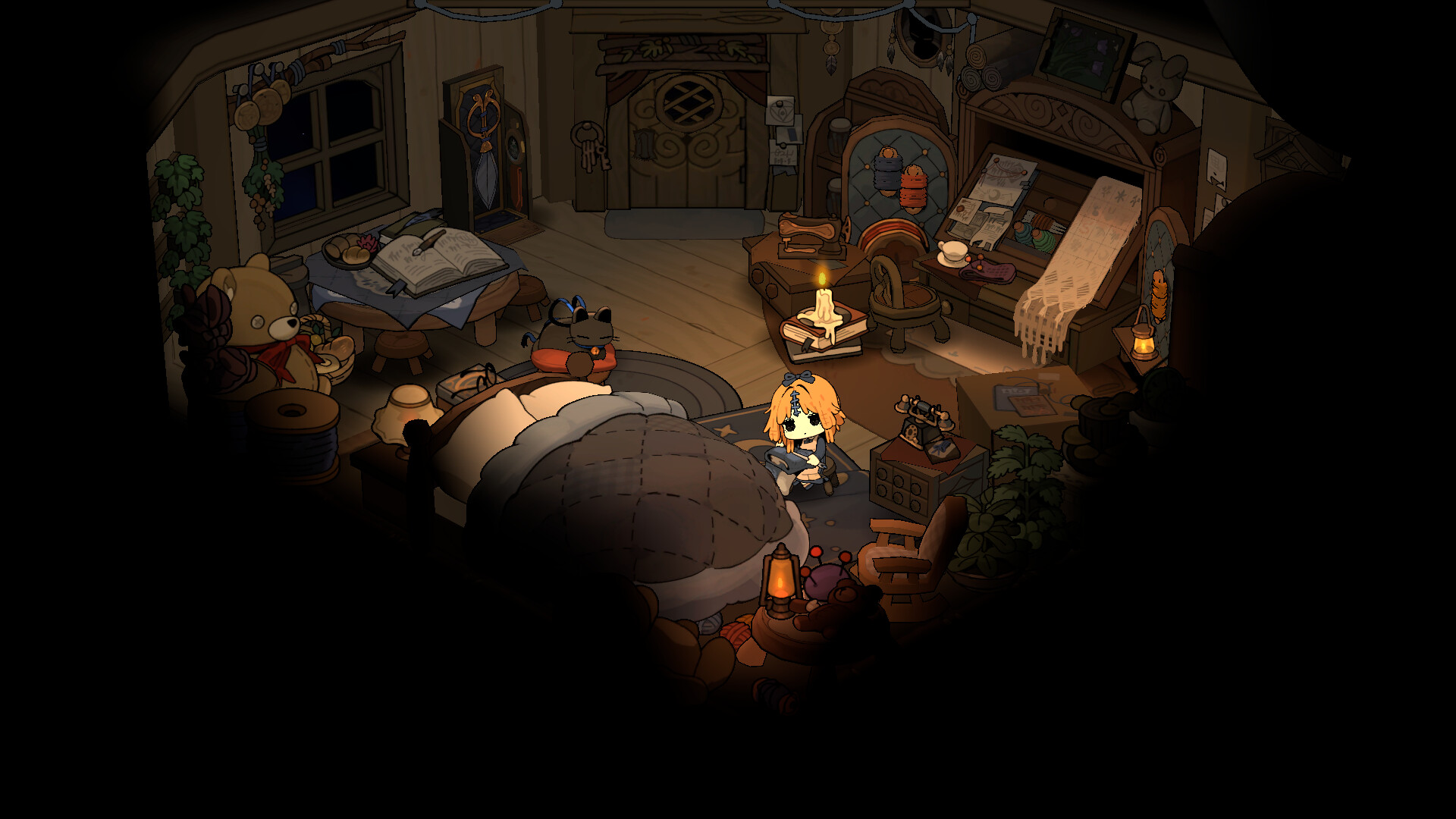
Garden of Witches is a top-down action roguelike developed and published by Team Tapas, the studio behind the mobile hits A Girl Adrift and Bistro Heroes. You play as Sil, the Thread Witch, whose mission is deceptively simple: gather all the witches in the Garden for an annual tea party before the entire realm collapses into oblivion. To do this, you’ll need to snip, slash, and spell-cast your way through five main chapters, each introducing new mechanics and escalating complexity.
The game’s structure mirrors Hades in its approach to roguelite storytelling. Each run through the Garden advances the narrative, with new dialogue, character interactions, and story beats woven into the combat loop. Unlike Hades, however, Garden of Witches doesn’t lean heavily on meta-progression between runs — you select your loadout before each attempt, and the upgrades you encounter are predetermined based on your weapon and spell choices. This gives the game a more deliberate, build-crafting feel that rewards planning over improvisation.
World, Story, and Central Premise
The Garden itself is a whimsical, storybook world populated by witches with distinct personalities and combat styles. The writing leans into cozy fantasy tropes — tea parties, magical creatures, a protagonist who just wants everyone to get along — but undercuts them with genuine stakes. The Garden is dying, and the only way to save it is to convince (or forcefully recruit) every witch into participating in the ritual.
Each chapter introduces new characters and environments, and the Epilogue chapters added in 1.0 bring the story to a satisfying conclusion. The narrative isn’t going to win any literary awards, but it’s charming, well-paced, and never overstays its welcome. Character interactions feel genuine, and the Japanese voice acting — available for the main story — adds a layer of personality that elevates the material. The writing understands that in a game this size, every line needs to earn its place, and it mostly does.
Gameplay and Combat
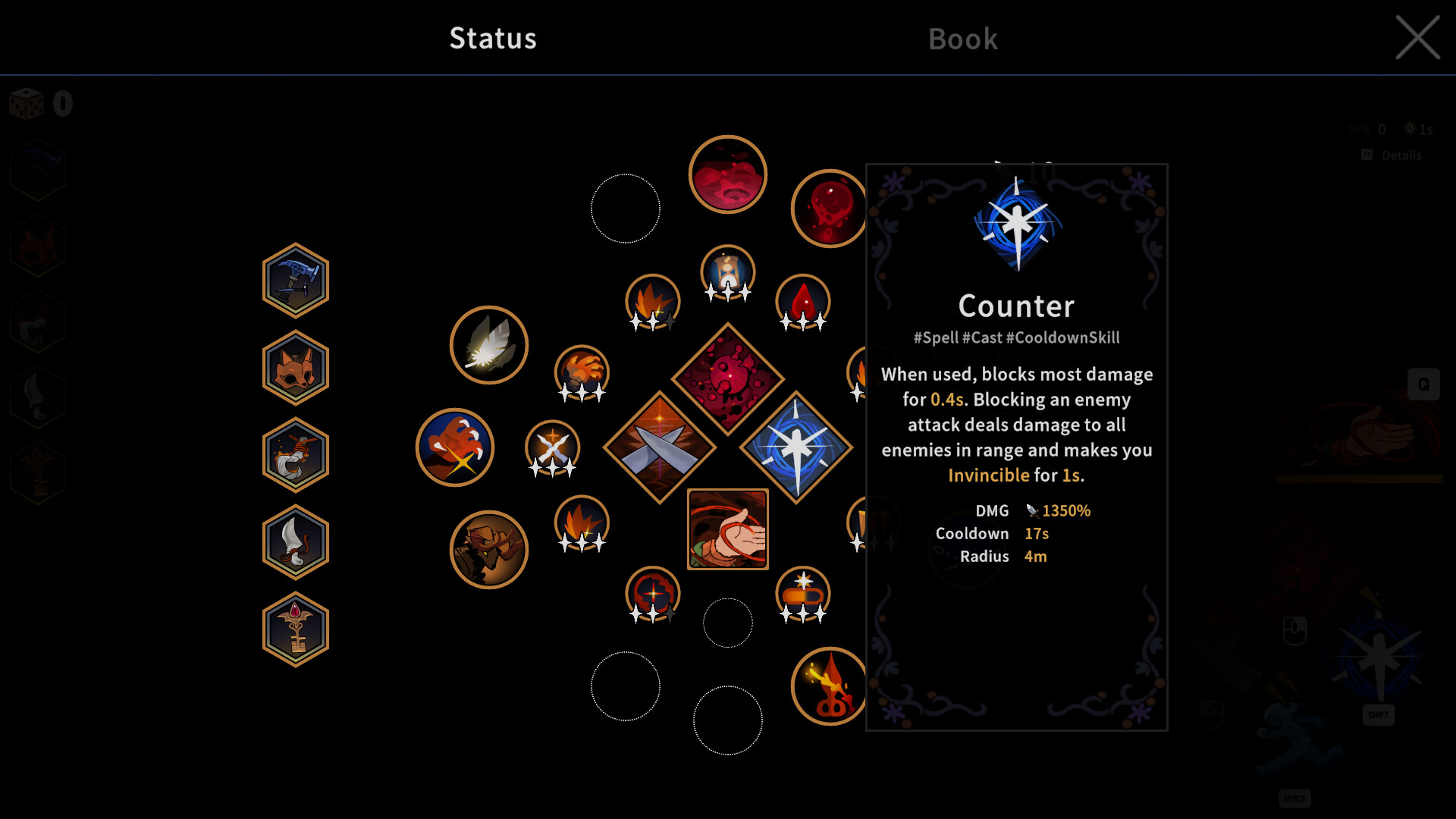
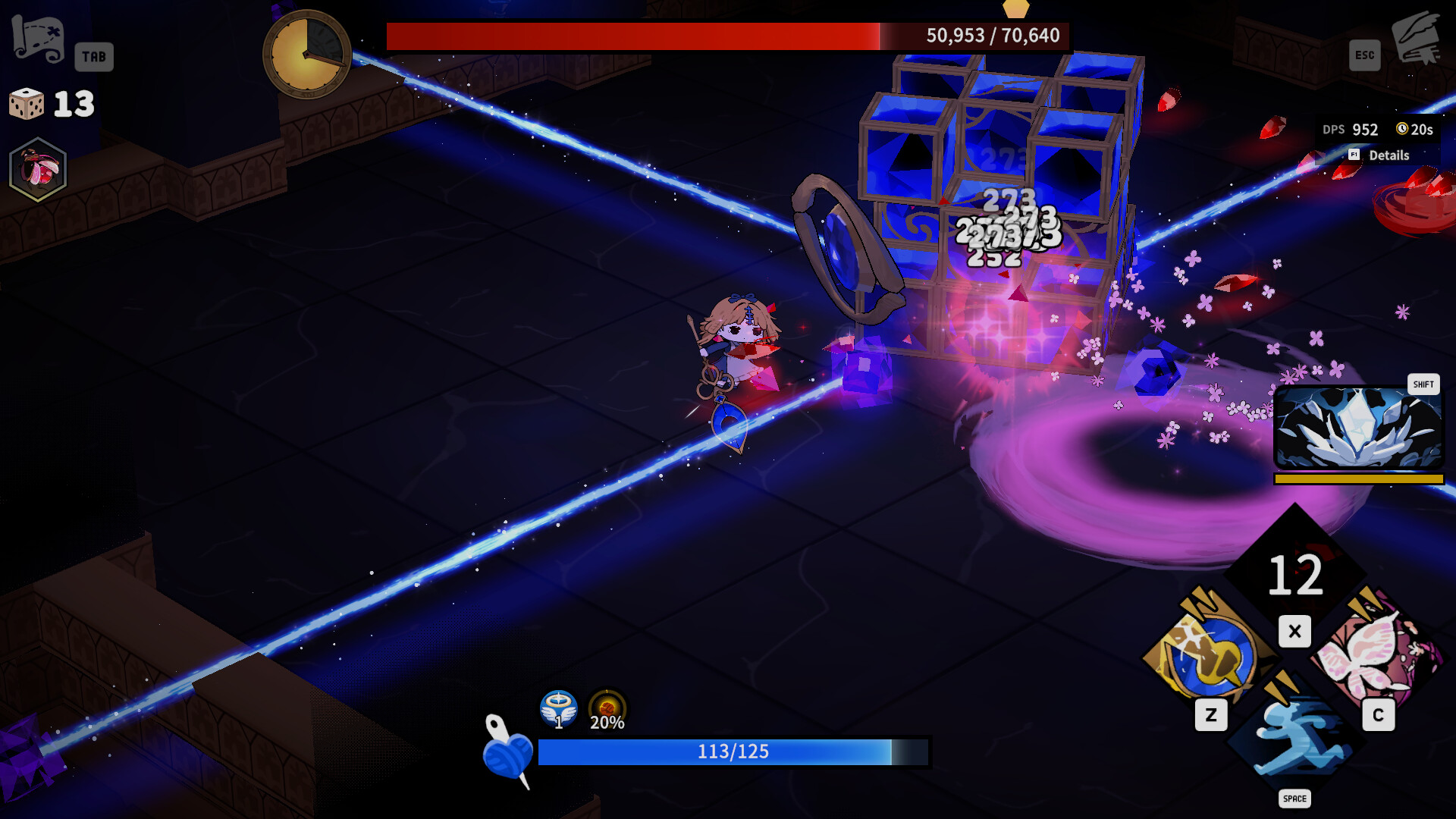
At its core, Garden of Witches is about two things: giant scissors and witchcraft. Sil wields oversized shears that can be upgraded into different weapon types, each with unique charge attacks, combos, and special abilities. The spell system layers on top of this with offensive and utility magic that can be combined with your weapon loadout for different build archetypes. Relics — passive modifiers found during runs — round out the customization.
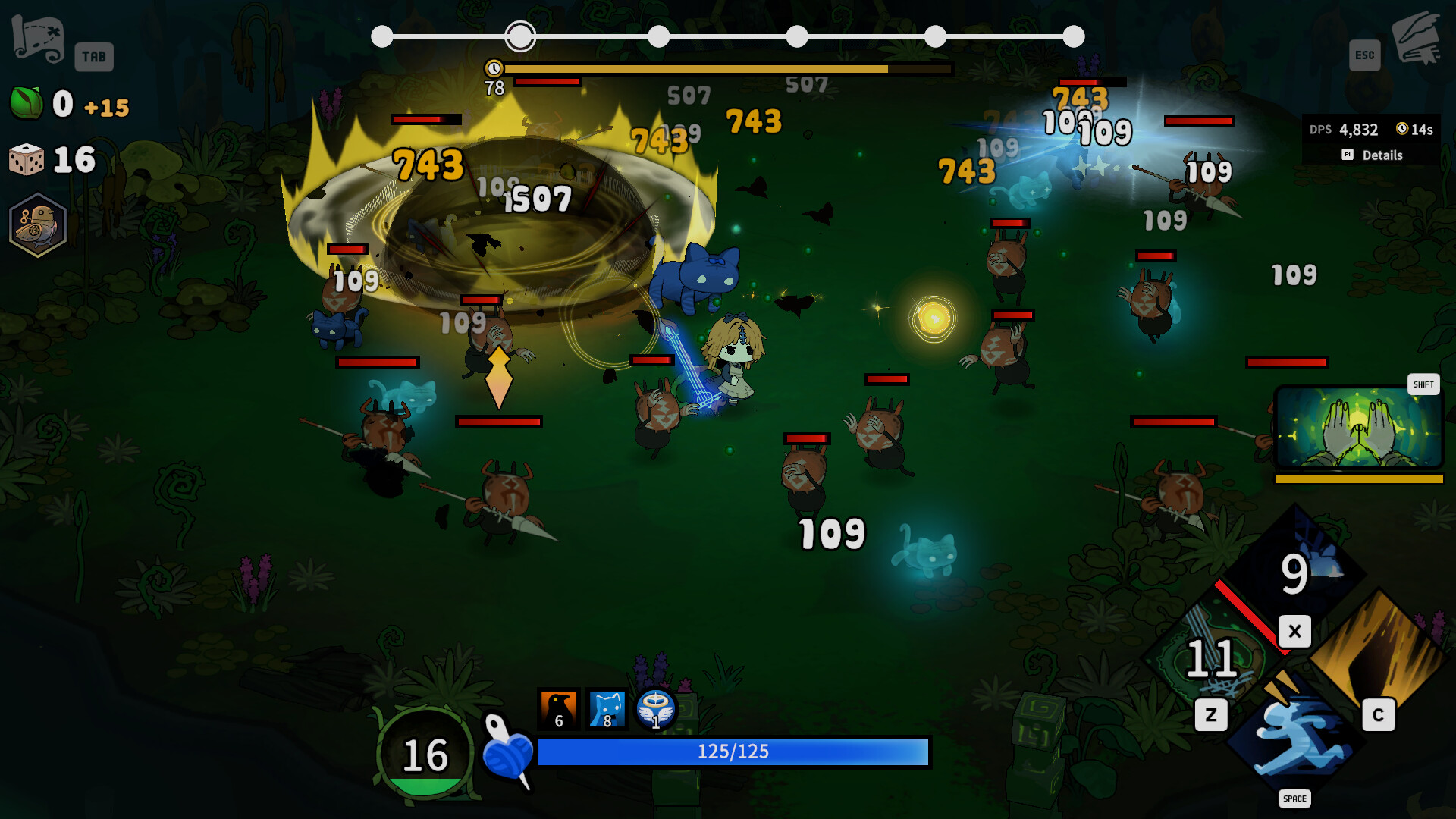
The combat feels responsive and satisfying in a way that punches above the game’s indie budget. Attacks have weight, enemy patterns are readable (if occasionally chaotic in later chapters), and the visual feedback — damage numbers, particle effects, screen shake — keeps every encounter feeling impactful. The Counter mechanic, which was a point of community contention during Early Access, has been rebalanced to feel less mandatory while still rewarding skilled play.
Where the combat stumbles is in its long-term variety. Each weapon has a fixed set of upgrades, and the relic pool is small enough that experienced players will complete their builds by the midpoint of most runs. Spells don’t interact with each other in meaningful ways — there’s no equivalent to Hades’ boon combinations or Dead Cells’ scroll synergy. Every spell does one thing, and that thing is usually damage. For a roguelike, this limits the replay value of individual runs, even if the moment-to-moment combat remains enjoyable.
Progression and Replayability
Garden of Witches is a compact game. Most players will complete the main story in 5-8 hours, with the Epilogue chapters adding another 2-4 hours on top. Achievement hunters and challenge-mode enthusiasts can extend this to 10-15 hours, but beyond that, the game doesn’t offer much reason to return.
This brevity is both a strength and a weakness. On one hand, the game never pads its content or outstays its welcome. Every chapter introduces something new, the difficulty curve is well-tuned, and the story reaches its conclusion before the gameplay loop grows stale. On the other hand, at $18.99 USD (currently $13.29 on sale), some players will feel the per-hour value doesn’t justify the price. The most common criticism across negative reviews is the game’s length relative to its cost — a fair complaint, even if the quality of those hours is consistently high.
Visuals, Audio, and Atmosphere
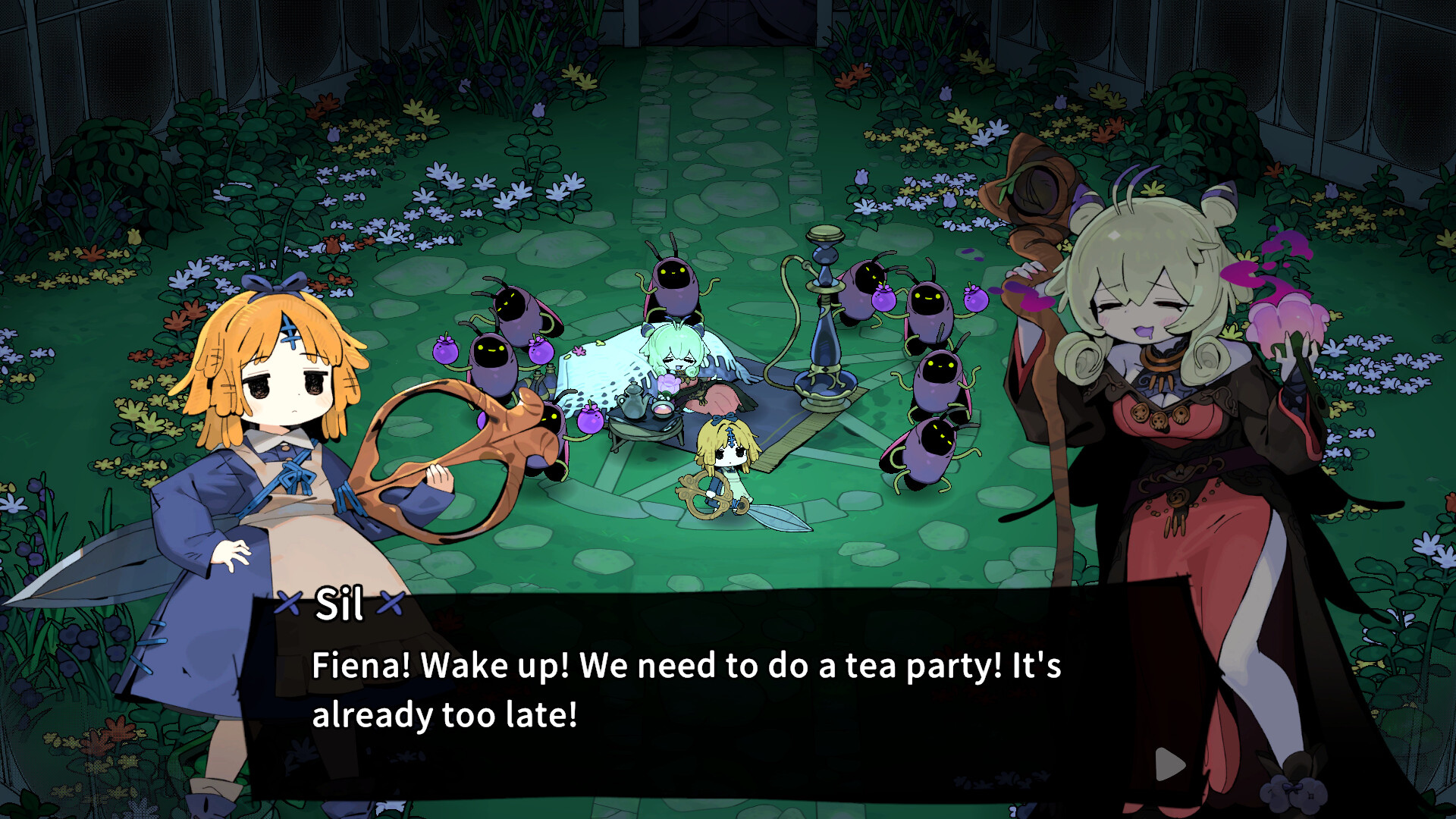
Visually, Garden of Witches is a standout. The hand-drawn art style blends cozy fairy-tale aesthetics with action-game intensity in a way that recalls Cult of the Lamb — though where Cult of the Lamb leans into grotesque charm, Garden of Witches opts for unabashed cuteness. Character designs are expressive and endearing, environments are detailed without being cluttered, and the spell effects are genuinely gorgeous.
The soundtrack deserves special mention. Team Tapas has crafted a score that shifts between whimsical and intense, matching the game’s tonal range perfectly. Boss themes hit hard, exploration music is inviting, and the quieter moments are scored with the kind of restraint that lets the atmosphere breathe. It’s the kind of soundtrack you’ll find yourself humming after putting the controller down.
The audio design extends to the voice acting, which is a genuine surprise at this price point. The main story is fully voiced in Japanese, with each witch having a distinct personality that comes through in their delivery. It’s not AAA quality, but it’s consistently good and adds a layer of polish that elevates the entire experience.
Performance and Technical Problems
Garden of Witches runs well on modest hardware. The game’s requirements are reasonable — a GTX 1660 or equivalent is more than sufficient for smooth gameplay at 1080p. Load times are brief, frame rates are stable, and I encountered no crashes during my time with the game.
The keyboard and mouse support, added in the 1.0 update, works adequately but doesn’t feel like the primary control scheme. Some players have reported that certain upgrade descriptions can be hard to parse at a glance, and the UI — while functional — could benefit from a few quality-of-life improvements for PC players. These are minor quibbles in an otherwise technically sound package.
Pros and Cons
Pros:
- Charming art style and character designs that punch well above indie expectations
- Satisfying combat with responsive controls and impactful feedback
- Well-paced story that never overstays its welcome
- Excellent soundtrack and solid voice acting
- Each chapter introduces meaningful new mechanics, keeping the experience fresh
- Compact length respects the player’s time
Cons:
- Short runtime (5-8 hours) can feel underwhelming at full price
- Limited build variety — spells don’t interact with each other meaningfully
- Small relic pool means runs feel samey after a few attempts
- Minimal post-game content beyond challenge modes
- Some players may find the difficulty settings too extreme between normal and hard
SteamGamer Verdict
Garden of Witches is the kind of game that’s easy to recommend with a caveat. It’s beautifully drawn, satisfying to play, and tells a charming story in a compact package. The combat system is polished, the art direction is top-tier for its class, and the overall experience leaves you wanting more — which is both its greatest compliment and its most legitimate criticism.
If you’re the type of player who values quality over quantity, who’d rather have eight excellent hours than forty mediocre ones, Garden of Witches delivers. It’s a game that knows exactly what it wants to be and executes on that vision with impressive confidence. Just be aware that the roguelite loop won’t hold you for dozens of hours — this is a sprint, not a marathon, and it’s all the better for it.
Score: 8/10

Lena Nakamura begins every review with one question: what is this game doing that nobody else would attempt? She covers roguelikes, narrative experiments, striking art direction, and games willing to risk failure in pursuit of something original. Familiar ideas do not bother her, but safe execution does. If a game is beautiful, strange, and slightly impossible to explain, Lena is already interested.






Comment here