
There is a specific kind of game that gets its hooks into you during a quiet moment. Not a boss fight, not a dramatic cutscene, but the instant you pause mid-run to stare at a grid of artifacts and realize you have exactly three empty slots and two items that could complete a devastating combo. That is the moment Sephiria claims you. TEAM HORAY’s second game arrived on Steam on July 31, 2026, after more than 16 months in Early Access, and it launched into a player base that was already deeply, almost obsessively, invested in its systems. The English-language reviews sit at Overwhelmingly Positive. The total review count has crossed 6,900. And the most common piece of feedback from players with 300, 500, even 800 hours is some variation of: “I meant to play for thirty minutes.”
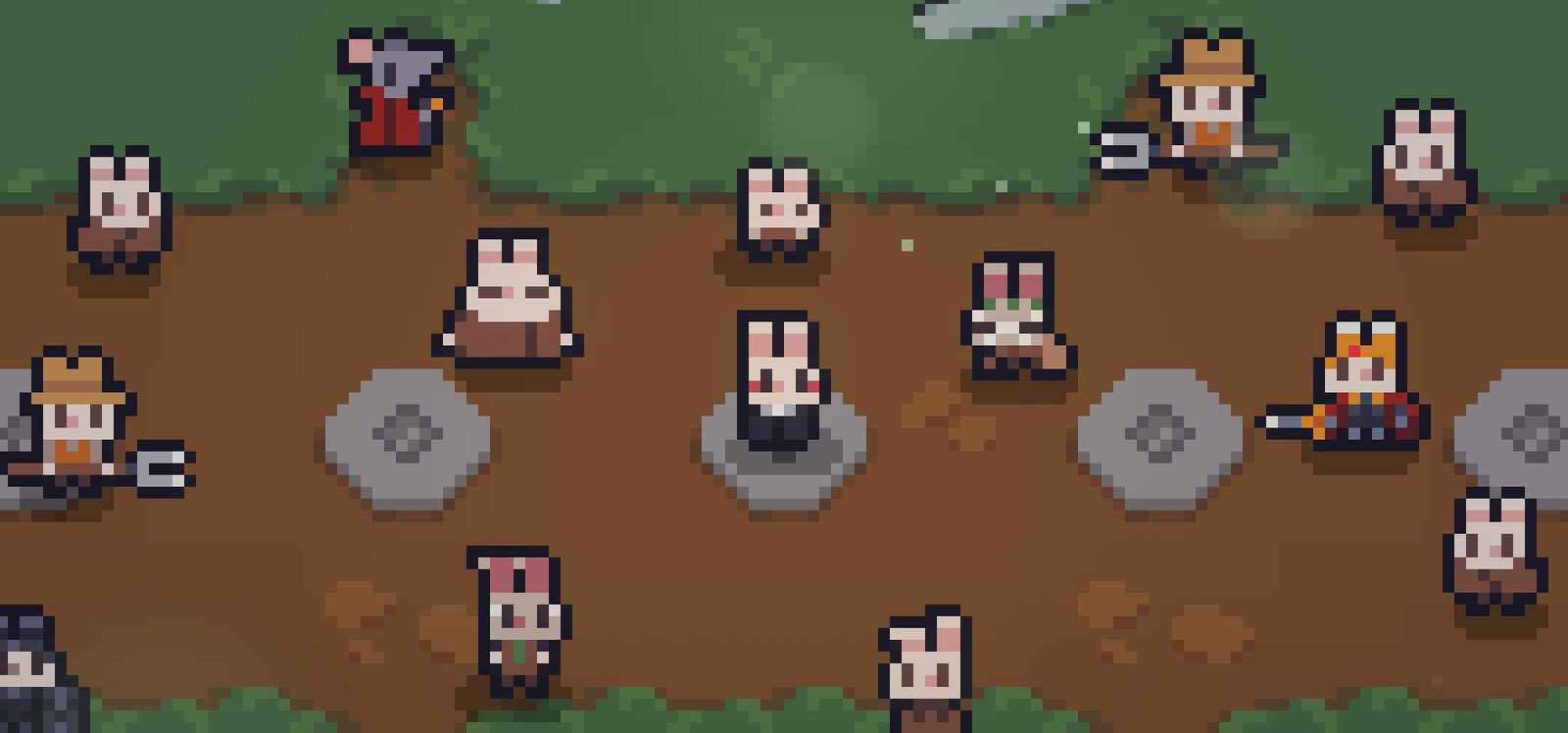
Sephiria is a top-down action roguelite that asks you to save a town of adorable bunny villagers from a tower full of demons. The premise is simple. The execution is anything but. What TEAM HORAY has built is a game where the inventory management is not a chore between the fun parts — it is the fun part, layered on top of responsive combat, genuine build variety, and a co-op mode that turns a solitary obsession into a shared one.
What Sephiria Is
For the unfamiliar, Sephiria is an action roguelite from TEAM HORAY, the small South Korean studio that previously made Dungreed — a side-scrolling dungeon crawler that quietly accumulated over 14,000 Steam reviews across eight years. Sephiria takes that pedigree and shifts the camera overhead, trading platforming for top-down isometric combat and adding a grid-based inventory system that is equal parts Backpack Hero and Tetris.
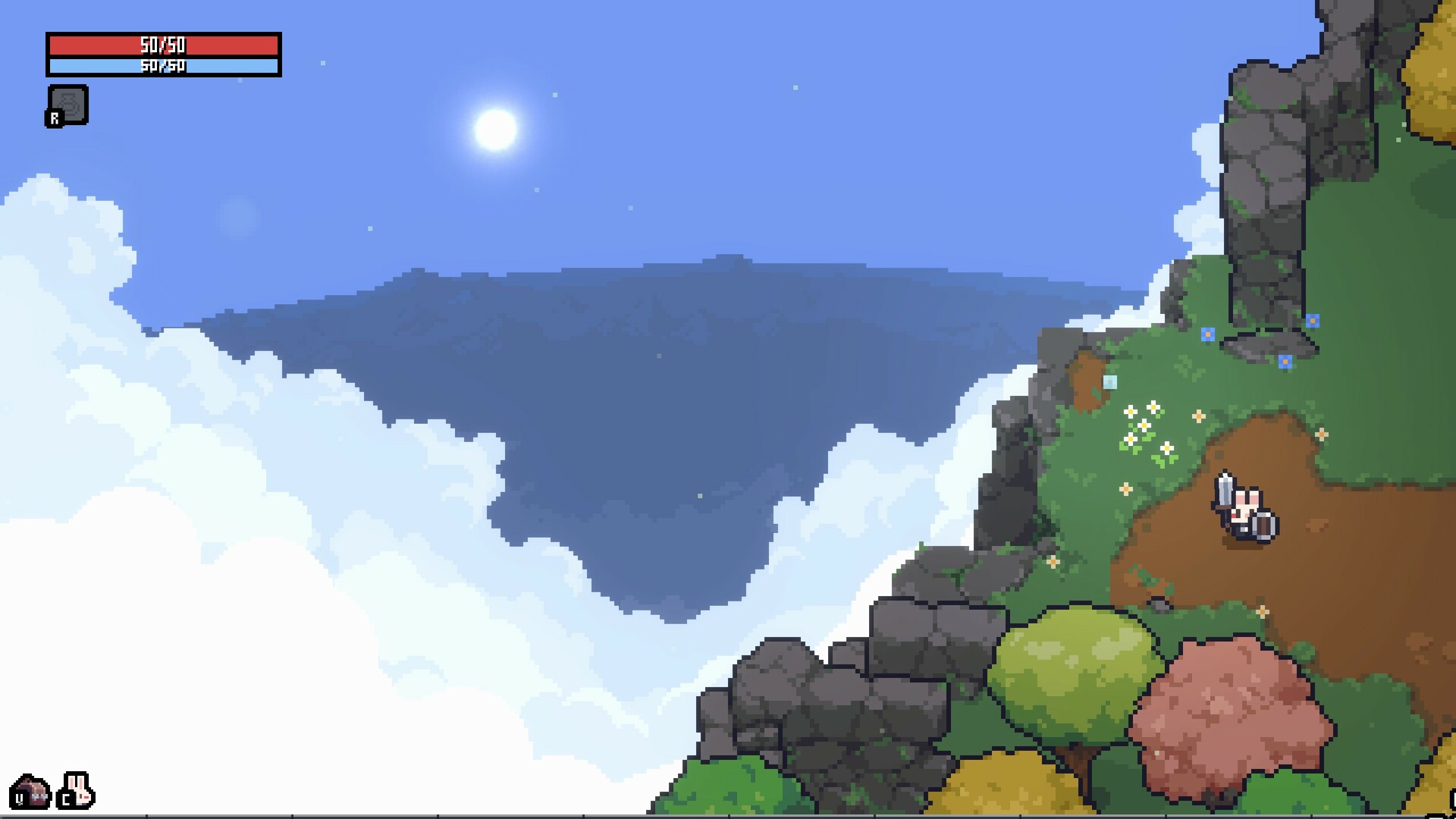
You play as a bunny from Bunnyville, a peaceful settlement perched atop a mysterious tower. On the Day of Destiny, demons emerge from the depths and threaten to annihilate your community. Your job is to descend the tower, fight through six chapters of increasingly dangerous floors, collect artifacts and tablets, and uncover the source of the invasion. Along the way, you unlock weapons, costumes, talents, and town upgrades that persist across runs — because in a roguelite, death is not failure. It is preparation.
The game launched at $14.99 and is currently 40% off at $8.99 through August 10. At that price, it is one of the best value propositions in the genre right now.
World, Story, and the Tower Beneath Bunnyville
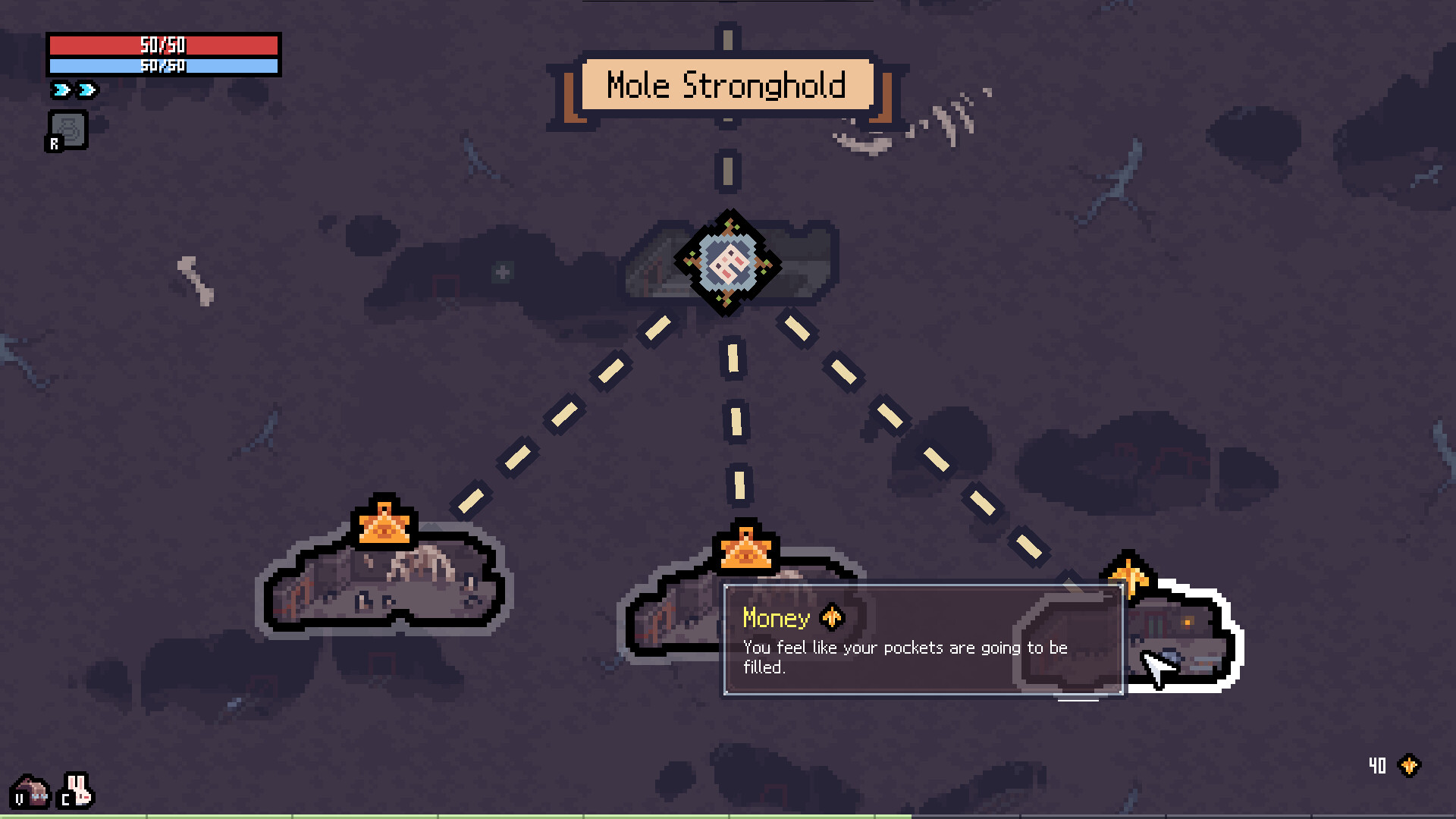
The contrast between Bunnyville’s pastel charm and the tower’s darkness is one of Sephiria’s smartest design choices. Your home base is warm, colorful, and populated by an entire cast of talking animal NPCs — cats, foxes, wolves, and of course other bunnies. The tower beneath is where things get grim. Each chapter shifts the tone, moving from sunlit forests and grassy clearings into volcanic caverns, frozen corridors, and eventually a corrupted final zone that feels genuinely ominous.
The 1.0 release added the sixth and final chapter along with animated cutscenes and a proper story arc. The writing is functional rather than exceptional — the dialogue can be stiff, and some translations read awkwardly — but the narrative structure works. You get a clear sense of escalation, a villain worth defeating, and a final confrontation that is mechanically memorable if not narratively groundbreaking. The real story is told through the tower itself: its shifting floors, its branching paths, and the way each run rewrites the journey through procedural arrangement.
The node-based map system gives you meaningful choices at every junction. One path might promise a powerful artifact but contain a difficult miniboss. Another might offer a stat boost but force you through a gauntlet of elite enemies. These decisions feel weighty because the build you are assembling in any given run determines which risks are worth taking.
Gameplay and Combat
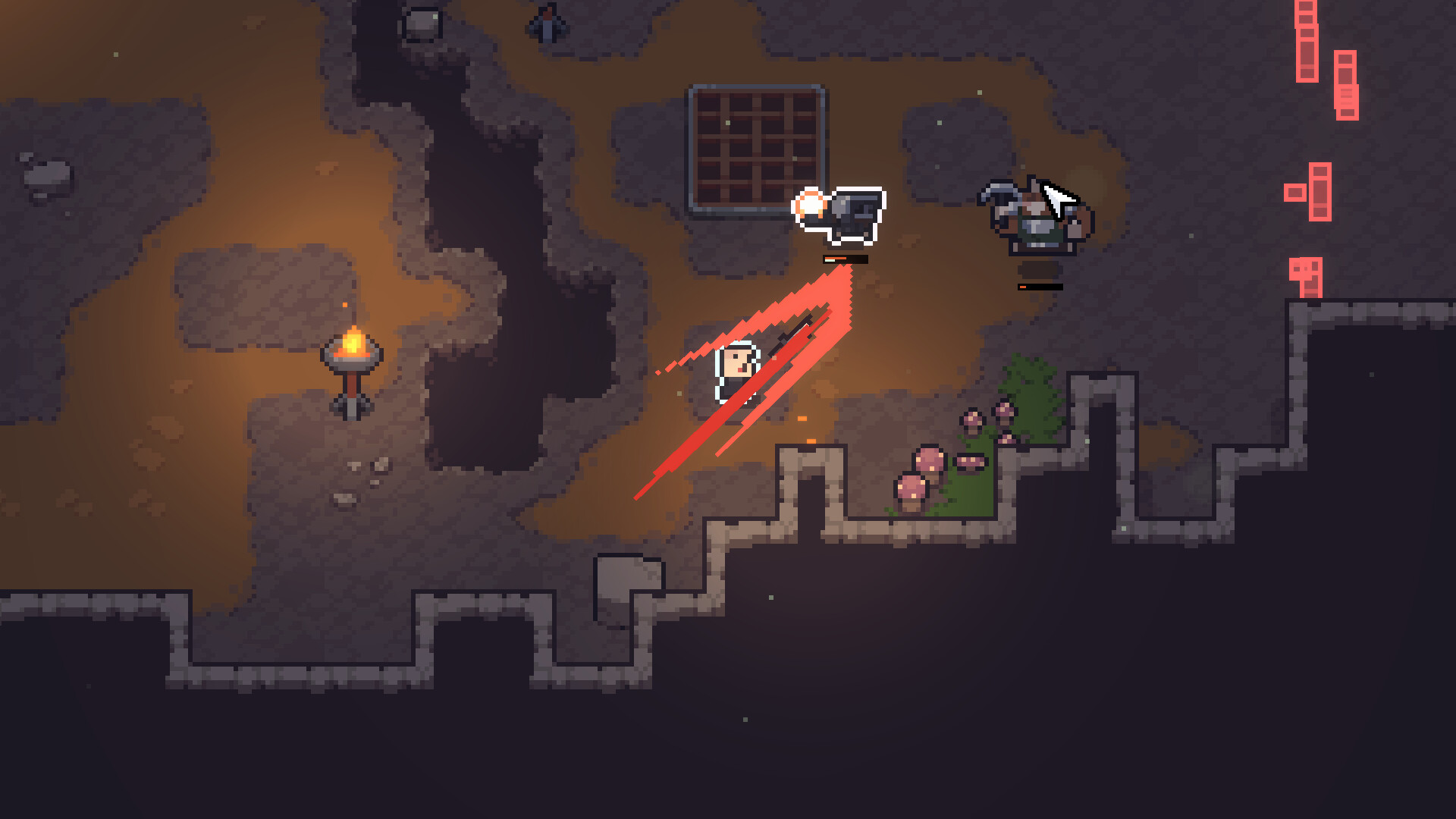
Combat in Sephiria is tight, responsive, and demands genuine attention. This is not a Vampire Survivors-style game where you watch your character auto-attack while numbers fly across the screen. Every dodge, every attack, every special ability requires input and timing. The screen fills with enemy projectiles, AoE indicators, and particle effects, and you need to read the chaos while maintaining your positioning.
The game offers six distinct weapon types, each with over 50 unique upgrades to unlock:
- Great Sword: Slow, sweeping attacks that clear groups but leave you vulnerable during wind-up.
- Dagger: Fast and aggressive with a high-risk parry mechanic for players who master the timing.
- Crossbow: Reliable ranged damage that rewards positioning and kiting.
- Staff: Magic-focused gameplay built around abilities and crowd control.
- Sword: Balanced melee option with consistent damage output.
- Shield: Defensive style that lets you tank hits and counter.
Each weapon path creates fundamentally different playstyles. A Great Sword build plays nothing like a Crossbow build, and the artifact synergies you discover along the way warp those foundations in unexpected directions. The build variety is genuinely impressive. Players have reported everything from tanky guardian builds with unbreakable shields to lightning-fast evasion builds that barely take damage, to glass-cannon mage builds that carpet-bomb entire rooms with meteors.
With over 60 distinct enemy types and more than 10 bosses, the combat encounters stay fresh across chapters. The difficulty curve is well-calibrated — early chapters teach you the basics without feeling punishing, while later chapters demand mastery of your build and movement. The hard mode modifiers add replayability for players who want to push their builds to the limit.
The Grid Inventory — Sephiria’s Secret Weapon
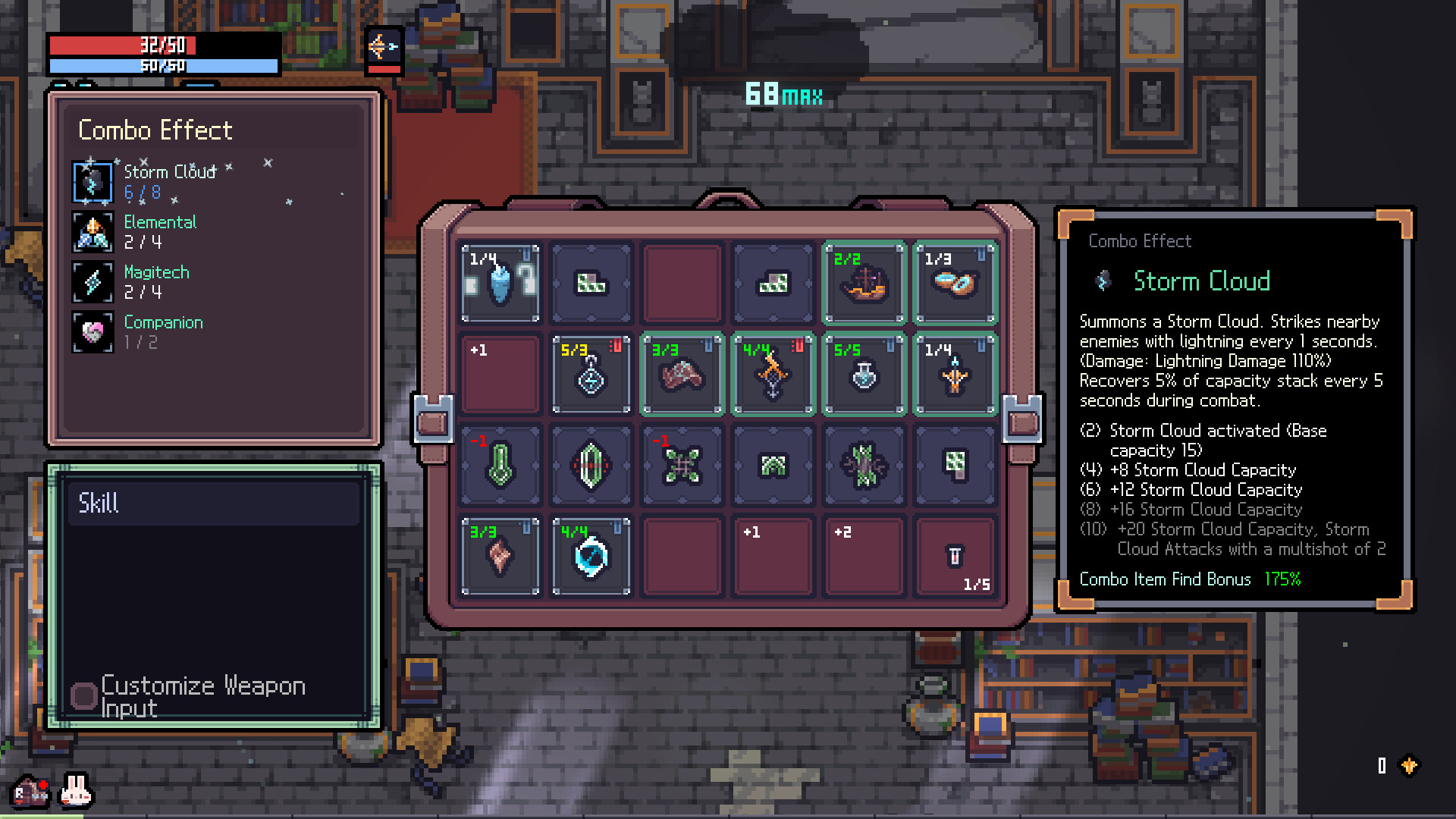
If there is one feature that elevates Sephiria above the crowded roguelite market, it is the inventory system. During runs, you collect Artifacts, Tablets, and Potions that must be placed inside a limited grid. The way you arrange them directly affects your build. Tablets create special connections with nearby artifacts, unlocking additional bonuses, elemental effects, and powerful hidden synergies.
This turns inventory management into a strategic puzzle. You are constantly making difficult decisions. You find an incredible artifact, but it does not fit your current layout. Do you dismantle your existing build to accommodate it? Do you hold onto a suboptimal arrangement hoping the right piece appears later? Do you spend gold rerolling the shop, gambling on a combo that might never materialize?
One Steam reviewer summed it up perfectly: “50% of this game is literally just sitting still and rearranging your inventory. This isn’t a roguelite, this is a puzzle game. 10/10 experience, would never change it.” That sentiment captures the core appeal. The grid system transforms the roguelite loop from “find stronger items” into “build a synergistic machine,” and it gives every run a distinct tactical identity even when you are using the same weapon type.
The Side Bag, unlocked through permanent town upgrades, expands your grid — but slowly enough that the constraint remains meaningful throughout a run. The result is a system that rewards planning, punishes carelessness, and creates those “eureka” moments when a perfect arrangement clicks into place.
Progression and Replayability
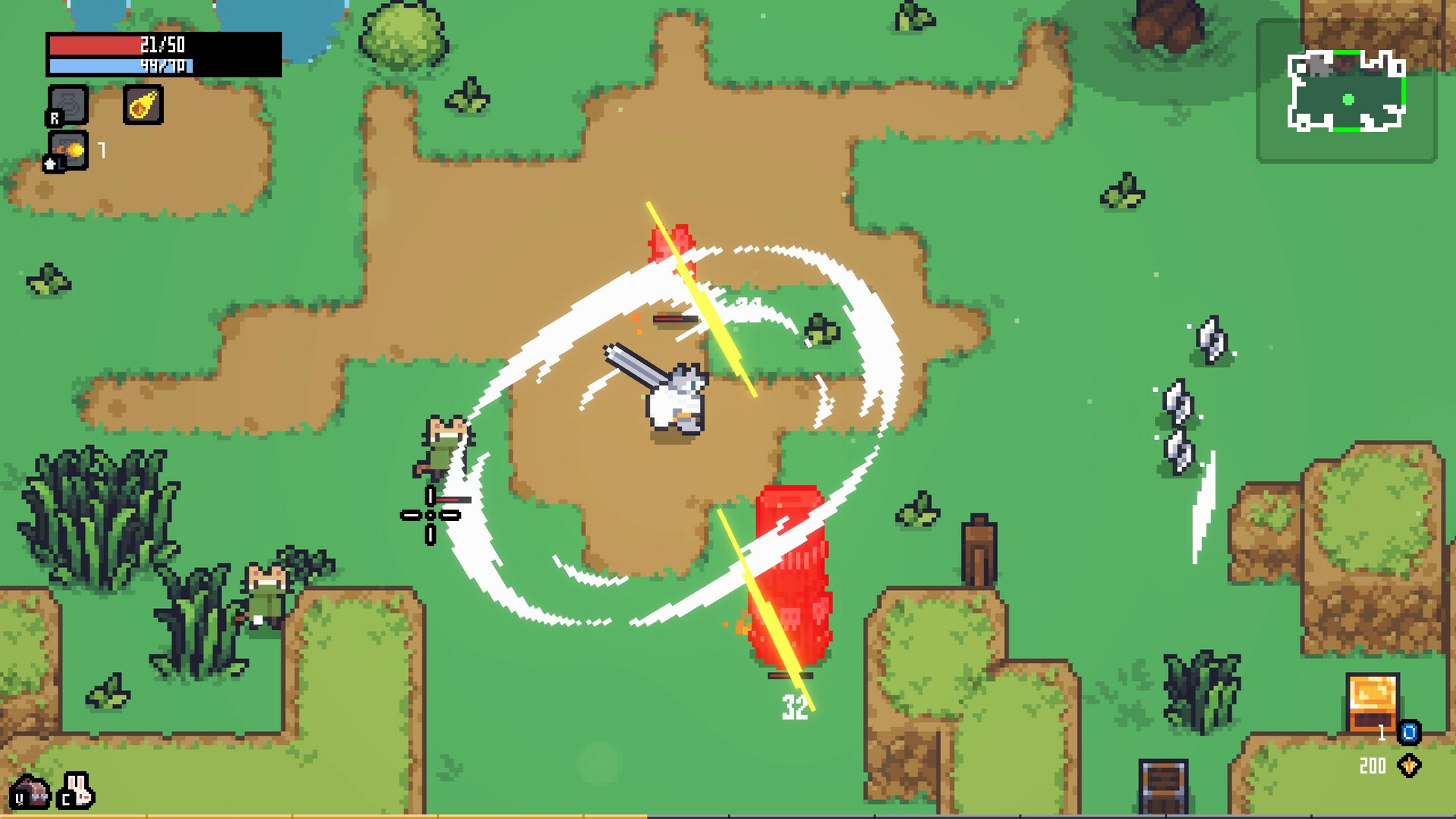
Sephiria has the kind of progression that respects your time without shortchanging depth. Failed runs still earn you permanent upgrades — talent points, town facilities, new weapon unlocks, and costume options. There is always a reason to keep playing even when a run ends badly.
The talent tree spans both individual character progression and broader unlocks. You can invest points to improve base stats, unlock new abilities, or open up new areas in town that provide additional benefits. The costume system adds another layer of variety: different characters have unique stat modifiers, from an evasive cat to a fox with an expanded inventory to a lizard scholar with unique potentials.
For players who want to push beyond the main campaign, the hard mode system adds meaningful challenge modifiers. You can stack difficulty options — increased enemy HP, defense scaling, boss healing — to create genuinely demanding runs. The co-op mode scales enemy health and damage to compensate for multiple players, creating a cooperative experience that feels balanced rather than trivialized.
The replayability is exceptional. With six weapons, each branching into dozens of upgrade paths, plus the infinite variability of artifact combinations, you could play hundreds of runs and encounter meaningfully different builds. One reviewer reported 500 hours without exhausting the possibilities. Another cleared the full campaign and hard modes in 50 hours and was still finding new combos at 200.
Visuals, Audio, and Atmosphere
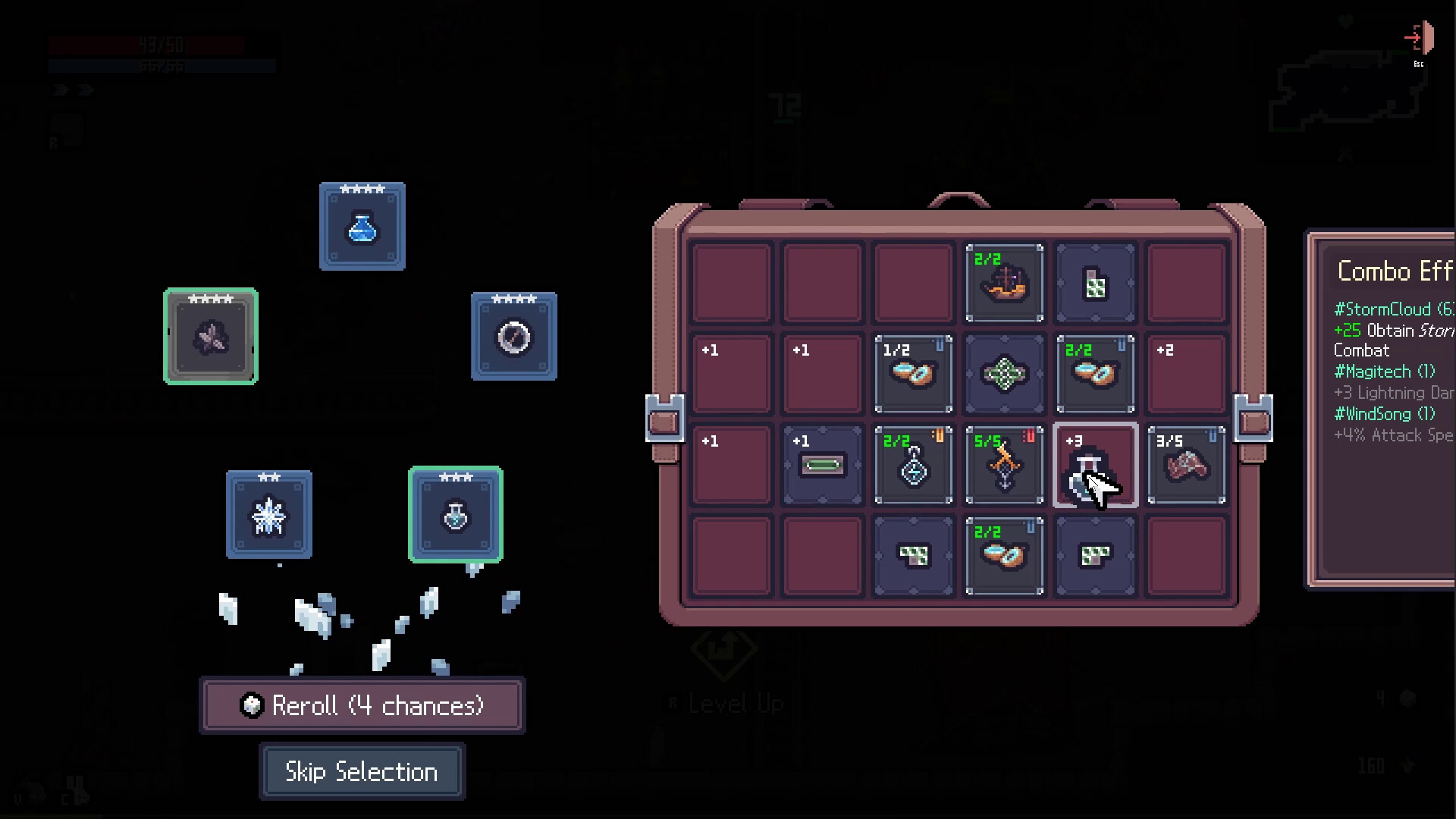
Sephiria’s pixel art is a genuine strength. The characters are charming without being saccharine, the environments are detailed enough to convey distinct atmospheres across chapters, and the combat effects are satisfying without becoming illegible — mostly. The bunny villagers have personality, the tower’s denizens look appropriately threatening, and the visual progression from light to dark across chapters creates a natural sense of escalation.
The soundtrack deserves specific praise. It knows when to build tension during dangerous encounters and when to let the music breathe during quiet moments in town. The sound effects are equally well-considered: weapon impacts feel crunchy, dash animations have weight, and the auditory feedback for completing an inventory combo is deeply satisfying.
The atmosphere is where Sephiria’s presentation really shines. There is a warmth to Bunnyville that makes you want to protect it, and a creeping dread to the tower’s deeper floors that makes the stakes feel real. It is a rare roguelite that makes you care about the narrative context of your runs rather than treating the story as window dressing.
Performance and Technical Problems
Sephiria runs well on modest hardware. The minimum specs ask for a Ryzen 5 1400 and a GTS 750, and the game delivers smooth performance at 1080p on systems well within that range. The file size is a tiny 2 GB, which feels almost quaint in an era of 100 GB installs.
The most commonly reported technical issue is visual noise in later chapters. When the screen fills with enemy projectiles, allied followers, particle effects from your own abilities, and environmental hazards, it can become difficult to parse what is happening. This is not a performance problem — frame rates hold steady — but it is a readability concern that can cause frustrating deaths when you cannot distinguish enemy attacks from your own effects.
The final boss has drawn specific criticism for having an extremely high health pool, particularly when hard mode modifiers are active. Some players have reported fights lasting over two hours with modifiers enabled, which feels disproportionate to the rest of the game’s pacing. The Russian localization has also been flagged as rough, though the English, Korean, and Japanese translations are serviceable.
Steam Deck support exists but the controls take adjustment. One reviewer noted their partner needed significant time to acclimate to the Deck’s input scheme, suggesting that the control mapping could use refinement for portable play.
Pros and Cons
Pros
- The grid inventory system is genuinely innovative and creates deep, meaningful build variety
- Six weapon types with 50+ upgrades each provide enormous replayability
- Combat is responsive, challenging, and rewards skillful play
- 4-player online co-op is well-balanced and adds significant enjoyment
- Pixel art is charming and atmospheric with a strong sense of visual progression
- Persistent progression across runs respects your time without shortchanging depth
- Hard mode system provides genuine challenge for experienced players
- Low system requirements and tiny install size
- Currently 40% off at $8.99 through August 10
Cons
- Visual noise in later chapters can make combat difficult to read
- Final boss health pool is excessive, especially with difficulty modifiers
- Writing and some localizations are stiff or awkward
- Steam Deck controls need refinement
- One-button combat loop may feel shallow to players expecting deeper combo systems
- Early chapters can feel like a slow build before the game opens up
SteamGamer Editorial Verdict
Sephiria is the rare roguelite that does something genuinely new with a well-trodden formula. The grid inventory system is not a gimmick — it is a core mechanic that transforms every run into a puzzle as much as an action game, and it gives the genre a fresh identity that neither Enter the Gungeon nor Vampire Survivors can claim. The combat is tight, the build variety is staggering, and the co-op mode adds a social dimension that makes the game even more compelling.
The issues are real but secondary. Visual noise in later chapters can be frustrating. The final boss needs tuning. The writing could use another pass. None of these problems undermine the core experience, which is one of the most addictive and well-crafted roguelite loops available on Steam right now.
At $8.99 on sale, Sephiria is an easy recommendation. At full price, it is still worth every penny. TEAM HORAY has delivered a worthy successor to Dungreed and a game that deserves every one of its 6,900+ positive reviews. If you have ever lost an afternoon to a roguelite build that was just one more run away from perfection, Sephiria understands you — and it will happily take the rest of your evening.
Score: 8.5/10

Sarah Chen searches the quieter corners of PC gaming for remarkable ideas that bigger releases leave behind. She covers indie games, platform updates, and overlooked releases for SteamGamer.net. If a strange little game has twelve reviews, an unforgettable mechanic, and absolutely no marketing budget, Sarah has probably already finished it—and is explaining why everyone else should care.





Comment here