
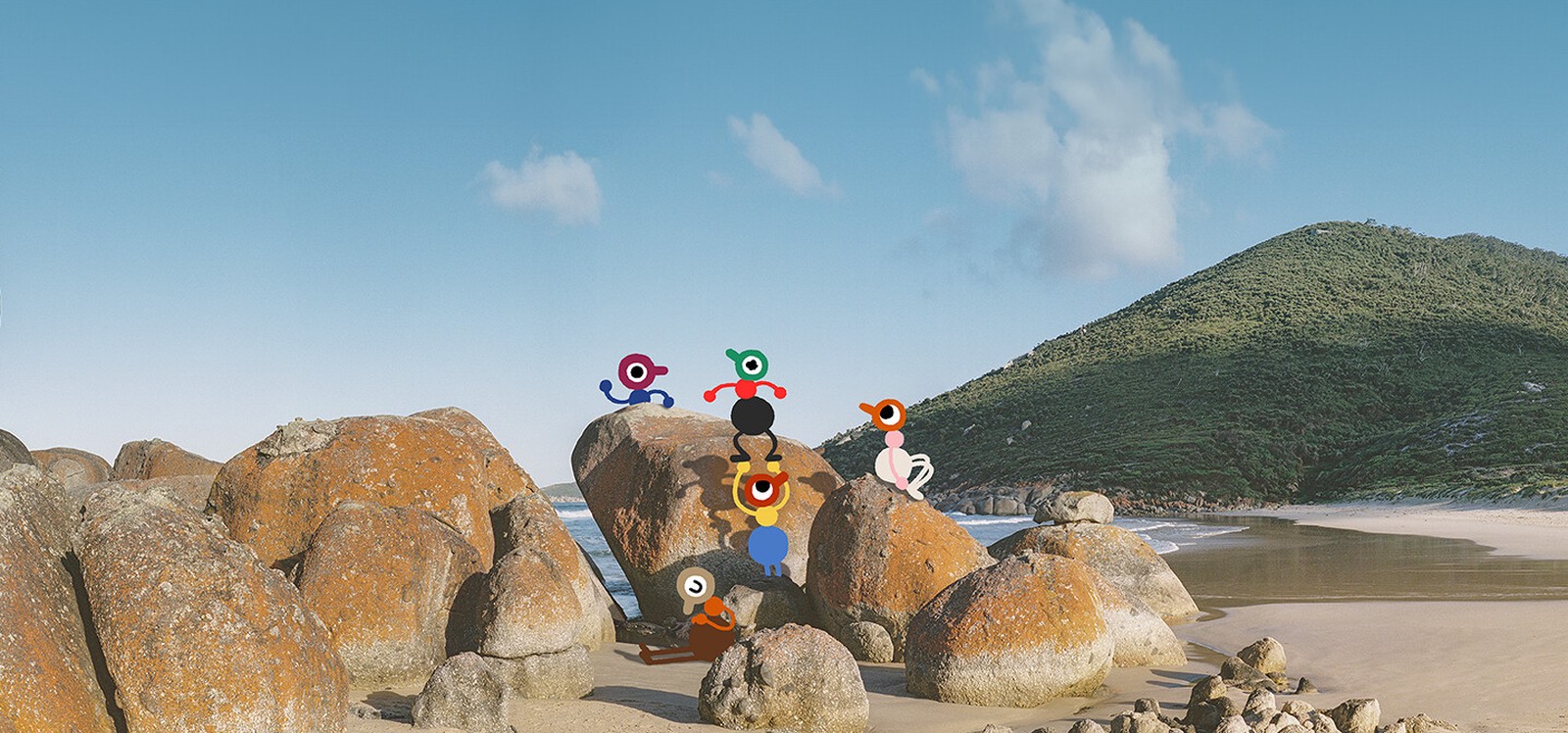
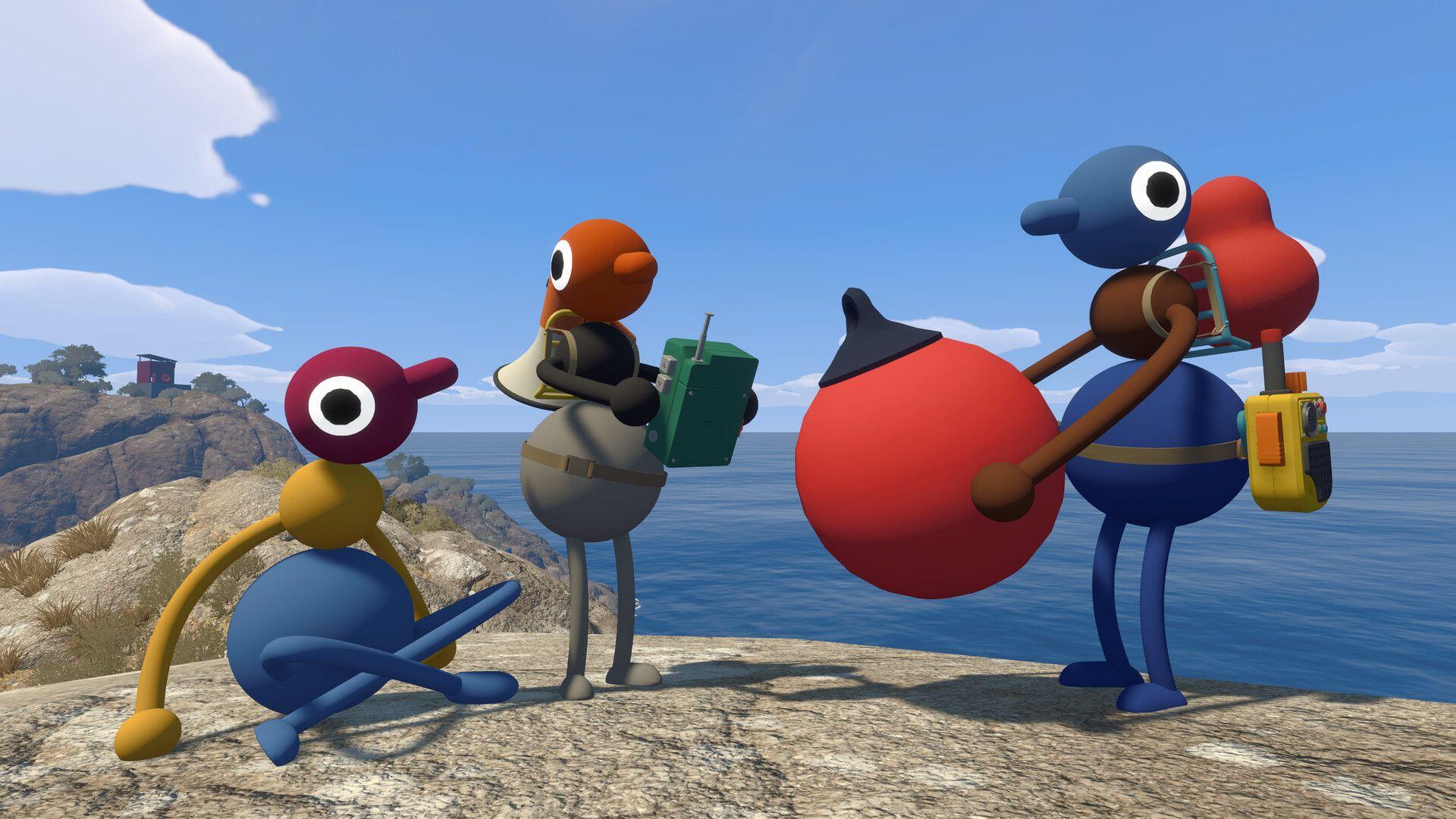
There is a moment in Big Walk where you and three friends are perched on a cliff edge at sunset, binoculars in hand, trying to figure out which direction to go next. One of you spots a strange structure in the distance. Another is busy kicking a cowbell off the cliff for no reason. A third has wandered off entirely and is now screaming through a walkie-talkie about something they found in a cave. This is Big Walk in a nutshell: a cooperative adventure that is constantly, joyfully falling apart, and somehow that is exactly the point.
House House, the Melbourne studio that gave us the universally beloved Untitled Goose Game, has returned with something radically different and yet strangely familiar in spirit. Where Untitled Goose Game was about causing chaos as a single mischievous bird, Big Walk is about creating chaos together as a group of oddly proportioned, big-eyed humanoids stumbling through a gorgeous open world. It is a game about communication, cooperation, and the kind of spontaneous absurdity that only happens when you put a group of friends in a shared space with too many tools and not enough instructions.
What Is Big Walk?
Big Walk is a cooperative multiplayer adventure for two to twelve players, developed by House House and published by Panic. Released on August 4, 2026 for PC, Mac, PlayStation 5, and Nintendo Switch 2, it puts you and your friends into a vast, hand-crafted open world filled with environmental puzzles, hidden secrets, and an assortment of tools that exist primarily to make communication more interesting and more difficult.
The premise is deceptively simple: walk somewhere, find things, solve puzzles, progress. But the execution layers on complexity through its proximity voice chat system, which muffles voices through walls, echoes down corridors, and crackles through walkie-talkies. Add in laser pointers, megaphones, flares, whiteboards, and a mysterious golden head, and you have a game that is less about reaching a destination and more about the beautiful, frustrating process of getting there together.
At its core, Big Walk is a puzzle game disguised as a walking simulator, or perhaps a walking simulator disguised as a puzzle game. The world is wide and inviting, with distinct biomes ranging from sun-drenched coastlines to moonlit forests, and every area contains structures hiding pear-shaped objects that serve as both currency and key items. Finding these objects requires teamwork, observation, and occasionally just brute-forcing your way through a problem by throwing things at it until something works.
A World Worth Getting Lost In
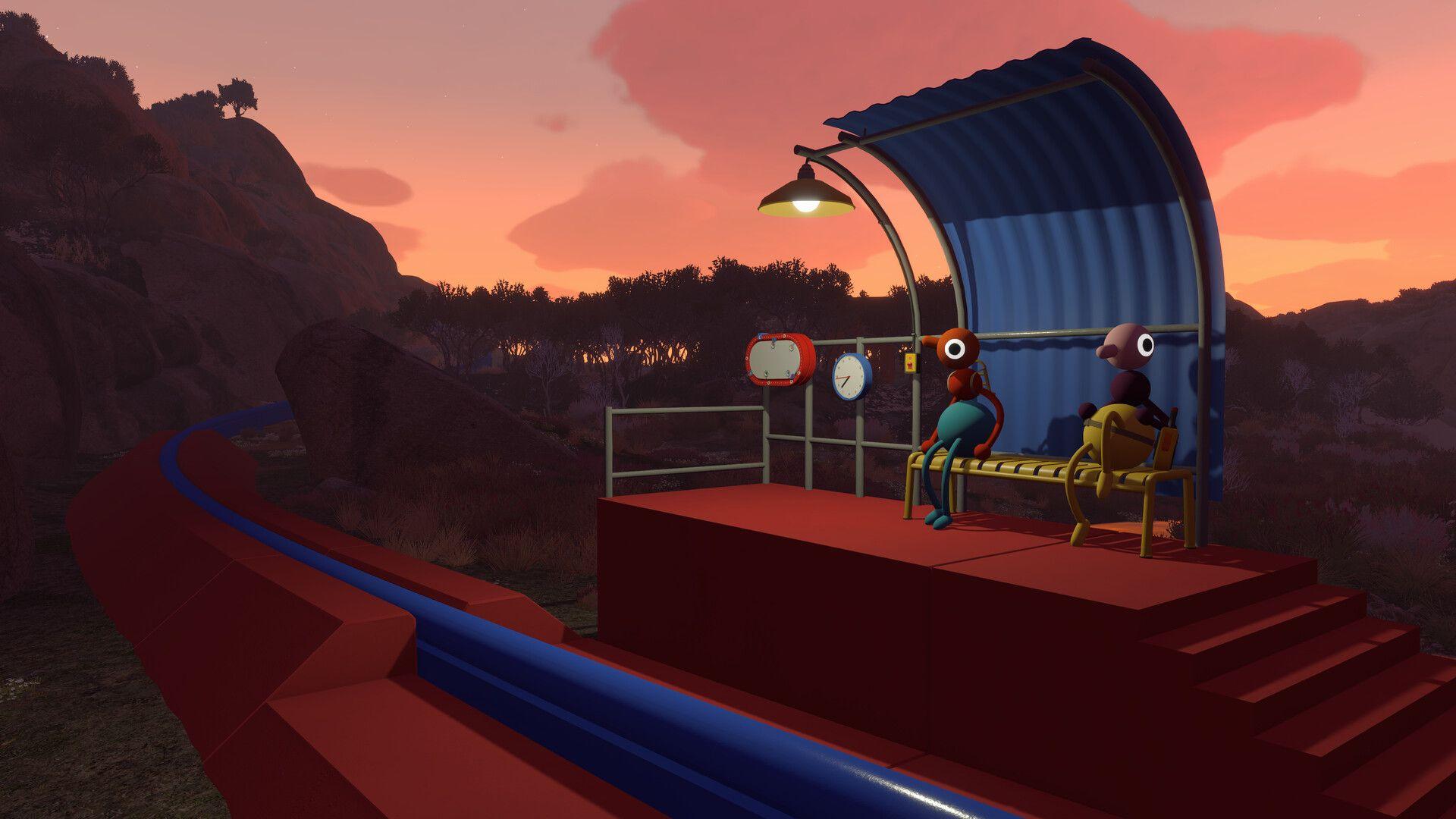
The world of Big Walk is one of its strongest assets. House House has crafted an environment that feels simultaneously vast and intimate, a landscape of rolling hills, rocky shores, dense forests, and mysterious ruins that begs to be explored at its own pace. There is no minimap, no quest marker, no waypoint system guiding you from objective to objective. You navigate by sight, by memory, and by the increasingly desperate directions of your friends shouting through walkie-talkies.
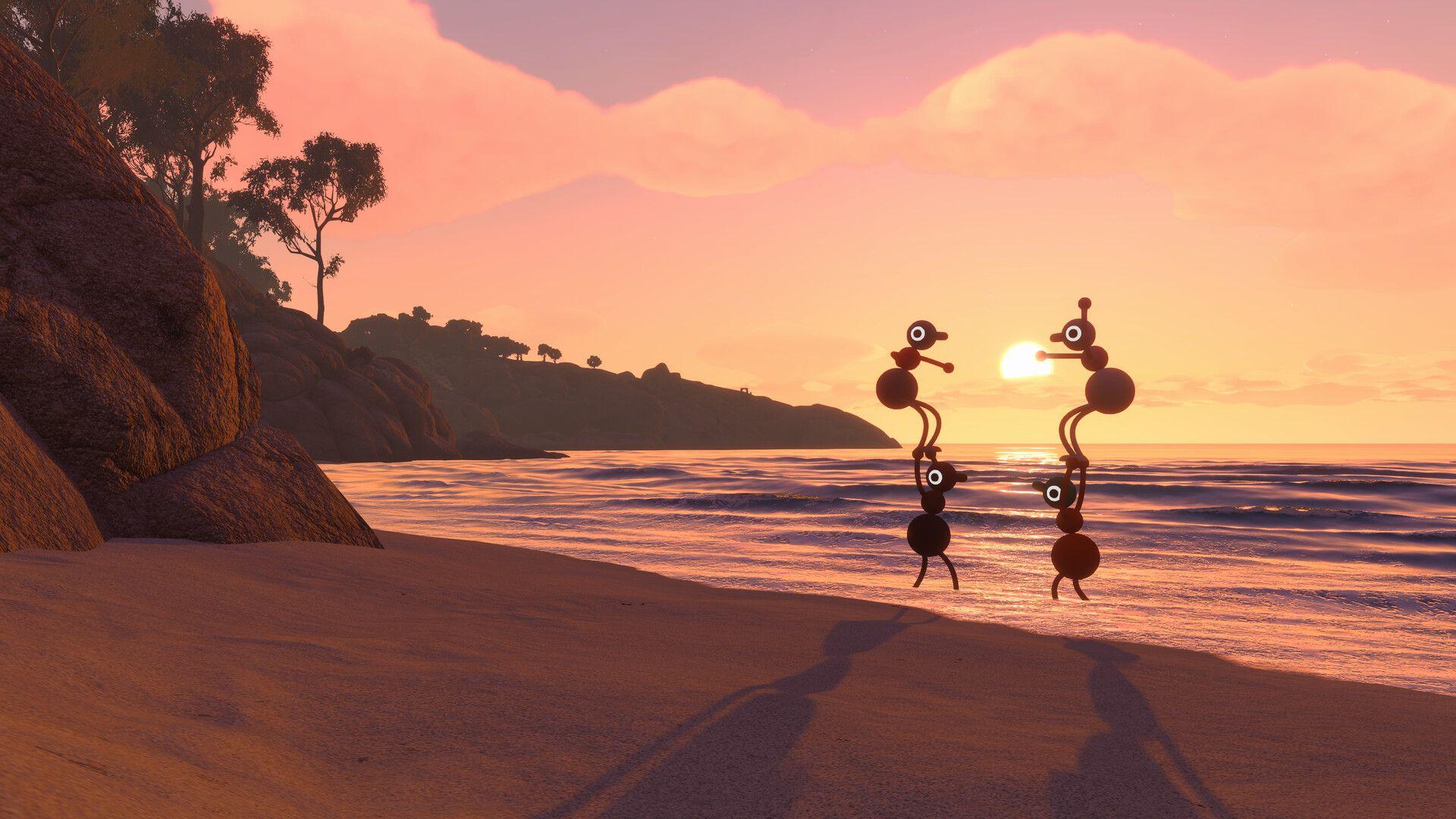
The visual design strikes a perfect balance between the stylized, cartoonish characters and the more realistic, painterly environments. Your little round-headed avatars, with their single oversized eyes and stick-figure limbs, look delightfully out of place against photorealistic rock formations and sunset skies. It is a visual contrast that never stops being charming, and it reinforces the game’s central conceit: these are small, slightly hapless creatures trying to make sense of a very big world.
The narrative unfolds gradually across your runs, with environmental storytelling revealing itself through the structures you discover and the paths you open. Without spoiling specifics, there is a genuine sense of progression and discovery that rewards exploration beyond just finding puzzle solutions. The world has a history, and piecing it together with friends adds a layer of meaning to what could otherwise be aimless wandering.
Gameplay: Walking, Talking, and Everything In Between
The moment-to-moment gameplay loop of Big Walk revolves around three core activities: walking, talking, and solving puzzles. Walking is exactly what it sounds like. Your characters move at a leisurely pace through the world, and the game actively encourages you to slow down and appreciate the scenery. This is not a game that respects speedrunners. It is a game that wants you to stop, look at a sunset, and argue with your friends about whether that rock formation looks like a whale.
Talking is where Big Walk gets genuinely innovative. The proximity voice chat system is not just a communication tool; it is a gameplay mechanic. Voices fade with distance, muffle through walls, and require walkie-talkies to bridge gaps. When you are separated from your group, communication becomes a puzzle in itself. You might need to describe a landmark to someone who cannot see it, relay coordinates through a chain of players, or figure out which echo belongs to which friend in a cavernous ruin.
The puzzles themselves range from straightforward environmental challenges to more complex multi-step problems that require coordinated effort. Some involve manipulating objects in the world, others require specific tools, and a few demand the kind of creative lateral thinking that produces those magical moments where someone suggests an insane solution and it actually works. The difficulty curve is gentle but present, and the game is smart about introducing new mechanics gradually without overwhelming players.
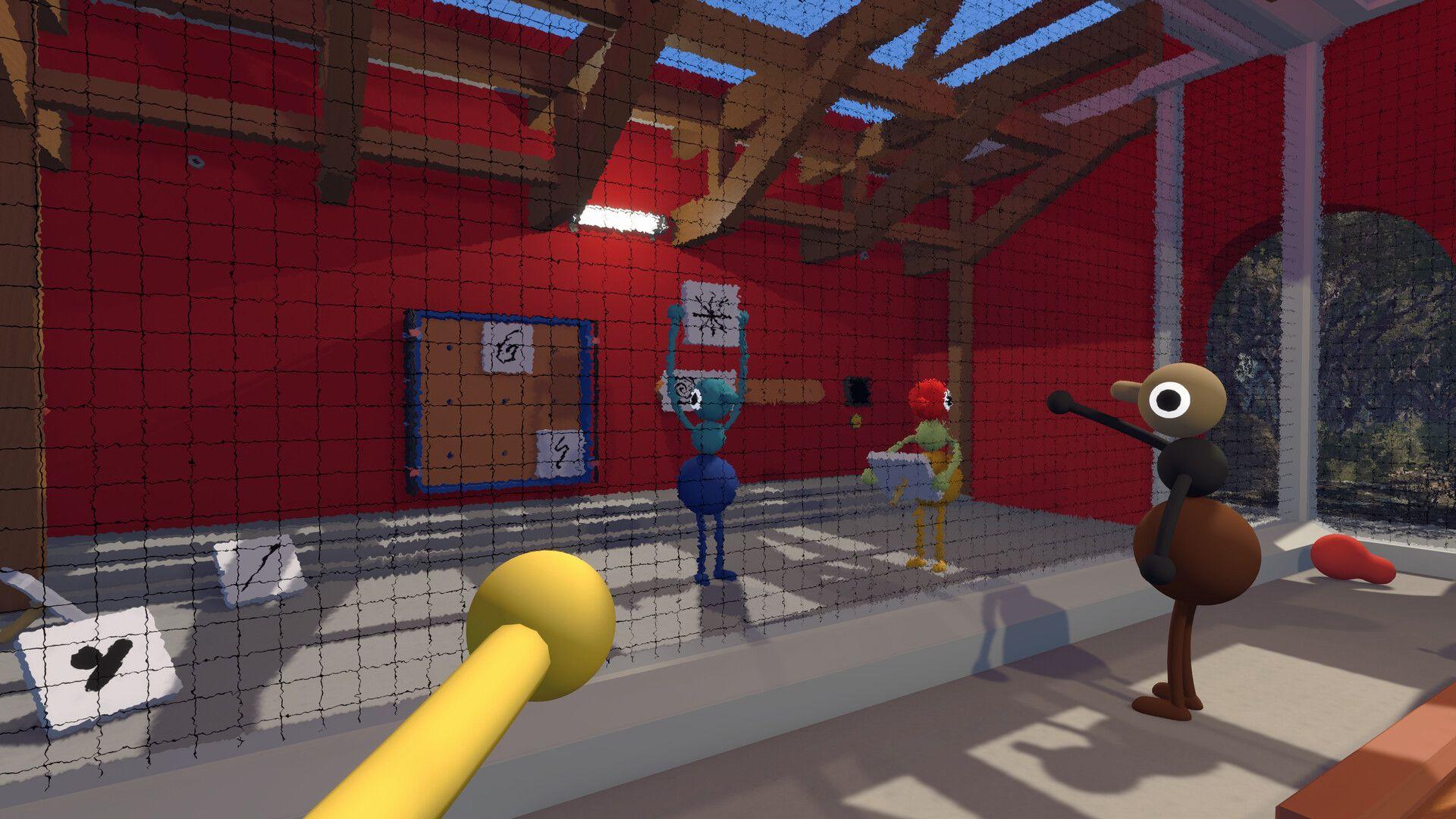
The tools and toys deserve special mention. Walkie-talkies extend your voice across distances. Laser pointers let you indicate locations without words. Megaphones amplify your voice (and your nonsense). Flares illuminate dark areas. Whiteboards let you draw diagrams. And then there is the golden head, which exists primarily to confuse everyone. Each tool serves a practical purpose but also functions as a vehicle for the kind of improvised comedy that makes cooperative games memorable.
Combat does not exist in Big Walk, and the game is better for it. There are no enemies to fight, no health bars to deplete, no fail states in the traditional sense. The only failure is the failure to communicate, and even that tends to produce laughter rather than frustration. This is a game that has made a deliberate choice to remove conflict and replace it with collaboration, and it works beautifully.
Progression and Replayability
Big Walk is structured as a hand-crafted adventure with a definitive beginning, middle, and end. This is not an endlessly replayable sandbox or a roguelike with procedural generation. It is a curated experience designed to be played start-to-finish with a group of friends, and it respects your time by not overstaying its welcome.
That said, the game has surprising replay value. Different group sizes produce fundamentally different experiences. A focused two-player session plays like an intimate co-op puzzle game, while a twelve-player session descends into beautiful chaos where half the group is solving puzzles and the other half is engaged in activities that have nothing to do with progression. The tools and toys also encourage experimentation, and discovering new ways to use them keeps the experience fresh across multiple playthroughs.
The cross-platform play support is a significant bonus, allowing friends on different systems to play together without friction. In an era where platform exclusivity often fractures friend groups, Big Walk’s commitment to crossplay is both practical and admirable.
Visuals, Audio, and Atmosphere
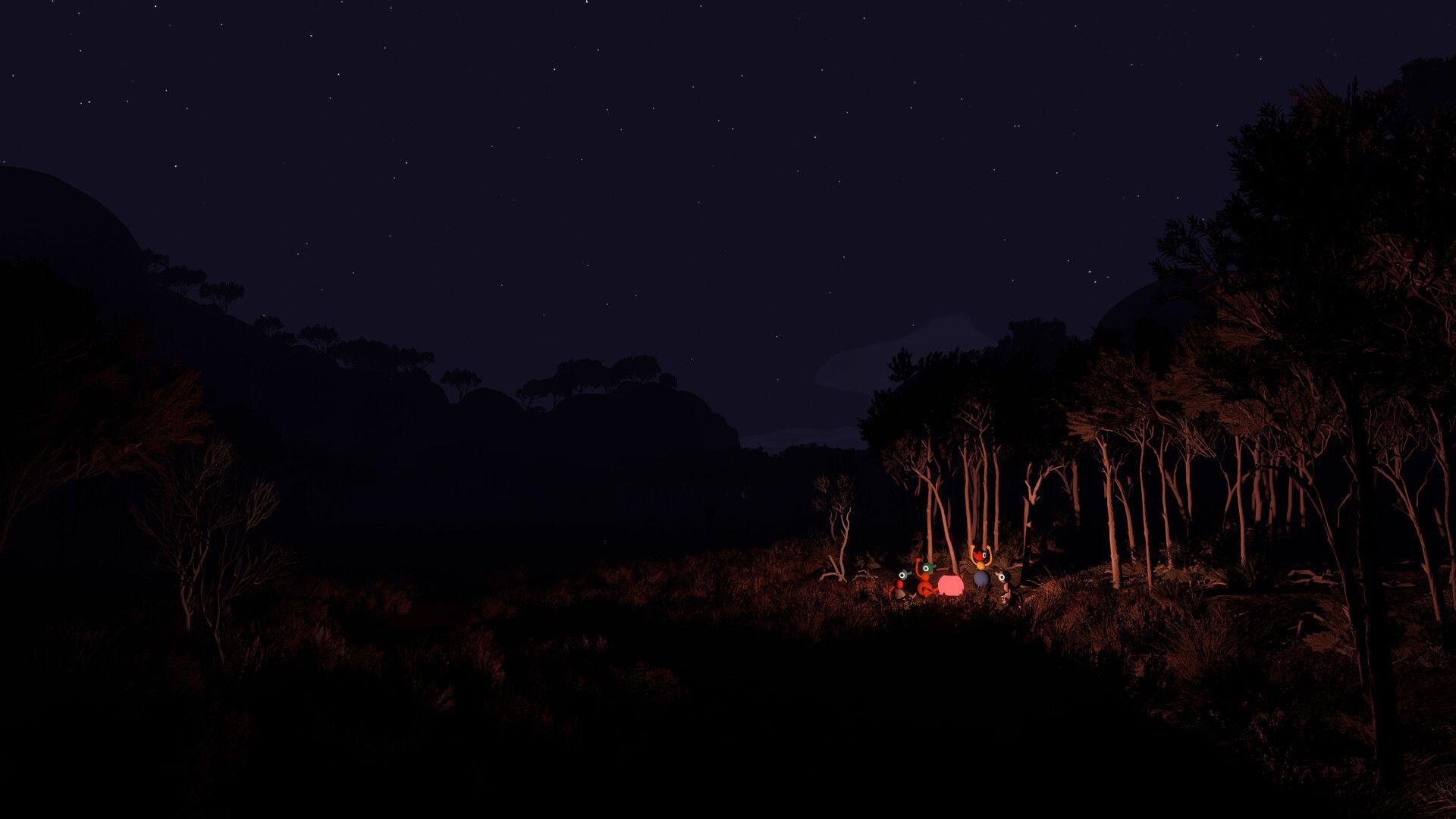
Visually, Big Walk is a triumph of art direction over technical spectacle. The environments are beautifully realized, with lighting that shifts dramatically from golden hour warmth to cool moonlit blues. The character designs are simple but expressive, and the animation gives them a clumsy, endearing physicality that makes every interaction feel tactile. Watching your friend’s character tumble off a cliff while clutching a precious puzzle item is simultaneously tragic and hilarious, and the game’s physics engine ensures that these moments happen with satisfying regularity.
The audio design is integral to the experience. The proximity voice chat creates a soundscape that shifts constantly as players move through the world. Distant voices echo and fade. Walkie-talkies crackle with static. The ambient soundtrack is understated and atmospheric, providing mood without demanding attention. Sound effects for tools and interactions are satisfyingly chunky, and the game uses audio cues effectively to guide players toward points of interest.
Atmosphere is where Big Walk quietly excels. There is a peacefulness to the experience that catches you off guard. You might spend twenty minutes simply walking along a beach, watching the waves, listening to your friends argue about directions. The game creates space for those quiet moments between the puzzles, and those moments often turn out to be the most memorable parts of the experience.
Performance and Technical Issues
Big Walk is not without its technical shortcomings. Several players have reported performance issues, particularly on mid-range hardware, with the game demanding more resources than its visual fidelity might suggest. Frame rate dips in densely populated areas and during complex physics interactions can break the otherwise smooth experience.
Audio settings have been a common complaint, with some players reporting difficulty configuring input and output devices simultaneously. For a game that relies so heavily on voice communication, this is a more significant issue than it might be in other titles. The game also lacks granular volume controls for individual audio channels, which is an odd omission for a experience built around sound.
Linux support has also drawn criticism, with some users reporting compatibility issues. Given the game’s emphasis on cross-platform play, these technical gaps feel particularly frustrating.
Pros and Cons
Pros:
- Genuinely innovative proximity voice chat that turns communication into a gameplay mechanic
- Beautiful, hand-crafted world that rewards exploration and curiosity
- Puzzles that encourage creative teamwork without punishing failure
- Excellent tool and toy design that produces spontaneous comedy
- Cross-platform play that keeps friend groups together
- Respectful pacing that values quiet moments as much as puzzle-solving
- Accessible to players of all skill levels while still offering depth
Cons:
- Performance issues on mid-range hardware undermine the visual experience
- Audio configuration limitations are problematic for a communication-focused game
- No single-player option limits accessibility for players without regular co-op partners
- Puzzle difficulty may feel too gentle for experienced puzzle game veterans
- Linux support needs improvement
- Limited replay value once the main adventure is completed
SteamGamer Verdict
Big Walk is the rare cooperative game that understands what makes playing with friends genuinely fun. It is not about competition, achievement, or progression systems. It is about the shared experience of being lost together, of figuring things out through conversation and collaboration, of creating stories that you will reference for years to come. House House has taken the spirit of Untitled Goose Game, the joy of causing delightful chaos, and channeled it into something more generous and more communal.
The game is not perfect. Technical issues hold it back from the polish it deserves, and the lack of a single-player mode means it requires a commitment from your friend group that not everyone can make. But when it works, when you are perched on a cliff with three friends trying to decode a map through walkie-talkie static while someone else accidentally kicks a cowbell into the ocean, Big Walk achieves something that very few games manage: it makes the simple act of walking feel like an adventure.
For groups looking for a cooperative experience that prioritizes communication over competition, Big Walk is an easy recommendation. It is charming, inventive, and built on a foundation of genuine understanding of what makes shared play memorable. House House has proven that the best adventures do not require weapons, skill trees, or elaborate systems. Sometimes, all you need is a big world, a few friends, and a really good pair of walkie-talkies.
Score: 8.5 / 10

Sarah Chen searches the quieter corners of PC gaming for remarkable ideas that bigger releases leave behind. She covers indie games, platform updates, and overlooked releases for SteamGamer.net. If a strange little game has twelve reviews, an unforgettable mechanic, and absolutely no marketing budget, Sarah has probably already finished it—and is explaining why everyone else should care.





Comment here