
There is a particular kind of warmth that only comes from a game that refuses to raise its voice. Finding Polka, the solo-developed debut from Shinnosuke Kumazawa at lidlocks, arrives on Steam with zero dialogue, zero hand-holding tutorials, and zero interest in being anything other than itself: a quiet, hand-drawn odyssey through the ballpoint-pen corridors of memory and everyday wonder. It is the rare game that earns your affection not by demanding it, but by simply letting you wander until you forget you were ever guarded in the first place.
You play as Frendy, a young woman living a gentle life with her dachshund Jazz, until one afternoon a familiar dog bolts past a flower shop — a dog that looks exactly like Polka, the beloved pet Frendy lost in childhood. Before you can think twice, you and Jazz are off on foot, chasing paw prints through an enormous, hand-illustrated world that keeps unfolding like the pages of a sketchbook you never want to close.
What Is Finding Polka?
Finding Polka is an exploration-driven walking adventure published by PARCO GAMES and developed by lidlocks, a one-person Japanese studio. It launched on Steam on August 11, 2026, priced at $9.99 USD (currently discounted to $7.99). The game supports full controller input and runs as a single-player experience. Its core loop is deceptively simple: follow the trail of a lost dog through sprawling, hand-illustrated environments, help the strangers you meet along the way, and discover what happens when you let curiosity — and kindness — lead.

A World Drawn in Ballpoint Pen
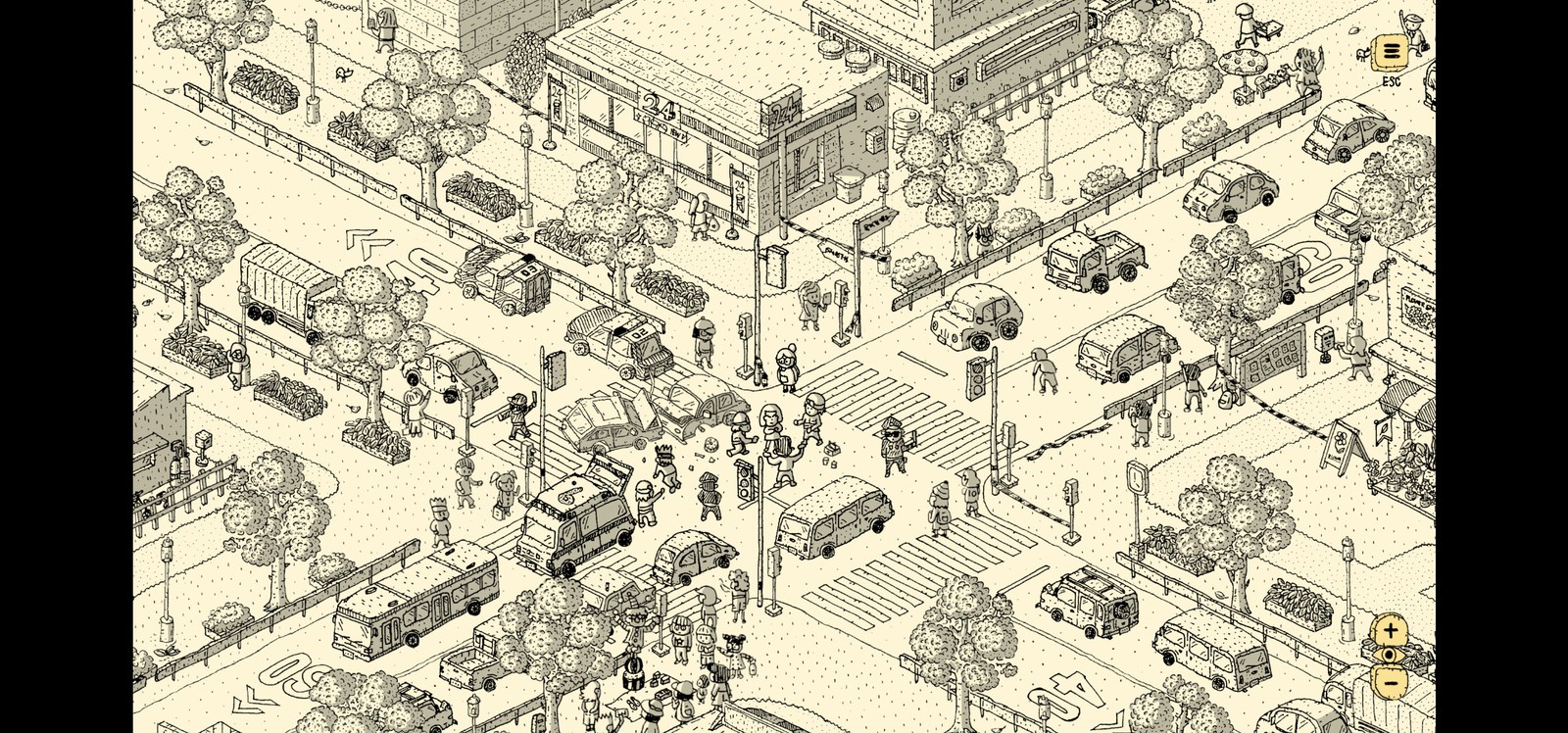
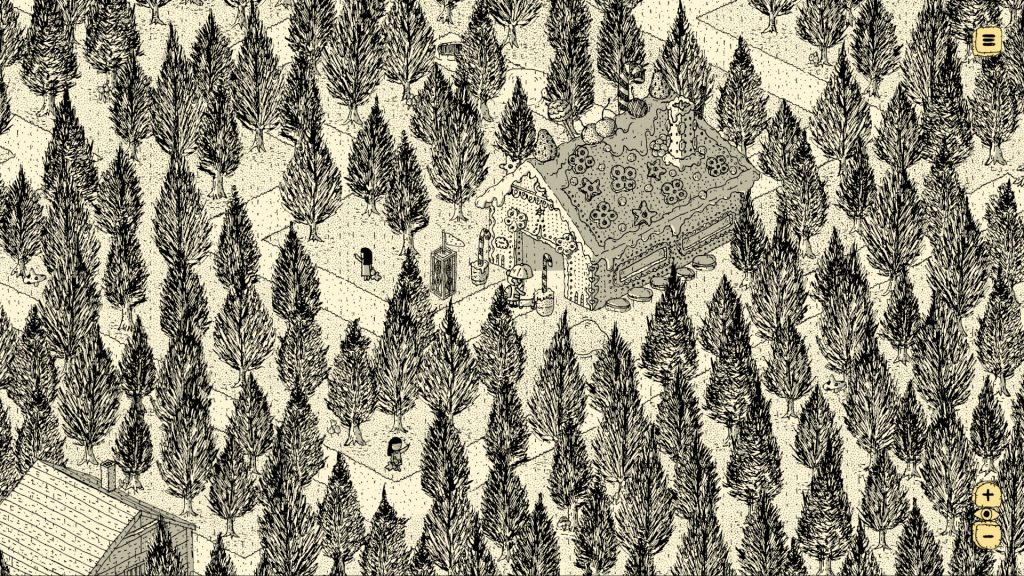
The first thing you notice when Finding Polka opens is the art. Every surface in this game is rendered in sepia-toned ballpoint-pen linework, as if someone sat down with a notebook and an ink cartridge and drew an entire civilization from scratch. There are no flat-shaded polygons here, no procedural generation, no texture packs. Every building, every tree, every oddly-shaped creature was drawn by hand, and you can feel it. The density of detail is staggering — a single city block might contain dozens of unique NPCs, each one with their own idle animation, their own little routine, their own reason for being exactly where they stand.
This is not a game that relies on photorealism or even stylized 3D to create a sense of place. Finding Polka builds its world from the ground up with ink and intention. Scroll through the streets of its Japanese-inspired city and you will spot storefronts with actual signage, convenience stores with recognizable product displays, crosswalks crowded with pedestrians who each have somewhere to be. The effect is less like playing a game and more like peering into a living illustration — the kind of scene where you could zoom in on any corner and find another tiny story waiting to be noticed.
Chasing Polka Through the Unknown
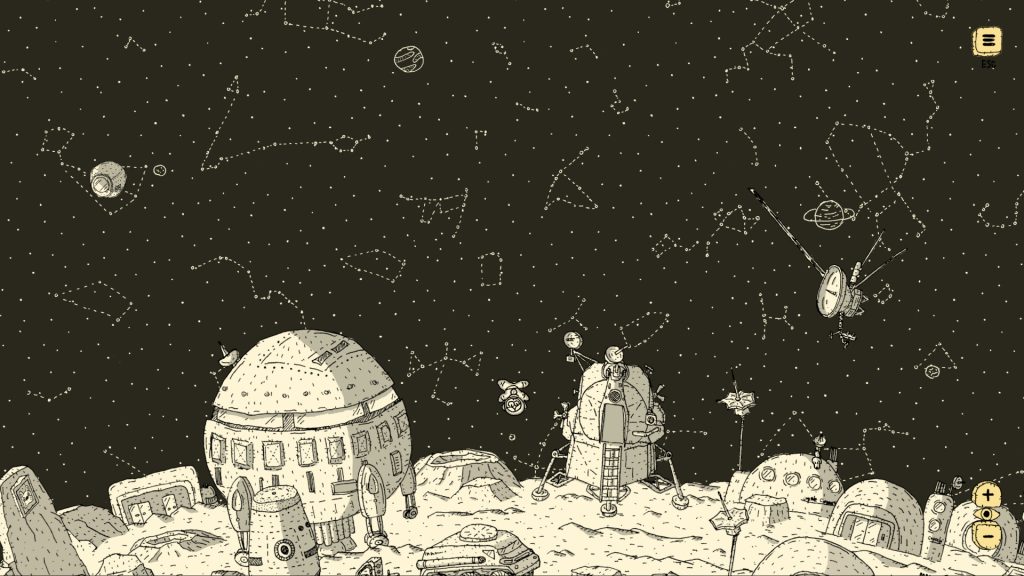
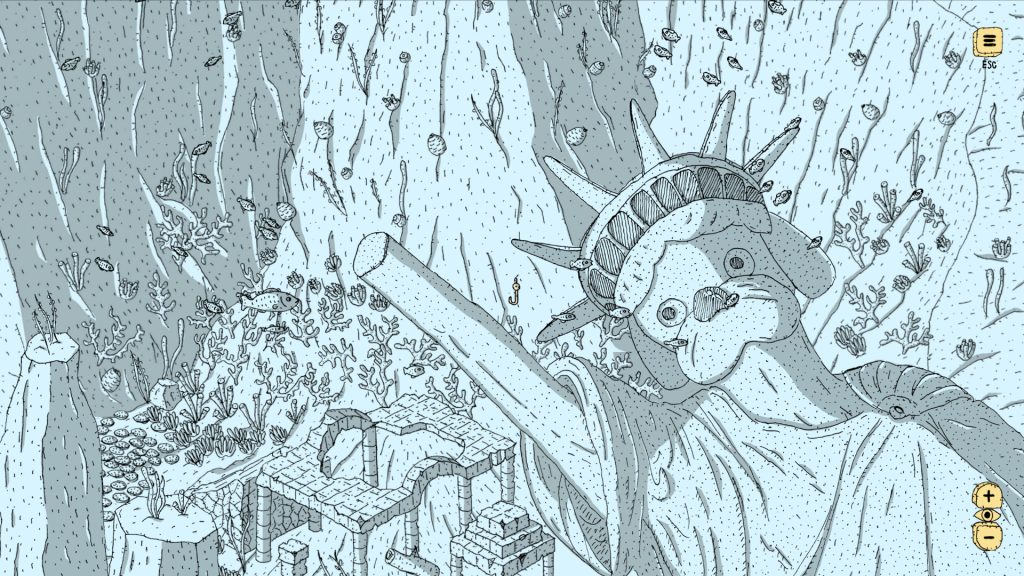
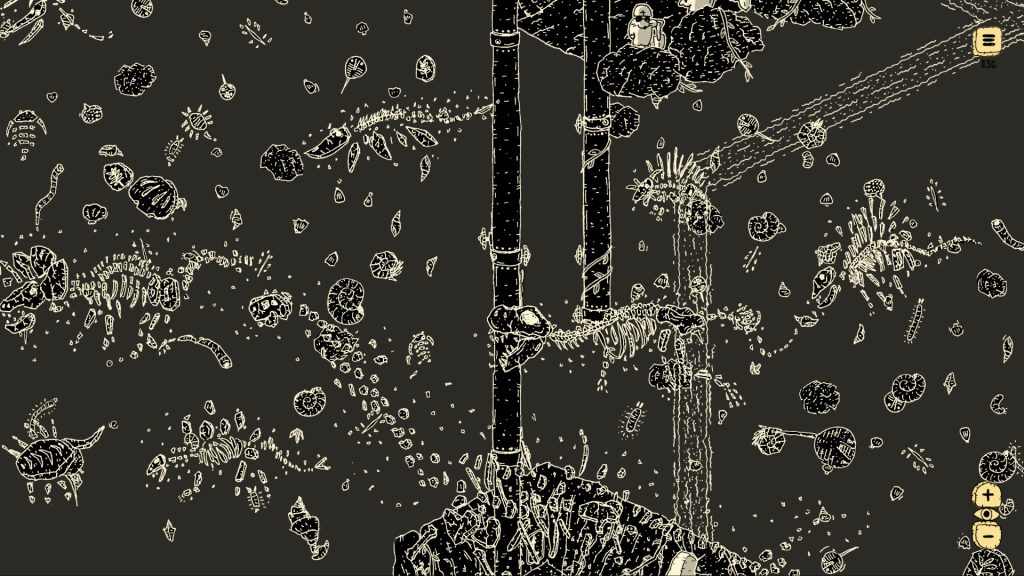
The central premise is beautifully straightforward: Polka is out there somewhere, and you need to find her. You follow paw prints, footprints, and environmental clues across a map that keeps expanding in unexpected directions. What begins as a leisurely stroll through familiar city streets quickly opens up into surreal, dreamlike environments — floating islands covered in chalk mathematical equations, underwater cityscapes with sunken landmarks, space outposts dotted with robotic equipment, and dense forest clearings hiding bizarre domestic scenes.
The game never tells you where Polka is. There is no quest marker, no minimap icon, no progress percentage. Instead, Finding Polka trusts you to observe. Pay attention to the NPCs who glance in a particular direction. Notice the paw print that appears near a doorway you almost walked past. Listen for the faint bark that seems to come from behind a building you haven’t explored yet. This is exploration as the game intended it — not the checklist-driven choreography of open-world collectathons, but the genuine thrill of stumbling onto something you weren’t looking for.
Friends You Meet Along the Way
Part of what makes Finding Polka so endearing is the way it handles its cast. Every character you encounter speaks through gestures, expressions, and sound effects rather than dialogue. A giraffe waves. A cat tilts its head. A figure in a tall hat gestures excitedly toward something you cannot yet see. You learn to read these characters like you would read the body language of a friend — context, timing, and emotional tone doing all the heavy lifting that words would normally handle.
Helping characters is as simple as interacting with them, but the game makes it feel meaningful. When you lend someone a hand, they become your friend, and that friendship manifests in concrete, often surprising ways. Friends show up later in the game to help you past obstacles, cheer you on during mini-games, or simply appear in the background of a scene you thought you had already explored completely. It is a system that rewards patience and attentiveness, and it creates a genuine emotional throughline without a single line of written dialogue.
The absence of words also gives Finding Polka an unusual universality. There is no language barrier to overcome, no translation to stumble over, no text box to skip through. The game communicates entirely through the language of movement, gesture, and visual storytelling, and it does so with a fluency that speaks to the care Kumazawa put into every animation and interaction.
Mini-Games and Side Activities
Finding Polka breaks up its walking adventure with a surprising number of optional mini-games scattered throughout the map. You can play putt-putt golf on a seaside course, whack moles in a carnival-style booth, take penalty shots in a soccer shootout, race boats across open water, split watermelons at a summer festival, and volley a ball back and forth in a surprisingly competitive volleyball match. None of these are required for story progression, but they add a playful variety that prevents the exploration from ever feeling monotonous.
The mini-games are simple in execution but generous in spirit. They feel less like diversions bolted onto the main experience and more like the kind of spontaneous activities you might stumble into during a real afternoon walk — the kind of thing that makes you stop, smile, and lose twenty minutes before remembering you were supposed to be going somewhere. Their optional nature is key: you never feel penalized for skipping them, but you are always rewarded for stopping to play.
Progression and Replayability
Finding Polka runs approximately four hours for a first playthrough, with an additional thirty minutes or so for the true ending. The game is structured around a single narrative arc — following Polka’s trail from start to finish — but the density of environmental detail and the number of hidden secrets make a second pass genuinely worthwhile. Many of the characters you meet early in the game reappear in later areas, and spotting these recurring faces becomes its own reward on repeat visits.
The lack of dialogue also means the game rewards different kinds of attention on subsequent playthroughs. Where you might have rushed past a crowded intersection on your first visit, a second time through you notice the small dramas playing out between NPCs, the hidden Easter eggs tucked into shop windows, and the subtle visual callbacks to earlier scenes. Finding Polka is the kind of game where the journey itself is the point, and that journey remains rich enough to justify revisiting.
Visuals, Audio, and Atmosphere
The ballpoint-pen aesthetic is the game’s most immediately striking quality, but Finding Polka’s visual identity runs deeper than its linework. Each environment has its own distinct mood and color palette: the warm sepia of the city streets gives way to the cool blues of underwater exploration, the dark purples of deep-space outposts, and the muted greens of forest glades. These shifts are subtle enough to feel organic — you never get a jarring loading screen that dumps you into a new biome — but distinct enough to keep each area feeling genuinely new.
The audio design is equally considered. Sound effects are sparse but purposeful: a surprised gasp from an NPC, the patter of footsteps on different surfaces, the bark of a dog echoing across a half-empty street. The soundtrack, when it appears, is gentle and unhurried — the kind of music that enhances without intruding. One reviewer specifically praised the music that plays during a rainy forest scene, and it is easy to see why: it captures the specific, bittersweet feeling of being alone in the woods while the world carries on around you.
Together, the visuals and audio create an atmosphere that is hard to replicate in any other medium. Finding Polka feels like flipping through a particularly beautiful sketchbook while listening to a record you forgot you owned. It is calming without being boring, detailed without being overwhelming, and emotionally resonant without ever being manipulative.
Performance and Technical Concerns
Finding Polka runs smoothly on modest hardware, which is expected given its hand-drawn art style. Players have not reported significant performance issues, frame rate drops, or crashes in early reviews. The game supports full controller input, including DualShock and DualSense, and offers a keyboard-only option for accessibility. Steam Cloud saves are supported, so your progress carries across devices without issue.
The game is still new enough that long-term technical support details remain to be seen, but the initial release appears stable and well-optimized. For a solo-developed title, the level of polish here is impressive — the game runs without stutter, loads quickly between areas, and handles its dense environments without visible pop-in or asset streaming problems.
Pros and Cons
Pros:
- Extraordinary hand-drawn art direction that rewards close inspection at every turn
- Emotionally resonant storytelling delivered entirely through gesture and visual language
- A sprawling, interconnected world that feels genuinely alive with hidden detail
- Optional mini-games that add variety without disrupting the core experience
- A soundtrack that perfectly complements the game’s contemplative, exploratory pace
- A meaningful friendship system that makes helping NPCs feel rewarding and consequential
- Universal accessibility — no text, no dialogue, no language barrier
Cons:
- At four hours, the experience ends before you are quite ready to leave
- The walking-simulator pace may not appeal to players seeking more mechanical depth
- Some environmental puzzles rely on subtle visual cues that can be easy to miss
- No official soundtrack release announced yet
SteamGamer Verdict
Finding Polka is a game that trusts its players in a way that most modern titles have forgotten how to do. It trusts you to explore without a map. It trusts you to care about characters who never say a word. It trusts that a beautifully drawn world, a wandering dog, and the simple act of helping a stranger can carry an entire experience. And it is right on every count.
Shinnosuke Kumazawa has created something genuinely special here — a game that feels less like a product and more like a love letter, to a dog, to a city, to the act of noticing the world around you. At $9.99, Finding Polka is an easy recommendation for anyone who values atmosphere, artistry, and emotional honesty in their games. It is short, it is sweet, and it will stay with you long after the credits roll.
Score: 8.5 / 10

Jordan Hayes covers PC gaming news, hardware, and the ever-changing Steam ecosystem for SteamGamer.net. He believes some of gaming’s biggest stories are hiding in patch notes, performance charts, and suspiciously quiet price changes. When he isn’t investigating what developers or GPU manufacturers are doing, he is probably starting another roguelike run he insists will be his last.


Comment here