
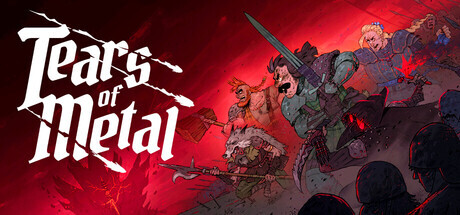
Paper Cult spent six years building Tears of Metal, and the waiting shows — not in the sense of a polished final product, because this is still Early Access, but in the sense that the Montreal studio clearly had a vision and committed to it with a level of craft that most indie studios can’t afford. The result is a game that has been called “Scottish Dynasty Warriors” since its Summer Game Fest 2024 reveal, and five days after its July 22 launch, that nickname still fits perfectly. It’s a medieval hack-and-slash roguelike where you lead a Scottish battalion across war-torn battlefields, carving through hundreds of enemies while building increasingly ridiculous damage builds. It’s Early Access, it’s rough around the edges, and it’s already sitting at 87% Very Positive on Steam with over 1,100 reviews. That kind of reception doesn’t happen by accident.
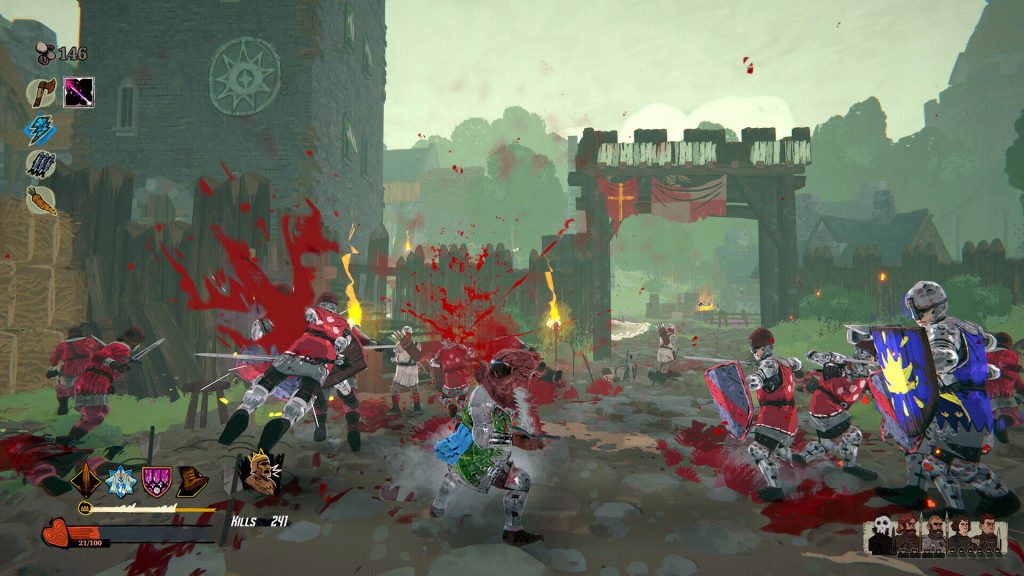
I picked this one up on launch day, and what struck me immediately wasn’t the combat or the roguelike systems — it was the art. Paper Cult nailed the Scottish Highlands aesthetic with a painterly, almost storybook quality that makes every battlefield feel like a diorama you could reach into and rearrange. The palette is rich with earthy greens, stormy grays, and the occasional splash of Dragon Stone purple. It’s gorgeous in a way that most musou-style games never attempt, and it gives the whole experience a personality that goes well beyond “medieval setting, check.”
What Is Tears of Metal?
Tears of Metal is a third-person action roguelike developed and published by Paper Cult, the Montreal indie studio behind the critically acclaimed Bloodroots. It launched in Early Access on July 22, 2026 on Steam and the Microsoft Store, and is available on Xbox Game Pass for PC from day one. The game supports single-player and online co-op for up to four players.
The pitch is simple: you’re a Scottish warrior leading a battalion to reclaim your island after a meteor called the Dragon Stone brought invaders and strange powers to your homeland. Each run takes you through handcrafted environments where you fight hordes of enemies, collect upgrades and artifacts, and try to push as far as you can before dying — at which point you return to your settlement with permanent upgrades and try again. Think Risk of Rain‘s loop meets Dynasty Warriors‘ scale meets Hades‘ upgrade system, wrapped in a medieval Scottish aesthetic.
The game features three playable heroes at launch, over 100 artifacts that modify your builds, 45 handcrafted environments, and 89 Steam achievements. The price is $24.99 USD, currently discounted to $22.49 for the launch period. Paper Cult says the price will increase after Early Access, and they’re planning 4 to 12 months of development before full release.
The World and Its Scottish Roots
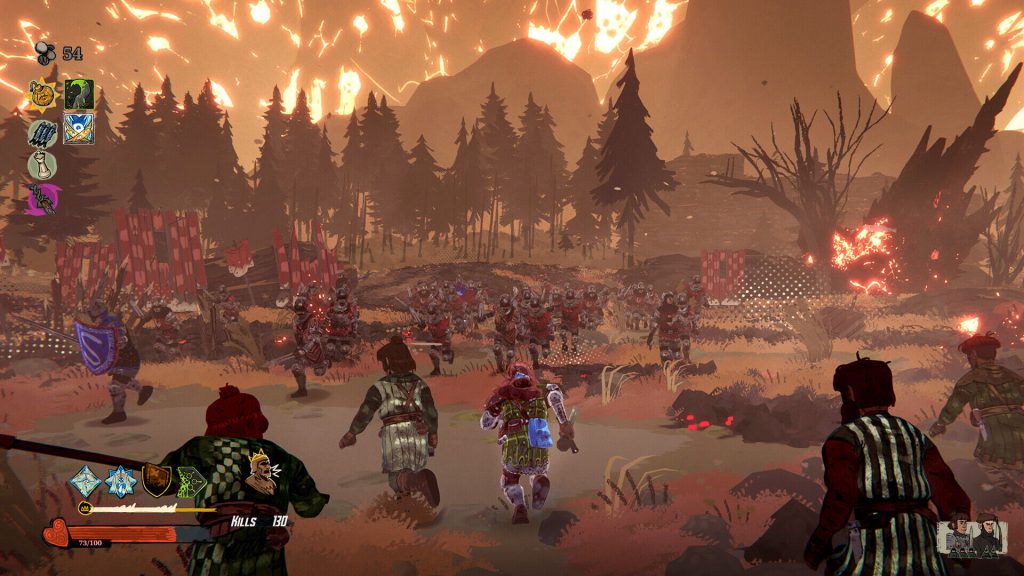
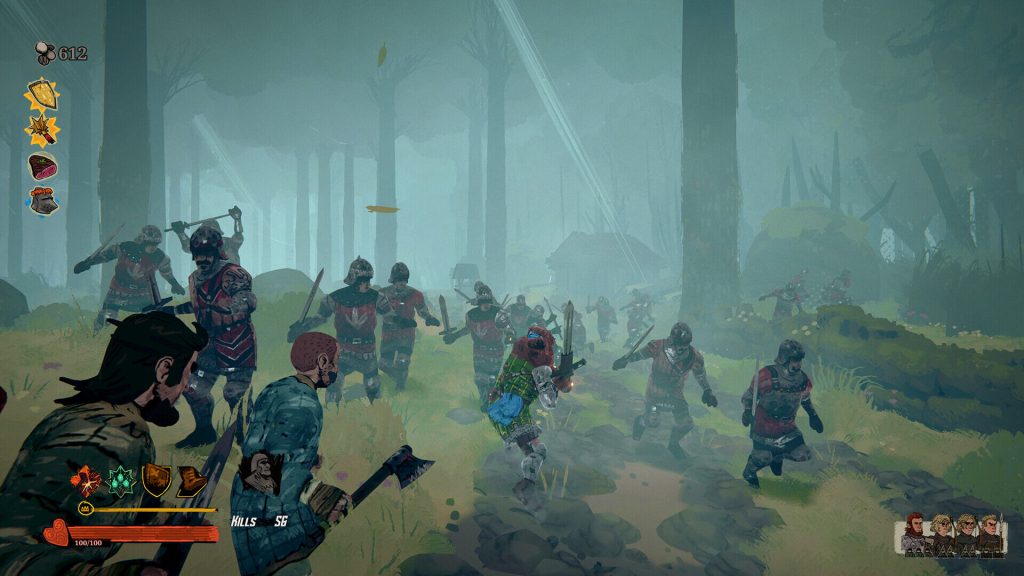
The setting is Tears of Metal‘s secret weapon. Scotland isn’t just a coat of paint here — it’s baked into the DNA of the game. The levels take you across misty highlands, through burning villages, past crumbling stone castles, and into fog-choked forests where enemy silhouettes emerge from the haze. There’s a real sense of place that you don’t get from most roguelikes, which tend toward abstract or procedurally generated environments.
The story is light but effective. The Dragon Stone Meteor brought invaders who are harvesting its power, and you need to push them back island by island. The lore unfolds through environmental details and brief narrative beats rather than cutscenes, which works for a game built around repeated runs. You’re not here for a 40-hour narrative — you’re here to rally your troops, find powerful artifact combinations, and feel like William Wallace screaming into the void. One Steam review literally described it as feeling “like Mel Gibson yelling ‘Freedom!'” and honestly, that captures the vibe better than any marketing copy could.
Gameplay and Combat
The moment-to-moment gameplay is where Tears of Metal lives or dies, and it mostly lives. You control your hero from a third-person perspective, swinging weapons through crowds of enemies with combo strings that feel meaty and responsive. The combat animations are smooth — Paper Cult clearly learned from Bloodroots — and there’s a satisfying crunch to every hit. You’ve got a dodge, a block, and a parry system that rewards timing, though the parry window can feel tight.
Between runs, you collect upgrades and combine them with over 100 artifacts to create builds. Some artifacts add straightforward stat boosts, while others modify your attacks in more interesting ways — pulling enemies into a vortex after a hit, setting them on fire, or chaining explosions. The best runs are the ones where your build comes together and you’re mowing through enemies like a lawnmower through grass. The worst runs are the ones where you’re stuck with mediocre upgrades and slogging through the same areas for the third time.
The three heroes at launch each bring a different playstyle, though the community consensus is that the combat variety between them could be deeper. As one negative review put it, “the attack combos are kind of pointless since there’s only one of them that does the most dmg even if you somehow get a buff for another type of attack.” This is a fair criticism — the combo system feels underbaked compared to the depth of the artifact system, and there’s a missed opportunity to make each hero’s moveset feel truly distinct.
The roguelike elements themselves are where the game divides players most. Fans of Hades expect dramatic mid-run power spikes that change how you play. Tears of Metal‘s upgrades tend to be more incremental — a percentage boost here, a new artifact there. One detailed negative review noted that “the roguelike system should interact much more with the actual moveset. Give us upgrades that change attacks, add new moves, modify combos.” This is a valid point, and it’s something Paper Cult will need to address during Early Access if the game wants to retain the roguelike crowd.
Progression and Replayability
The dual progression system — in-run upgrades plus permanent settlement upgrades — gives the game legs. Between campaigns, you can expand your settlement, recruit and upgrade soldiers who gain permanent skills, buy upgrades from shops, and unlock challenging objectives for greater rewards. This Darkest Dungeon-style hub system adds a layer of long-term investment that pure roguelikes sometimes lack.
The problem is that the early game can feel punishingly slow. Multiple negative reviews flagged that the first few runs are a slog before you’ve unlocked enough permanent upgrades to make progress feel meaningful. One player warned that “you will die many times before you make any substantial progress in the game” and recommended adjusting expectations accordingly. This is a common roguelike tension — the games need to be punishing to make runs feel meaningful, but they also need to give players enough early hooks to keep them playing. Tears of Metal sometimes leans too hard on the punishment side.
The 45 handcrafted environments provide decent variety across runs, though players have noted that the difficulty spikes between islands can feel abrupt. The lack of a mid-run save system is also a sore point — a single campaign can take one to two hours, and losing all progress because you had to close the game feels archaic in 2026.
Visuals, Audio, and Atmosphere
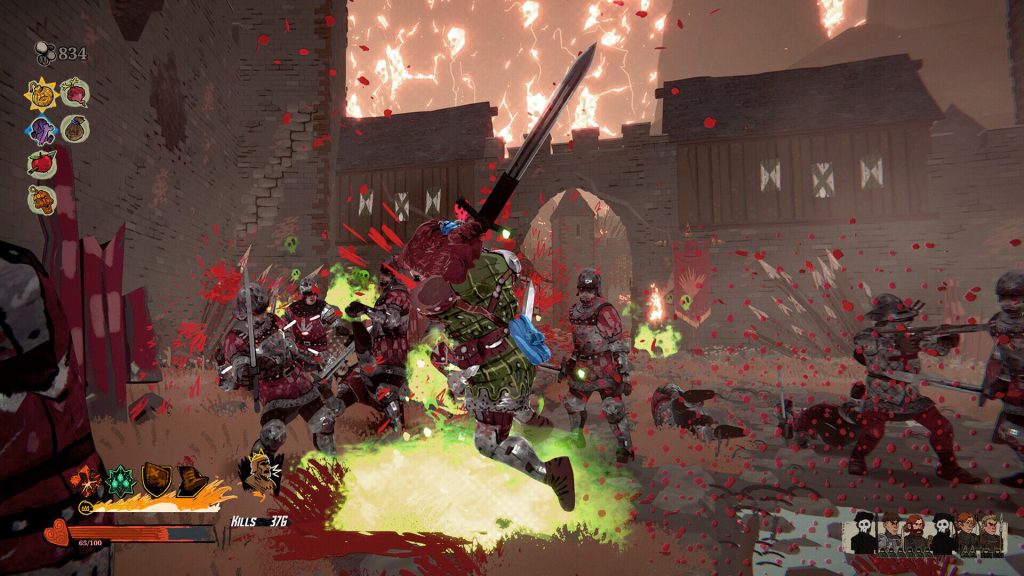
This is where Tears of Metal absolutely excels. The art direction is stunning — every environment has a handcrafted quality that rewards exploration and screenshot-taking. The color palette shifts naturally between biomes, from the warm oranges of burning villages to the cold blues of misty highlands. Character designs are distinct and memorable, with the Scottish battalion members each having their own personality.
The soundtrack, composed by Paper Cult, leans into Celtic and orchestral influences that perfectly complement the setting. Multiple reviews singled out the music as a highlight, with one player noting they “love the BGM at the last boss run.” The sound design during combat — the clash of steel, the spray of blood, the roar of crowds — adds a visceral quality that makes every fight feel impactful.
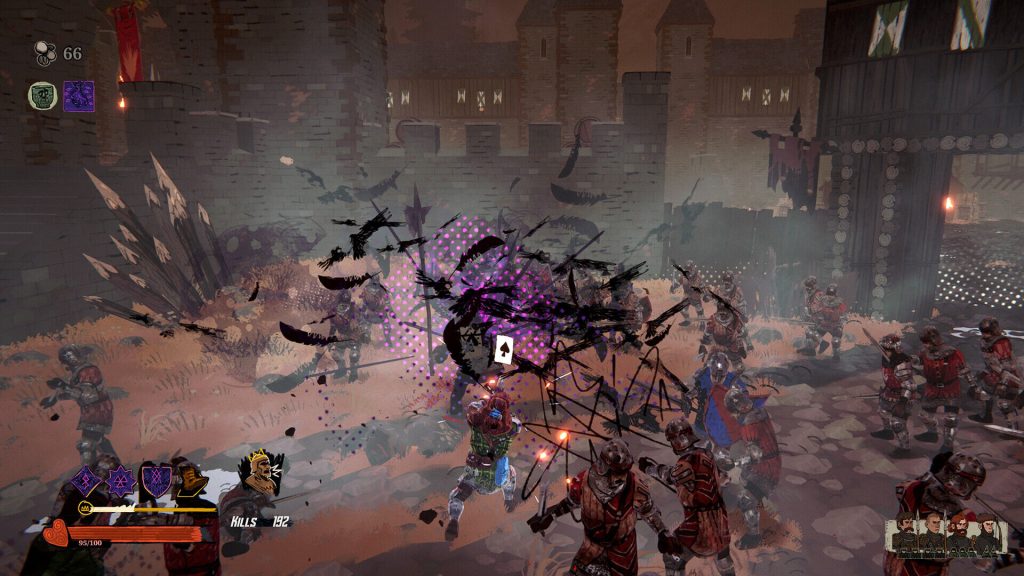
Atmosphere is a word that gets thrown around a lot in game reviews, but Tears of Metal genuinely earns it. The combination of art, music, and environmental design creates a world that feels lived-in and war-torn. When you’re standing on a hill overlooking a burning village, watching your battalion charge into the fray, there’s a cinematic quality that elevates the whole experience above typical roguelike fare.
Performance and Technical Problems
Early Access means bugs, and Tears of Metal has its share. The most commonly cited issues:
- Visual clarity in later stages: When the screen fills with enemies, particle effects, and boss health bars, it becomes genuinely difficult to read incoming attacks. Several negative reviews flagged this as a core problem, with one player noting that “40% of the screen is covered by boss health bars, and the lower part of the screen is so filled with noise, that responding to the near-instant attacks becomes literally impossible.”
- Co-op desync: Some players reported minor desynchronization issues during online co-op, though this appears to be a minor annoyance rather than a game-breaker.
- Performance inconsistencies: One player reported the game feeling like a “slowmo fest” despite stable 120fps, suggesting some internal timing or frame pacing issues.
- Frametrapping: The dodge having a fixed cooldown, combined with some attacks being unblockable, can create situations where you’re guaranteed to take damage. This is a design issue more than a technical one, but it compounds the frustration in later stages.
- AI captain deaths: In co-op or with AI allies, suicidal bomber enemies can wipe your entire battalion because the AI won’t dodge. One player lost 7 allies to this mechanic and immediately shelved the game.
The devs have acknowledged these issues and have a public roadmap. They’re collecting anonymous gameplay data and have an in-game feedback tool. The game ran fine on my mid-range hardware (Ryzen 5 5600X, RTX 3060), but the later stages definitely stress-test visual clarity more than raw performance.
Pros
- Stunning art direction that gives the game a unique visual identity
- Excellent soundtrack that complements the Scottish medieval setting
- Satisfying core combat with smooth animations and weighty impacts
- Up to 4-player online co-op that’s genuinely fun with friends
- Deep artifact and upgrade system with over 100 collectibles
- Permanent progression through settlement upgrades and soldier skills
- 45 handcrafted environments with real variety
- Available on Xbox Game Pass from day one
- Full controller support with DualShock and DualSense support
- Active developer engagement and public roadmap
Cons
- Visual clarity collapses in later stages — too many effects, not enough readability
- Roguelike upgrades feel incremental rather than transformative
- Early game is punishingly slow before permanent upgrades kick in
- No mid-run save system — campaigns can take 1-2 hours
- Healing is expensive and scarce, making mistakes feel overly punishing
- Combo variety between heroes is underwhelming
- Co-op has minor desync issues and AI ally pathing problems
- $24.99 feels steep for Early Access, especially compared to similar games
- Difficulty spikes between islands can feel abrupt and unfair
SteamGamer Editorial Verdict
Tears of Metal is the rare Early Access game that already feels like it has a soul. Paper Cult clearly spent those six years of development figuring out what makes their game special — the Scottish setting, the painterly art, the satisfying crunch of combat — and the foundation they’ve built is genuinely compelling. The 87% Very Positive rating after five days isn’t just launch hype; it reflects a game that delivers on its core promise of large-scale medieval hack-and-slash combat with roguelike progression.
But the cracks are visible. The visual clarity issues in later stages aren’t just a minor inconvenience — they fundamentally undermine the combat system that the game is built around. If you can’t read incoming attacks, the dodge-and-parry mechanics become a guessing game. The roguelike upgrades need more dramatic variety to keep runs feeling fresh. And the $24.99 price tag is a hard sell for an Early Access title that still has significant balance and content gaps.
The question isn’t whether Tears of Metal is good — it is. The question is whether Paper Cult can address the visual clarity problems, deepen the roguelike systems, and deliver enough new content during the 4-12 month Early Access window to justify the investment. Based on what they’ve built so far and their track record with Bloodroots, I’m optimistic. But optimism isn’t a score.
Score: 7.5/10
Tears of Metal is available now in Early Access on Steam ($24.99, currently $22.49 with 10% launch discount) and the Microsoft Store. It’s also available on Xbox Game Pass for PC from day one.

Zoe Mitchell writes about games that start arguments. At SteamGamer.net, she covers gaming culture, unexpected indie hits, controversial design decisions, and releases that send the internet into a collective meltdown. She is most interested in the moment a game stops being entertainment and becomes a conversation. If everyone is asking, “Who thought this was a good idea?” Zoe wants to play it.



Comment here