
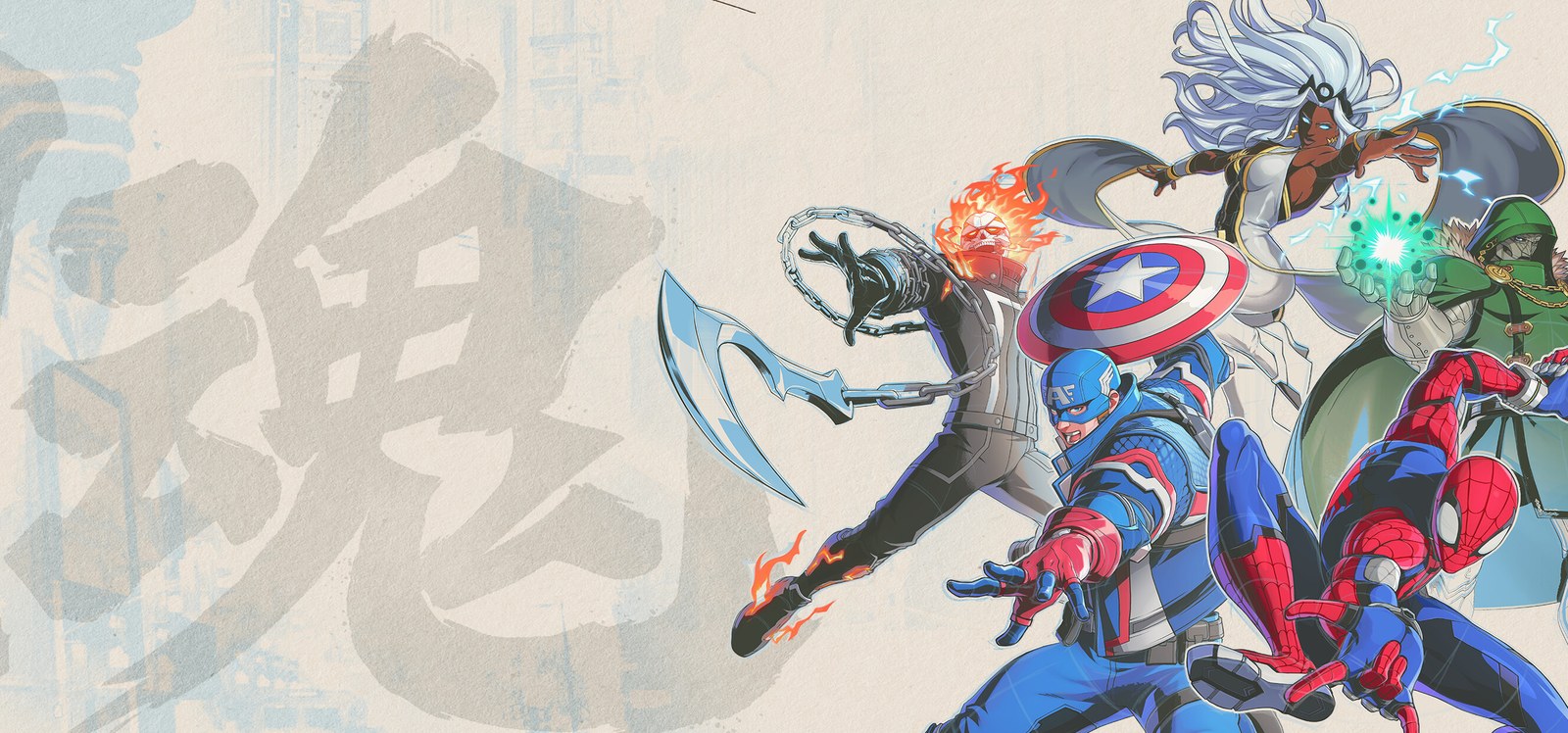
There is a version of MARVEL Tōkon: Fighting Souls that deserves every ounce of praise its developer has ever received. That version lives on PlayStation 5, where Arc System Works’ latest tag fighter runs at a locked 60fps, looks like a Saturday morning cartoon directed by someone who actually reads comics, and plays like the spiritual successor to Marvel vs. Capcom that fans have been begging for since Infinite stumbled out of the gate in 2017. That version is genuinely excellent.
The problem is that most people encountering this game for the first time are doing so on Steam, where MARVEL Tōkon launched on August 6, 2026 to a tidal wave of negative reviews, a mandatory PlayStation Network login requirement, and performance so poor that players with high-end rigs are reporting frame drops, black screens, and CPU usage that would make a cryptocurrency miner blush. As of this writing, the game sits at a “Mixed” rating on Steam with roughly 43% positive reviews across more than 1,400 user assessments. That number tells you everything you need to know about the PC port, and almost nothing about the game underneath it.
This review tries to do justice to both realities. Because MARVEL Tōkon is simultaneously one of the most exciting fighting games released in years and one of the most frustrating PC launches of 2026. Understanding why requires separating the art from the engineering.
Game Overview
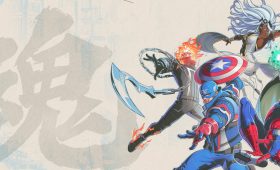
MARVEL Tōkon: Fighting Souls is a 4v4 tag-team fighting game developed by Arc System Works, published by PlayStation Publishing LLC, and created in collaboration with Marvel Games. It features 20 playable characters at launch, each drawn from the Marvel Universe and reimagined in Arc System Works’ signature anime-inspired art style. The roster spans heroes and villains alike: Spider-Man, Captain America, Iron Man, Storm, Doctor Doom, Wolverine, Ms. Marvel, Star-Lord, Blade, and more, each belonging to their own named team within the game’s fiction.
The game is available on PlayStation 5 and PC (Steam and Epic Games Store) at a standard price of $19.99 USD, with Digital Deluxe and Ultimate Editions that include a Year 1 Character and Stage Pass, costumes, and cosmetic extras. A PlayStation Account is required for all online features, including on PC.
World, Story, or Central Premise
The narrative framework of MARVEL Tōkon is built around “Episode Mode,” a single-player experience that follows the various teams that make up the roster. According to Arc System Works, it promises a 10-plus-hour original story that explores the dynamics between characters within their respective teams. The premise involves “The Champion,” a cosmic-level threat that has set his sights on Earth, forcing heroes and villains into uneasy alliances.
Early impressions from players who have dug into Episode Mode suggest it functions more as an extended tutorial wrapped in narrative dressing than a fully realized story mode. You learn each team’s dynamics, pick up character-specific mechanics, and get a sense of how the roster fits together. It’s serviceable — not the kind of mode you’d replay multiple times, but enough to give context to the roster before you take your team online.
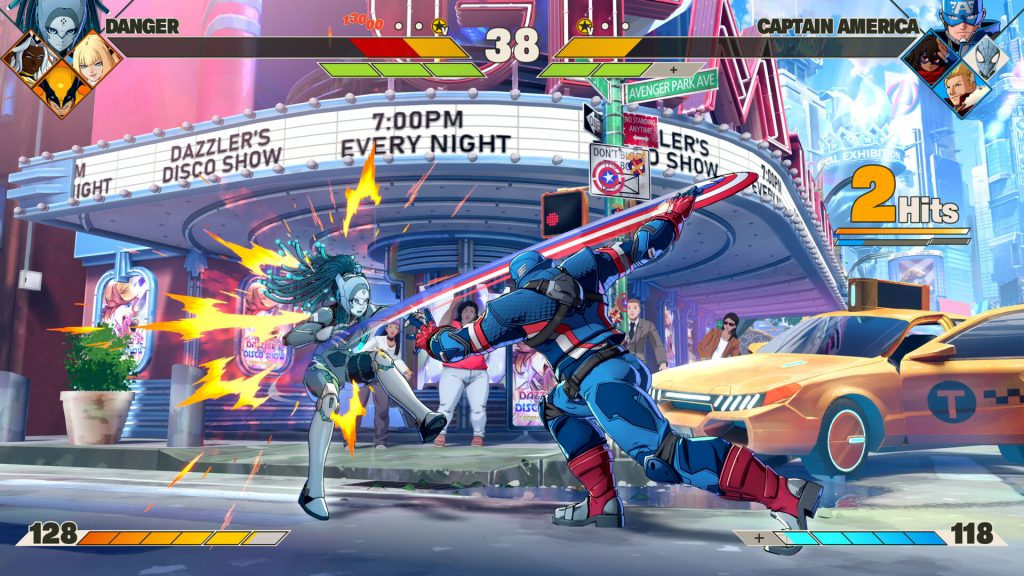
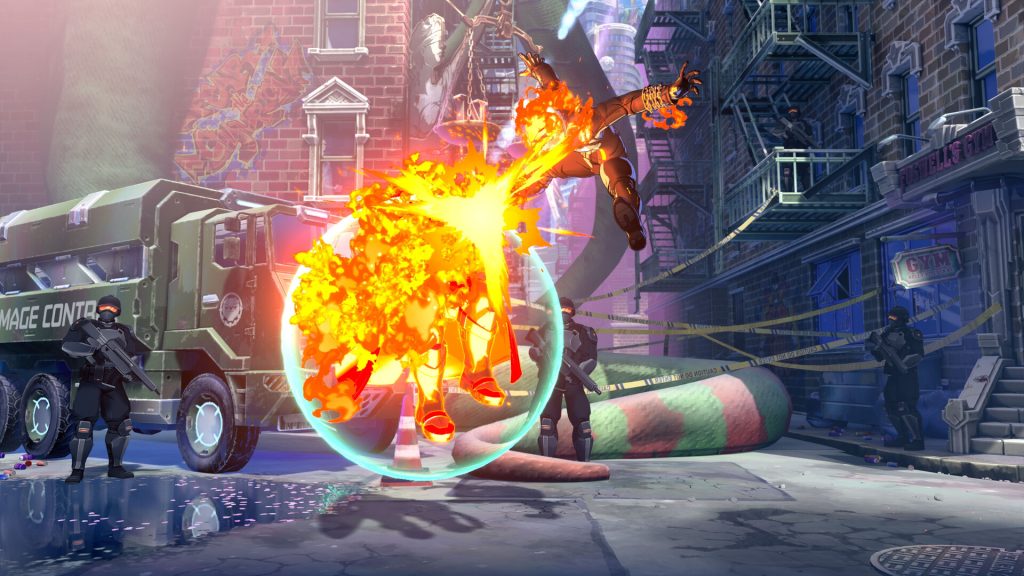
The world itself is vibrant and detailed. Stages are based on iconic Marvel locales — New York City streets, cosmic battlegrounds, S.H.I.E.L.D. installations — and are packed with easter eggs, reactive pedestrians, and environmental details that reward close attention. Arc System Works clearly cared about building a living Marvel Universe, not just a backdrop for fights.
Gameplay and Combat
This is where MARVEL Tōkon earns its stripes, and where the conversation about the game’s quality diverges most sharply from the conversation about its PC port. The 4v4 tag-team system is unlike anything else in the fighting game genre, and it works remarkably well once you understand its rules.
The fundamental innovation is the shared health bar. All four characters on your team draw from the same pool of health, which eliminates the traditional tag-fighter incentive to cycle through characters to heal the damaged one. This single design choice makes the game far more accessible than it might otherwise be: you can build a competitive team around knowing just one character deeply, then layer in additional characters as you improve. As IGN’s Mitchell Saltzman noted during the open beta, this allows players to “add new elements to your gameplan piece-by-piece rather than feeling like you need to have everything on lock right from the start.”
Matches begin with only two characters available per team. The remaining fighters are unlocked during play through specific actions: landing a light auto-combo, hitting a corner transition, connecting a throw, or losing a round. Each unlocked character adds a bar to your Assemble meter, which governs assist calls. Before each match, you assign your four characters to specific positions — Leader, Shooter, Vertical, and Assault — which determine what kind of assist they provide when called in neutral. Leader is your point character; Shooters fire projectiles; Verticals cover aerial space; Assaults deliver your most powerful assist.
The active tag system, which lets you briefly take control of an assist character while they’re on screen, adds another strategic layer. It’s more restrained than similar mechanics in 2XKO or Dragon Ball FighterZ, but it creates moments of genuine excitement when you swap mid-combo to extend a sequence or cover your recovery.
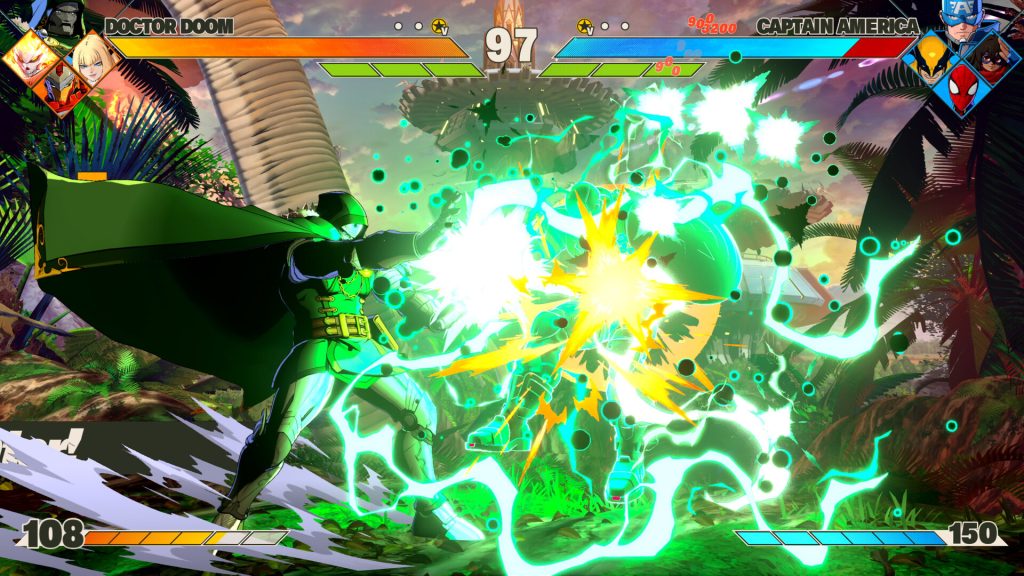
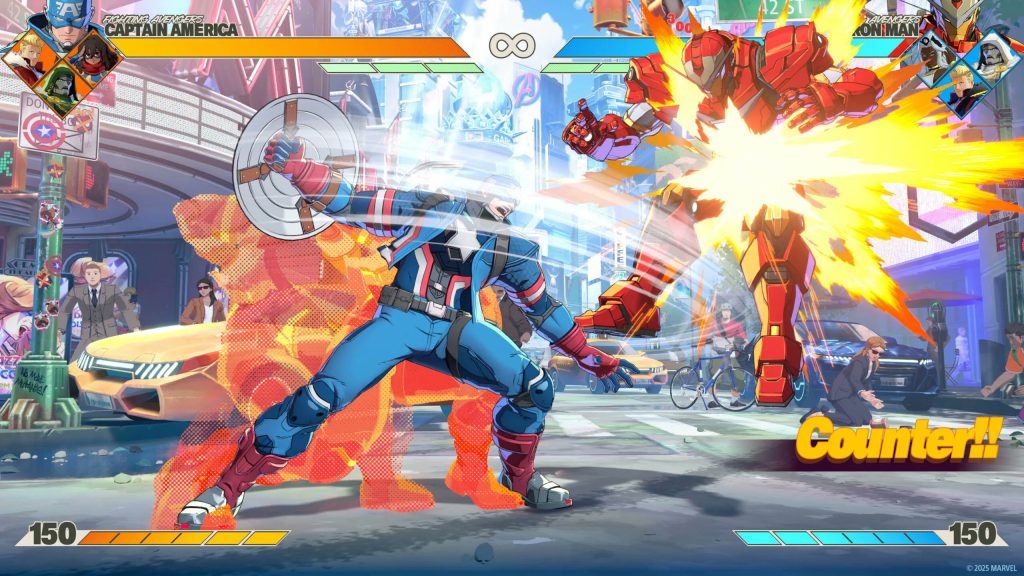
Every character feels distinct. Spider-Man zips across the stage on webs, baiting anti-airs and creating ambiguous left-right mixups. Storm manipulates weather to push enemies, pull objects, and even snatch opponents from half a screen away with a gust of wind. Doctor Doom fills the arena with metallic projectiles and magical traps. Iron Man controls space with repulsor blasts and aerial dominance. Captain America serves as the all-rounder — a reliable entry point for newcomers who want to learn the game’s systems without committing to a specialist role.
Arc System Works’ combat design pedigree — honed across Guilty Gear, BlazBlue, and Dragon Ball FighterZ — is evident in every frame. Controls are responsive, movement is fluid, and the visual feedback for hits and combos is spectacular. The anime-inspired cel-shaded art style transforms every battle into a living comic book, with explosive special effects that never sacrifice gameplay readability.
Progression and Replayability
The progression loop in MARVEL Tōkon is primarily skill-based rather than unlocks-based. The game’s depth comes from mastering team compositions, learning character-specific tech, and climbing the ranked ladder. With 20 characters at launch and a Year 1 roadmap that includes Phoenix Cyclops as the first DLC character this fall, the roster will continue to expand.
The learning curve is steeper than a traditional 1v1 fighter but gentler than most 4v4 systems would suggest. The shared health bar and the ability to build proficiency with one character at a time mean you’re never forced to learn the entire roster before you can compete. That said, the assist system’s hyper-specific rules — the timing windows, the positioning requirements, the distinction between neutral assists and combo assists — will take time to internalize.
Online play is where the game’s long-term appeal will be tested. The online lobby supports up to 64 players and includes standard ranked and casual modes. Arc System Works has included rollback netcode, which is essential for a fighting game’s competitive viability. However, community reports suggest the netcode has a known issue with approximately 8 frames of rollback inconsistency, which can make online matches feel less responsive than they should. The developer has acknowledged the problem and is investigating.
Visuals, Audio, and Atmosphere
Visually, MARVEL Tōkon is outstanding. Arc System Works has taken the anime-meets-American-comics aesthetic that made Guilty Gear Strive so visually arresting and applied it to Marvel’s roster with stunning results. Every character oozes personality in their design and animations — Spider-Man’s acrobatic flourishes, Storm’s regal composure, Doctor Doom’s imperious menace. The stages are dense with detail, from the neon-lit streets of New York to cosmic arenas crackling with energy.
On PS5, the game targets 60fps locked during battle at up to 4K resolution, and it hits that target consistently. The visual presentation during chaotic four-character exchanges remains readable, which is a testament to the art team’s understanding of fighting game clarity. Every super move is a spectacle — full-screen animations that play out like comic book panels brought to life.
The soundtrack delivers a heart-pounding mix of orchestral and electronic tracks that match the game’s energy. Character voice acting is top-notch, with each hero and villain delivering lines that feel authentic to their comic book counterparts. The little details — characters quipping during swaps, reacting to each other’s moves, giving daps after successful assists — add a layer of personality that elevates the presentation beyond mere spectacle.
Performance and Technical Problems
And here is where the review turns, because the PC version of MARVEL Tōkon is, to put it plainly, a mess.
The issues are extensive and well-documented. Players report dropped frame rates and stuttering even on high-end hardware. CPU usage spikes during matches, sometimes pushing processors to 100% utilization. The game’s anti-cheat software — Easy Anti-Cheat — causes extended black screens on startup, with some players reporting waits of over 30 minutes before the game finally loads. The same issues that plagued the open beta in July persist in the launch build, despite Arc System Works’ promise of a day-one patch.
On top of the performance problems, the game requires a mandatory PlayStation Network account to play on PC, even when purchased through Steam. This mirrors the backlash Sony faced with Helldivers 2 in 2024, and the PSN account restrictions have reportedly blocked the PC version from launching in certain countries altogether. The login is free, but the requirement adds friction that PC players understandably resent.
Perhaps most frustratingly for the Steam Deck community, MARVEL Tōkon does not launch at all on Linux or SteamOS. The Easy Anti-Cheat implementation blocks the game from running, effectively locking out every Steam Deck owner. When asked about Linux support, Arc System Works reportedly compared adding it to porting the game to the Nintendo Switch — suggesting it’s not a priority.
Arc System Works has acknowledged the PC issues through official channels, stating they are “actively investigating these reports” and asking affected players to share additional feedback. No timeline for fixes has been provided.
Pros and Cons
Pros:
- Innovative 4v4 tag-team system with a shared health bar that’s both accessible and strategically deep
- Distinct, character-accurate roster where every hero and villain feels unique
- Arc System Works’ signature anime-inspired cel-shaded visuals are gorgeous
- Responsive controls and fluid combat with satisfying impact
- Rollback netcode (when it works properly)
- 10+ hour Episode Mode provides context and training
- $19.99 base price is reasonable for the content on offer
- Year 1 DLC roadmap with new characters and stages
Cons:
- PC port performance is poor across the board — stuttering, frame drops, high CPU usage
- Mandatory PSN account requirement on PC creates friction and region locks
- Easy Anti-Cheat blocks Linux and Steam Deck entirely
- Black screen launch issues with EAC, sometimes exceeding 30 minutes
- Rollback netcode has known issues with inconsistent frame counts
- Active tag system feels restrictive compared to competitors
- Assist system’s rules are overwhelming for newcomers despite tutorials
- Episode Mode is functional but not compelling enough for replay
SteamGamer Verdict
MARVEL Tōkon: Fighting Souls is a difficult game to evaluate fairly because it is genuinely two different products depending on where you play it. On PlayStation 5, it is a spectacular, polished, deeply satisfying tag-team fighter that ranks among the best Marvel games ever made. On PC, it is a frustrating, poorly optimized port that requires a PlayStation account, blocks Linux users entirely, and can’t maintain stable performance on hardware that should handle it with ease.
The core combat is brilliant. Arc System Works has created a tag-fighter that manages to be both more accessible and more strategically interesting than its competitors, thanks to the shared health bar, the character unlock system, and the positional assist mechanics. The roster is fantastic, the visuals are stunning, and the attention to character personality is infectious. If this game ran properly on PC, it would be one of the year’s best releases, full stop.
But it doesn’t run properly on PC, and that’s the reality most Steam players are dealing with right now. The Mixed review score isn’t a reflection of the game’s quality — it’s a reflection of a broken port that launched with the same problems it had in beta. Arc System Works has a track record of improving their PC releases over time (see: Guilty Gear Strive), so there’s reason to hope this will get better. But hope isn’t a review score.
For now, MARVEL Tōkon: Fighting Souls earns a 6.5 out of 10 on Steam. The game underneath is an 8.5 or higher. The port drags it down by two full points, and until Arc System Works delivers the fixes this release desperately needs, that’s the score it carries. If you’re on PS5, play it immediately. If you’re on PC, wait for the patch.
A review copy was not provided; reviewed on PC.

Zoe Mitchell writes about games that start arguments. At SteamGamer.net, she covers gaming culture, unexpected indie hits, controversial design decisions, and releases that send the internet into a collective meltdown. She is most interested in the moment a game stops being entertainment and becomes a conversation. If everyone is asking, “Who thought this was a good idea?” Zoe wants to play it.



Comment here