
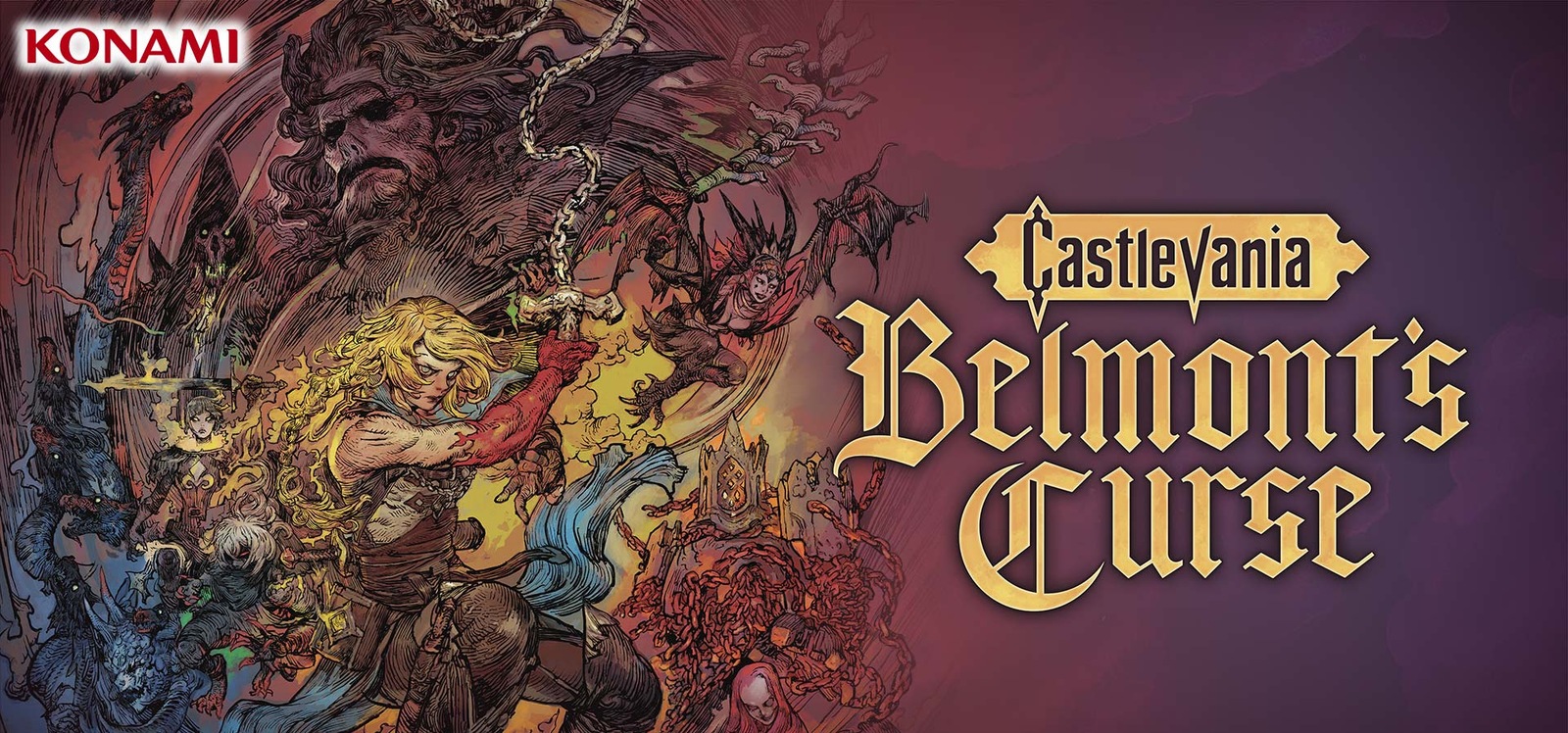
Twenty-three years after Castlevania III: Dracula’s Curse, the Belmont name is dragging its coffin back into the light. Castlevania: Belmont’s Curse is a 2D action-exploration game from KONAMI, Evil Empire, and Motion Twin — the partnership behind Dead Cells, which shows in every frame of its whip-swinging, momentum-driven movement. You play Rose Belmont, and from the first chained whip-crack it is clear this is a game that knows exactly what it wants to be: fast, fluid, and unapologetically old-school in its cruelty. It launched on October 14, 2026 at $29.99 USD and has settled at Very Positive on Steam, with roughly 3,589 positive reviews against 701 negative ones at the time of writing — a community verdict that lines up closely with what the game actually does well and where it stumbles.
The first hours are the weakest pitch the game makes. Multiple Steam players describe a slow, almost tutorialized opening — one reviewer counted three bosses before the game “hits its stride,” and another jokes that the whole first section feels “like a prologue where you’re on a guided tour.” The criticism is fair: Belmont’s Curse keeps its best toys, the whip grapple and the exploration keys, locked behind a sequence that under-sells the castle’s density. Once that castle opens up, though, the game becomes genuinely hard to put down.
Swinging for the Fences
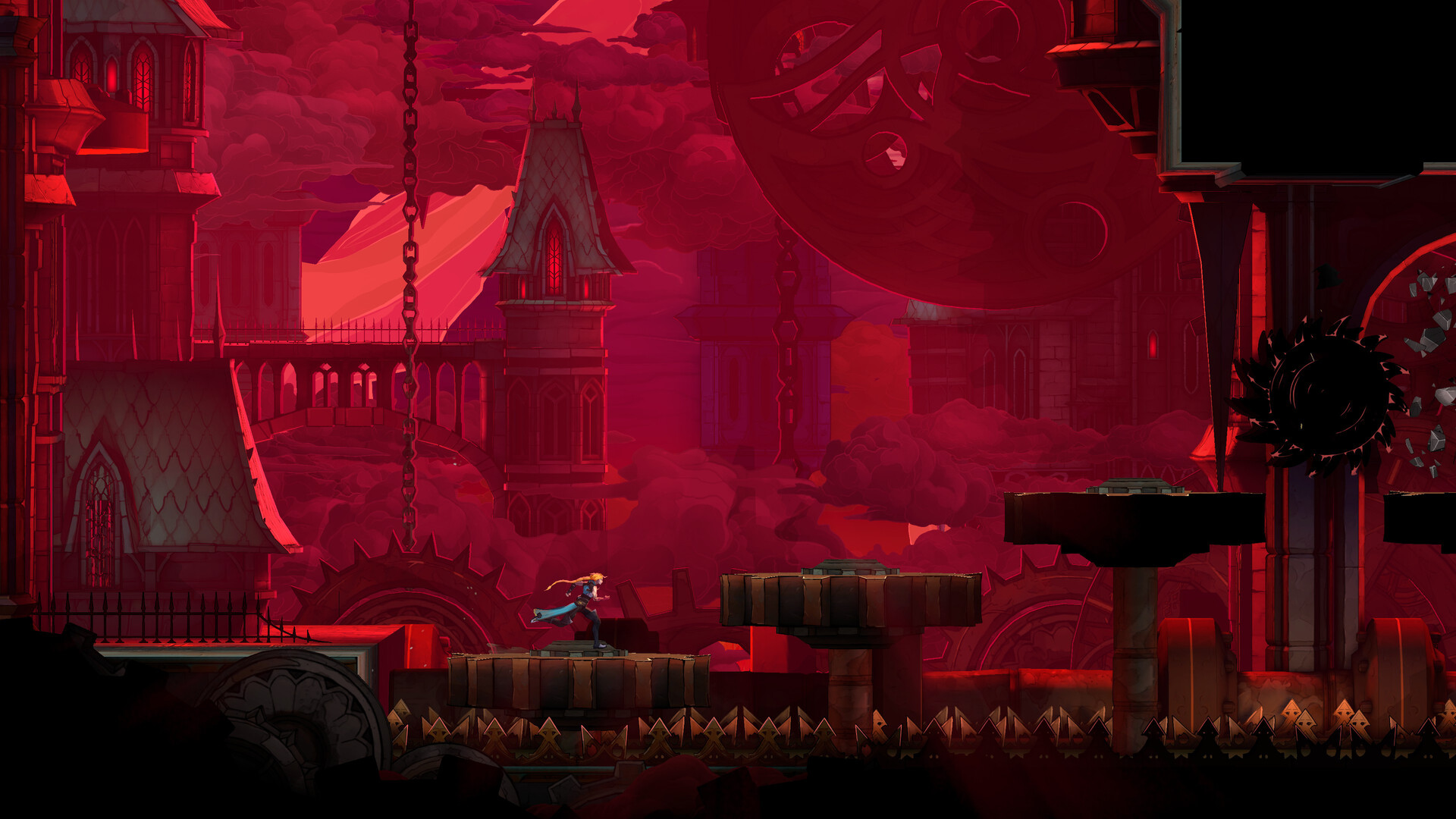
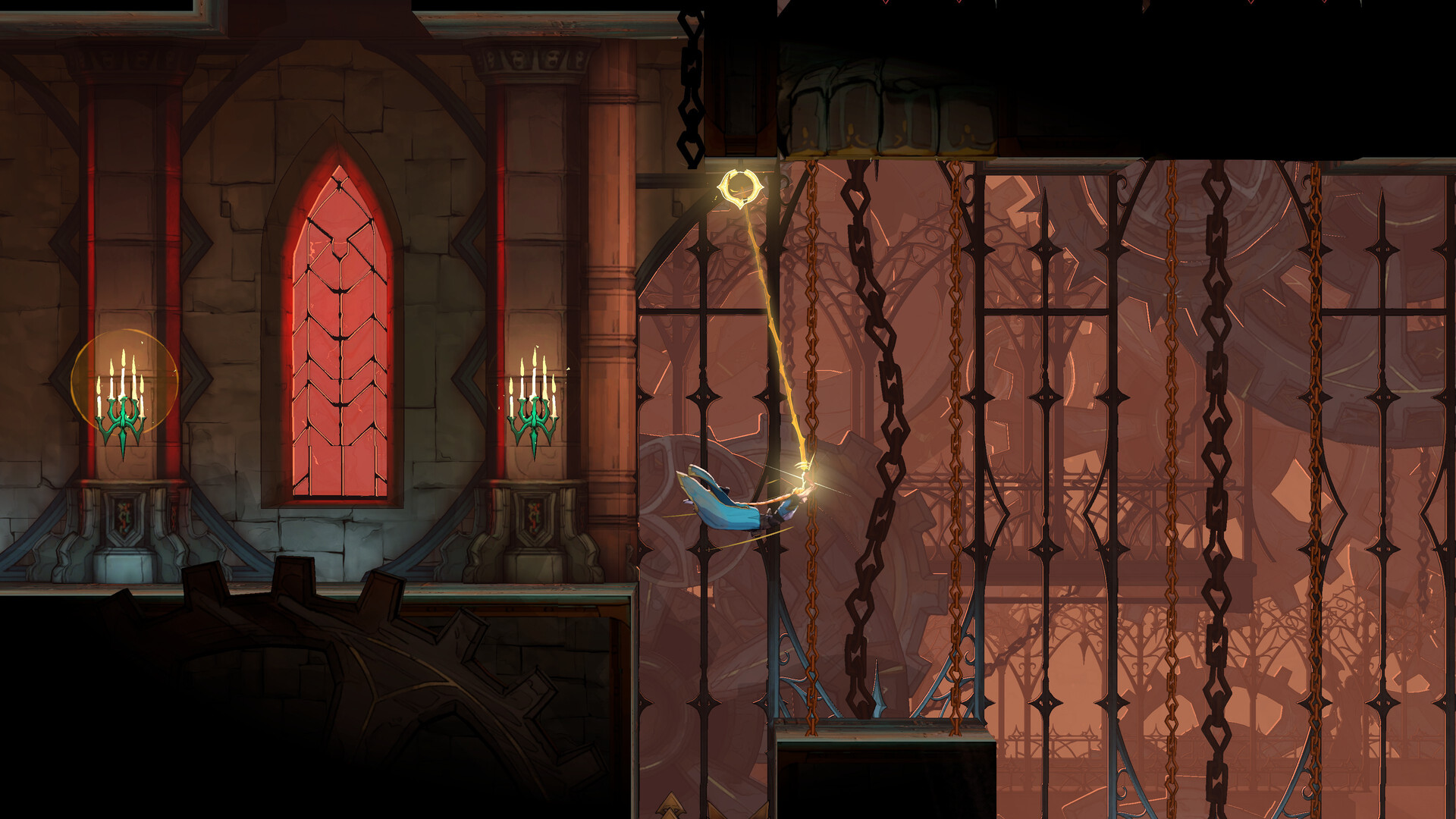
Movement is the star. Rose swings, dashes, and grapples with a whip that attaches to rings, chains, and enemies alike, and the community consensus is that this traversal is the best thing the game has. Traversal upgrades arrive in a deliberately slow trickle — the double jump is a famously late unlock, a decision that generates a steady trickle of complaints from players who expected Metroidvania mobility earlier — but the grapple-swing compensates. Rooms built around vertical momentum, swinging chains, and mid-air redirects are where Belmont’s Curse feels most like nothing else in the series. The parry system, tied to a burst of holy light, is the other headline mechanic: timing a deflect correctly turns a defensive panic into a room-clearing punish, and reviews consistently single it out as the combat loop’s secret weapon.
Whip Cracks, Enemies Tank
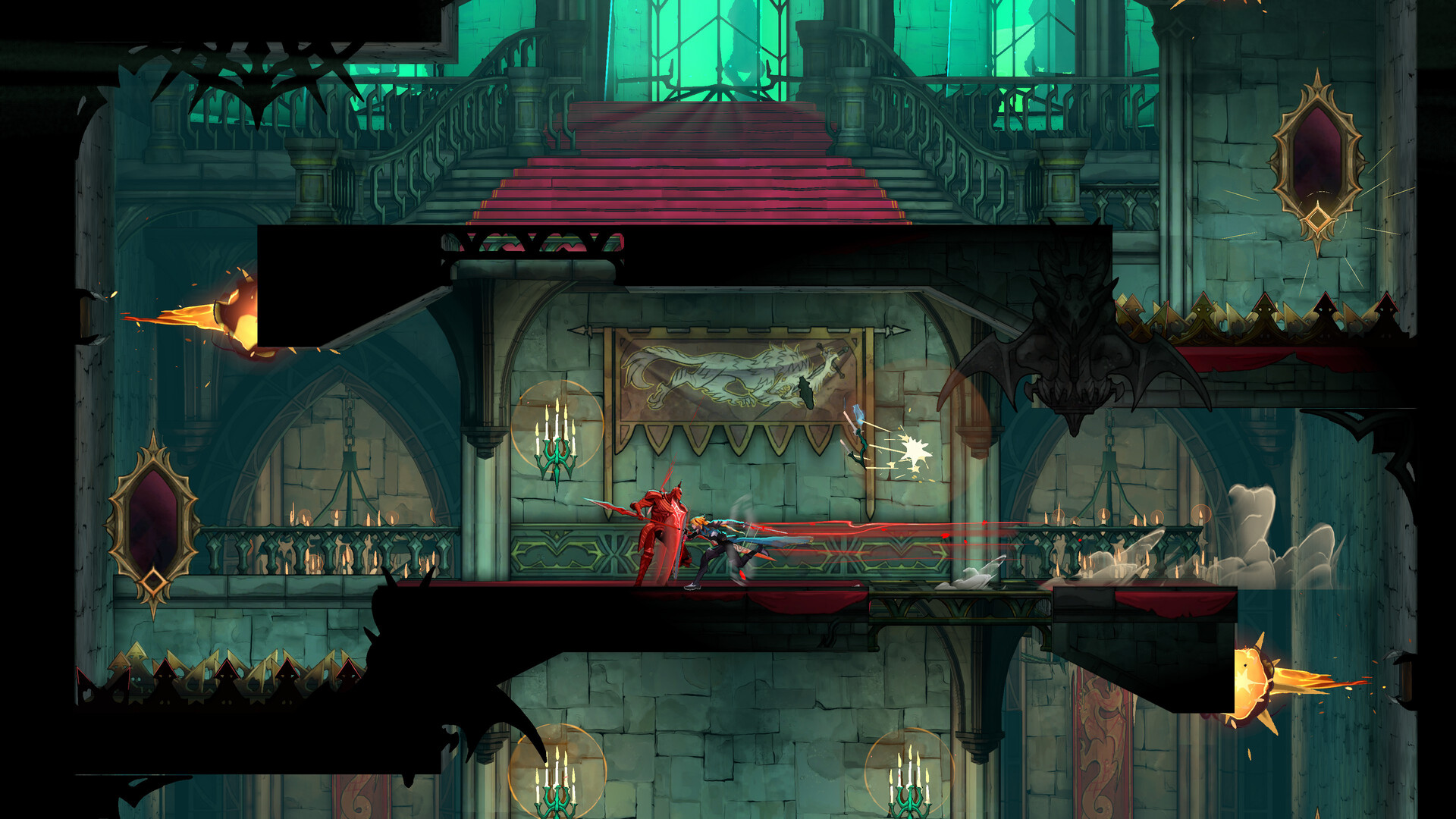
Combat is fast and readable, and when the whip, dash, and parry click together it is a joy — “combat feels fantastic” is one of the most repeated verdicts in the game’s positive reviews. But the tuning is uneven. Common enemies absorb far more hits than their designs suggest, and several players report the whip’s lock-on snapping to the nearest target rather than the one you aimed at, a mismatch that stings most in crowded rooms and trap corridors. Spells add welcome variety, and build diversity through the game’s items and relics is deeper than it first appears, but the moment-to-moment fights can feel like chip damage against damage sponges rather than duels. It is the one system that never quite reaches the fluidity of the movement it is stapled to.
The Boss Problem
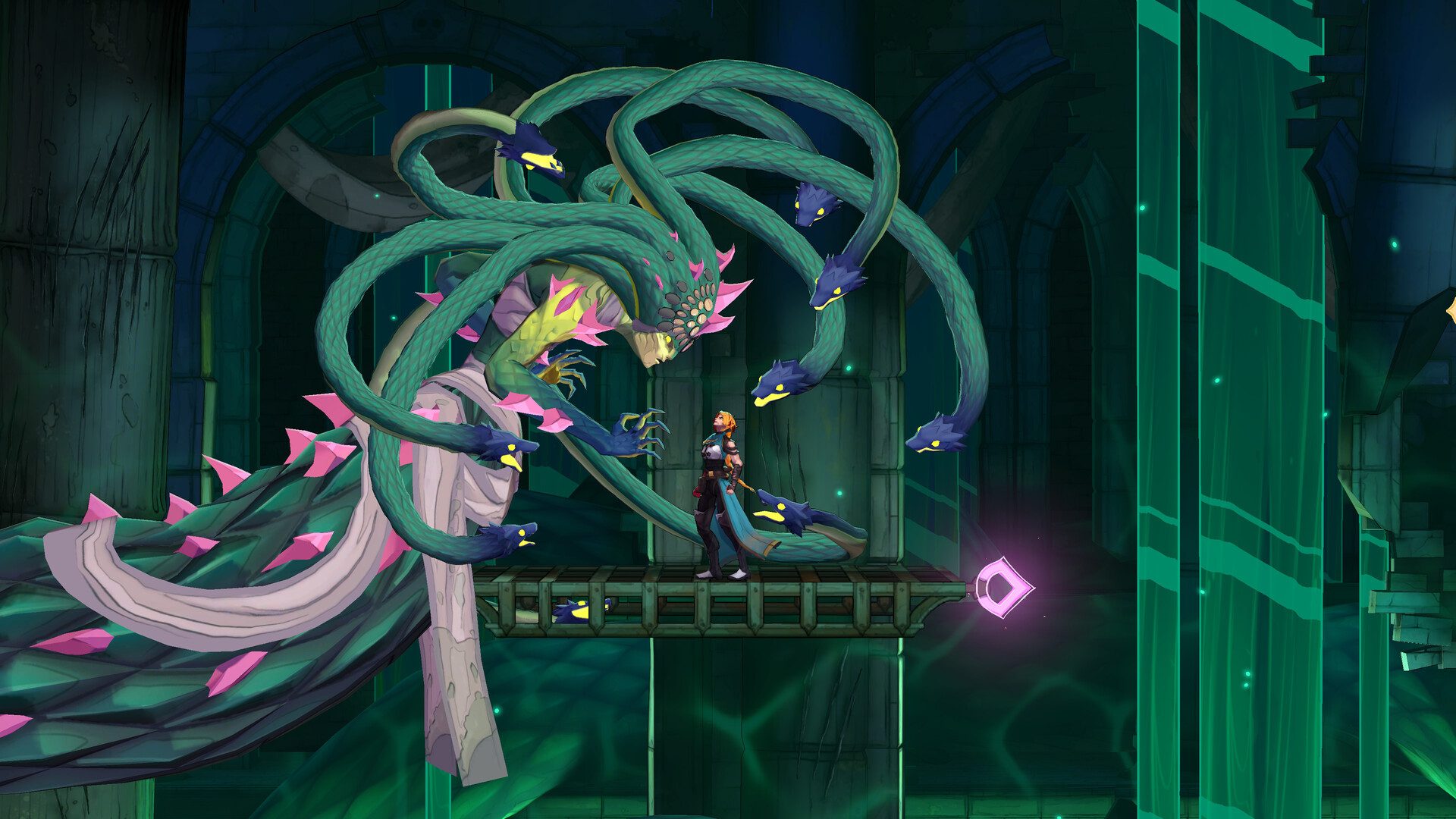
If there is a consensus weakness, it is the bosses. The spectacle is undeniable — a multi-headed sea serpent in a flooded cavern, Death himself warping around an arena, a final confrontation under a blood moon — but the execution draws the loudest complaints in the negative reviews. Players describe hitboxes that fail to register on the Dracula fight, Death teleporting out of his arena entirely, and phases that dissolve into stun-lock spam. A recurring line across critical reviews is that the game is at its best between the bosses, when you are threading trap gauntlets and hunting secrets, and at its shakiest when it stages a set-piece duel. Some of this reads like a post-launch tuning backlog — a studio with Evil Empire’s live-update pedigree is well placed to tighten it — but right now, the boss fights are the parts most likely to leave you frustrated rather than thrilled.
Trap Rooms and Tantrums
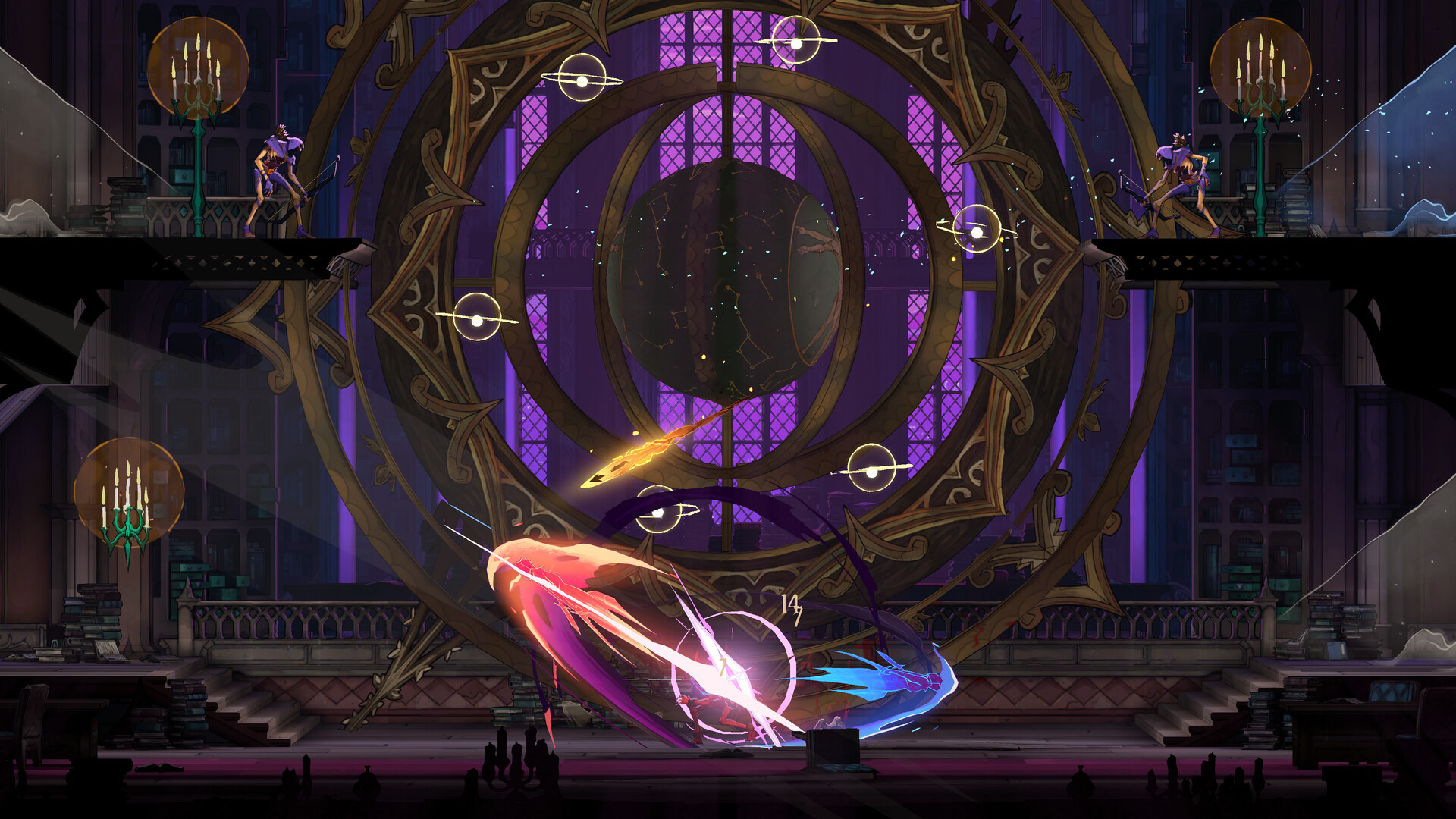
The level design is deliberately nasty, and it will decide how much you love this game. Trap corridors stuffed with saw blades, spike beds, and rotating machinery are everywhere, and the platforming demands precision under pressure — several reviews mention aching hands after long sessions, and more than one player calls out punishing pushback physics that shove you back into hazards. Save placement is stingy in exactly the wrong places. And yet the castle is layered with secrets, notes to read, and shortcuts that reward mastery, and the map keeps unfolding well past the point most Metroidvanias start repeating themselves. Completion estimates from the community cluster around six hours for a focused run and roughly twenty hours for full completion, and the absence of New Game Plus or a boss rush mode is a real gap for a game this mechanically rich.
Gothic Splendor, Rough Edges
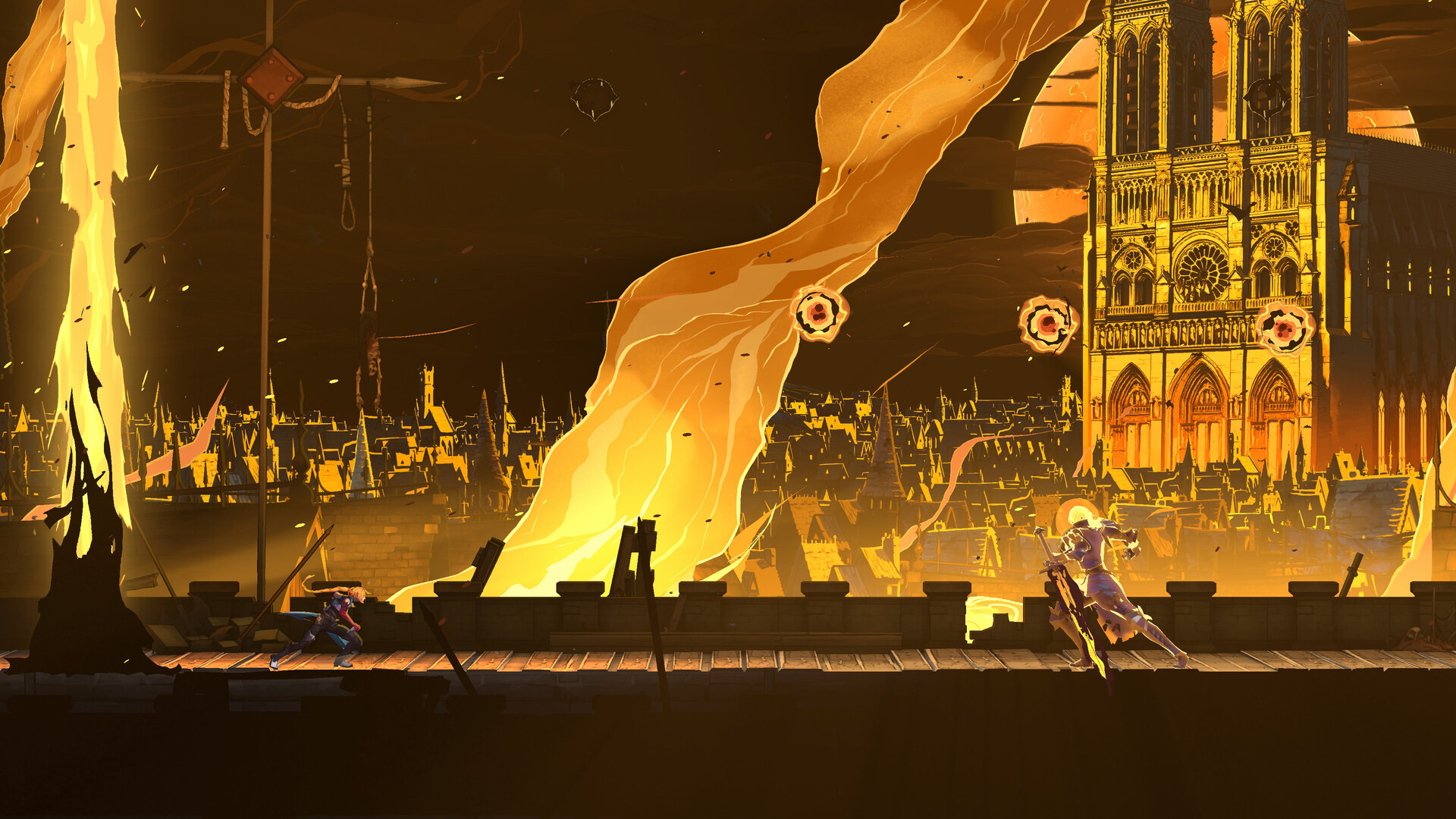
The presentation is where the game earns its “Castlevania” title outright. The neo-Gothic art direction is universally praised — luminous cathedral skylines, blood-red courtyards, and a Notre Dame rooftop sequence at sunset that ranks among the best-looking set-pieces of the year. Voices from the Netflix series reprise their roles, and the lore is doled out generously, sometimes too generously: “too much dialogue” is a recurring complaint, and the story’s cutscene cadence will test anyone here purely for the whip-cracking. The soundtrack splits players cleanly down the middle between “neo-Gothic brilliance” and “grating,” which is at least proof it has personality. The technical state is less debatable: stuttering and frame drops are widely reported even on strong hardware, plus at least one nasty black-screen bug on map transitions. None of it ruins the game, but a performance pass is overdue.
Verdict
Castlevania: Belmont’s Curse is a confident, characterful return for a series that spent too long in the wilderness. Rose Belmont moves like a dream, the whip grapple and holy-light parry are mechanics worth stealing, and the castle is gorgeous enough to forgive a lot. It is also a game with boss fights that need patching, a slow opening that needs tightening, and technical edges that need sanding. At $29.99 USD it is an easy recommendation for Metroidvania fans willing to meet it halfway — just know that its hardest obstacles are sometimes its own design choices.
SteamGamer Score: 8.4/10

Dan Kowalski reviews games by listening to what they do before believing what they promise. He cares about responsive combat, purposeful sound design, satisfying movement, and whether a game respects the player’s time. Dan will forgive technical roughness when the underlying experience is exceptional. He will forgive almost anything for a brilliant combat system—but never a tutorial that refuses to stop talking.




Comment here