

There is a specific kind of longing that only people who grew up with the Nintendo 64 understand. It is the memory of huddling around a CRT television with three friends, the glow of GoldenEye 007’s Dam level illuminating your face while someone inevitably yelled about screen-looking. For decades, that feeling has been almost impossible to recapture. Retro shooters have come and gone, some excellent, some forgettable, but very few have dared to target the exact sweet spot between GoldenEye and Perfect Dark that defined an entire generation’s idea of what a first-person shooter could be.
Agent 64: Spies Never Die is that rare game that understands precisely what it is trying to be and executes on that vision with startling confidence. Developed by Replicant D6 and released on August 11, 2026, this retro spy FPS does not merely reference the N64 era—it inhabits it. Every low-poly character model, every chunky explosion, every enemy grunt that sounds lifted directly from a 1997 sound library is deliberate. This is a love letter written in bullet casings and keycards, and it is remarkably good at what it does.
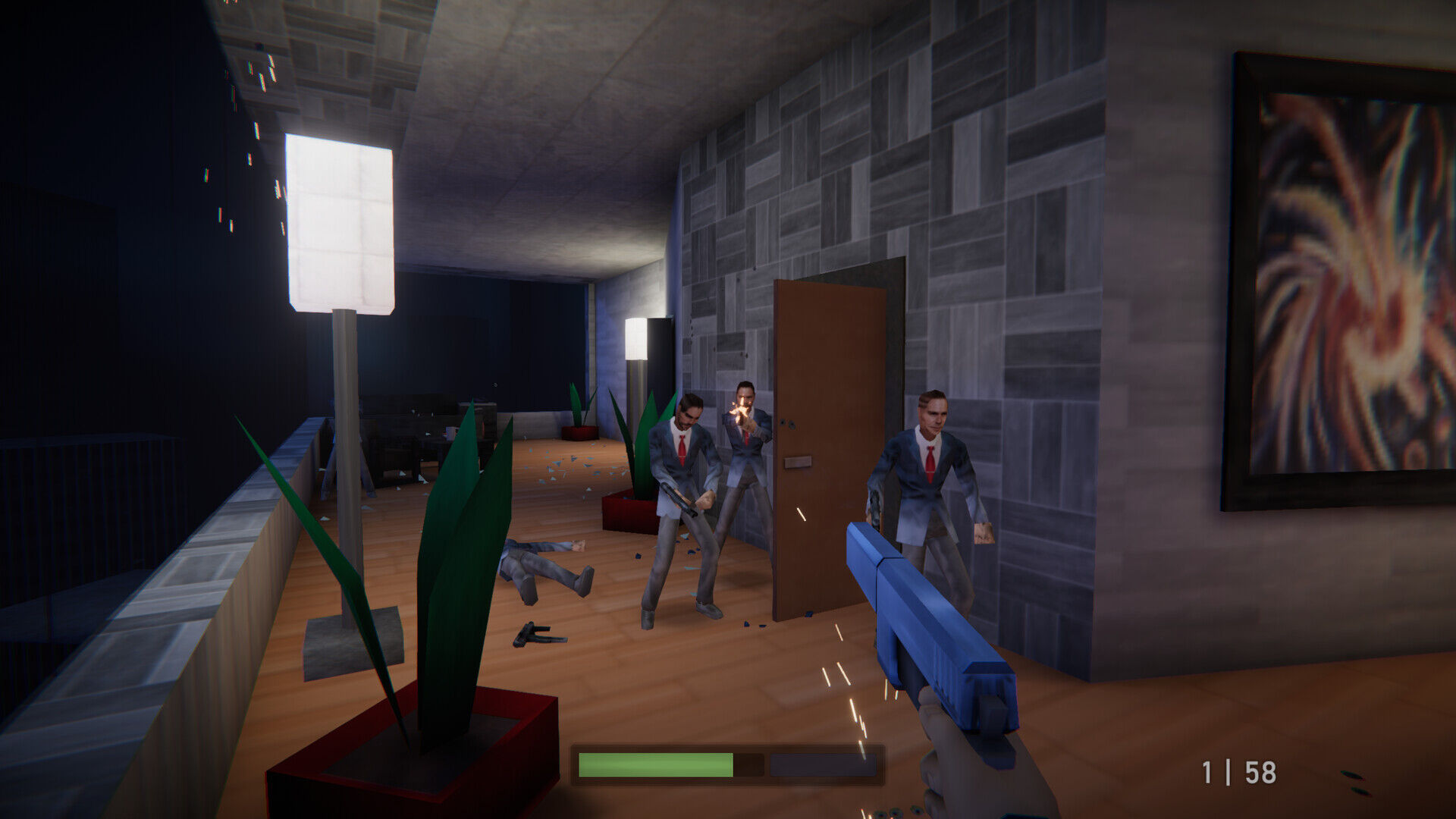
Game Overview
Agent 64: Spies Never Die is a first-person shooter that channels the mission-based structure and aesthetic of late-90s console shooters into a modern PC package. You play as Secret Agent John Walter, an operative tasked with saving the world from the nefarious Dominic Pulp across 14 handcrafted missions. Each level is a self-contained environment—skyscrapers, nightclubs, museums, catacombs, snow bases—where you accomplish objectives ranging from hacking terminals to stealing classified plans to rescuing hostages, all while dispatching waves of armed guards.
The game ships at $19.25 USD (currently discounted from $21.64) and offers a surprisingly robust package: a full campaign playable solo or in co-op, an arena mode with modifiers reminiscent of Perfect Dark’s Combat Simulator, and a challenge system with par times that will test even veteran shooters. Three difficulty tiers—Agent, Special Agent, and the punishing 64 Agent—add new objectives and open previously inaccessible areas, giving the campaign genuine replay value beyond its initial clearing.
World, Story, and Central Premise
The narrative follows the familiar beats of a Bond-adjacent spy thriller: Agent Walter must thwart Dominic Pulp’s megalomaniacal schemes across a globe-trotting adventure that visits nightclubs in unnamed European cities, ancient catacombs beneath Mediterranean ruins, and snow-covered military installations. The story is not trying to win awards for literary depth, and that is entirely the point. It is a scaffolding for excuses to shoot people in interesting rooms, and it wears that simplicity with charm.
What elevates the writing is its self-awareness. The cutscenes are brief, delivered through simple text and character portraits in the classic N64 tradition, and the dialogue leans into the absurdity of the genre with a wink. You are not playing this for the plot twists. You are playing it because the idea of being a secret agent who solves every problem with a silenced pistol is inherently fun, and Agent 64 never loses sight of that.
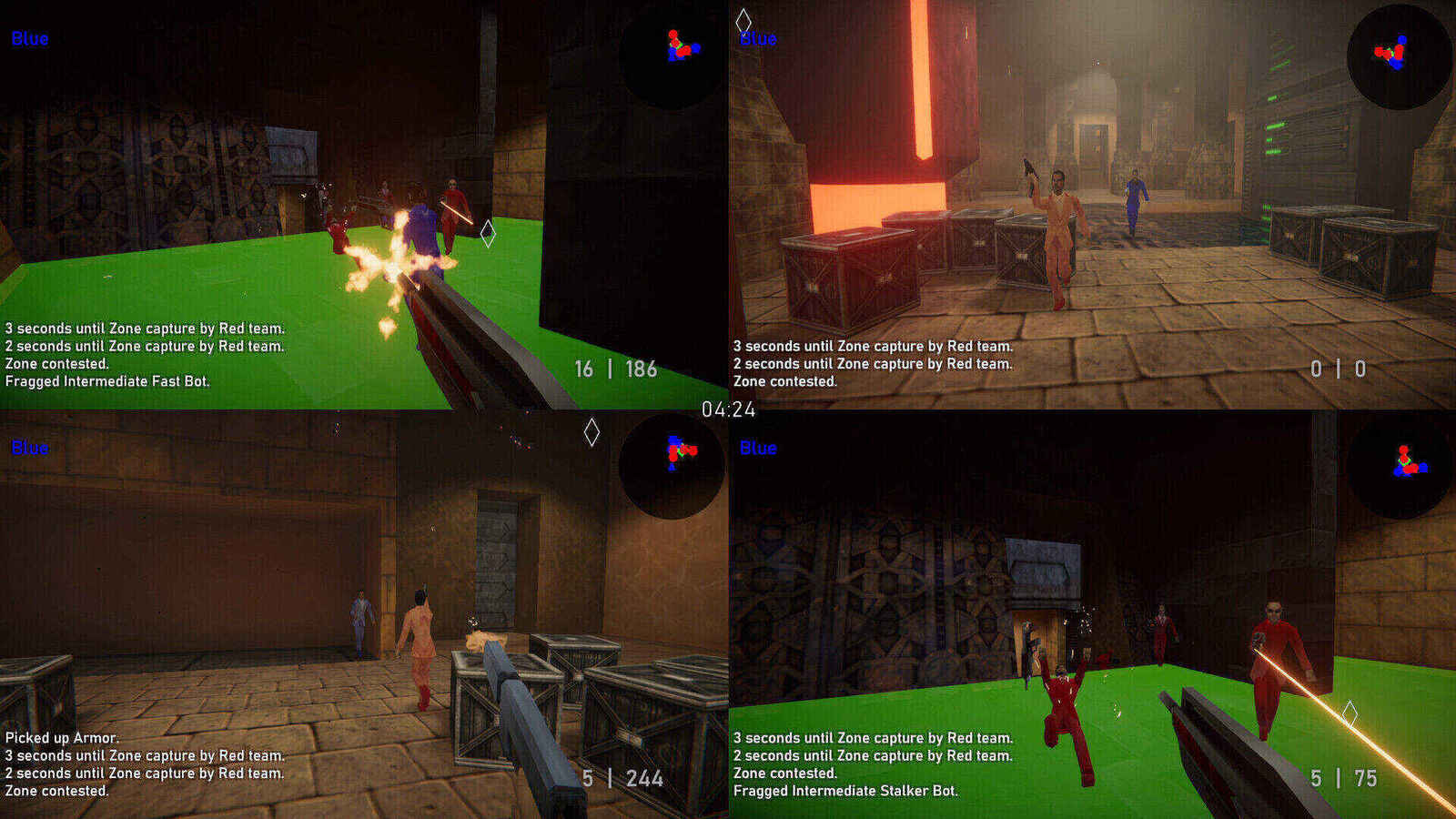
Gameplay and Combat
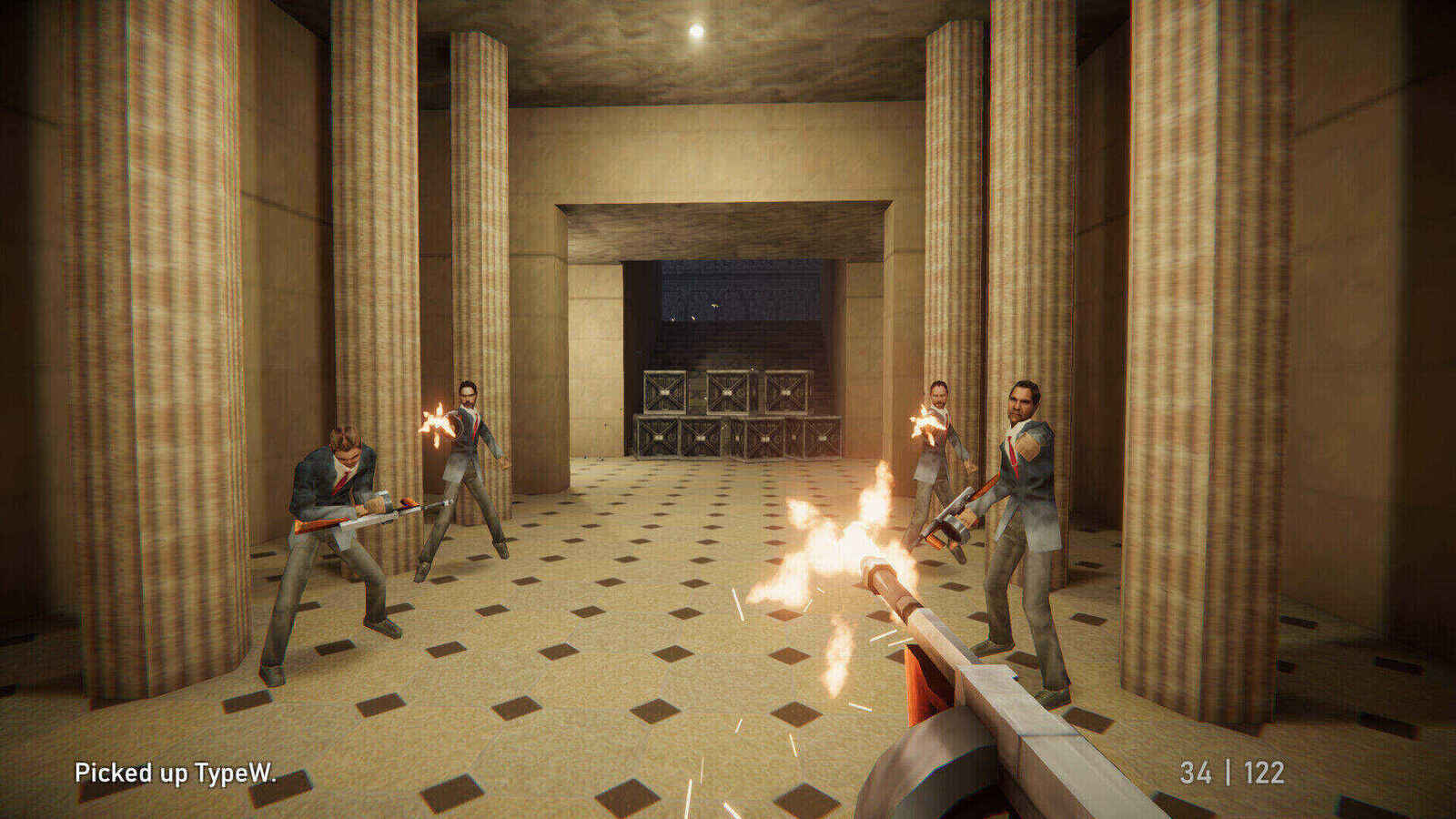
The moment-to-moment gameplay is where Agent 64 truly earns its keep. Weapon handling strikes a careful balance between the floaty feel of 90s console shooters and the tight precision modern PC players expect. Hip-fire is viable and satisfying—you will spend a lot of time wildly spraying across rooms as enemies tumble and explode in theatrical fashion—but there is enough precision in the aiming to reward careful play on higher difficulties.
Enemy AI is surprisingly clever for a game wearing its retro credentials so openly. Guards do not simply stand still and shoot; they track you with increasing accuracy, pre-fire their attack patterns, and can land devastating sweep attacks if you dodge the wrong way. On Agent difficulty, they are cannon fodder. On 64 Agent, they become genuinely threatening, forcing you to learn enemy placement, manage your ammunition, and use the environment to your advantage. The difficulty scaling is one of the game’s smartest design choices—higher difficulties do not just add more enemies, they change how you must approach every encounter.
Mission objectives are telegraphed clearly on the map, with minimal dead-end corridors or useless rooms. This is a game that respects your time: you will not get lost wandering empty hallways wondering where to go next. The trade-off is that levels can feel somewhat linear, but the multiple difficulty tiers add enough objectives and hidden areas to reward exploration on subsequent runs.
Progression and Replayability
The campaign’s 14 missions can be cleared in a single evening on Agent difficulty, which might seem slight for the price. But Agent 64 is built for replays. Each mission has three difficulty tiers with different objectives, par times to beat, and cipher points to collect—a currency system that gates access to later missions and encourages replaying earlier levels on higher difficulties. Agent mode only awards one cipher point per level, which can lock you out of progression if you coast through on easy.
The Paradox Mode adds another layer entirely: by beating par times and completing specific challenges, you unlock over 70 modifiers that can transform levels into chaotic sandbox playgrounds. Combine this with the Arena mode—a standalone combat sandbox with bots, multiple behaviors, and its own modifier system—and you have a game that can easily consume 20, 30, 40 hours for players who want to master every challenge. The co-op support across campaign and arena extends this further, turning the game into a genuine party experience.
Visuals, Audio, and Atmosphere
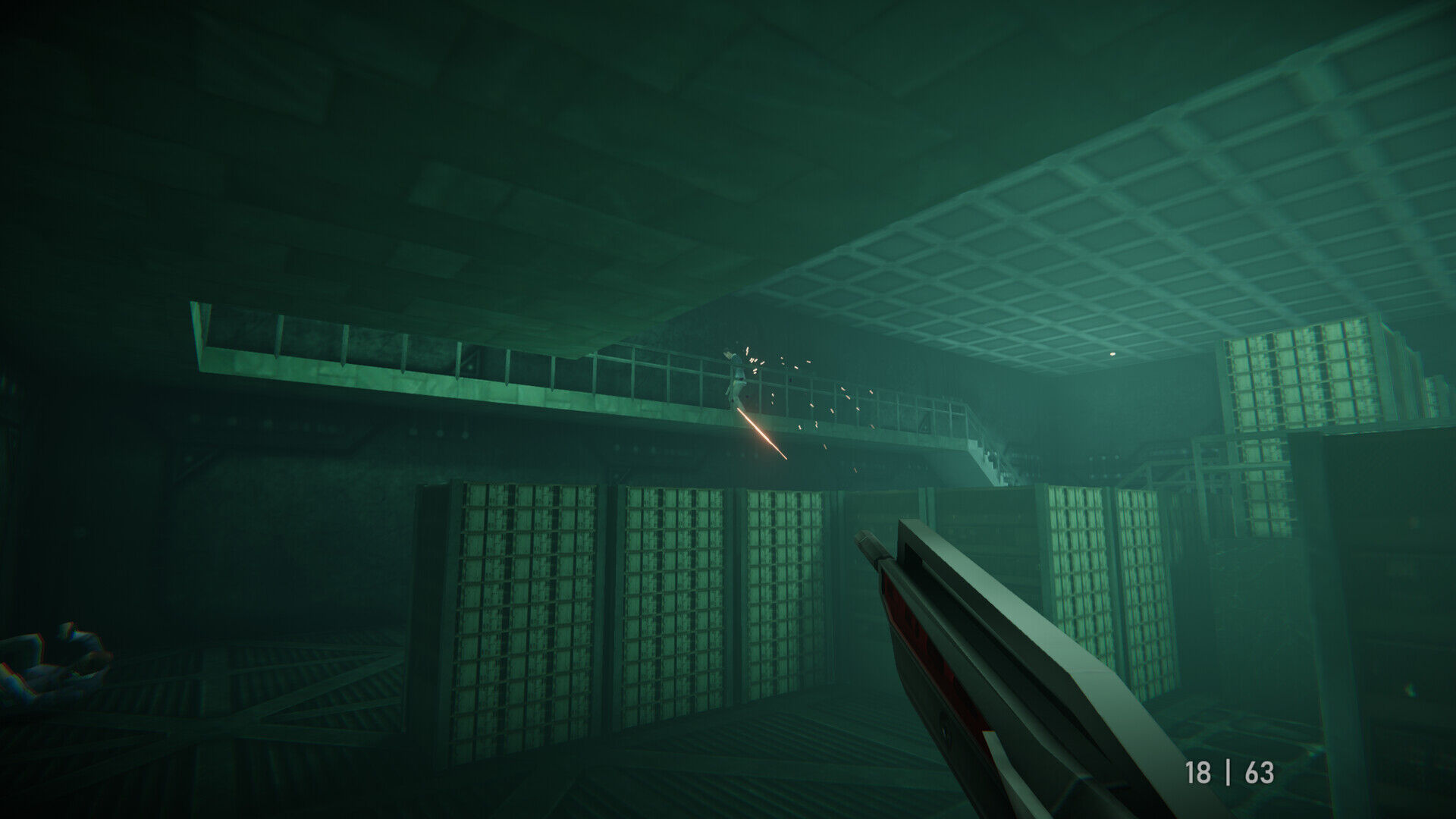
Visually, Agent 64 is a masterclass in deliberate retro aesthetic. This is not a game that happens to look old—it is a game that was designed to look like it was made in 1997 with 2026 technology. Low-polygon character models, chunky particle effects, and environments that glow with that specific CRT-era warmth create an atmosphere that is immediately recognizable to anyone who spent time with the N64 library. The art direction ensures that each level has a distinct visual identity: the cold blues of the snow base, the warm amber of the nightclub, the sickly green of the industrial complex.
The soundtrack is a highlight that deserves special mention. Dynamic music that ramps up during combat and mellows during exploration is a subtle touch that adds genuine atmosphere. The enemy death sounds—those familiar, theatrical grunts—are a direct callback to GoldenEye that will make nostalgia-driven players smile every single time. Sound design across the board is tight and purposeful, with weapon reports that feel appropriately punchy and environmental audio that reinforces the retro aesthetic without feeling cheap.
Performance and Technical Problems
The game runs well across a wide range of hardware. Its intentionally low-poly art style means it can hit high framerates even on modest systems, and it has been confirmed to work well on the Steam Deck OLED. Controller support is full and well-implemented, with DualShock and DualSense options available.
The most notable technical issue at launch was an Easy Anti-Cheat bug that made the game unplayable for some players. The developers responded quickly by releasing a no-EAC version, though this version disables online co-op. Controller sensitivity has also been a point of contention—several players report that the default sensitivity feels off and the aiming mode is difficult to use with a gamepad, which is a significant issue for a game explicitly inspired by console shooters. Some players have also noted that hidden items required for progression can be frustratingly obscure, necessitating guide consultation on certain missions.
Pros and Cons
Pros
- Faithfully captures the feel of GoldenEye and Perfect Dark without feeling like a mere nostalgia grab
- Excellent weapon handling that balances retro charm with modern playability
- Three difficulty tiers with genuinely different objectives add substantial replay value
- Paradox Mode and Arena mode provide dozens of hours of additional content
- Outstanding dynamic soundtrack and atmospheric sound design
- Full co-op support across campaign and arena modes
- Steam Deck compatible and runs well on modest hardware
Cons
- Campaign is short on the easiest difficulty, requiring replays to access full content
- Controller sensitivity issues can make gamepad play frustrating
- Hidden items for progression can be obscure without a guide
- Weapon variety could be deeper—several weapon types only have one or two options
- Easy Anti-Cheat launch bug disrupted co-op for early players
SteamGamer Verdict
Agent 64: Spies Never Die is not trying to reinvent the first-person shooter. It is trying to recapture something specific and precious–the feeling of playing GoldenEye with your friends on a Saturday night–and it succeeds at that with remarkable fidelity. The gunplay is satisfying, the level design is smart, the difficulty scaling is thoughtful, and the presentation nails the retro aesthetic without feeling like a gimmick.
For players who grew up with the N64 shooter library, this is an easy recommendation. For everyone else, it is still a genuinely fun, well-crafted FPS that proves the mission-based console shooter formula has legs well beyond nostalgia. The minor technical rough edges and somewhat limited weapon pool keep it from greatness, but at $19.25 USD, it is an easy day-one purchase for anyone who has ever whispered “I am invincible” after clearing a room of guards.
Score: 8.2 / 10

Dan Kowalski reviews games by listening to what they do before believing what they promise. He cares about responsive combat, purposeful sound design, satisfying movement, and whether a game respects the player’s time. Dan will forgive technical roughness when the underlying experience is exceptional. He will forgive almost anything for a brilliant combat system—but never a tutorial that refuses to stop talking.



Comment here