
Every horror game asks you to enter a space that used to be safe. The Quiet Flat takes that premise literally: after word arrives that your father has disappeared, you inherit the keys to his Soviet-era apartment — a museum of ordinary objects that have stood exactly where he left them. What begins as an inventory of a stranger’s life slowly turns into an argument with the walls themselves.
Built and published solo by Firzy Games and released on September 4, 2026 for $3.90, The Quiet Flat is a first-person psychological horror short: the kind of game Steam players clear in one sitting, with the store listing an average playtime of 40–60 minutes and player reports clustering around the half-hour mark. That brevity is the design, not a shortcoming. There are no chase sequences and no systems to master — just an apartment, a failing lighter, and the growing suspicion that the room you just left has rearranged itself.
Coming Home to a Stranger’s Apartment
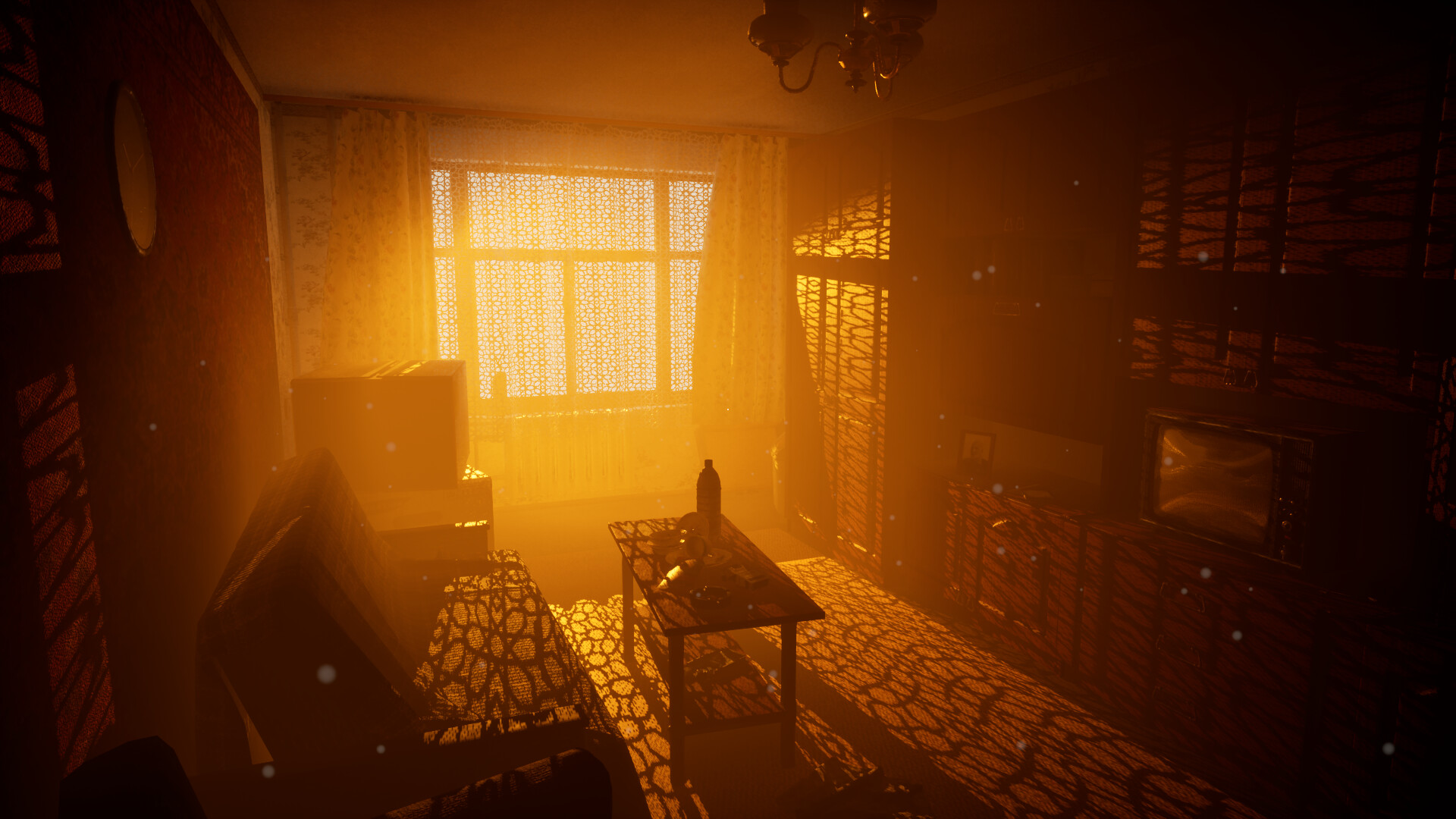
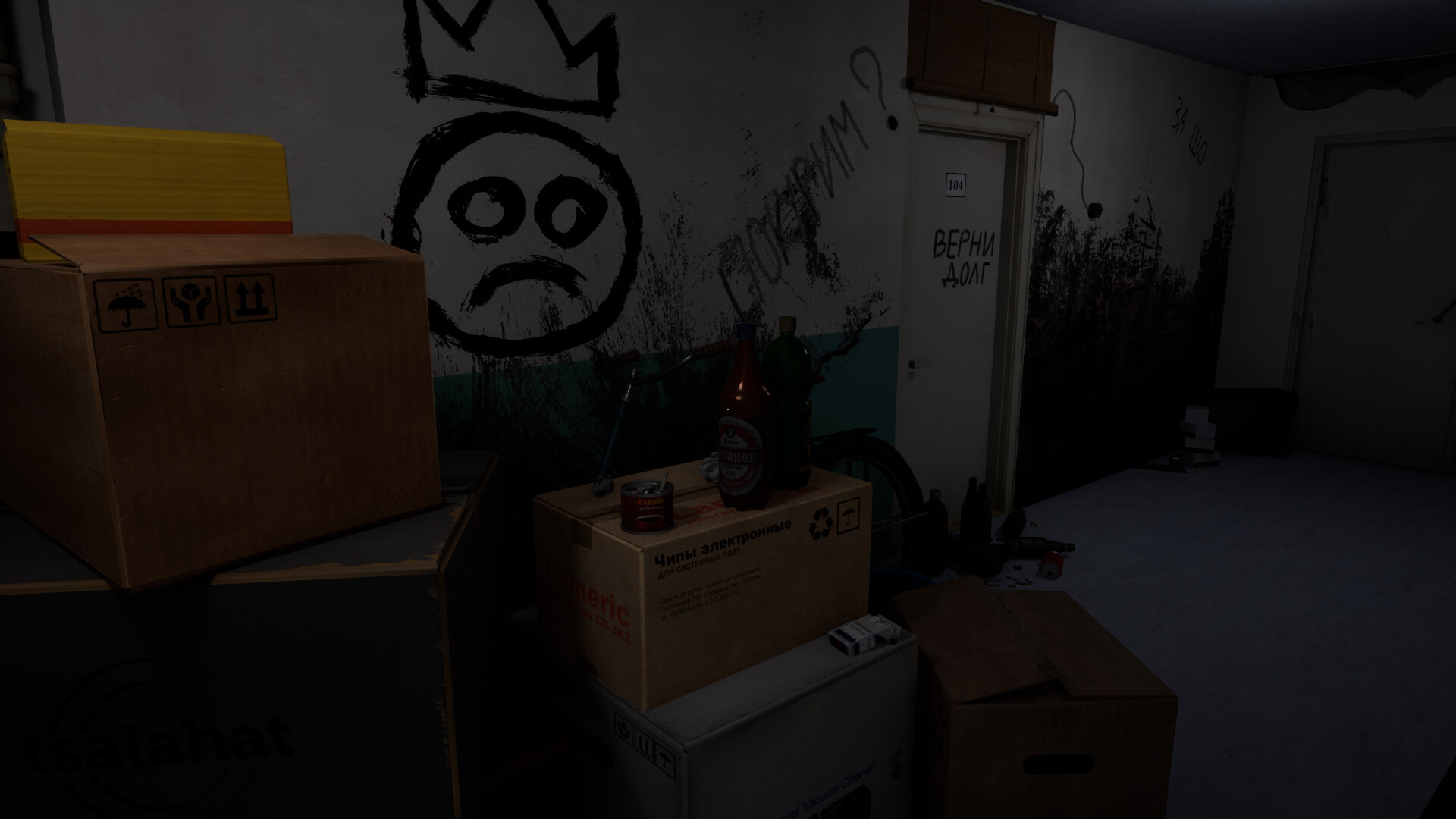
Firzy Games understands that dread lives in specificity, and the apartment is loaded with it: floral wallpaper, a wall unit crowded with clutter, a thermos on a wooden table, evening light pushing through lace curtains and throwing floral shadows across the sofa. Steam players consistently single out the atmosphere — the kind of praise that only lands when a space feels genuinely lived in. The corridors are worse in the best way: cardboard boxes, a beer bottle balanced on an electronics crate, Cyrillic slogans spray-painted across the walls, an apartment door numbered 104.
Exploration is the entire verb here. The setup is delivered quickly — a neighbor’s call, a door, permission to look around — and from there you are alone with the rooms. The game trusts objects to do the storytelling: drawers left half-open, notes tucked where a person in a hurry would leave them, household details that predate whatever went wrong. One German reviewer joked that the first task is taking out the trash, and that joke lands because the game earns its domestic texture before it spends any of it on horror.
The Dark Is a Design Decision — Whether You Asked for It or Not
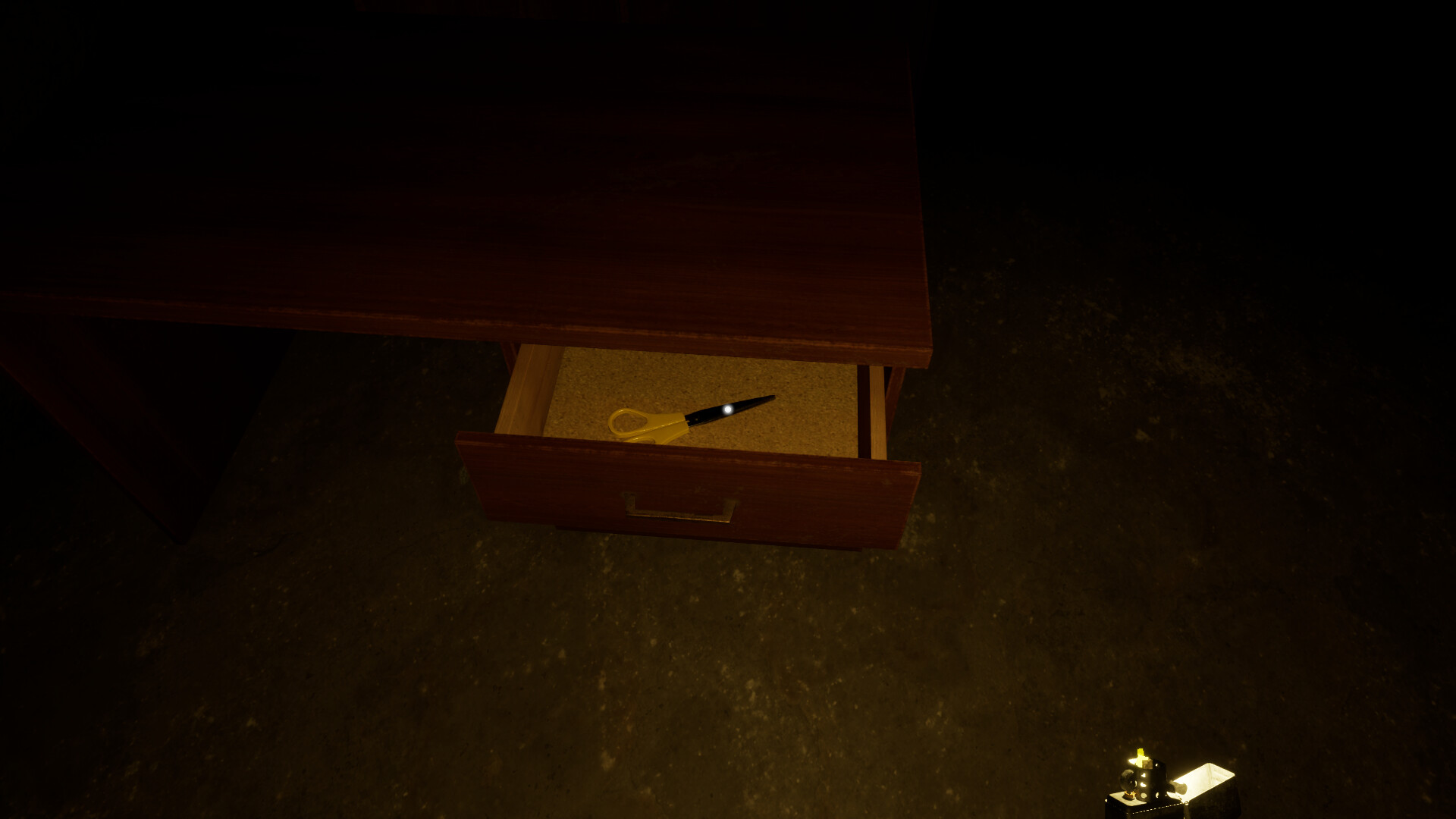
Be warned before you pay anything: The Quiet Flat is extremely dark. This is not a mood note; it is the mechanical center of the game. Your lighter is the primary light source, and it is fragile — a detail players have genuinely enjoyed, because in this apartment the light can be blown out from across the room. When it works, darkness stretches hallways and makes familiar furniture look like it moved while you were reading a note.
The problem is that the game commits to darkness without handing players the tool to survive it. There is no brightness control, and as multiple Steam reviews point out, monitors and play environments vary wildly — a scene that reads as atmosphere on one display becomes an unlit maze on another. Several of the game’s negative reviews are, in essence, one complaint repeated: you cannot see. For a horror game that wants you to notice small changes in a room, refusing players any way to adapt the image to their own hardware is a real design failure, not a purist stance.
Puzzles That Trust You to Notice
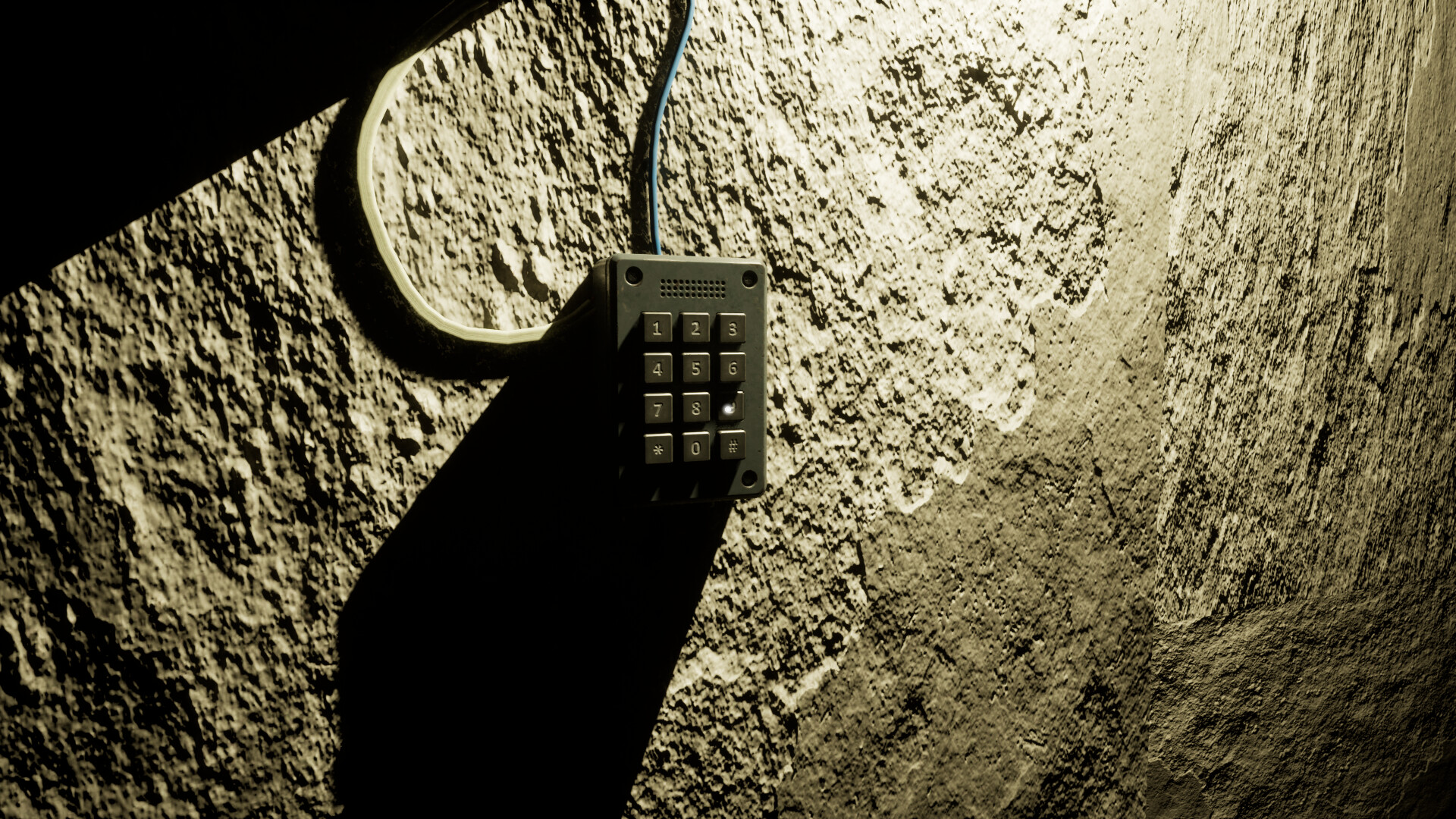
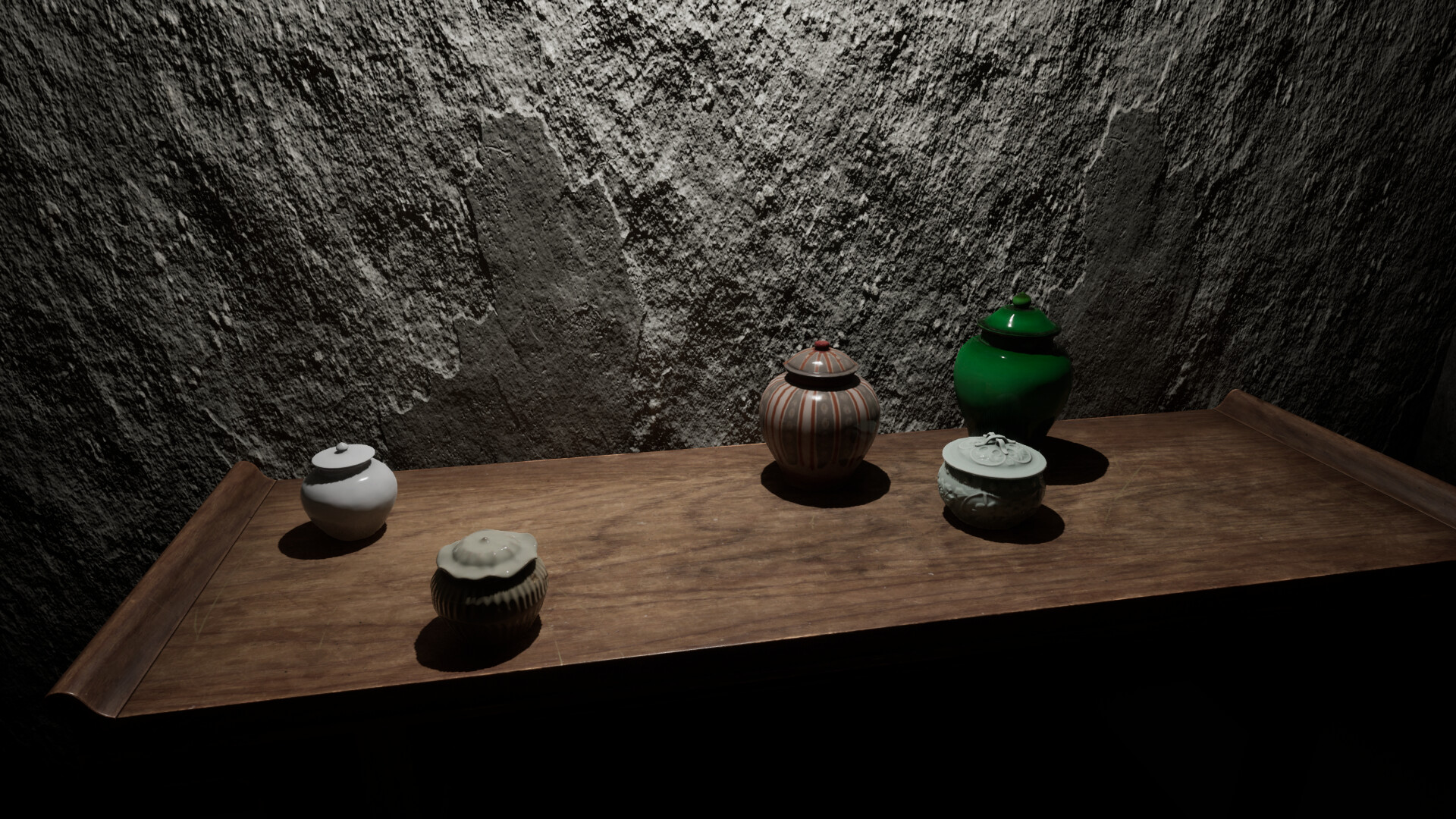
The puzzle layer is deliberately modest, and mostly it works in the game’s favor. A numeric keypad wired to a rough concrete wall. A pair of yellow-handled scissors left in a drawer. Ceramic jars arranged on a table like a test you did not study for. Most puzzles carry simple hints when you stall, and progress rarely halts for long — for a one-hour game, that pacing discipline matters more than difficulty.
Where it stumbles is legibility. Several players note that interactive objects do not announce themselves; you are scanning dark rooms for the one drawer handle that responds. Two of the harshest reviews on the page are not about scares at all — they are about hinting, or the lack of it, at moments when the game needed to point. Observation-based puzzles are a fair choice for atmospheric horror, but the game occasionally asks for patience it has not earned with signposting.
Jump Scares With a Metronome
The sound design is the loudest thing The Quiet Flat does, in both senses. Player reviews keep circling the same trick: models that are not inherently terrifying paired with sudden, well-mixed volume spikes still make people flinch. It is cheap in theory and effective in practice — the audio carries scares that the visuals alone would not, and the game knows it.
The criticism is rhythm. With no chase sequences to break the pattern, the scares arrive on a predictable cadence: pick up an object, turn around, get punished for it. Over a single sitting that beat becomes legible, and once you hear it, the tension leaks out of rooms the atmosphere had carefully filled. A horror game this short has limited time to vary its vocabulary, and The Quiet Flat leans hard on one verb. When the timing lands, it lands hard — but a metronome is still a metronome.
A Story Told Through What Was Left Behind
The narrative arrives almost entirely through the space, and the fragments players have assembled point somewhere: a son estranged from his father, a family broken by addiction and infidelity, a childhood illness that kept father and son apart, and a disappearance that sends you back to the apartment to answer questions nobody else will. Notes and environmental details do the heavy lifting, and the ending recontextualizes the father’s choices in a way reviewers describe as genuinely moving — including a late twist in which the dead seem to intervene on your behalf.
The catch is assembly. Players like the story and simultaneously report that it does not quite connect: relationships get no setup, key figures are never properly identified, and scares arrive before the game has given you reason to care about them. The Quiet Flat trusts you to build a family history from household objects, and some of those objects never show up. When the final pieces click, the apartment transforms retroactively into something devastating. Not every player will make it that far with the thread in hand.
The Verdict
The Quiet Flat is a confident solo debut that knows exactly what it is: a concentrated dose of domestic horror, built from specific rooms, sharp sound design, and an ending that rewrites the floor plan in your head. At $3.90 and under an hour, it is an easy recommendation for players who value atmosphere over mechanics — the apartment is that good, and the audio is better.
Go in with the lights off and your monitor brightness already set, forgive the predictable scare cadence and the story’s loose threads, and you will get exactly the kind of evening the title promises: quiet, familiar, and wrong by the time you leave. SteamGamer Score: 7.5/10
Reviewed on PC. Copy provided by developer.

Zoe Mitchell writes about games that start arguments. At SteamGamer.net, she covers gaming culture, unexpected indie hits, controversial design decisions, and releases that send the internet into a collective meltdown. She is most interested in the moment a game stops being entertainment and becomes a conversation. If everyone is asking, “Who thought this was a good idea?” Zoe wants to play it.




Comment here