
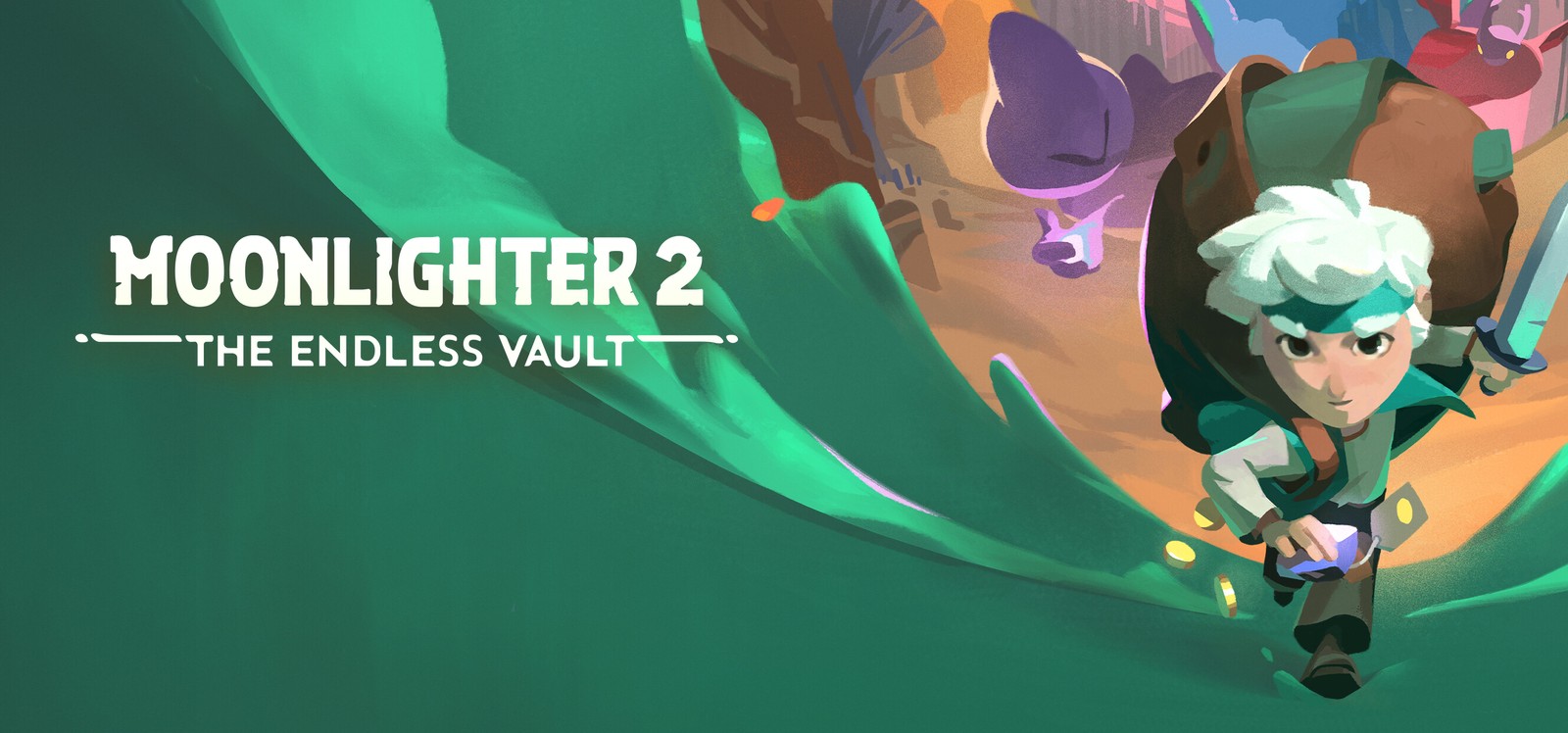
Moonlighter 2: The Endless Vault understands that the best part of running a fantasy shop is knowing exactly how much danger went into stocking every shelf. One hour I was dodging projectiles in a sun-baked ruin with a backpack full of fragile relics; the next I was rearranging displays, nudging prices upward, and watching customers reveal whether I had judged the market correctly. That push and pull between risk and profit is still the series’ heartbeat, and the sequel makes it faster, brighter, and far more elaborate.
The move from pixel art to a fully 3D presentation is the obvious change, but the more important shift is structural. Moonlighter 2 leans harder into roguelite routes, build synergies, and long-term upgrades. It sacrifices some of the original game’s exploratory dungeon atmosphere in return for snappier combat and a much denser progression loop. The trade is not painless, but it produces an addictive sequel that kept finding one more upgrade, one more shop night, and one more vault run to chase.
Game Overview
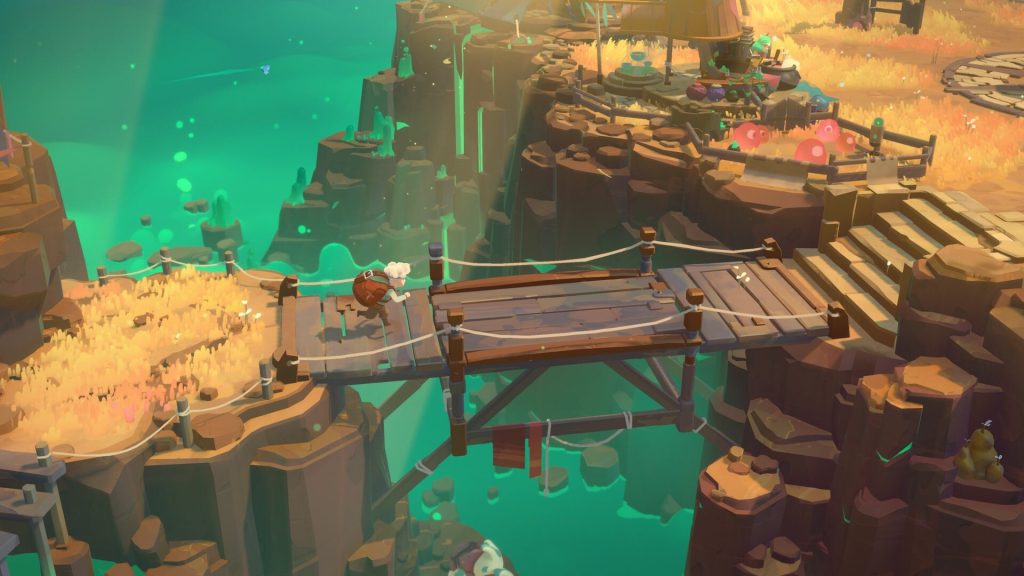
Digital Sun’s sequel once again divides Will’s life between adventuring and retail. Runs send him through branching sequences of combat rooms, treasure opportunities, special encounters, and bosses. The relics brought home are then arranged in the shop, priced, displayed, and sold so the profits can be reinvested in weapons, armour, vendors, and Tresna itself.
Moonlighter 2 entered Steam Early Access on November 19, 2025, with version 1.0 announced for September 2, 2026. This review covers the current PC build at that transition. The official United States Steam price is $29.99 USD. It is a single-player action RPG with roguelike progression, full controller support, Steam Cloud, and achievements. A controller remains the more natural option; keyboard and mouse work, but precision aiming can feel less consistent with some weapons.
World, Story, and the Endless Vault
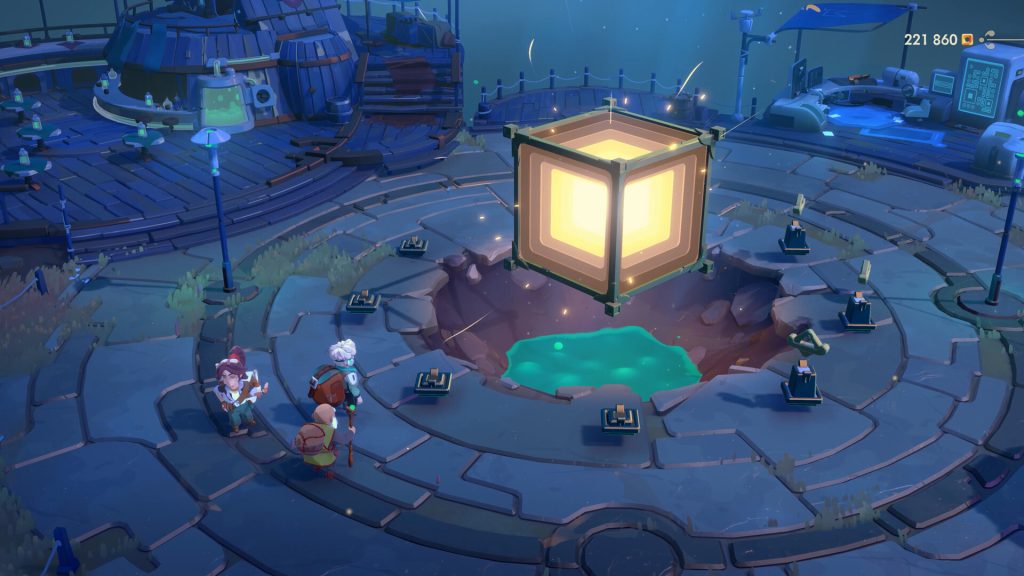
Will begins stranded and penniless in Tresna after the interdimensional collector Moloch claims his home. Rebuilding is not just an excuse for upgrade menus: each restored service makes the village feel more useful and gives the next expedition a clearer purpose. Familiar faces and eccentric newcomers bring warmth between runs, while the mysterious Endless Vault provides a strong central challenge that continually raises the stakes.
The story is light enough not to smother the loop, though its dialogue and repeated animations occasionally slow the pace when all I wanted was to return to the shop or start another run. Tresna works best as a comfortable reset point rather than a dramatic narrative hub. Its personalities, Bloblet companions, vendors, and small visual details create an appealing rhythm of preparation before the portals open again.
Gameplay and Combat
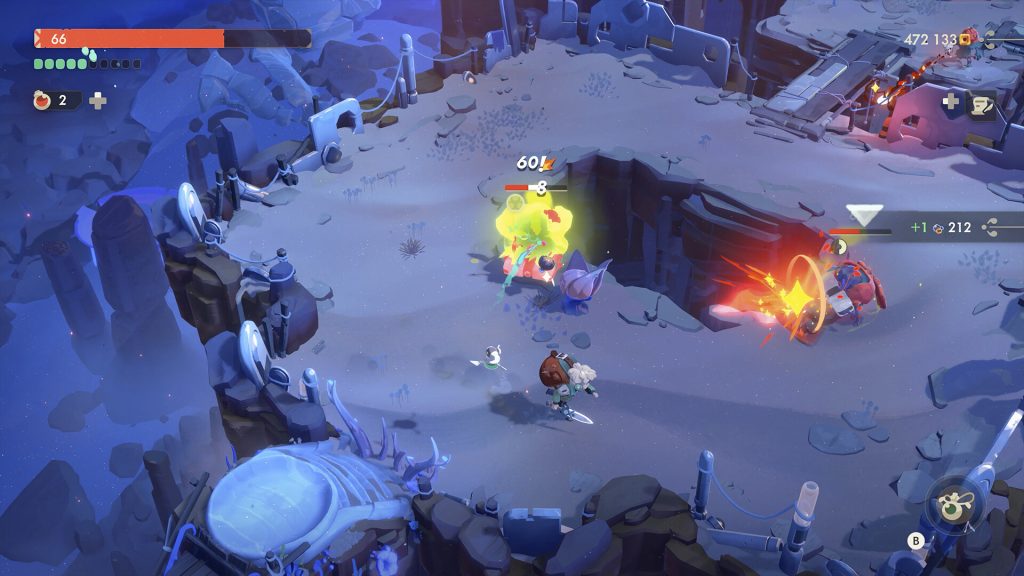
Combat is the sequel’s biggest improvement. Will’s movement is responsive, attacks carry satisfying impact, and weapon variants meaningfully alter positioning. Close-range options reward aggressive combos, while precision weapons demand more careful spacing and target selection. Perks collected during a run can turn a modest weapon into a crowd-clearing machine, especially when several effects begin feeding the same status, combo, or critical-hit plan.
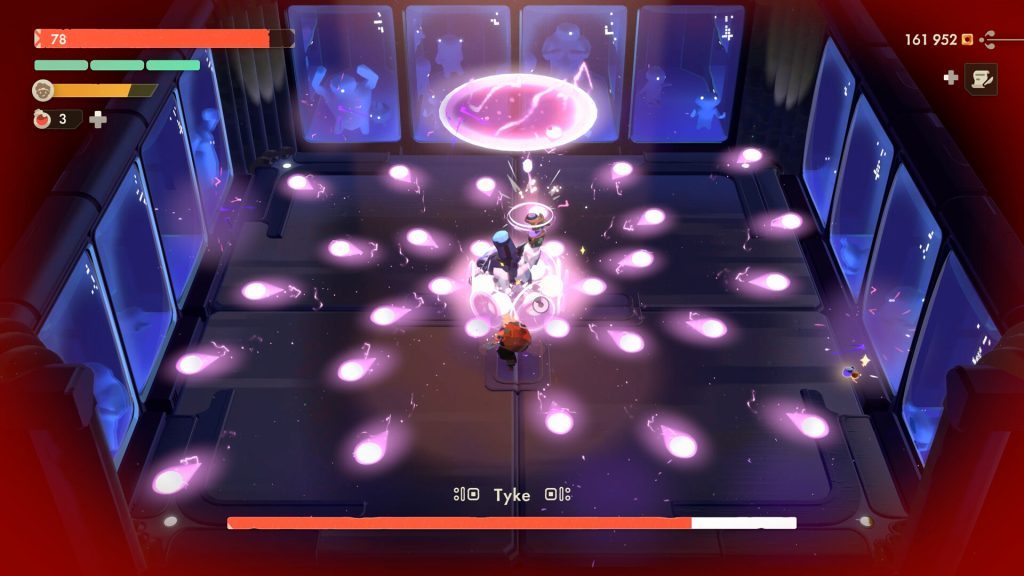
The isometric camera is not always a perfect partner. Busy arenas can stack melee enemies, jumping attacks, and off-screen projectiles in ways that make damage difficult to read. Target snapping helps until environmental objects or an unwanted enemy capture the aim. The strongest encounters remain exciting because they force quick decisions, but an avoidable hit can sometimes feel like a camera problem rather than a tactical mistake.
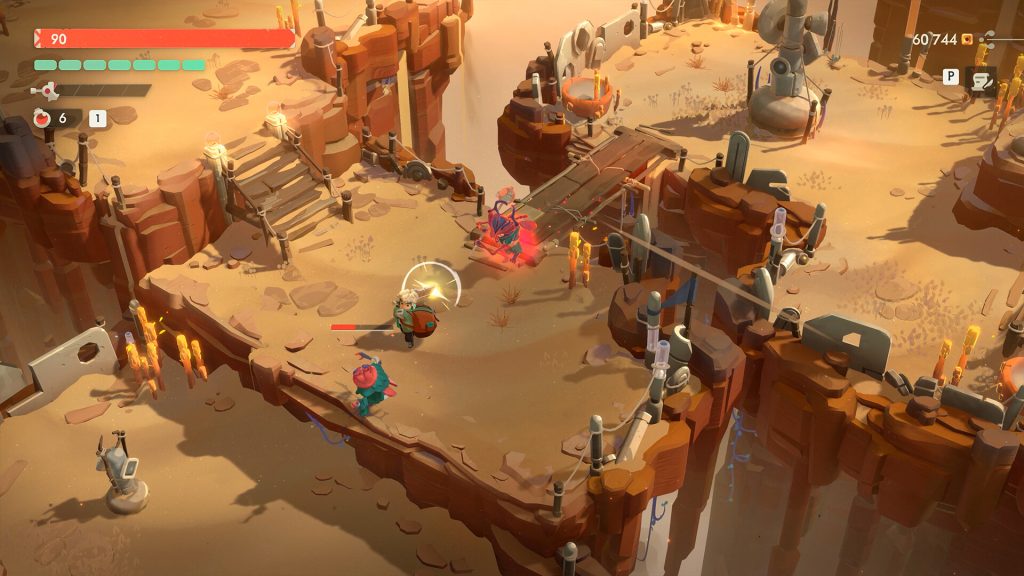
Loot management adds another layer of pressure. Relics occupy space in Will’s backpack, and their placement can trigger bonuses or conflicts. Deciding whether to preserve a valuable item, rearrange the grid for a synergy, or risk carrying more into the next room gives every successful run a satisfying puzzle. Greed is constantly encouraged, but the game is equally happy to punish it.
The main point of contention is the dungeon structure. Rather than freely exploring interconnected floors, players select the next encounter from a branching route. The format creates clear tactical choices and supports quick runs, yet it also makes the worlds feel like sequences of arenas instead of mysterious places. Fans who loved uncovering secrets in the first Moonlighter may find this design more efficient but less adventurous.
Progression and Replayability
Nearly everything feeds another progression track. Profits improve the shop and town; expedition rewards unlock equipment and permanent advantages; special challenges open new perk paths, armour, gadgets, weapon aspects, and tougher encounters. There is always a visible target close enough to justify another run, and the systems are especially good at letting players decide whether survivability, selling power, or combat variety should come next.
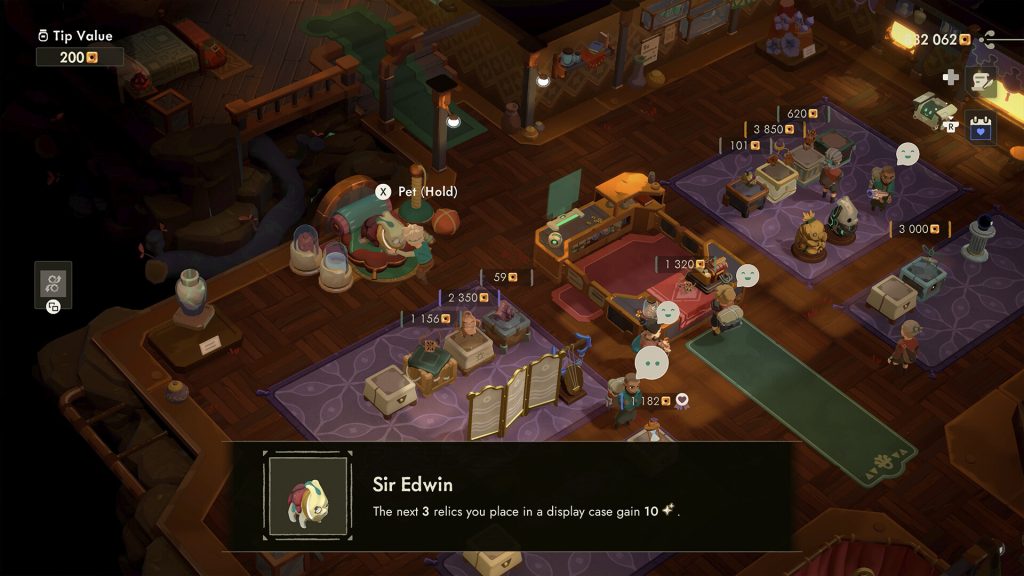
Shopkeeping is more flexible than before. Customers react to prices, displays influence value, perks modify sales, and special events can transform an ordinary evening into a flood of gold. Reading the room and adjusting prices still matters, but the sequel gives the store more personality through decoration and layout. The only disappointment is that most relics ultimately exist to be sold. A deeper crafting or town-use layer would have made the best finds feel important beyond their price tag.
Build variety is broad, though balance is uneven. Certain perk combinations are immediately powerful while others struggle to justify taking them over treasure or survivability. Random room choices can also deny the pieces a build needs. That uncertainty belongs in a roguelite, but a run sometimes feels decided by perk availability rather than by execution.
Visuals, Audio, and Atmosphere
The new 3D style is colourful, clean, and animated with confidence. Each dimension uses a distinct palette, from dusty industrial canyons to cold blue laboratories and glowing green chasms. Enemies communicate plenty of personality through movement, and the shop becomes wonderfully busy when displays, customers, pets, and sale effects all operate at once.
It is less immediately distinctive than the original’s pixel art, but it looks excellent in motion. Impact flashes, particle effects, and exaggerated enemy reactions give combat energy without losing the cosy tone between expeditions. The music supports the switch from relaxed merchant routine to urgent dungeon combat, although prolonged sessions expose some repetition in both room layouts and audio cues.
Performance and Technical Problems
Moonlighter 2 is playable and generally stable, but it still carries visible rough edges from its Early Access journey. I encountered occasional traversal hitching and camera micro-stutter in the hub, while geometry in some rooms can catch Will or interrupt an otherwise clean route. Combat readability suffers most when multiple effects, enemies, and projectiles overlap.
Digital Sun has already issued fixes for crashes, DX11 performance, stuck bosses, input conflicts, autosave problems, and softlocks. That support is encouraging, but players on the minimum specification should expect some tuning. The official requirements call for 16 GB of RAM, DirectX 12, and at least a GTX 1650, RX 5500 XT, or Intel Arc A750, with an SSD recommended.
Pros and Cons
Pros
- An addictive cycle of dangerous runs, backpack decisions, and shop profits
- Responsive combat with meaningful weapon and perk combinations
- Shop customization and sales systems are deeper and easier to read
- Vibrant 3D environments, charming characters, and strong animation
- Abundant permanent upgrades and long-term goals
Cons
- Arena-based routes lose some of the original game’s exploratory magic
- Targeting and projectile readability can become unreliable
- Occasional stutter, geometry snags, and lingering technical bugs
- Perk and weapon balance can make unlucky runs feel predetermined
- Repeated dialogue and animations sometimes interrupt the pace
SteamGamer Verdict
Moonlighter 2: The Endless Vault is a confident sequel when it concentrates on the tension between adventuring and commerce. Combat is sharper, progression is richer, and the shop finally feels like a place I wanted to shape rather than merely operate. Its route-based dungeons and technical roughness prevent it from completely replacing the original, especially for players who valued exploration over roguelite builds.
Even with those reservations, the loop is remarkably difficult to put down. Returning from a dangerous run with a perfectly arranged backpack, turning that haul into a spectacular shop night, and spending the profit on a new combat plan remains immensely satisfying. Digital Sun has built a bigger and more ambitious Moonlighter; a little more polish and balance could make it the definitive one.
Score: 8/10
Moonlighter 2: The Endless Vault is available on Steam. Digital Sun’s official version 1.0 announcement details the September 2 launch content.

Sarah Chen searches the quieter corners of PC gaming for remarkable ideas that bigger releases leave behind. She covers indie games, platform updates, and overlooked releases for SteamGamer.net. If a strange little game has twelve reviews, an unforgettable mechanic, and absolutely no marketing budget, Sarah has probably already finished it—and is explaining why everyone else should care.


Comment here