
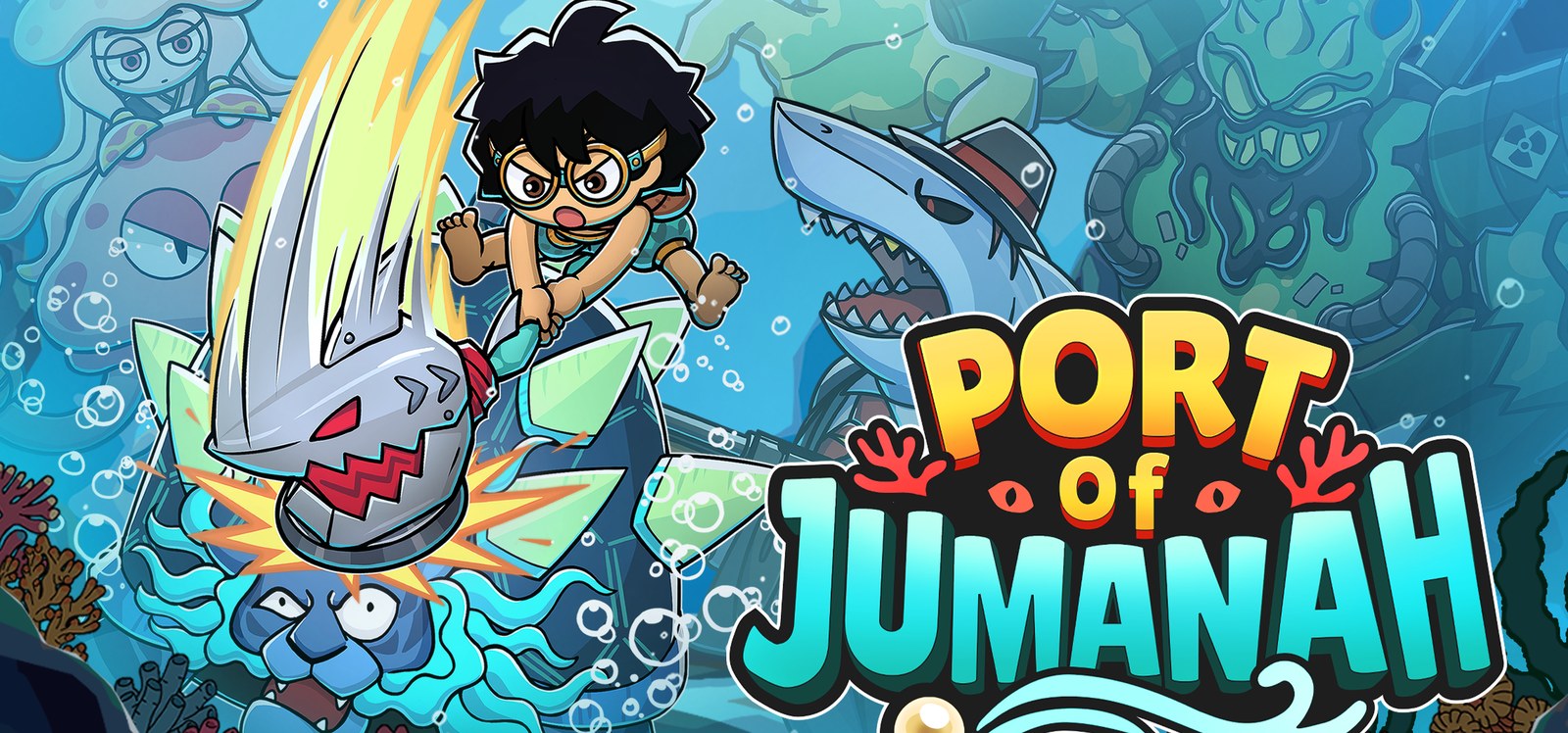
Pearl diving used to be a straightforward occupation — hold your breath, find something shiny, swim back up. Mansour never signed up for the part where the ocean tries to kill him with mobster sharks and weaponized jellyfish. Port of Jumanah takes that ancient Gulf tradition and cranks it into a 2.5D roguelite brawler that’s equal parts charm and chaos, a game that understands something most roguelites forget: sometimes you just want to punch an orca and call it a day.
From Red Dunes Games and Indonesian studio Agate, this underwater action adventure launched on September 7, 2026 for Steam, Epic Games Store, and PlayStation 5 at $11.99 USD. It’s the kind of game that sneaks up on you — a single run feels brisk enough for a quick session, but the combination of oxygen management, crew recruitment, and gear upgrades has a gravitational pull that turns “one more dive” into two hours of vanished time.
Game Overview
Port of Jumanah is a roguelite action-adventure set in a surreal version of the Arabian Gulf. You play as Mansour, a pearl diver who opens a mysterious Black Giant Clam and promptly unleashes more trouble than a barrel of sea monkeys. The core loop is elegant: dive into procedurally generated ocean floors, fight your way through rooms of increasingly hostile marine life, collect loot, recruit crew members, and use what you bring back to rebuild Jumanah’s struggling port between runs.
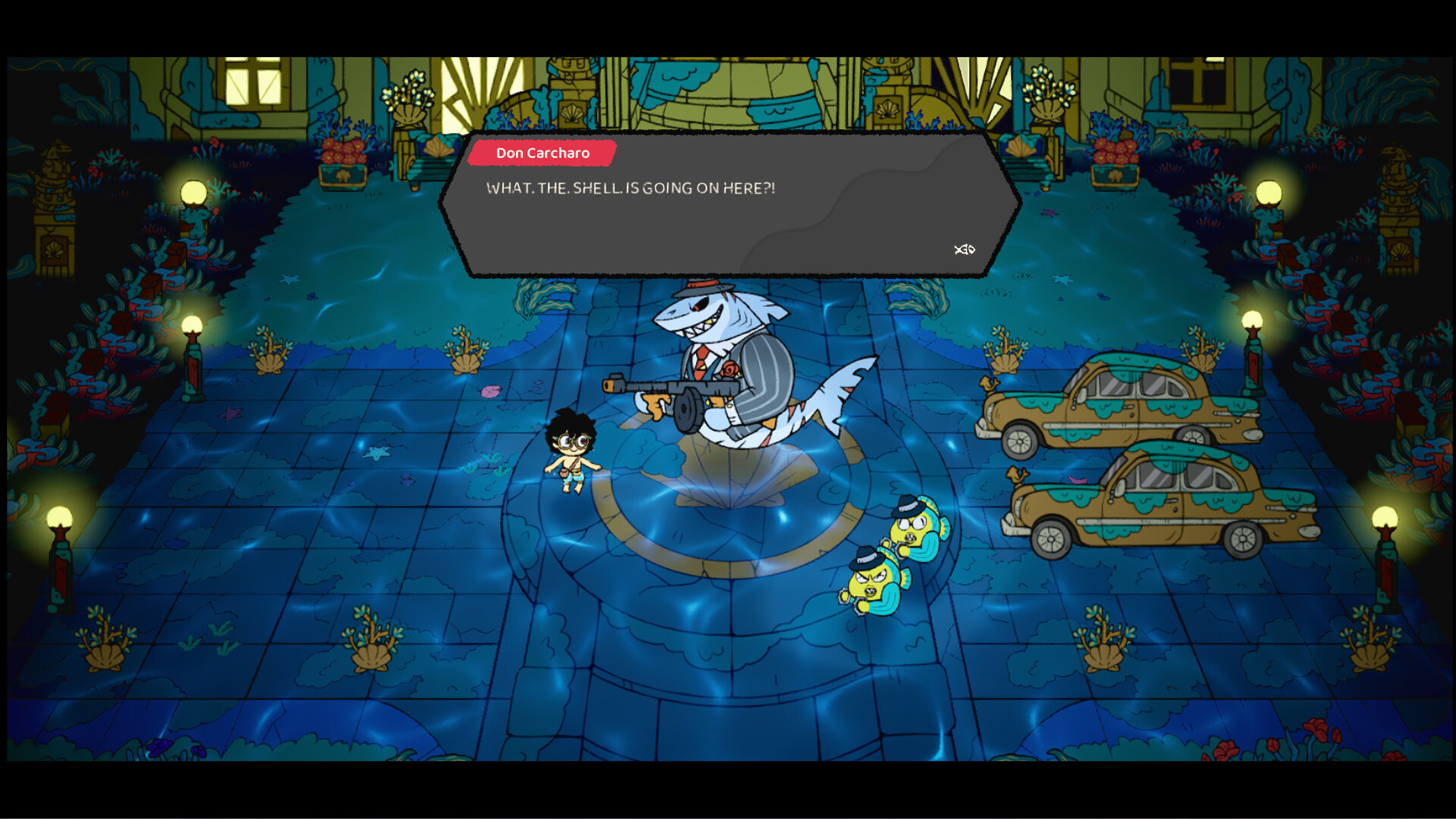
The 2.5D side-scrolling perspective gives the game a distinctive feel compared to the top-down视角 most roguelites default to. Mansour swims through layered underwater environments, dodging attacks from fish mobsters in fedoras and jellyfish wielding spears. Combat is responsive and snappy — players consistently praise the controller feel, with one reviewer noting it’s “so fun and satisfying to play with controller.” The game supports full controller input including DualSense haptics, and keyboard-and-mouse works fine too for those who prefer it.
World, Story, and Central Premise
Jumanah isn’t just a name — it’s a port town with personality. The game’s world-building draws on Arabian Gulf pearl diving culture with a generous helping of absurdity. Mansour is an upbeat, cheerful protagonist who encounters dangerous and often adorable things with the kind of disposition that suggests he’s either very brave or very oblivious. The writing leans into this, delivering corny jokes and lighthearted dialogue that keeps the tone buoyant even when the difficulty spikes.
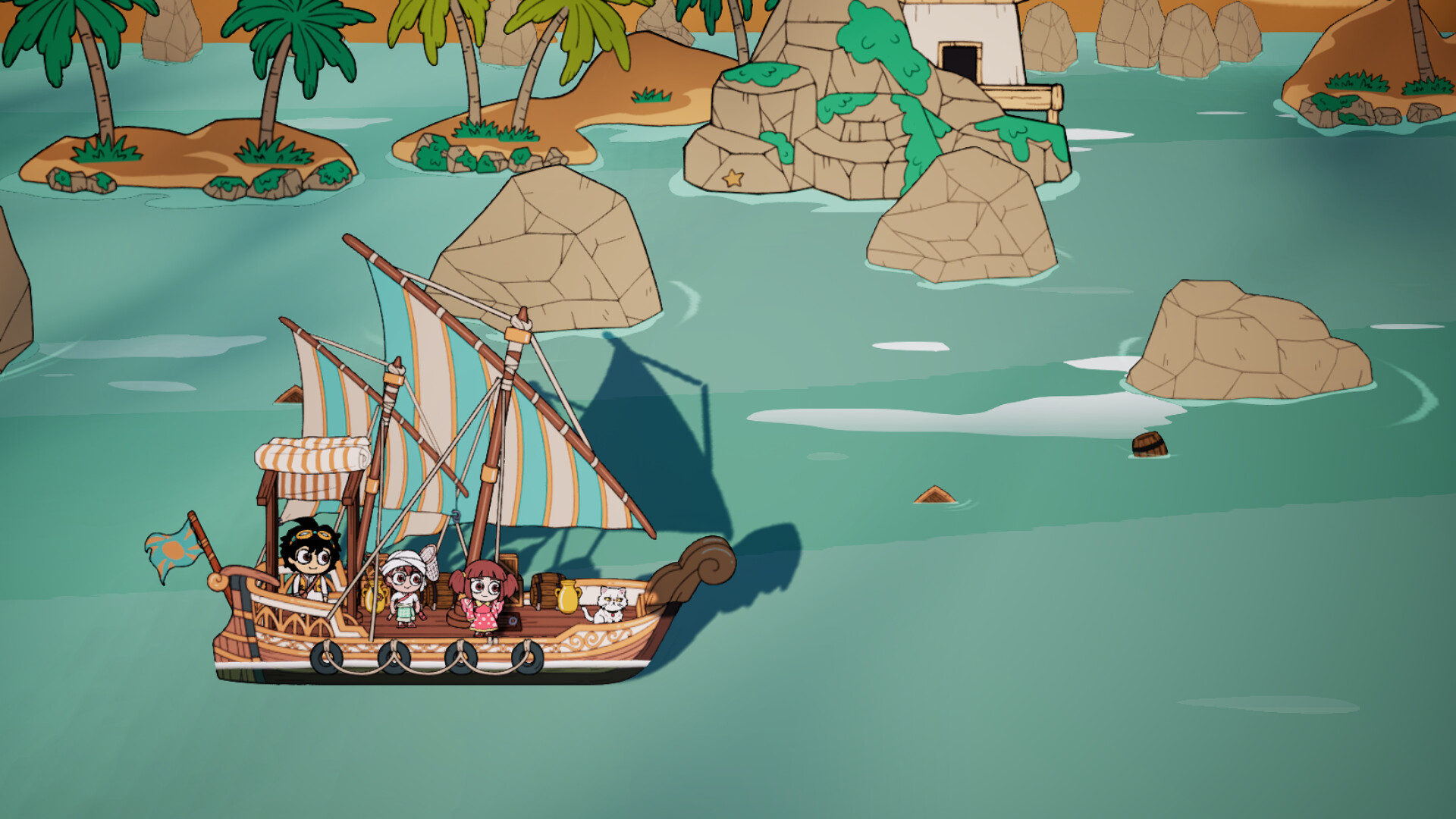
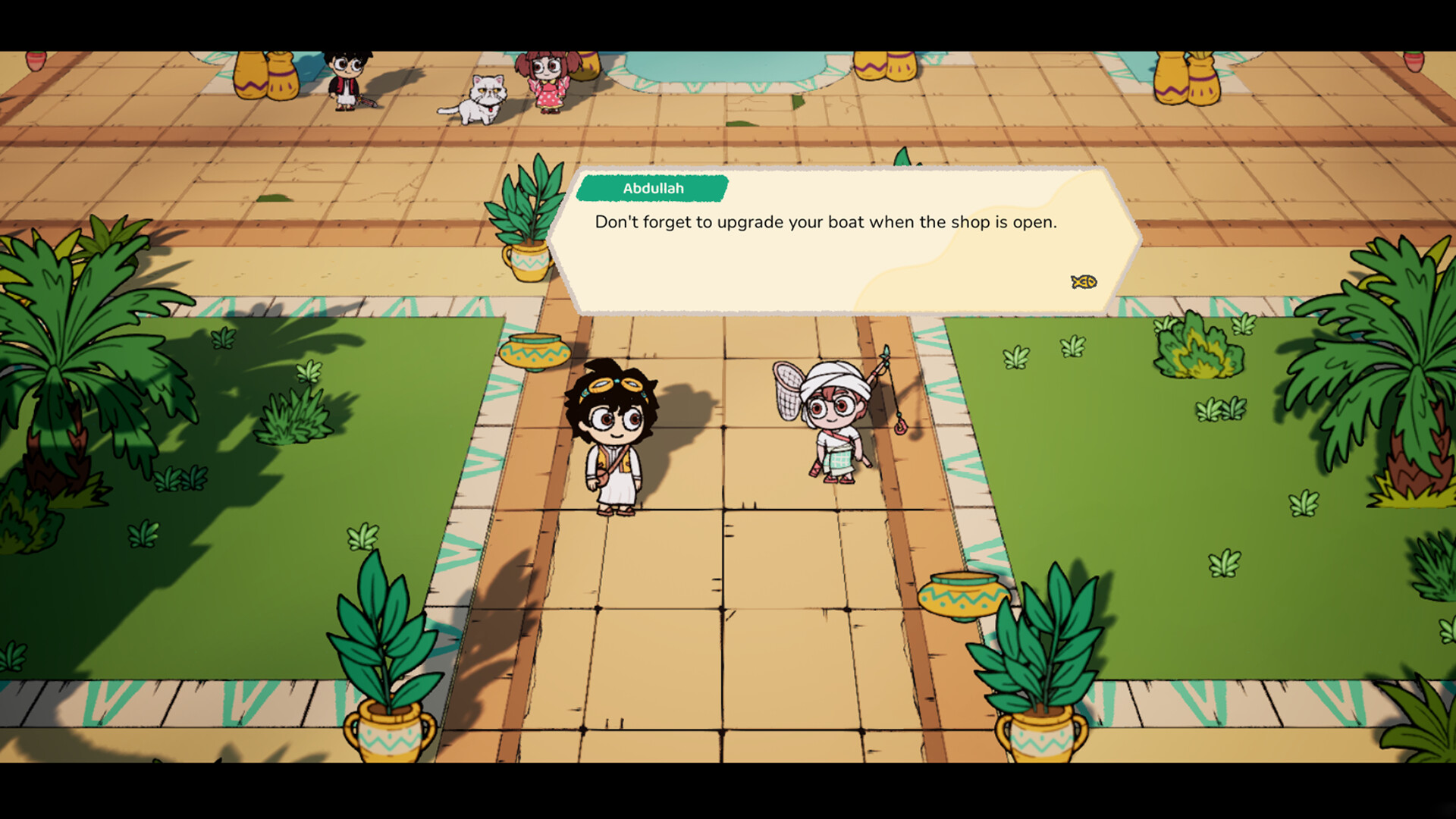
The world extends beyond the underwater levels. Back on shore, you rebuild the port, recruiting allies — including a cat, because of course there’s a cat — who each bring unique abilities to your crew. The narrative unfolds through character interactions and environmental storytelling rather than heavy exposition. It’s light, it’s fun, and it knows exactly what it’s trying to be. As one player put it: “the light and quirky dialogue from the character and cute visual is also really nice.”
Gameplay and Combat
The moment-to-moment gameplay is where Port of Jumanah shines brightest. Each dive drops you into a series of rooms — some contain enemies, others offer treasures or opportunities to recruit crew members. The room-selection mechanic adds a layer of strategy that experienced roguelite players will appreciate: choosing which door to enter next matters more than you’d expect, and routing decisions can make or break a run before combat even begins.
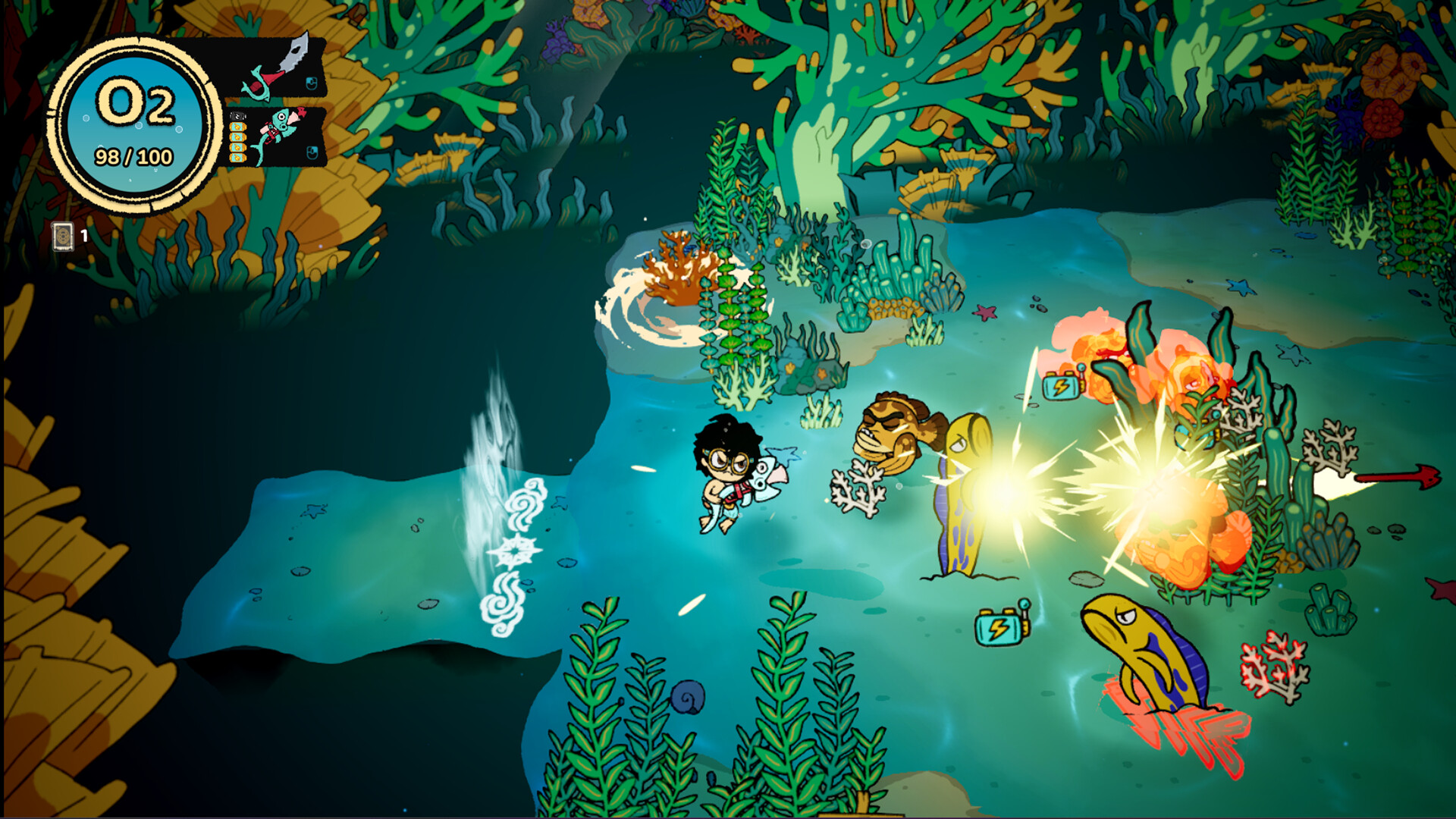
Combat centers on the oxygen system, which functions as both a timer and a resource. Your O2 meter drains as you explore, but it recharges at certain points — this creates a push-your-luck dynamic where you’re constantly balancing aggression against survival. Run out of oxygen and you’re done. The genius is that this system motivates efficiency rather than caution; you’re rewarded for acting fast and making smart decisions about when to fight and when to swim.
The weapon and power-up system provides the variety roguelites demand. You’ll find spears, harpoons, and other equipment throughout your dives, each with different damage profiles and utility. Between runs, the port upgrades and crew abilities unlock new combat styles, keeping the gameplay loop fresh across multiple sessions. Difficulty is pitched on the easier side compared to Hades or Cult of the Lamb, making it accessible without sacrificing the satisfaction of a well-executed combo.
Progression and Replayability
The roguelite structure ensures every run feels distinct. Procedurally generated chambers mean you’re never fighting the same layout twice, and the randomization of enemies, treasures, and crew encounters keeps the surprise factor alive. The metagame progression — upgrading the port, unlocking new abilities, recruiting more crew members — provides the long-term hooks that separate a good roguelite from a great one.
One area where the game occasionally stumbles is the early curve. Some players report the first 50 minutes feeling rough, with difficulty that outpaces your available upgrades. The out-of-run growth is gated behind completing early waves, which can create a frustrating loop when you’re still learning the mechanics. However, once you clear the first map’s boss and unlock meaningful upgrades, the game opens up considerably and finds its rhythm.
Short individual runs also work in the game’s favor for replayability. You can complete a satisfying dive in 20-30 minutes, making it easy to justify “just one more.” The breadth of weapons, crew combinations, and upgrade paths means you’re discovering new builds well into your twentieth hour.
Visuals, Audio, and Atmosphere
This is a gorgeous game. The hand-drawn art style brings the Arabian Gulf to life with vibrant colors and expressive character designs. Mansour is immediately endearing, the enemies range from menacing to adorable (sometimes both simultaneously), and the underwater environments are rich with coral, seaweed, and sunken architecture that reward exploration with visual variety. The sunken city levels, with their vintage cars and glowing lamps, are particular standouts.
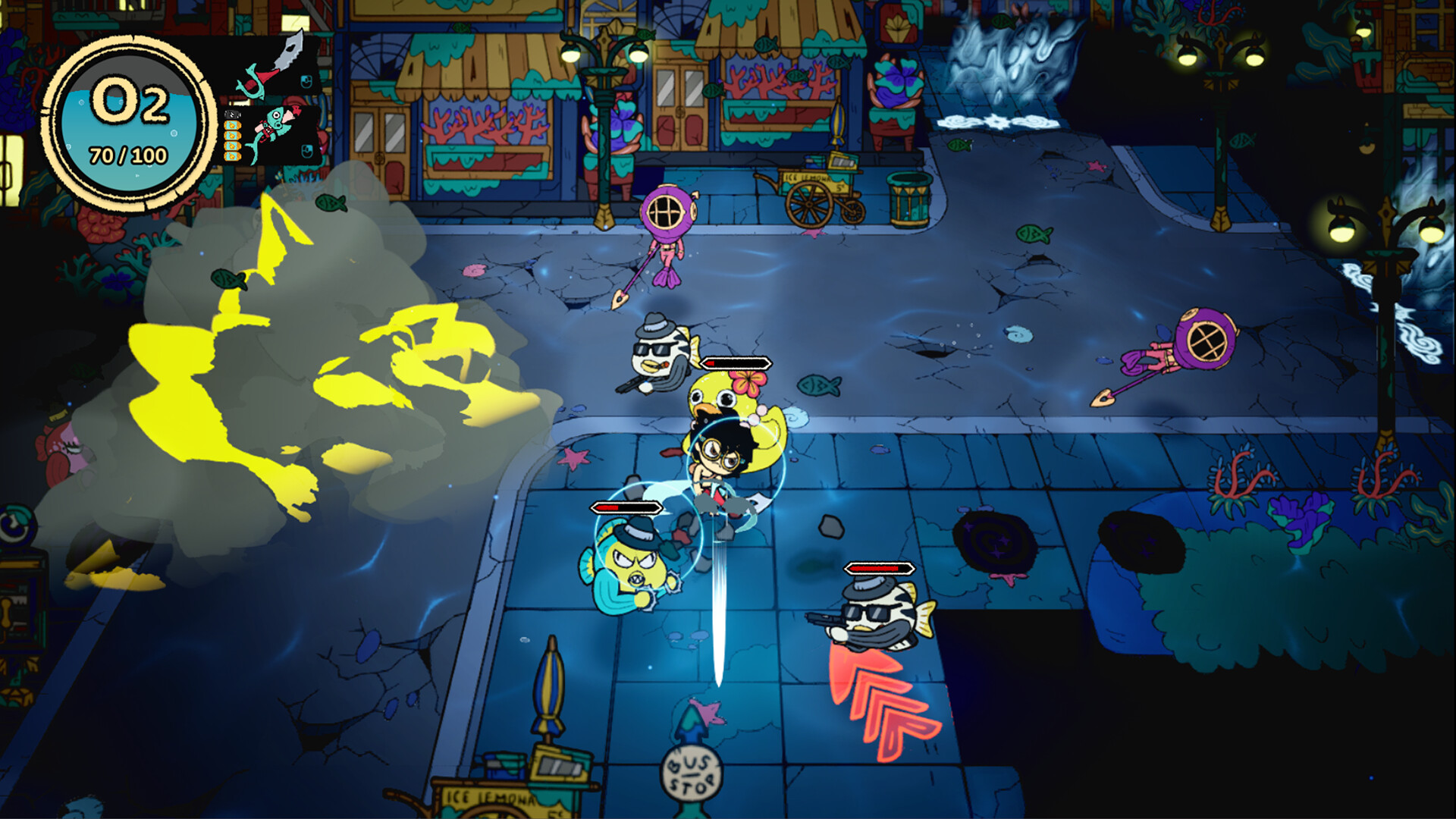
The visual polish extends to the UI — the O2 gauge is clear and unobtrusive, weapon tooltips appear at the right moment, and the HUD never competes with the art for your attention. Character animations are fluid, and combat effects hit with satisfying impact. It’s the kind of visual presentation that makes you stop and appreciate a frame even mid-combat.
The audio design complements the visuals with appropriately aquatic sound effects and a soundtrack that captures the lighthearted adventure tone. It’s not the kind of score you’ll put on repeat, but it does exactly what it needs to do: keep the energy up without getting in the way.
Performance and Technical Problems
For a game that launched with full controller support, Steam Cloud, and DualSense integration, Port of Jumanah is technically well-put-together. Players report smooth performance across a range of hardware — one reviewer running a GTX 1650 laptop had no issues, and the game runs well on Steam Deck as well. The 2.5D art style is inherently less demanding than 3D environments, and the game is well-optimized for what it’s trying to do.
The most commonly cited technical note is the dodge-roll recovery frames, which some players find slightly stiff. This isn’t a bug so much as a design choice — the deliberate recovery on dodges forces you to commit to your movements rather than spamming evasion. It’s a learning curve rather than a technical flaw, but it can feel jarring if you’re coming from faster-paced roguelites.
The early-game difficulty curve mentioned earlier is worth noting here too — it’s not a technical issue, but it’s a pacing issue that affects the first impression. Once you push through the initial hump, the game settles into a much more comfortable difficulty rhythm.
Pros and Cons
Pros
- Charming hand-drawn art style with vibrant Arabian Gulf setting
- Oxygen-as-timer system creates genuine tension and smart pacing
- Responsive, satisfying combat with good controller support
- Light, humorous writing that never overstates its welcome
- Short runs make it easy to play in any session length
- Strong crew recruitment and port-building metagame
- Full localization support across 11 languages
Cons
- Early-game difficulty can feel punishing before upgrades unlock
- Dodge recovery frames may frustrate players coming from faster roguelites
- Some players find the roguelite elements less deep than genre heavyweights
- A few reviewers note it feels more like a linear brawler with roguelite dressing
SteamGamer Verdict
Port of Jumanah knows exactly what it is: a charming, approachable roguelite that prioritizes fun over difficulty and personality over pretension. The oxygen system is a clever twist on the genre’s usual health-bar formula, the Arabian Gulf setting gives it a visual identity most underwater games can only dream of, and the writing has a warmth that makes you genuinely want to spend time in this world.
It won’t replace Hades in your roguelite rotation, and that’s fine — it’s not trying to. What it does instead is offer a lighter, more colorful alternative that respects your time while still delivering enough depth to keep you coming back. At $11.99 USD, it’s an easy recommendation for anyone who’s ever wanted to punch a shark in a fedora and feel good about it.
SteamGamer Score: 7.5/10

Sarah Chen searches the quieter corners of PC gaming for remarkable ideas that bigger releases leave behind. She covers indie games, platform updates, and overlooked releases for SteamGamer.net. If a strange little game has twelve reviews, an unforgettable mechanic, and absolutely no marketing budget, Sarah has probably already finished it—and is explaining why everyone else should care.






Comment here