

Control Resonant arrived on Steam on September 24, 2026, listed at $59.99 USD in the US storefront, and it lands with the confidence of a studio that knows exactly what it is building. Remedy Entertainment has swapped Jesse Faden’s Oldest House for a fractured, gravity-torn Manhattan and handed the keys to Dylan Faden, a former test subject who has spent years inside Bureau custody. The pitch is a paranatural action-adventure RPG about a city folding in on itself, and roughly ninety-two percent of more than ten thousand Steam reviews would tell you the pitch is honest.

A warped Manhattan that rewards the nosy player
The single best thing Resonant does is make exploration feel like trespassing. Zones of the city loop back on themselves, corridors fold into courtyards, and the vertical axis keeps changing its mind. Gravity anomalies are not set dressing: they alter how a room reads, which angles you can shoot from, and which routes exist at all. That is a smart design choice, because it means the world is constantly teaching you to re-evaluate a space you thought you already understood. Players who loved the original Control’s interlocking Bureau architecture will recognise the hand here, transposed onto a much larger and much louder canvas.
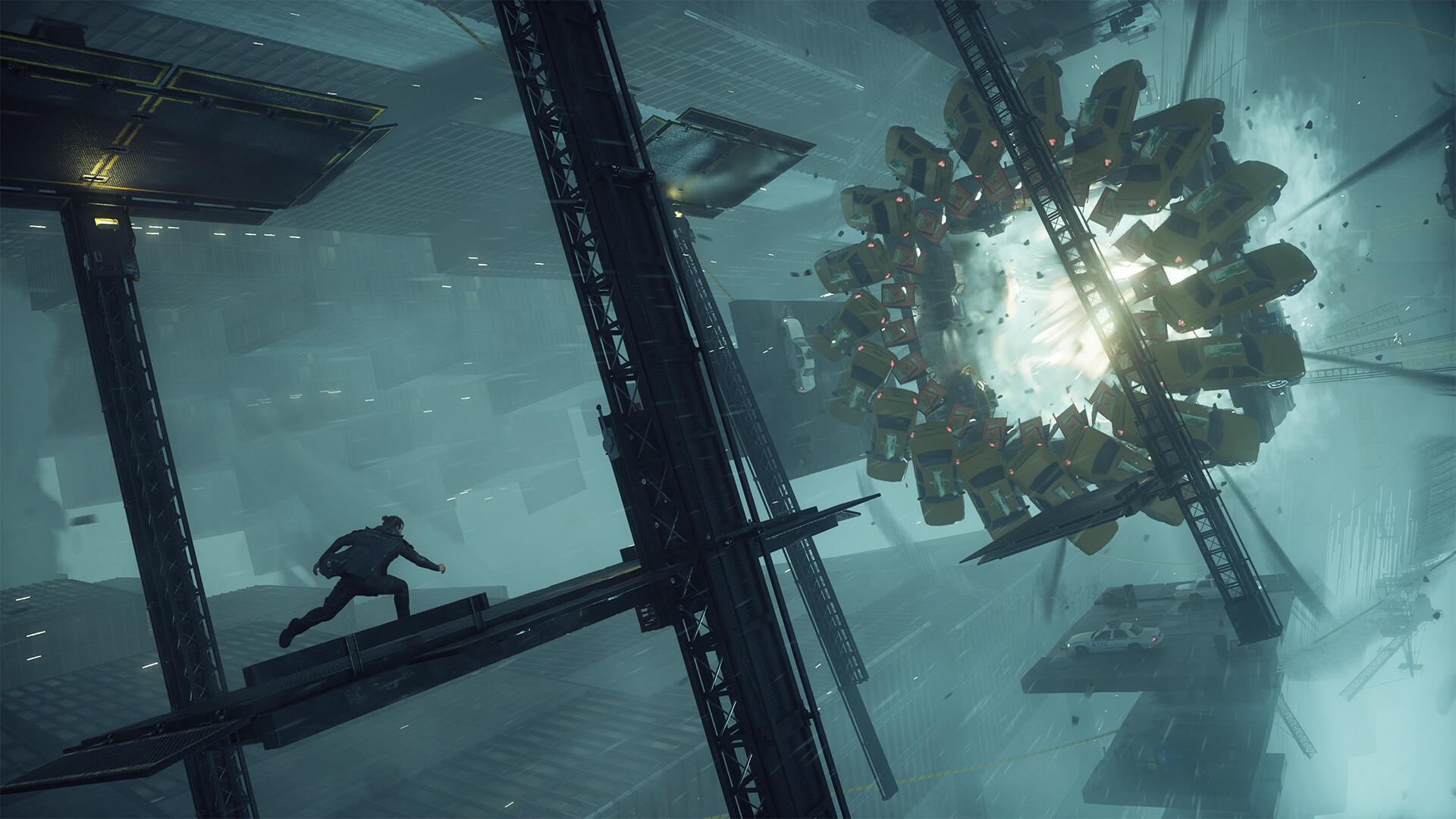
The trade-off is scale. A bigger city means more distance between the moments that matter, and a number of negative Steam reviews single out traversal as a chore rather than a pleasure. Fast travel exists, but the map — which multiple players describe as opaque even after an area is supposedly cleared — does not always tell you where you want to go. When Resonant is firing on all cylinders you are leaping across a canyon of floating debris with the skyline tilting underneath you; when it is not, you are squinting at a minimap arguing with itself. The former happens often enough to carry the game, but the friction is real.

The Aberrant: one weapon, many arguments
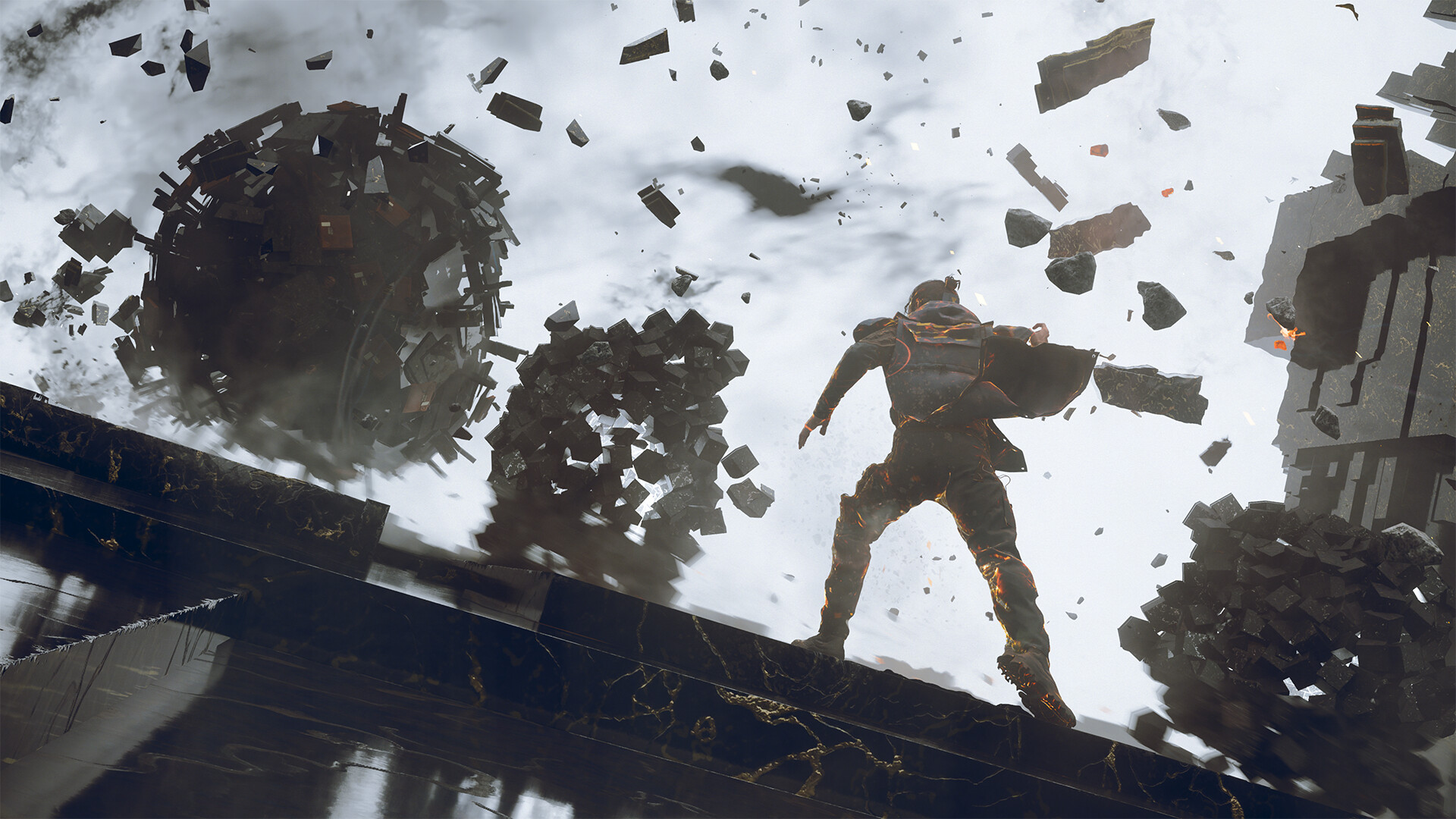
Combat is where the consensus is loudest, and it is overwhelmingly positive. Dylan’s signature weapon, the Aberrant, is a paranatural shapeshifter: it can become a two-handed hammer that lands with bone-crunching weight or flow into dual-wielded blades for fast, precise pressure, and it morphs on demand to answer whatever is standing in front of you. Around that sits a kit of elemental abilities, environmental takedowns and a progression system that lets Dylan’s powers branch as the threats escalate. Reviews praise the melee loop as fresh and readable — neither trivially easy nor punishingly strict — and comparisons to Prototype and Devil May Cry keep appearing in player copy for a reason. It is a combat system with momentum, and momentum is hard to fake.
The criticism that follows the combat is about legibility rather than feel. Several negative reviews report that the game never explains its own vocabulary: terms such as falter and dominance appear in menus and on-screen prompts without a glossary, and players end up searching the web mid-session to decode the status effects their build is supposed to exploit. That is a genuine onboarding failure in a game with this much systems depth, and it sits alongside complaints about repetitive encounter design once the novelty of the first few zones wears off. The verbs are excellent. The tutorialising around them is not.
Gravity is a mechanic, not a cutscene
Traversal abilities deserve their own paragraph because they change how the game thinks. Grappling gravity anomalies means the shortest route between two points is often the one that goes sideways, and puzzles built on the same rule keep introducing new twists well into the back half. One recurring complaint is that these abilities make the map worse rather than better, since a route that bends through a rift is hard to represent on a flat minimap. Fair enough. But the moment-to-moment sensation of riding a beam of light across an industrial void while the level geometry rotates around you is the kind of thing Resonant does better than almost anything else on Steam this year.
Performance, at least for many players, has been a selling point rather than a sore point. Positive reviews from launch week describe smooth frame pacing with ray tracing pushed to ultra and no visible stutter, which is not a sentence you get to write about many 2026 AAA releases. The caveat is that the picture is not universal: a cluster of negative reviews in early November reports a memory leak that degrades performance over a session until the game is restarted, occasional crashes to desktop after fast travel, and one widely repeated report of update 1.4.0 freezing the build at the photosensitivity warning before the main menu. Remedy’s support channel is linked directly from the store page, and these reports are recent enough that any verdict should be read with a patch cycle still in progress.

Dylan, Jesse and a story that trusts the player
Narratively, Resonant makes a bold swap. Jesse Faden, the Director of the Federal Bureau of Control and the protagonist of the first game, is now the sister Dylan is trying to reach, and the story runs on the gap between them: her lockdown on the Oldest House is failing, the paranatural catastrophe has spilled onto the streets of Manhattan, and Dylan has to walk out of containment to contain everything else. The world-building remains Remedy’s signature — documents, ambient chatter and environmental storytelling that reward players who slow down — and positive reviews keep calling the setting trippy, complex and worth inhabiting. The studio’s habit of tying Control into the wider Remedyverse is on display too, and fans of Alan Wake will find threads worth pulling.
Not everyone is convinced. The most substantive negative reviews argue that Resonant plays more like a standalone than a continuation, leaving big mysteries from the first game unanswered while expanding the world sideways instead of deeper. One widely upvoted complaint misses the camp of the original — the oddball videos, the soundtrack cameos, the strange sense of humour — and finds the sequel more sober and more conventional for it. There is also a quiet commercial irritant that surfaces repeatedly: buyers of the deluxe edition who expected an external soundtrack discover the audio is playable only from the main menu. None of that undoes the writing; it does mean the story lands harder for players already fluent in the Bureau than for newcomers.
Where it stumbles
Strip away the atmosphere and three complaints keep recurring across the negative column. First, the map: even players who have cleared an area say it fails to show them what is left, which turns exploration into guesswork. Second, repetition — the same encounter shapes and the same traversal chores return often enough that the middle stretch sags, and a couple of reviewers with forty or fifty hours on record describe the loop as button-smashy once the novelty fades. Third, technical instability for a minority of rigs, from the aforementioned leak to an exchange-materials mistake in one player’s report that cannot be undone. There is even a critique of the difficulty system itself from a hundred-hour player who loves everything else about the game. These are the kinds of problems that patches can shrink, but they are not imaginary, and a review that pretended otherwise would be doing readers a disservice.

Verdict
Control Resonant is a sequel that understands what made the original special — hostile architecture, powers that reshape space, a story that trusts you to assemble it — and then has the nerve to make all of it bigger, faster and meaner. Its combat has real grammar, its city has real personality, and its art direction survives every argument about the systems underneath it. It is also a game with an unhelpful map, an under-explained status vocabulary and a live technical question mark two weeks after launch. In other words: a Remedy game. The rough edges are part of the signature, and this time the highs are high enough to justify them.
SteamGamer score: 8.6/10. Recommended for players who want a combat-driven action-adventure with a genuinely strange world to pick apart, with the caveat that map clarity and performance stability are still being sorted out in patches. Control Resonant is available now on Steam for $59.99 USD, developed and published by Remedy Entertainment.

Dan Kowalski reviews games by listening to what they do before believing what they promise. He cares about responsive combat, purposeful sound design, satisfying movement, and whether a game respects the player’s time. Dan will forgive technical roughness when the underlying experience is exceptional. He will forgive almost anything for a brilliant combat system—but never a tutorial that refuses to stop talking.






Comment here